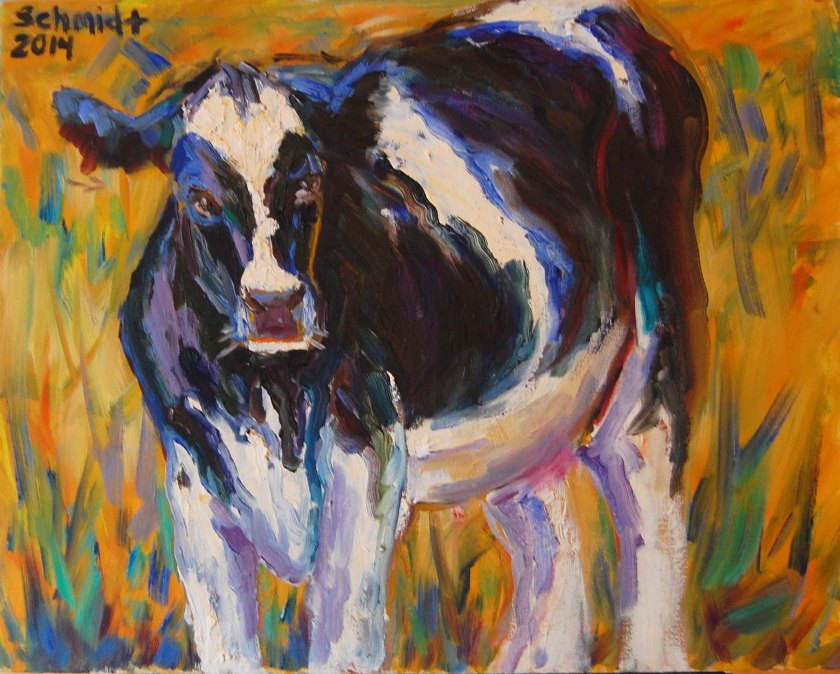
Sold! Cow in theMeadow

Hello, Friends,

I am pleased to share that my oil painting, Cow in the Meadow, sold to a client this May. If you wanted to purchase the painting but didn’t get a chance, I have reproductions of this painting for sale on my Redbubble store at https://www.redbubble.com/people/jsjschmidt2017/works/26919397-cow-in-the-meadow. There are canvas prints, iPhone cases and more with this painting on it! Iphone cases are selling for $25 each. cow portrait small

Can Artist Make Money from Thier Art?

Last week I talked about some common stereotypes about artists, such as all artists wear berets, starve and live in attics, etc.  And another misnomer about art, according to the McDonald’s advertisement I had mentioned, is that art is all about play, and is just for kids. And yet another stereotype describes two extremes of the artist type as the brilliant artist failure or the artist celebrity, according to the author, Emily Browne, of the article, Ten Things About Being an Artist that Teachers Won’t Tell You, (2013).

The celebrity artist type makes it big with a gallery opening and becomes rich and famous, or perhaps just famous. The brilliant failure is unable to break into the art world despite their talent and only gains recognition for their artwork after they are dead… A well-known artist, Van Goh, is a good case in point of this type. He struggled to find an audience who liked his work and only sold two paintings during his lifetime. Now his work is famous and very well known.Source: https://www.theguardian.com/education/mortarboard/2013/feb/21/10-things-art-teachers-wont-teach-you.

The former stereotype of the famous artist, was featured in the BBC television documentary series, What do Artists Do All Day? (2014).This show featured artists who are well known in the United Kingdom such as, Jack Vettriano, whose celebrated painting, The Singing Butler, sold for something like 750 pounds sterling at Sotheby’s Gallery in 2004. Source: https://www.jackvettriano.com/biography/.  But what about the artists who haven’t made it big but aren’t necessarily starving either, or flakey or mentally ill or driven by emotions? How do these artists make money from their art? I know I have wondered about this question myself regarding other artists. Lately, I have wondered what types of avenues I might pursue to make money from my artwork and have begun researching what people have to say about making money from artwork by reading articles online about this subject.

One article entitled, How Do Artists Make Money? , written by Valerie Atkisson in 2008 on the website, ArtBistro.com, listed a few traditional methods to the path of earning money from your art. These methods include: 1.) Showing your art at Commercial Art Galleries, 2.) Displaying your artwork at a nonprofit Galleries, 3.) Hosting an art show at your studio, 4.) Selling Your Artwork online, 5.) Creating custom art for clients, 6.) Obtaining a public art commission, 7.) Applying for an art grant, 8.) Securing an Art Residency, 9.) Teaching art at a secondary school, college, or as a guest artist. Source: http://artbistro.monster.com/careers/articles/5848-how-do-artists-make-money?page=4

For the sake of space, I will only be discussing the first two methods of making money from your art, but I will follow up with the other methods listed in my future blog posts. The trouble with the first two methods is that no sales are guaranteed and artists might end up just taking home the work that they exhibited. Not to mention that the competition for art shows is fierce, and rejection is a common theme among artists, which can be demoralizing for sensitive egos. It can also be expensive to pay for art submission fees if an artist is applying for juried shows which require application fees.  In addition, according to Atkisson, (2008), most commercial galleries take a 40%-50% commission to sell artists works, which the artist and gallery owner decide with a contract. So, with that in mind, artists need to take that factor into consideration so they can price their work accordingly and actually make a profit if the work sells.

In addition, regarding the next method of making income, which involves using not for profit galleries, many of these galleries “do not represent artists or enter into relationships with them.” Source: http://artbistro.monster.com/careers/articles/5848-how-do-artists-make-money?page=4. It is also important to note that although some commercial galleries do offer to advertise for art shows, the art world has changed, and the way artists make sales has also changed, particularly with the advent of the Internet and Social Media sites like Facebook, Instagram,

and Twitter. It is no longer enough to follow the traditional method of letting galleries do all of an artist’s marketing or to find an influential patron of the arts to fund artists as was the case in the patronage system in European countries or museums and galleries today.  Source: http://unconventionalguides.com/art.htm.

In the current art world, artists need to do a lot of self-promotion for their work to gain followers and collectors through social media sites such as Instagram, Twitter, and Facebook. Also, because of the stiff competition for gallery shows, the artist must also look for non-traditional venues to showcase their work, whether it be online selling, hosting open studio venues, or showing their artwork at non-traditional art venues, such as coffee shops.  This can be especially useful for emerging artists, who may not have a gallery that represents their work yet. However, all of these methods of making money from art are a gamble, especially the art show venues. Furthermore, to make them effective, the artist must develop marketing, technological, and business skills to keep up to date with current trends in the art world.  I myself did not learn any of these skills until I graduated from McDaniel College in 2005 with a degree in Art. To keep pace with the emerging technology I have taken classes in Photoshop, In Design and Illustrator, which have taught me how to edit my photos professionally and how to make marketing materials such as flyers to advertise my custom art pet portraits. I also try to keep up with the art world trends by reading articles and blogs about artists and business skills. The art business coach, Allyson Stanfield is an excellent resource for artists who want to learn more art marketing skills. For more tips on how to market you as an artist, go to the following link: https://artbizcoach.com/wp-content/downloads/50-things-better.pdf. Good luck!
 

Artwork for Sale on Red Bubble website

I am pleased to announce that my artwork is available for sale as mugs, t-shirts, i-phone cases and more on the website http://www.redbubble.com. Here is a link for my online shop: https://www.redbubble.com/people/jsjschmidt2017. A few samples of my work that will be featured on this site are Owl at Midnight, Ghost House and Self-Portrait. iPhone cases are available for sale at $25 each. I made this online store in an effort to make my artwork more affordable for those who admire my artwork but might not be able to afford prices for my originals. Each piece is based on my original work and is copywritten art of Schmidt 2017. If you are interested in purchasing my original artwork please go to my Etsy website at http://www.etsy.com/shop/ArtofSchmidt. Thank you for stopping by!

A Day in the Life of an Artist


A few weeks ago, I was visiting McDonald’s and I noticed an advertisement about artists where the tag line was, “Play like an Artist.” The advertisement featured a picture of a young child with art supplies in its mouth and surrounded by various artwork pieces, wearing, of course, the inevitable beret hat that defines a stereotypical vision of an artist. This advertisement highlights the prevailing beliefs in American culture that one, art is for kids and two that artists just play all day…

And what are some other common artist stereotypes? I did some research online to find out. On one blog called Endpaper, The Paperblanks Blog, the author listed a variety of so-called traits that all artists share in common. For example, all artists are out of touch with reality, perfectionist, a Casanova, moody or flakey.  Source: http://blog.paperblanks.com/2016/04/the-top-20-artist-stereotypes-you-cant-avoid/. Where did these stereotypes come from? My guess is that many of the celebrated artists that we have heard of from books or movies fit this stereotype, like Van Goh, who was mentally ill, or Picasso who was a lady’s man, or Monet who lived an impoverished lifestyle,  (before he was discovered by American art collectors).  And these stereotypes are continually reinforced by popular culture such as the well-known TV sitcom, Friends. For example, in one episode of Friends, the character, Ross, talks to his girlfriend Rachel about baby names and she suggests the name, Rain.  Ross responds with the following comment: “Hi my name is Rain. I have my own kiln and my dress is made of wheat!” Source: https://www.theodysseyonline.com/who-art-thou. So if you are an artist, then you must be eccentric seems to be the message.

While there is some truth that art is an important part of child development and education and that there is some element of play in the life of an artist, it is not all fun.  For instance, according to, author, Grace Hwang Lynch, the art classes teaches children a variety of skills such as “fine motor skills, language development, decision making and visual learning.” Source:http://www.pbs.org/parents/education/music-arts/the-importance-of-art-in-child-development/.   Also, regarding the element of play in art, there are times when art can be considered fun, like that light bulb moment when I get an inspiration for a new art series and feel excited about getting in the studio and making my vision come to life with paper and pencil or oil paint and canvas. However, it is not called art work for nothing. For example, in the case of a hobbyist artist who is trying to imitate a certain style of painting or get into an art show, or a professional artist who is trying to make a living out of their art, or someone who straddles both worlds as a semi-professional artist, who still works a day job to support them, there are many tasks involved in getting your art work ready to be viewed by the outside world in art shows, art festivals, etc. For example, in addition to juggling everyday demands, the artist must contend with a variety of other things such as: bad days in the studio when the artwork is not going well, difficult art clients, rejections for art shows or grants, working the day job, marketing yourself, perfecting your craft, etc., etc.  And if you want to become a professional artist, there are many, many hats to wear.

According to Art Business Coach, Alyson Stanfield, who is the author of, I’d rather be in the Studio! (2008), if you are trying to sell your artwork “You are no longer only an artist. You’re a businessperson as well.” For example, in my experience as a semi professional artist, I have found that there are many other administrative tasks that do not come under the category of “fun”, like accounting, marketing on social media, setting up online commerce sites such as Etsy or Shopify, writing custom art contracts, keeping time sheets, etc.  And with so many demands on my time, making time to actually do the art can be a real challenge.  I personally have struggled to make time to make art every day, and am currently participating in a 100 faces in 100 days challenge, where I am drawing one celebrity portrait a day, for 15 minutes a day and then posting the results on Instagram. I’m hoping this practice will enable me to be a better portrait artist and that it will help me to build the skills of discipline and time management.

By the way, the BBC has created a documentary tv series entitled, What Do Artists Do All Day?, which features several well known artists , such as Norman Ackroyd, and Michael Craig-Martin, which went live in 2014. Source: http://www.bbc.co.uk/programmes/articles/49j3ZhwyXyPq703lDJzrNfc/what-do-artists-do-all-day. I haven’t seen this series yet, but I am wondering if the series will simply reinforce commonly held stereotypes of artists or hopefully, offer some more balanced insight into all the work that goes into making art.


How to Finish a Custom Art Piece (or any art for that matter)

Last week I posted about a custom art portrait I have been working on for my neighbor. It is a group portrait and has it ever been challenging! It is like painting three separate paintings rather than just one painting. What I didn’t share in last week’s post was how difficult it has been to finish this project, which I feel has been dragging. Although the project started out to be deceptively simple, with the colors and the drawing coming together in a few days, once I got to the smaller version of the painting, the trouble began.

I discovered that working small on a 5 x 7 canvas was extremely challenging. I am used to working on medium sized canvases of about a 9 x 12 size and using large brushes, either a one inch flat or a 2 inch bright. For this project, I have had to use tiny brushes and it has made it take all the longer to complete. Also, working in acrylic rather than oil has been really difficult because the paint keeps drying faster than I would like and I have to keep squeezing out more of it and spritzing it with water or adding slow dry medium to the paint.  When the paint dries too fast, I get really hard edges which aren’t good. I’m worried that this project might fall into the realm of being overworked if I am not careful, but I want both the client and myself to be happy. So far, neither of us are. I’ve set a deadline for myself and I hope that works! Yesterday I painted out the middle person’s face in frustration because the proportions were off and the paint values seemed to have been too dark. So I am starting from scratch with the middle figure’s face. I re-measured the head and drew a new oval and repainted the whole in flesh tone.

In an effort to finish this painting by the deadline, I have been scheduling in time to work on it every week, and have been taking pictures of it after each painting session to make sure that it is really progressing and not just getting overworked.  When will I know if the painting is really completed? I looked up an article on ThoughtCo. to try and get some more perspective on this subject. According to the author, Marion Boddy-Evans, the answer to when a painting is done is as individual as each artist who completes the work, based on their individual skills, and their vision for the work. Source: Boddy-Evans, M. (2017). How Long Should it Take to Finish a Painting?ThoughtCo. https://www.thoughtco.com/duration-to-finish-a-painting-2578835. For me, it will be a difficult tightrope between not finishing it and over working it. Diane Custom Art Tanya face painted out

Custom Art Portrait, in Progress

This week I have been working on a custom art portrait for my neighbor. These photos represent stages 1 and 2 of the custom art process. The first stage is stage 1, the three value pencil sketch, and stage 2, the color sketch. The first stage helps to define the lights and darks of the piece and the composition. And the second stage is a chance to explore different color schemes for the final portrait. If you are interested in ordering a custom portrait of your family member, celebrity or pet, email me at

jsjschmidt2@gmail.com or visit my Etsy site: http://www.etsy.com/shop/ArtofSchmidt to learn more about the process.

Art of Schmidt Blog Post: Dealing with Rejection as an Artist


Rejection is something most artists deal with, especially when attempting to take their artwork to the next level of professionalism, i.e. entering juried art shows. It happens to all of us, and especially to artists who are brave enough to put their artwork out there into the world of juried shows. Often times it comes in the form letter, which is worded something like this: “Dear Artist, Thank you for participating in our show”, etc, etc. Bottom line, for whatever the reason, your artwork wasn’t selected. Maybe it didn’t fit the theme or style of the gallery you submitted it to, maybe it was just one person who didn’t like it, or maybe (gasp), it might be a sign that you need to up your game art wise. Whatever the cause, not knowing why your artwork wasn’t accepted into a juried show can cause a lot of insecurity, even making some artists want to give up making art or submitting it for further review.

I have certainly had my share of rejection, be it from art show jurors and I have even had some cutting critiques from people who have critiqued my art. Sometimes it makes me feel like giving up, and I need to take a break to re-group and think about why my work wasn’t accepted. On the other hand, at times these setbacks have led to further growth. For example, after one harsh critique from a well-known artist and teacher, I rebounded by asking myself if there was any truth in what the person said, and if so, how I could improve my artwork. Ultimately, I started trying to paint in a more colorful and impressionistic way, and I took a drawing class which helped me to improve my drawing skills. But it took several days and some encouraging words from an old friend and trusted art teacher to “shake the dust off”, so to speak.  I’m still working on not taking it too personally when I get a rejection letter for an art show because unless I talk to the actual juror, I can’t know why my work was rejected. And trying to figure that question out on my own, can lead to filling in the blanks with negative thoughts such as, “Maybe I don’t have any talent,” or something along those lines. This line of thinking is rarely helpful or productive for me.

I recently faced a rejection email from an art gallery where I had submitted what I thought was one of my finest portraits ever. I had gotten a lot of positive feedback about it on Instagram and put in many hours of work. I had carefully selected the theme, trying to make sure it would “fit” with the call for art motif of Inspiration. My expectations were high. Unfortunately, the jurors didn’t agree with me.  It’s been a few months since then and I just submitted another piece of artwork to a different gallery for review. A few years ago, that rejection would have taken me out of the game for several months, maybe even years. But now, I am trying to step back from the experience, process the emotion and see what can be learned from it.

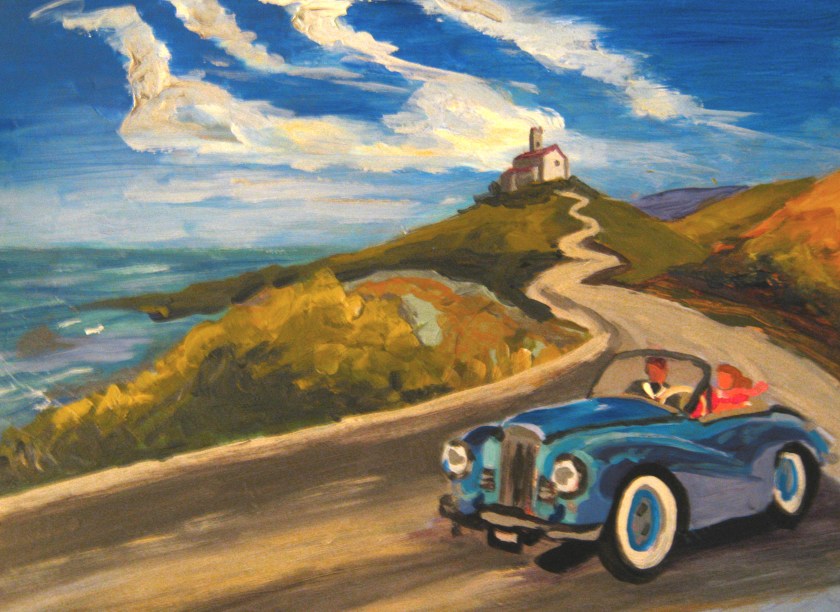
So my next step is to try and submit my artwork for review and not the rejection keep me from moving forward and making more art. Below I attached the latest artwork I submitted,  for review, To Catch a Thief at The Artist Angle Gallery in Frederick, MD. The entry deadline for this latest show is June 10, 2017, so I should know whether the painting, To Catch a Thief, Reimagined was accepted. This newest painting is inspired by classic cars and the theme of driving. In addition, I used the movie, To Catch a Thief, as a springboard to get the composition and setting for this painting. I combined multiple photos from the movie, based in the French Riviera and stitched them together in Adobe Photoshop as a reference for this painting. This work was painted with acrylic on Ampersand board.


To Catch a Thief, Re-Imagined , Art Show Entry

Hello friends,

I am working on a new painting, To Catch a Thief, Re-imagined. This piece is acrylic on Ampersand board and is based on the Alfred Hitchcock movie, To Catch a Thief. I wanted to capture the feeling of movement and speed, so I blurred the paint strokes in the front to make the car seem like it is in motion. And I wanted to capture that vintage, the 1950s vibe, so I went wild with a bright color scheme of blue, blue-green, red, pink, and blue-violet.  Stay tuned and I will let you know what happens with my entry. If accepted into the art show at the Artists’ Angle Gallery in Frederick, MD, I will be sure to post the details about the time/place that the show takes place. To Catch a Thief, re-imagined

The Art of Finishing

The Art of Finishing

      This week I am returning to a favorite topic of mine which is the importance of completing a painting or work of art. I have several unfinished paintings and sketches pilling up in my studio lately. They are the remnants of ideas not fully thought out, false starts, or brick walls I didn’t know how to climb. In trying to figure out what caused this to happen, I have a few theories…Maybe life got really busy, I got stuck and didn’t know how to fix a problem with composition or color, lost interest in it, etc. I call these paintings and sketches, UFOS, unfinished objects. They clutter my studio, and remind me reproachfully that I have unfinished business. What to do, what to do?

       About two weeks ago, I tried to break this trend in my work flow habits, and I returned to a sketch that I have been working on and off for about a year. Facebook reminded me of this event this week with a post about the sketch, And Still I Rise.  The sketch is called, And Still I Rise, and it is based on a Maya Angelou poem entitled, And Still I Rise. This poem describes the struggle that African Americans have endured as a legacy of slavery, prejudice, and Jim Crow Laws of the South, and the power that they ultimately exercise when they rise above it. I’m sorry to say that my own ancestors played a part in the history of slavery and plantations.

        I’ve been looking at my various attempts to finish this sketch and make it into a painting, and the below photos demonstrate my struggles to complete the painting. Some of these struggles include: breaking out of old habits of just putting things in the middle of the page, or not really thinking about art as a story to be told, or not knowing what medium and color choices to use in telling a complicated story like this one. Ultimately, I decided to limit the color palette to burnt sienna, black, and white, with tonal values, so that the focus is ultimately on the symbolic content of the painting’s story line, such as:  the slave ships, slave manacles, (all to symbolize slavery), the phoenix bird (re-birth), and the sun (which rises every day). Two other central figures in this piece include a Caucasian woman, to symbolize the legacy of slavery and white prejudice, and the other, an African American woman, in this case, Maya Angelou, who serves as a representative of the African American population. She has risen above her circumstances and refuses to be beaten. Here are a few lines from the poem, which demonstrate Angelou’s indomitable spirit:

“You may write me down in history

With your bitter, twisted lies,

You may trod me in the very dirt

But still, like dust, I’ll rise.” (Source: Poetry Foundation, www.poetryfoundation.org).

                 So why is this important? I feel that I pushed myself out of my comfort zone and saw some growth happen, despite the frustration. Sticking with this sketch and making it into a tonal watercolor painting, forced me to re-think my art process and habits, and it has been helping me to define my unique voice as an artist, by making work that is content based and tells a story. It’s also been a good lesson in problem solving and determination. And I felt great when it was finally finished! Here are some progress photos, starting with the three value graphite sketch, oil painting, pastel, and finally the mixed media watercolor painting. The biggest inspiration I had in bringing this painting to a conclusion was Pablo Picasso’s, Rose Period. These paintings are limited in color and feature narratives about various characters, such as circus performers. Without the inspiration I received from this work, I doubt I could have brought it to a conclusion. All of which reminds me of an earlier post I wrote about the importance of copying master art works, in this case, they can provide new ways of thinking about value and color. I definitely want to keep studying the masters as I continue in my journey to define my voice as an artist. What about you? Do you have any tips for completing unfinished art?


Enjoy the Process

Today I am writing about enjoying the process of art, as a follow-up to last week’s post about finding your creative voice. I was inspired by this topic when I read the article entitled, Five Ways to Enjoy the Process of Making Art, by Sandrine Pelissier, on https://paintingdemos.com/enjoy-the-process-of-making-art/.  I think that learning to enjoy the process of painting is a big part of finding your creative voice, because before you can define who you are as an artist, you have to practice, practice, practice your craft whether it’s drawing, painting, sculpting, etc. You know the old adage, “Practice makes perfect.” And to maintain that sort of dedication, you need to be able to enjoy the activity regardless of the outcome. For example, it has taken me about 12 years to learn how to paint in an impressionistic style, and I learned how to do it by a process of trying different types of paint brushes, various consistencies of paint and painting techniques, and holding the brush in different positions.  It also helped to look at the artwork of Claude Monet and try to copy his paintings, especially the Waterlilies series, which is kind of loose and painterly. What others may think of as “talent” has been a long-term process of practice, trial, and error. Here are some examples of my work as I was attempting to learn how to paint in an Impressionistic, wet into wet style.

From left to Right: Breakfast Blend, oil on canvas panel, 2006, Chincoteague Marsh, oil on canvas panel, 2009, Cow in Meadow, oil on canvas panel, 2014, Pathway in Monet’s Garden at Giverny, oil on canvas, ca. 1901/1902, After Monet, Jodie Schmidt, 2014, Waterlillies, oil on canvas, 1906, After Monet, Jodie Schmidt, 2014, and finally one of my more recent paintings, Jack Daniels, oil on canvas, 2017. I hope this encourages you not to give up on your art if you are struggling to improve your work.