I’m taking a break from blogging

Hi Friends, Family, and Followers,

I am taking a break from blogging on my Art of Schmidt site until life calms down a little. I’ve been juggling an art show deadline that’s looming and the art hasn’t been coming

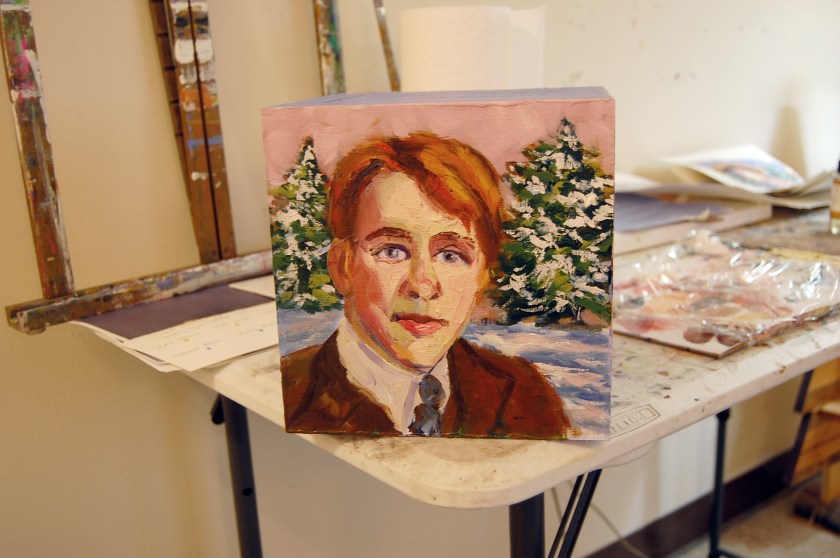
Stopping by the Woods, one point
Stopping by the Woods, Mixed Media, 2018, Jodie Schmidt.

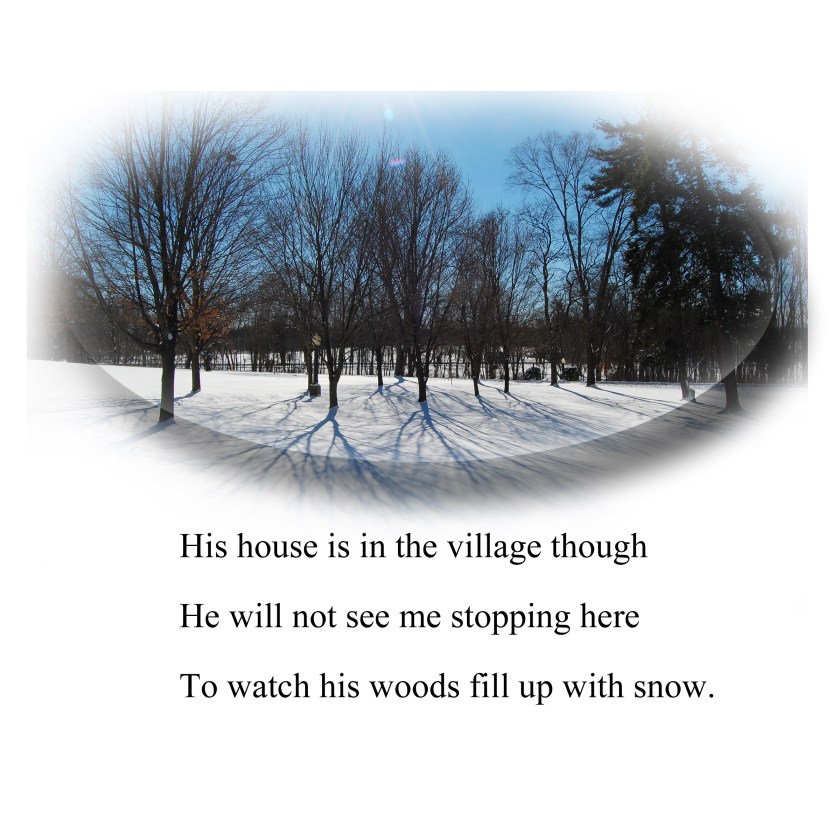
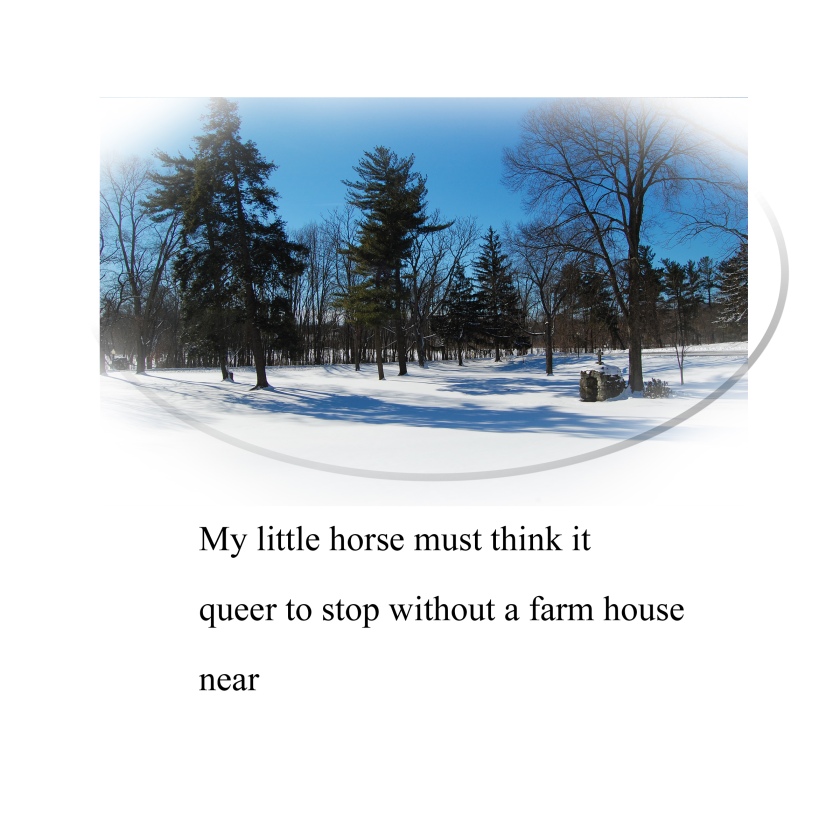
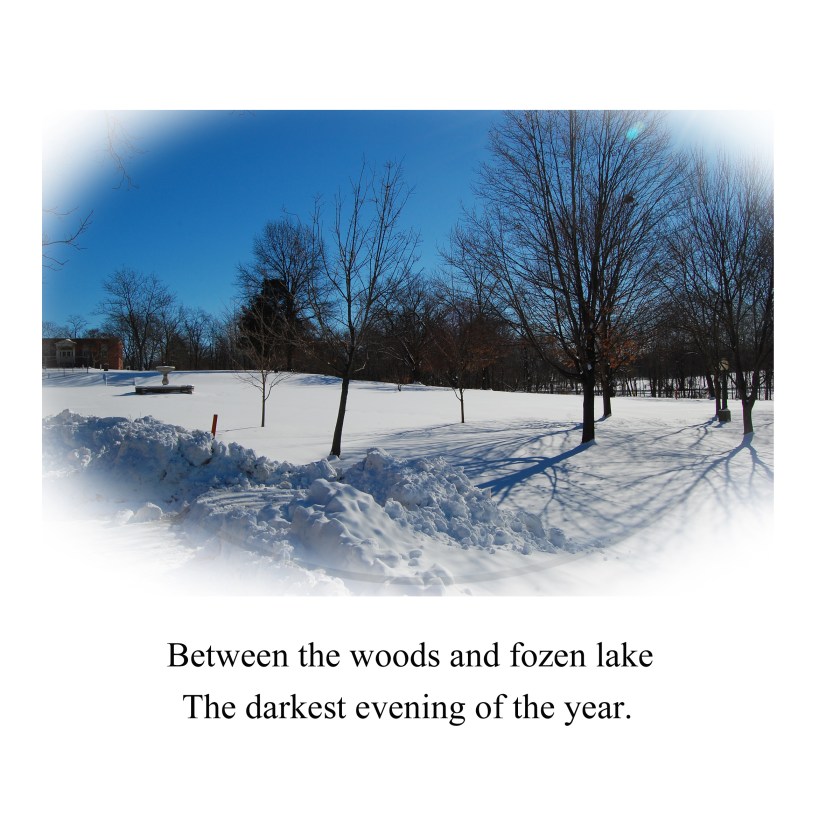
together, and some health issues. I hope to get back to blogging more frequently after the art show opening, On and Off the Wall at the Artists Gallery in Frederick, MD. I will be joined by many local artists who work in a variety of media. All art will be for sale via silent auction and proceeds will help raise funds for the continuation of the gallery, which is operated exclusively by artists. For now, here are some progress photos of my box entry, Stopping by the Woods. Here is a link to the art show if you want to know more about it:Box Side 2_edited-1Box Side 3_edited-1, finalBox Side 4_edited-1 http://www.theartistsgalleryfrederick.com/march-2018-box-show.

In my next post, I hope to show you the completed project, but for now, I am still figuring out how to bring it to a successful conclusion. I was not happy with how the sides of the box turned out, so I  am re-doing them from scratch in Photoshop. Next week, I hope to transfer these images to the box and paint the panels in Acrylic. Here are the Photoshop files in progress that will be displayed on the other sides of the box. The box is based on the poem, Stopping by the Woods on a Snowy Evening, by Robert Frost. I love this poem because it is so mysterious. Is he talking about death, life, or the push and pull between responsibilities and dreaming, when he stops to admire the snowy woods, but then decides that he has other things to get back to at the end of the poem when he says he has “miles to go before I sleep”. I think the poem can be open to many interpretations and that’s what makes it interesting. Thanks for stopping by!

Richard Diebenkorn (1922-1993): An Artist I Admire


This week I have really been struggling to come up with a new topic for this blog. At first, I thought I might write about time management strategies and how I have been implementing my Ideal Week schedule template I mentioned last week. However, the trouble with that topic is that I still haven’t taken the time to write it out, but I did download a copy of the Ideal Week schedule template pdf from Michael Hyatt’s website, and so it did get me started thinking about what I have been spending my time doing other than painting, and the reasons why I have been putting it off… Then I thought I might write about the top ten contemporary living artists in an article by Artsy.net, but as I read about what these artists represented in their work, it didn’t seem to fit the type of painting I do, so I decided not to do that.

After some reflection,  I am realizing that one of the reasons I have been putting off painting has been that I have not had any inspiration about what to paint, despite the vague idea that I might start up my poetry series again. But somehow I haven’t been making much progress there. Instead, I’ve been working on other things for my art business that needed to get done, and which I have been procrastinating on, due to a large number of art shows. One of these tasks was to get up to date with my profit and loss sheet. Yesterday, I researched different blog topics that I thought might get me motivated to paint again, and I read my blog topics list. Amongst the topics I have listed, was one that stood out for me. That topic was to write about artists that you admire and why you like that particular artist. Immediately the name Richard Diebenkorn came to mind.

Perhaps I thought of him because it reminded me of a conversation I had with an old friend about artists, and she mentioned that her stepmother had introduced her to the art of Richard Diebenkorn. On the other hand, maybe  I was reminded of a documentary about Richard Diebenkorn I had watched on YouTube several months ago which featured a presentation by his daughter in which she described his works and shared some interesting facts about his life, such as how his home in California influenced his art. Or perhaps I thought of Diebenkorn’s work because it reminds me of the kind of subject matter I used to draw and paint when I was an art student at McDaniel College, which was figures in interior spaces, with an emphasis on color. For whatever the reason, he came to my mind and so I started researching facts about his life and trying to learn all I could about his artwork.

From the article, Diebenkorn’s First Steps, on artsy.net, I learned that he was introduced to art at an early age by his father, Richard Diebenkorn, Sr. who entertained him “with pieces of cardboard placed between the folds of crisply pressed shirts from the dry cleaner.” (“ Diebenkorn’s First Steps”).  As a young child, Diebenkorn drew trains and locomotives on the “smooth, white surface of the paper.” (Ibid).  And, he continued to pursue art for many years after that, despite a lack of support from his father, who wanted him to pursue a more practical career path in law or medicine, during his time as a student at Stanford University, where he attended undergraduate classes in 1940. (“Richard Diebenkorn: Biography, Art, and Analysis of Works”). Instead, he decided to study art and art history, and he successfully combined influences from many art styles such as Abstract Expressionism, Color Field Painting and “belle peinture” or the beautiful painting.” (Ibid).

He was able to seamlessly shift from abstraction to figuration in his long career as an artist, painting figures in interior spaces, and abstracted landscapes and cityscapes of his home in California. (Ibid) But whatever the subject, he continued to incorporate bright color and shape, which gives his paintings an unmistakable brand as a Diebenkorn, not to be confused with any other artist. According to Amy Crawford,  Diebenkorn was highly influenced by the artwork of Henri Matisse, another fine colorist. (The Lasting Influence Matisse Had on Richard Diebenkorn’s Artwork, Amy Crawford, March 2017, Smithsonian Magazine, www.smithsonianmag.com/arts-culture/lasting-influence-matisse-richard-diebenkorn-artwork.  In addition to reading up on Richard Diebenkorn and his art, I gave myself the assignment to copy two of his paintings which describe his various subject matter of figures in interior spaces and abstracted landscapes. I had a lot of fun with drawing the shapes and mixing the colors. The two paintings I copied this week are Woman on a Porch, Richard Diebenkorn, 1958, oil on canvas and Cityscape 1, (Landscape No. 1), 1963, Richard Diebenkorn, oil on canvas. The one difference in approach to my paintings and Diebenkorn’s are that my version was painted in acrylic paintings rather than oils. I also include some of my original self-portraits in oils, because I think they show the connection in subject matter and color between my works and Diebenkorn’s paintings, although my approach is more restrained and traditional with subtle gradations of tone and color. Copying these paintings by Diebenkorn showed me just how much I enjoy painting the figure and using bold color. Since completing the 100 Faces in 100 Days drawing Challenge on Instagram, I have really missed working in color.  Thanks for stopping by!


Paintings of the Week: Catoctin Mountain State Park Landscapes

Have you ever heard the saying, that writers should write about what they know? I am taking that axiom and applying it to the artwork that I create. This week’s offering features two acrylic mini-canvases of two scenes from a nearby park called Catoctin State Park in Thurmont, MD, just minutes away from my apartment. I have lived in the Thurmont/Sabillasville area in Maryland for about 10 years and have visited the Catoctin State Park many times with my husband, family, and friends.

About 4 years ago, I spent a day photographing different views of this park on a cool, Autumn day when Maryland had a genuine colorful, fall. It’s taken me four years to turn my photos into paintings, but better late than never right? In these works, I sought to capture the quiet beauty and colorful foliage of the park. As always, my work

Acrylic painting, Catoctin State Park, Autumn, landscapes
These are two completed acrylic paintings on miniature canvases.

is defined by color and light and how each element interacts and affect each other. My style is loose and impressionistic, and I use my photos as a jumping off point for these landscapes. To purchase, Wolf Rock, acrylic on canvas, 3 x 2 inches, 2017, (right) visit https://www.etsy.com/listing/565427233/wolf-rock-catoctin-state-park?ref=listing_published_alert. To purchase, Along the Path, acrylic on canvas, 3 x 2 inches, 2017, (left), visit https://www.etsy.com/listing/551631770/along-the-path?ref=shop_home_active_1. To see what other items are for sale, visit: https://www.etsy.com/shop/ArtofSchmidt?ref=l2-shopheader-name.

Painting of the Week: Rooster, Hen, and Chick

Hello friends, family, and visitors,

I am posting a recently completed, acrylic painting, Rooster, Hen, and Chick. In a manner similar to my commissioned work, I started with a three step process. First, I decided on the composition and reduced the color photo referenced to three values in black, gray and white. After that, I began painting in the local colors, or the colors that I actually saw in the photo. Lastly, I did some problem solving with the composition by changing the arrangement of the chickens and by adding a baby chick to balance out the composition and fill in the empty space. The painting is available for sale on my Etsy site: https://www.etsy.com/shop/ArtofSchmidt?ref=seller-platform-mcnav. I will also be adding this painting to my Red Bubble site tonight so that it will be available in a variety of formats such as coffee mugs and fine art prints! Thanks for looking!Rooster, Hen, Chick

Art of Schmidt Blog Post: Dealing with Rejection as an Artist


Rejection is something most artists deal with, especially when attempting to take their artwork to the next level of professionalism, i.e. entering juried art shows. It happens to all of us, and especially to artists who are brave enough to put their artwork out there into the world of juried shows. Often times it comes in the form letter, which is worded something like this: “Dear Artist, Thank you for participating in our show”, etc, etc. Bottom line, for whatever the reason, your artwork wasn’t selected. Maybe it didn’t fit the theme or style of the gallery you submitted it to, maybe it was just one person who didn’t like it, or maybe (gasp), it might be a sign that you need to up your game art wise. Whatever the cause, not knowing why your artwork wasn’t accepted into a juried show can cause a lot of insecurity, even making some artists want to give up making art or submitting it for further review.

I have certainly had my share of rejection, be it from art show jurors and I have even had some cutting critiques from people who have critiqued my art. Sometimes it makes me feel like giving up, and I need to take a break to re-group and think about why my work wasn’t accepted. On the other hand, at times these setbacks have led to further growth. For example, after one harsh critique from a well-known artist and teacher, I rebounded by asking myself if there was any truth in what the person said, and if so, how I could improve my artwork. Ultimately, I started trying to paint in a more colorful and impressionistic way, and I took a drawing class which helped me to improve my drawing skills. But it took several days and some encouraging words from an old friend and trusted art teacher to “shake the dust off”, so to speak.  I’m still working on not taking it too personally when I get a rejection letter for an art show because unless I talk to the actual juror, I can’t know why my work was rejected. And trying to figure that question out on my own, can lead to filling in the blanks with negative thoughts such as, “Maybe I don’t have any talent,” or something along those lines. This line of thinking is rarely helpful or productive for me.

I recently faced a rejection email from an art gallery where I had submitted what I thought was one of my finest portraits ever. I had gotten a lot of positive feedback about it on Instagram and put in many hours of work. I had carefully selected the theme, trying to make sure it would “fit” with the call for art motif of Inspiration. My expectations were high. Unfortunately, the jurors didn’t agree with me.  It’s been a few months since then and I just submitted another piece of artwork to a different gallery for review. A few years ago, that rejection would have taken me out of the game for several months, maybe even years. But now, I am trying to step back from the experience, process the emotion and see what can be learned from it.

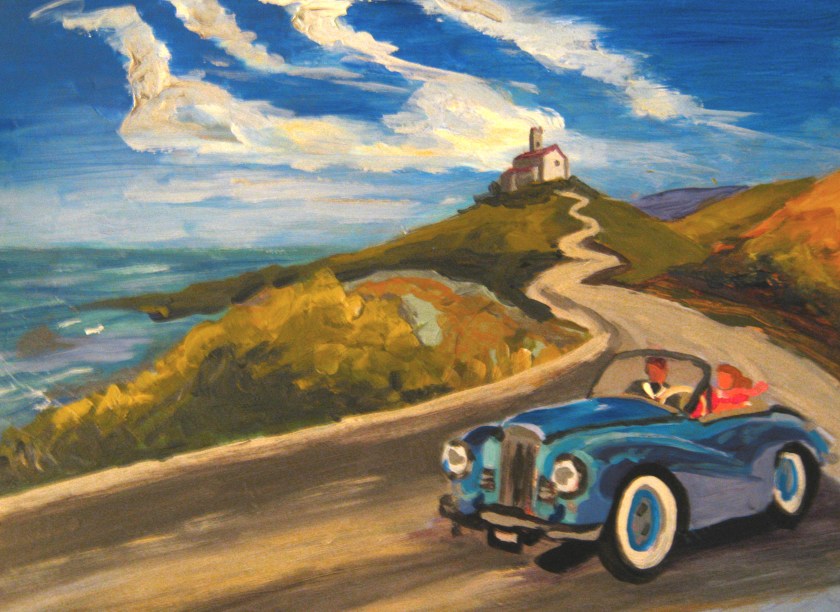
So my next step is to try and submit my artwork for review and not the rejection keep me from moving forward and making more art. Below I attached the latest artwork I submitted,  for review, To Catch a Thief at The Artist Angle Gallery in Frederick, MD. The entry deadline for this latest show is June 10, 2017, so I should know whether the painting, To Catch a Thief, Reimagined was accepted. This newest painting is inspired by classic cars and the theme of driving. In addition, I used the movie, To Catch a Thief, as a springboard to get the composition and setting for this painting. I combined multiple photos from the movie, based in the French Riviera and stitched them together in Adobe Photoshop as a reference for this painting. This work was painted with acrylic on Ampersand board.


To Catch a Thief, Re-Imagined , Art Show Entry

Hello friends,

I am working on a new painting, To Catch a Thief, Re-imagined. This piece is acrylic on Ampersand board and is based on the Alfred Hitchcock movie, To Catch a Thief. I wanted to capture the feeling of movement and speed, so I blurred the paint strokes in the front to make the car seem like it is in motion. And I wanted to capture that vintage, the 1950s vibe, so I went wild with a bright color scheme of blue, blue-green, red, pink, and blue-violet.  Stay tuned and I will let you know what happens with my entry. If accepted into the art show at the Artists’ Angle Gallery in Frederick, MD, I will be sure to post the details about the time/place that the show takes place. To Catch a Thief, re-imagined

What to do When a Painting Goes Wrong

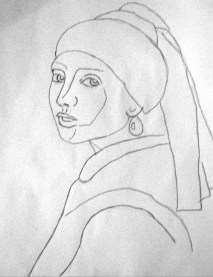
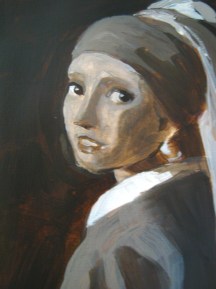
I was hesitant to write this blog post for a number of reasons. For one, I wasn’t sure what to write about after last week’s blog, and for another, I wasn’t pleased with how my painting turned out. And so I didn’t really want to post photos of a painting I wasn’t pleased with. Despite the many hours I put into this painting, it didn’t look like the painting I was copying, Girl with a Pearl Earring, by Vermeer, ca. 1665. I researched Vermeer’s techniques and palette colors online, practiced my sketching, both freehand and with a grid. Painstakingly I mixed up the paint colors and compared my color mixtures to the reproduction images of Girl with a Pearl Earring. And yet, something was off…Was it the colors, the painting techniques, or the drawing that was wrong?

So I took some time off and made some revisions to the color choices and the drawing. And I am still not pleased. I feel I have not captured the “look” of this painting. So I am giving myself permission to start over, from scratch and not try to keep “fixing” the old painting. Meanwhile, this process has made me think of the question, What should you do when a painting goes wrong? Should you, trash it, start over, cut it up into smaller pieces and create something new, make it a mixed media piece, take a break, etc? To investigate this topic, I did a google search and looked up a few articles. One article that stood out for me was, a blog post from Painting My World: Daily Pastel Paintings by Karen Margulis PSA: What do you do when a painting goes bad? Thursday, January 19th, 2012, http://www.kemstudios.blogspot.com.

The artist and blogger Karen Margulis listed a few tips for revising a painting that isn’t going in a direction that you like. Some of her tips include 1.) thinking about what things you want to change in the painting, 2.) Take the paint completely off of an area you’d like to change, 3.) take a drastic measure, such as painting a wash, and 4.) Use a viewfinder and crop out sections that you like. Source: Margulis, 2012. How about you? Do you have any tips to share about what to do when a painting goes wrong? As for me, I am starting over again from scratch, starting with the drawing of Vermeer’s, Girl with a Pearl Earring, ca. 1665. After taking time away from the painting, two things stand out for me that bother me about this painting, and they are the drawing inaccuracies and the skin tones. My version does not resemble the original girl’s features and the skin tone looks washed out instead of glowing, like the original.

Vermeer Copy Secondary Color Lay in
Girl with a Pearl Earring, After Vermeer, Jodie Schmidt.


Master Copy Tutorial: Girl with a Pearl Earring

Last week I talked about the importance of copying the work of the old masters and this week I am going to give you a step by step tutorial about how to get started. I have several master copies in the works, but I am choosing to focus on Vermeer’s well-known work, Girl with a Pearl Earring, circa 1656, according to Maritshuis, 2014. If you wish to read more about this painting, you may visit the following link: Details: Johannes Vermeer, Girl with a Pearl Earring, c. 1665, Mauritshuis. Retrieved on 9 December 2014. This citation is from an article about Vermeer’s painting, Girl with a Pearl Earring, which I found on Wikipedia. The original painting was painted in oils on canvas, but to save drying time, I used acrylic paints.

Step One: Make a Grid from a Photocopy of a Master Copy

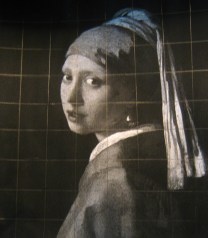
My first step in creating a master copy of Vermeer’s, Girl with a Pearl Earring, was to locate a good print copy which I could use to create a grid for the initial sketch. Creating a grid helped me to make sure the proportions of the head were proportionate to the copied image. I photocopied an image of Vermeer’s painting, Girl with a Pearl Earring, from the book, Vermeer, by Arthur K. Wheelock, Jr. After I made the copy, I created a grid, measuring one inch from the horizontal and vertical edges of the printed copy with a ruler. After I measured out the markers for the grid, I drew vertical lines to create the vertical axis. Then I drew horizontal lines for the horizontal axis.  Each box on the horizontal lines of the grid should be numbered starting with 1, and the vertical boxes should be labeled A, B, C, etc. After that, I created an exact duplicate of this grid on a clean sheet of sketch paper. Note: it is very important to ensure that you have the exact amount of boxes on both the vertical and horizontal axes on your grid copy as the one from the original, or the proportions may be incorrect. Also, be sure that when you draw vertical and parallel lines that your ruler is perpendicular to the picture plane and doesn’t shift, or it make affect the measurements of the one-inch boxes.

Step Two: Create a Duplicate Grid and Transfer it to Canvas with Carbon Paper

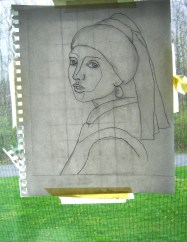
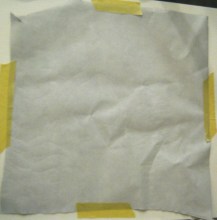
Next, I located my first set of coordinates on the vertical and horizontal axes, on my grid copy to start drawing in the edge shape of the portrait, i.e. A1. The artist, Thaneeya McArdle, gives an excellent description of this process with detailed visuals of the grid method at https://www.art-is-fun.com/grid-method/?rq=draw%20a%20grid. To complete the portrait, I moved on the next grid coordinate, and so on. My next step was to trace the completed grid sketch onto a clean sheet of sketch paper, using my window as a light box. I taped the original sketch to the window with masking tape, then taped a clean sheet of paper on top of the original. Then I traced the image to the cover sheet. The traced image was then transferred with a pen to canvas paper, using carbon paper, with the dark side taped face down.

Step Three: Paint a three value underpainting in Acrylics

Are you still with me? I know it sounds like a lot of steps…Don’t worry I am including some photos of this process to help jog your memory. So now we move on to the fun part, the painting itself. To break down the light and dark values, I consulted a well-used book from my art library, The Complete Oil Painter, by Brian Gorst, which gives a detailed demonstration about how to paint a monotone underpainting. I mixed up three values from darkest to lightest with Liquitex Acrylic paints and a palette knife using Burnt Umber, Titanium White, and Ivory Black. The darkest value was applied to the background, while the middle and lighter values were painted on the figure. Intermittently I sprayed the palette and the canvas with water from a spray bottle to keep the paints wet so they wouldn’t dry up, especially while I was mixing them. I also stepped back every so often to view the painting from a distance and be sure that the drawing in my painting was accurate, and made corrections as needed. These values will give me a roadmap of where to put light and dark values when I get into the color portion of the painting. They help to simplify the lights and darks without the difficulty of color matching. Next week, I will paint a “limited color lay in” with the local color

Meisje_met_de_parel
Photo copy, Girl with a Pearl Earring by Vermeer ca. 1656
Vermeer copy with grid
Photo copy, Girl with a Pearl Earring by Vermeer ca. 1656, with grid 
Vermeer paper copy with grid
Copy of Grid with pencil on sketch paper 


Vermeer Copy Light Box
Traced image of grid using window as light box


carbon paper trace 1
Carbon Paper used to trace image to canvas


Carbon Paper tracing, complete
Carbon paper tracing completed


Jodie Schmidt after Vermeer three value
Three Value Underpainting in Acrylic 


Why Should Artists Study the Great Masters? What can be learned from copying master artworks and other things I didn’t learn in College.

Many years ago when I was an undergraduate Art student at McDaniel College, I asked one of my art professors, “Will it help me to be a better painter if I study the masters?” She said that it would, but declined to tell me how it would help. At the time, unfortunately, I didn’t take her advice. Perhaps it was because I didn’t truly understand why it was a good idea to study the works of Caravaggio or John Singer Sargent. Lately, I have been asking myself the question, “How can I be a better artist?” because my artwork has seemed lacking in something, but I am not sure what is is.

My employment background as a Library Assistant has shown me to the wonders of the internet and how any question can be researched and instant results to your search inquiry on Google, can answer your questions in seconds. And so, I started doing Google searches over the past few weeks on how to be a better artist. Lo and behold, several article results flashed on my  Samsung galaxy phone screen and one of them by Magic the Gathering, Artist and illustrator, Noah Bradley, caught my eye, 21 days to be a better artist (even if you’re terrible), (2015). Here is the website link, if you would like to read more: https://medium.com/@noahbradley/21-days-to-be-a-better-artist-48087576f0dd.

Ok, so back to the question, “Why should Artists study the great masters?” In the above-mentioned article, Noah Bradley, 2015,  speaks about the importance of copying the masters, which he terms, “master copies”. In these exercises, he explains that an artist chooses an artwork by a dead artist and attempts to replicate it. He includes a website link, entitled, Week 1: Master Studies-Noah’s Art Camp, with a step by step art tutorial decribing how to copy the masters and gives a bit more explanation for why we should copy dead artists’ work on this video, https://www.youtube.com/watch?v=kQfF-P70V2Q. In the video, Bradley also mentions that copying the art work of “golden age illustrators” (i.e. artists who worked betweeen the 1880s and 1920s),  is a good place to start. Source: Week 1: Master Artists -Noah’s Art Camp, http://www.youtube.com, and Art Cyclopedia, Artists by Movement: The Golden Age of Illustration, 1880s to 1920s,

http://www.artcyclopedia.com/history/golden-age.html.   Today, I did some additional research on the topic of master studies and why they are important undertakings for artists.

In another article entitled, “Copying Paintings of the Masters and Other Artists” by Lisa Marder, November 24, 2015 on Thoughtco.com, she states that there are several concrete benefits to copying master artworks. Marder, 2015,  also observes that although the practice of copying master art works was once a popular teaching method in the academic artworld, this practice has fallen out of favor because today’s culture is more attuned to creating “original” artwork and avoiding the dangers of copyright violation. Source: https://www.thoughtco.com/copying-paintings-of-the-masters-2578707. She lists several benefits of copying the masters, (i.e. artists who created artwork prior the 18th century”),Marder, 2015. According to Marder, 2015, some of these benefits include: 1.) Learning to see things more accurately by drawing, and 2.) Building a foundation of artistic techniques with which to inspire your future work, such as composition or color choices. Souce: https://www.thoughtco.com/copying-paintings-of-the-masters-2578707.  For further reading on this subject, she recommends readers to peruse the article, Today’s New Old Masters Outshine the Avant Garde, Huffington Post, May 24, 2015 by Brandon Kralik.

Stay tuned for next week’s art blog when I will give you a step by step art tutorial on how to copy master art works! For now, I am attaching some photos of master copies that I have been working on by Mary Cassatt and Mead Schaeffer. The first master copy is entitled, Sara in a Green Bonnet, by Mary Cassatt, ca. 1901, and the second copy is The Count of Monte Cristo, by Mead Schaeffer, 1928. These works are painted with Gamblin 1980 oil paints on canvas.

Making art a Habit

Well, here I am a week after I said that I was going to start a daily sketchbook…It ended up being very difficult to make time for it, and unfortunately, I only got to work on it one day out of seven.


I also started thinking that perhaps my topic for last week’s blog about doing what you love and making it a habit, may not necessarily correspond to the prompts in the sketchbook I was thinking of using for this project. The sketch prompts in this book tends to focus more on still life and architecture, and less on portraits, which is something I really want to get better at doing. So I have decided to make a slight topic change. I am going to be posting photos of my oil and acrylic portraits in the process.  Here’s a youtube video that inspired me to finish my work and to make this topic change: Finished Not Perfect, by Jake Parker, at https://www.youtube.com/results?search_query=finished+not+perfect+. I felt that the speaker hit the nail right on the head with his mantra of “Finished not Perfect.” I tend to struggle with perfectionism and find it hard to bring projects to a close because of my high expectations for the work.

I’d also like to alternate my own work with master copies to try and push my art making abilities forward and try to break some old habits in my painting practice, such as putting everything in the center of the page. This is an idea I got from the artist, Noah Bradley’s, article: 21 days to be a Better Artist at https://medium.com/@noahbradley/21-days-to-be-a-better-artist-48087576f0dd#.bzzgdsrp6, mentioned in last week’s post. Bonus, Noah Bradley includes a link to a youtube video where he teaches you how to make master copies of artwork!

So once again, my change of topic will be posting weekly portrait paintings and sketches, alternated with master artwork copies. My goals will be improving the level of my artwork with regards to drawing accuracy, composition, and harmonious color choices. And another important goal will be making sure to complete each work and post the results before moving onto other projects. Time management will be a crucial part of reaching this goal. Here’s an article that I have read about time management, which I plan to re-read. It’s called: Five Ways to Make Time for Art by Julie-Fei Fan Balzer, http://balzerdesigns.typepad.com/balzer_designs/2012/12/five-ways-to-make-time-for-art.html. She lists five ways to make art more of a priority in your schedule, and I am going to try the first two to help me in this quest of making more time for art, and getting really good at portraits, being sure to complete each piece.  The first two suggestions Balzer mentions are using a crockpot for cooking and limiting computer time. Let me know if you have any time management tips for making art that you’d like to share! Here are some portrait paintings that I have been working on this week…An acrylic painting of Emily Dickinson, which illustrates the poem,  Hope is the Thing with Feathers and a master copy of a Mary Cassatt oil portrait, Sara in a Green Bonnet, c. 1901.