If you are a creative type or if you like to make things, you have probably encountered the moment when the finished product you imagined, does not live up to your expectations. Creative types such as musicians, composers, producers, dancers, writers, artists, photographers, cooks, and makers of all types, can probably tell you what it feels like to hit a wall with a project, how it felt, and what they did to navigate that feeling of utter frustration. As an artist, I have experienced this frustration more times than I can count. Some paintings and drawings are simply learning projects and are difficult to salvage, while others can be fixed.
I know it’s been said that you learn more from your mistakes than your successes, but when I get to a point in a painting or drawing and I realize that the painting or drawing doesn’t look right, it can be really frustrating. I start doubting myself, feel like giving up, or doing something that I am not good at, like cooking or cleaning because I know that I am not good at these things, so my expectations of success in these domains are much lower than for painting or drawing since I have no training in cookery or housekeeping. Since I know I am not a good cook, if it doesn’t turn out so well, it’s a waste of ingredients but I don’t feel as emotionally attached to the outcome as I would to a painting or drawing.
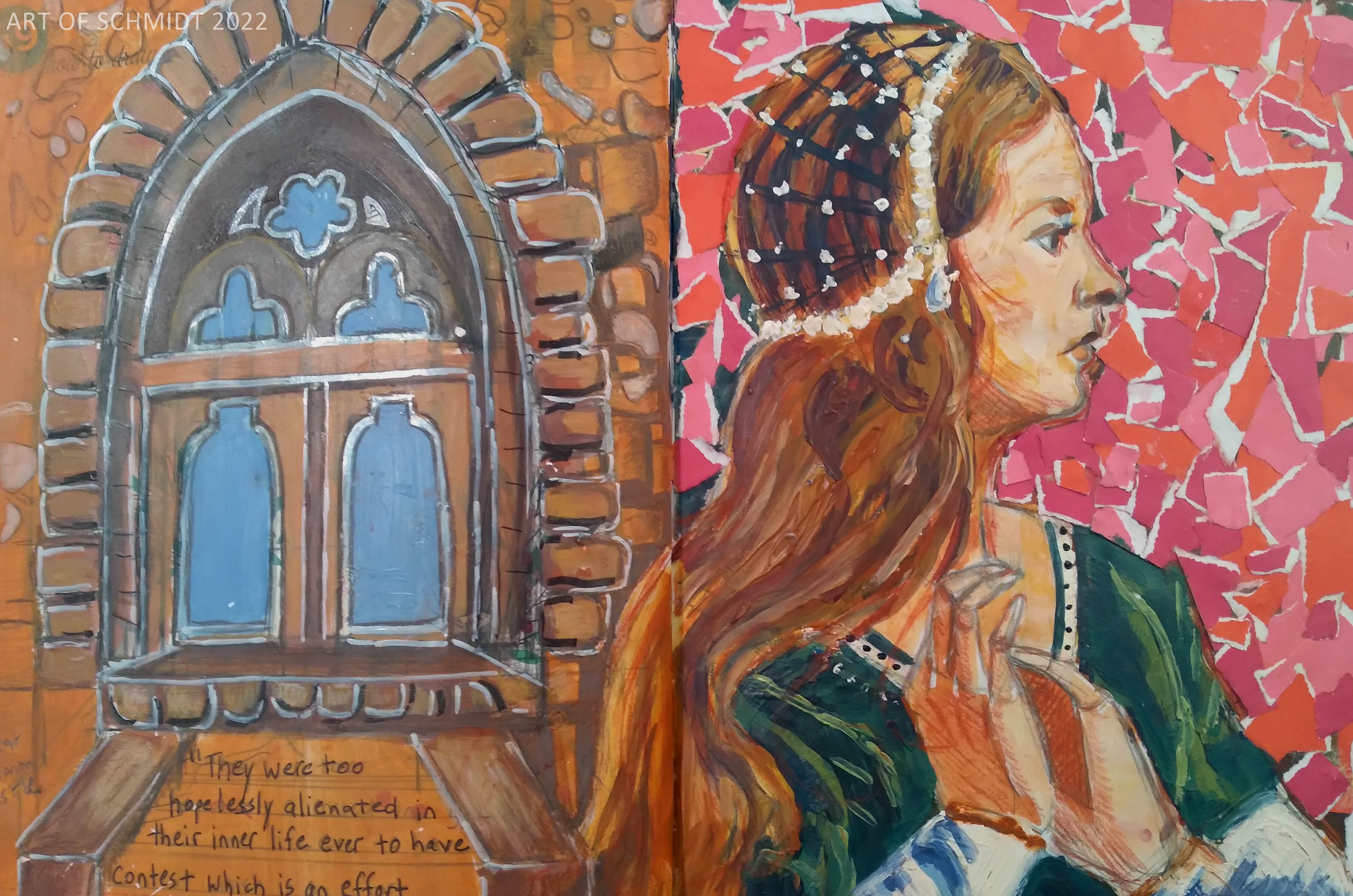
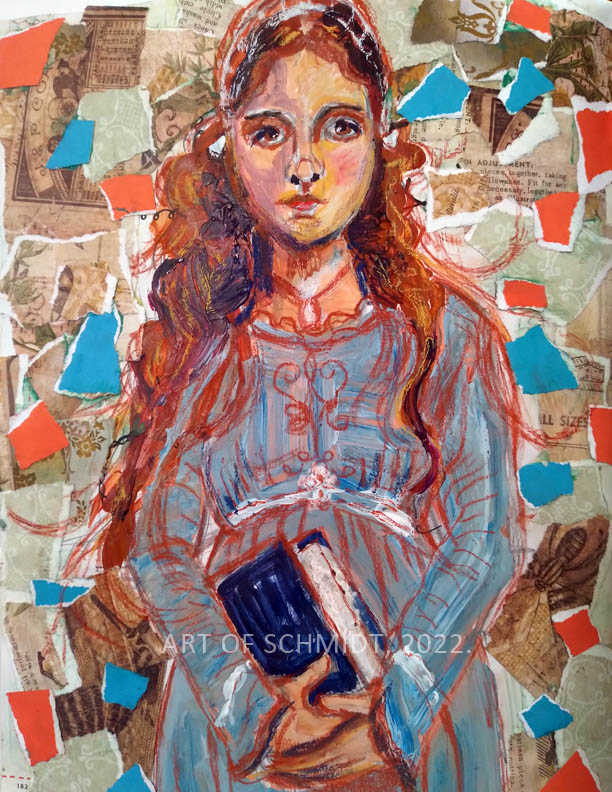
Romola Illustration with Lillian Gish, Mixed Media, Jodie Schmidt, 2022.
I recently read a forum question on the website, Wet Canvas.com, and the question of the day was,” When should I stop working on a painting? I was intrigued by the question, and wondered how other artists dealt with paintings that can “look like a dog’s breakfast.” I read about a variety of solutions suggested by artists who had hit the wall creatively. Some were familiar to me, like my tendency to put the painting away and stop looking at it for a few days, weeks, months, or even longer. Others were not as familiar such as putting the painting somewhere where you can see it, such as on an easel in a living room, and then taking time to look at it from time to time to diagnose the problem. Another favorite technique is to write a list of things I want to change in the painting, be it the drawing, colors, value, edges, etc. In my case, some of the artwork I have abandoned was started about two years ago, and I am just now starting to look at the sketches and Photoshop files.
This week I took some time to work some more on my acrylic painting, Waiting: Creative Block. I realized that there were several things bothering me about it. The colors and values, and composition were some of the biggest glaring errors. I am realizing there are many reasons why this painting series of poetry illustration works have been abandoned. One of which was being too busy with other things to give the series the proper amount of time it requires to get things right, such as the composition and the drawing. Since I dropped out of the Social Work program at Frederick Community College, I do have more time to work on paintings.
And since I have deliberately looked at my schedule e and started marking studio days on the calendar, I have more “intentional “time. But I am also realizing just how hard this series is, as I am making some paintings almost entirely from scratch by combining different photo references in Photoshop and then drawing and painting them, with this technique, I do not have the luxury of working from reference photos already taken. I have to look for source material and then combine it to make it my own. This project is highlighting areas of weakness in me as an artist, and one of them is composition. I have a tendency to put everything in the middle and don’t often use more unconventional compositional styles. I want to change that and start looking to master artworks to try and broaden my skills in this area.
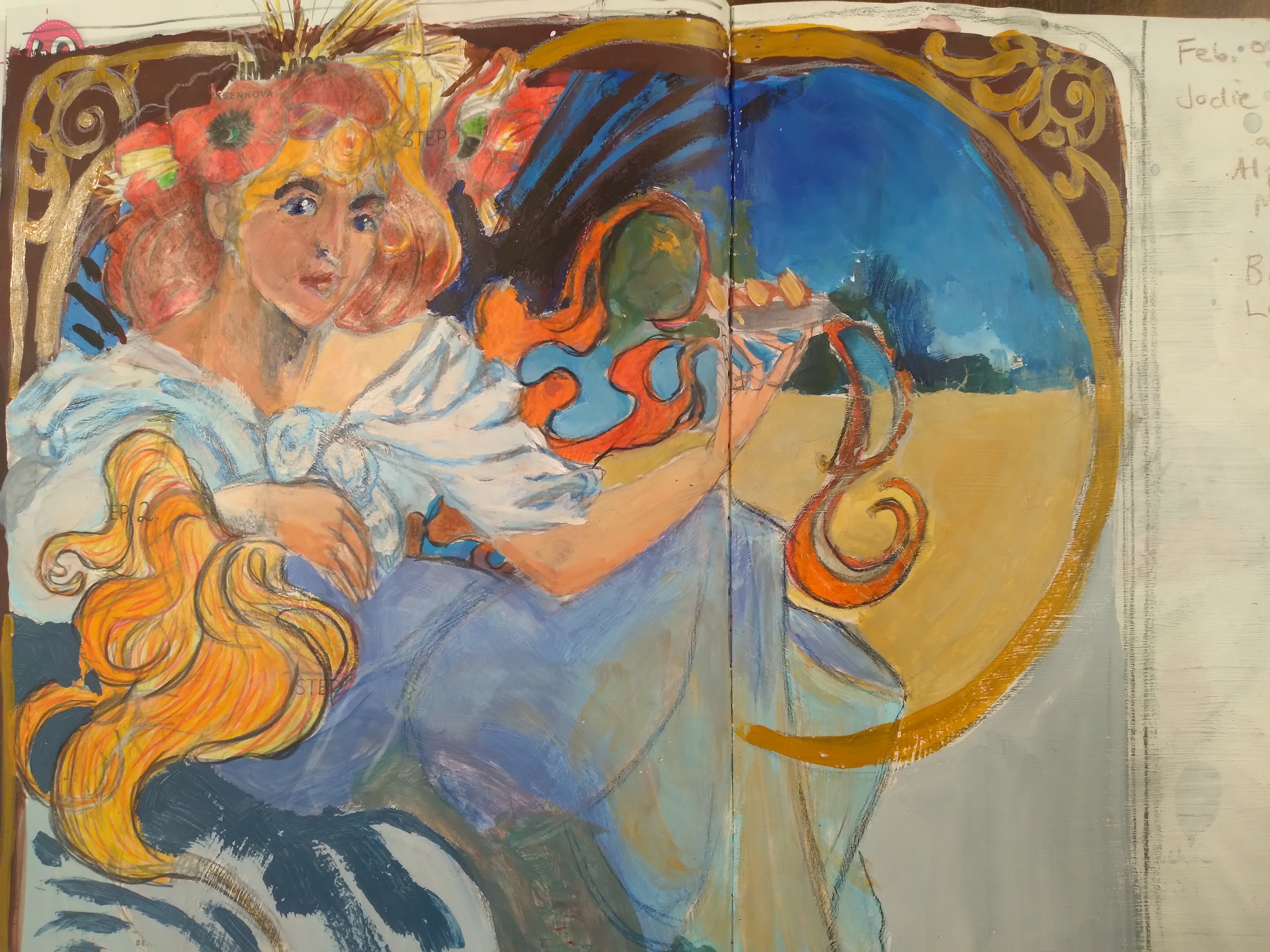
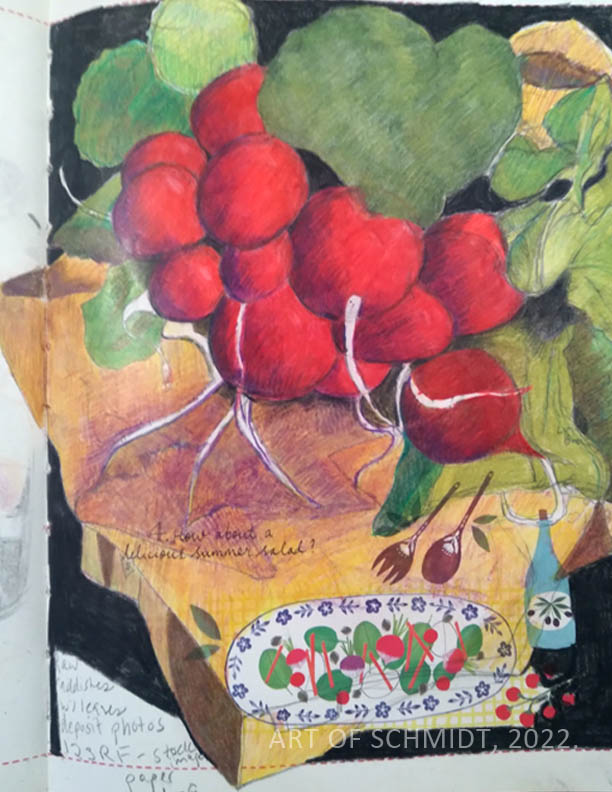
Another great way to improve your painting skills is to draw, yes draw. Regularly and in a sketchbook if you can, as much as you can so that you can practice things like composition, color, proportions, etc. It can also help you see patterns in your work, such as a favorite subject you return to, or a color palette. A sketchbook is also a great place to try out a variety of art media since it doesn’t feel as precious as a large painting can sometimes feel. This week I am featuring photos from my old sketchbook to show just how diverse you can be in art media. I include mixed-media collages and colored pencil drawings. The sky really is the limit with sketchbooks!
Lillian Gish as Romola, Mixed Media, Jodie Schmidt, 2022. Jodie Schmidt, After Alphonse Mucha, Mixed media, 2022.Fruit Bowl Drawing, Colored pencil, Jodie Schmidt, 2022. Radishes with paper bag, Colored Pencil, Jodie Schmidt, 2022.
Have you ever wondered what makes the four seasons so unique? Find out by taking my pastel class, The Four Seasons at the Delaplaine Art Center this April! Pastel is a very forgiving art medium that allows you to combine the qualities of painting and drawing with vibrant color! Best of all, no drying time is required and few supplies are needed to get started! To learn more, visit http://www.delaplaine.org.
Artists: What kind of Artist Are You-Amateur, Hobbyist, or Professional?
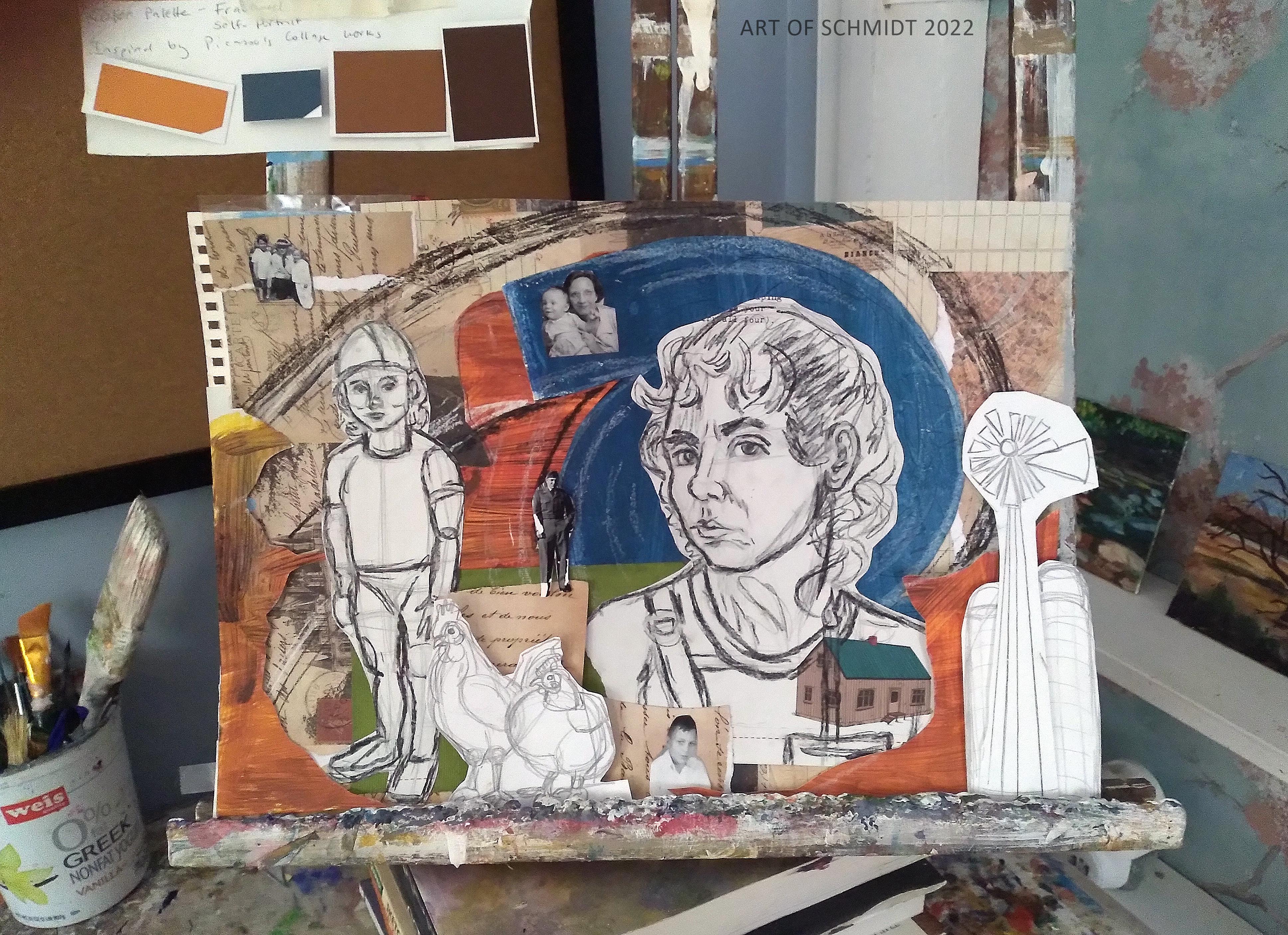
My Biography, Mixed Media, 2022, Jodie Schmidt.
Pictured is a work in progress, which I plan to use to advertise my upcoming mixed media narrative course at the Adams County Arts Council in Gettysburg, PA.
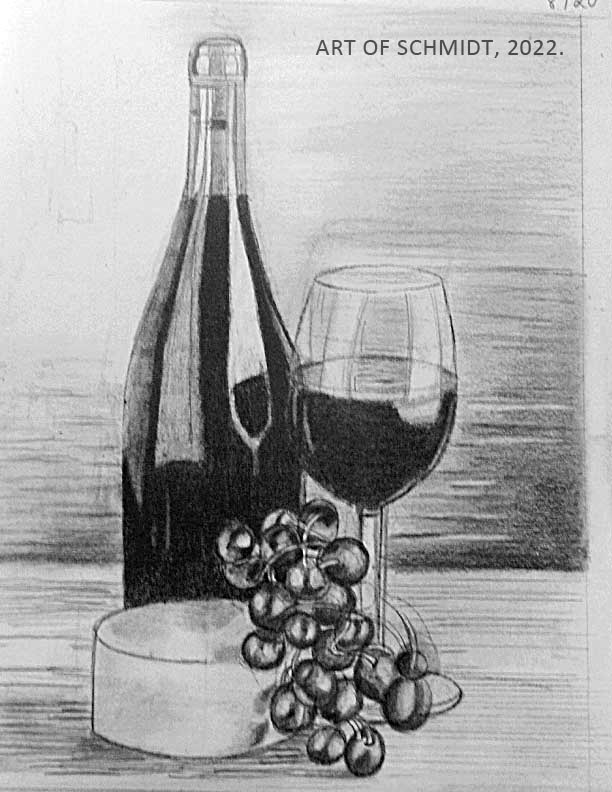
Wine and Cheese, After Steven Pearce, pencil on paper, 2022, Jodie Schmidt.
This is an example of a final project for my Classic Drawing course, which focuses on teaching beginners the fundamentals of drawing, such as line, shape, and form as well as shading techniques to simulate a variety of textures in still life. I will be offering this course in April at the Delaplaine Art Center April! Visit: https://delaplaine.org/class/?id=22-4-DR02 to learn more!
My Rendition of Monet’s Haystacks, Pastel and acrylic on paper, 2021, Jodie Schmidt.
Here is a photo of a mixed media piece from my course, Drawing Calm: A mixed Media survey, which will be offered again at the Delaplaine Art Center in April of this year. Click on the link to learn more: https://delaplaine.org/class/?id=22-4-DR03
Wooded Road, After Nathan Rohlander, soft pastel on paper, 2020, Jodie Schmidt.
This is a sample of the demonstrations which I plan to teach in my Continuing Landscapes course at the Delaplaine Art Center in Frederick, MD this April! Click here to learn more: https://delaplaine.org/class/?id=22-4-DR04.
Why I decided to Write about Artist Types
It’s been a while since I last posted on this blog, and I have debated off and on within myself, whether to continue blogging about the series I started in May called and famous failures. However, at the end of the day, I decided that I would switch gears and write about a more arts-based topic. Instead, I decided to examine the topic of different artist types and the pros and cons of each type. It’s my belief that there is no superior type of artist, and that it is all about what type works best for you. However, I do think that it takes a very unique person to be able to combine the roles of both artist and entrepreneur.
In my opinion, such individuals must be extremely dedicated to making art their life’s work, no matter what it takes, or how much time they have to invest in learning their craft and other business skills to make a profit. On the contrary, not every artist has that sort of drive or wants their art to be consumed by the public as a commodity. Perhaps for some, art is an outlet for their feelings and experiences and they would rather keep that private, which is perfectly fine. Meanwhile, there are other artists who find themselves somewhere in the middle between hobbyists and amateur artists. These artists, sometimes called, “double jobbers,” want to take their art to a more professional level, but also work a day job, such as the British artist described in the article, “The Double Jobbers, Making a Living into eh Arts, by Kathy B. Sweeney, posted on The Guardian, https://www.theguardian.com/culture/2012/jul/29/living-working-in-the-arts. Consequently, they are not pressured to make a living from their art.
On the other hand, there are artists who cannot imagine doing anything else with their lives and spend almost all of their time marketing and making their artwork, such as Elizabeth St. Hillaire, Kelly Wynne, and many others. The three types of artists which I will discuss in this blog post are hobbyist, amateur, and professional artists, along with the pros and cons of each type.
Why is it important to know what type of artist you are?
I picked this topic because I have been wrestling with the question about what category I fall into as an artist: Amateur, Hobbyist, or Professional? In my opinion, it’s important to know which category of artist you fall into because there are specific actions that you need to take if you want to go beyond making artwork for pleasure and start making it with a business mindset. According to the author, Alyson Stanfield, who wrote the art business book, I’d Rather Be in the Studio, it is not enough just to make art, you need to learn about how to market and sell your art, as well as to sharpen your artistic skills and creating a specific body of work that showcases your unique style as n artist. (Sources: Artwork Archive, “Alyson Stanfield Shares Her 10 Best Marketing Tips,” https://www.artworkarchive.com/blog/alyson-stanfield-shares-her-10-best-art-marketing-tips, accessed on 06/14/18, and Alyson Stanfield, I’d Rather Be in the Studio!, preface, pg. 1, 2008, Pentas Press, Golden. Colorado, and Aletta de Wal, “Hobbyist, Amateur or Profefessional Artist: Which Are You?” http://emptyeasel.com/2011/02/01/hobbyist-amateur-or-professional-artist-which-are-you, accessed on June 6, 2018. )
My Journey as an Emerging Artist
After my father died in 2011, I realized that I wanted to make the most of the time I had left. I wanted to live without regrets about pursuing art to the highest extent possible. For as long as I can remember, it has been my dream to be an artist. In fact, my grandmother reported in her scrapbook that I began drawing at the age of 3. When I first started making art with the intention of selling it, back in 2011, my catalyst for making art was that I needed an avenue to express my grief.
Deciding what level of involvement in art that I want to have in my life has modified my choices and informed my decisions about my career, how I spend my time, and how I spend my money. I’ve gone from being a wide-eyed dreamer of a someday art career, as an art student, who lived amongst the bubble of the art community, to living life after college with all its startling reality. This world I now live in includes: bills, student loan debt, working as much as I can on my art while balancing a night job, experiencing frequent rejections for art shows, and feeling unrelenting and crushing self-doubt about my abilities as an artist. I feel I have been drifting without many purposes in my quest to be a professional artist, and it’s making me wonder whether this is the life I really want.
Making the Jump from Hobbyist Artist to Amateur Artist
In more recent years, I have really stepped up my activity to bring my art to a more professional level, such as: creating profit and loss sheets in Excel, designing an art catalog of inventory, launching an artist website, blogging about art, participating in more frequent art shows, hosting studio sale events at my home, producing custom art, and starting commerce shops on Etsy and Red Bubble, etc. However, all of this activity has been challenging and sometimes disappointing. It seems to me that no matter how hard I try, I am still struggling to sell my art consistently. I have also made efforts to connect with people on a personal level through writing blog posts, and producing artist newsletters.
However, I am still not making a profit, and instead, I find myself falling into debt to pay for framing, art supplies, and marketing expenses. Even more importantly, I feel I have lost the joy of making art in the midst of all this business-related activity. Consequently, I’ve had severe doubts about whether I want to be a professional artist, because of the amount of work, time, emotion, skill, and unflagging confidence a professional artist must have to survive. I wonder, are any other artists are struggling with this situation? And I’m also asking myself, do I really want to be a professional artist, or not? If not, then what type of artist do I want to be?
Since writing this post, I am now adding a new dimension to my identity as an artist, as a teaching artist, and I now teach art classes at Delaplaine Art Center, Frederick Community College, and the Adams County Arts Council. This new role, which I began in 2019, has informed my studio practice in a way that challenges me to keep learning new skills, and techniques so that I have fresh new content to offer my students and to inspire my own personal work, which is becoming more and more content-based, i.e. art that is meant to be a personal expression of my thoughts, memories, poems that inspire, etc. My favorite new place to continue my education as an artist and teacher is youtube, which is chock full of free art tutorials, such as The Virtual Instructor, Rapid Fire Art, and my favorite pastel artist, Karen Margulis, to name a few! To learn more about my current class offerings in pastel, mixed media, and drawing, please visit www.delaplaine.org. I am also working on a new art course about mixed media narratives at the Adams County Arts Council. I will update that information as soon as it becomes available.
What are some Specific Types of Artists?
To investigate and to define the different types of artists that anyone can be, I read an article entitled, “Hobbyist, Amateur, or Professional Artist-Which are you?” written by Aletta de Wall on the website, Empty Easel, at http://emptyeasel.com/2011/02/01hobbyist-amateur-or-professional-artist-which-are-you. The author, De Wall, states that there are three categories of artists and they are: Hobbyist, Amateur, and Professional and that each type is distinctly different. (Source: ibid)
The Hobby Artist
For example, hobby artists are not trying to make a living from their art, and they may only make art when the creative bug bites. (Source: ibid) In addition, hobby artists may study for many years and hone their craft by taking classes and workshops, but they may not ever receive the recognition that their work deserves because they are not taking actions that would promote their art effectively, such as having a business or marketing plan. (Source: ibid) On the other hand, an advantage of being a hobby artist is that there is no pressure on them to cater to a specific audience or make a profit, so they are free to experiment with a variety of media and subject matter and styles and techniques. They may also have more time to make art because there is no imperative to make a profit and engage in business-related activities such as marketing, bookkeeping, or sales.
The Amateur Artist
Another category of artist types is an amateur artist. This type of artist has started to play with the idea of making their art into a profession. (Source: ibid) Perhaps they have started to think that they need to start selling their art to help foot the bill for their art supplies and to start being able to deduct their art expenses from taxes. (Source: ibid) An important distinction between hobby artists and amateurs is that amateurs are willing to give up their personal time in order to learn how to sell their art and create new works. (Source: ibid) However, they may be uncertain about how to turn their passion into a viable business. (Source: ibid)
The Professional Artist
Finally, the last category of artists that this article discussed is professional artists. This type of artist is distinguished from the other two types of hobby artists and amateur artists because they consider art to be their profession. (Source: ibid, and Drew Kimble, “9 Warning Signs of an Amateur Artist,” https://skinnyartist.com/9-warning-signs-of-an-amateur-artist, accessed on June 7, 2018. )
These types of artists want to make a profit from their art, build a following, and continue to build their business skills at the same time. They have an intense level of dedication for their art and are willing to sacrifice time, money, sleep, and do whatever it takes to make a profit. (Source: ibid, and Drew Kimble) They might work another day job to help support their business or eventually quit their day job when they are able so that they can devote more time to making art and learning how to sell it.
Other activities that they engage in are: making studio time a daily habit, applying for grants, writing artist newsletters, submitting their artwork for review at galleries and art fairs, writing business plans, extending their knowledge of effective business practices by attending art business workshops, etc. (Source: ibid, and Hayley Roberts, “Twelve Things No One Ever Tells You About Being An Artist,” The Huffington Post, https://www.huffingtonpost.com/hayleyroberst/twleve-things-no-one-tell.html. accessed on June 7, 2018.) They also promote their artwork online and offline through social media, their artist website, and in real-life artist events, such as art gallery openings, art festivals, etc. (Source: ibid)Some may also make a living by teaching their craft to others. (Source: Aletta De Wal, “Hobbyist, Amateur, or Professional Artist-Which are you?”, and Hayley Roberts, “Twelve Things No One Ever Tells You About Being An Artist,” ) .
These artists may receive more recognition for their artwork, but they may also experience more criticism and rejection than the two other types because they are more aggressively pursuing art gallery representation, etc. In addition, they may have less time for making artwork because they have to balance making art with business-related duties. Furthermore, they may struggle to sell their art or make consistent income and they may face stiff competition from other artists because it is such a saturated field. It is a long road for these artists towards building a following and making a success from their art, but they are dedicated for the long haul. (Source: Drew Kimble, “9 Warning Signs of an Amateur Artist,” https://skinnyartist.com/9-warning-signs-of-an-amateur-artist, accessed on June 7, 2018. )
What about You? What Type of Artist are you?
So what about you, reader? What type of artist are you? I would love to hear about your dreams and hopes with regard to making art. Thanks for taking the time to stop by and read this. Next week, I will be talking about this topic of artist types in more detail, with a slight twist. The twist will be a more in-depth look at what it really means to be a professional artist and why it has been traditionally so difficult to be successful in this field.
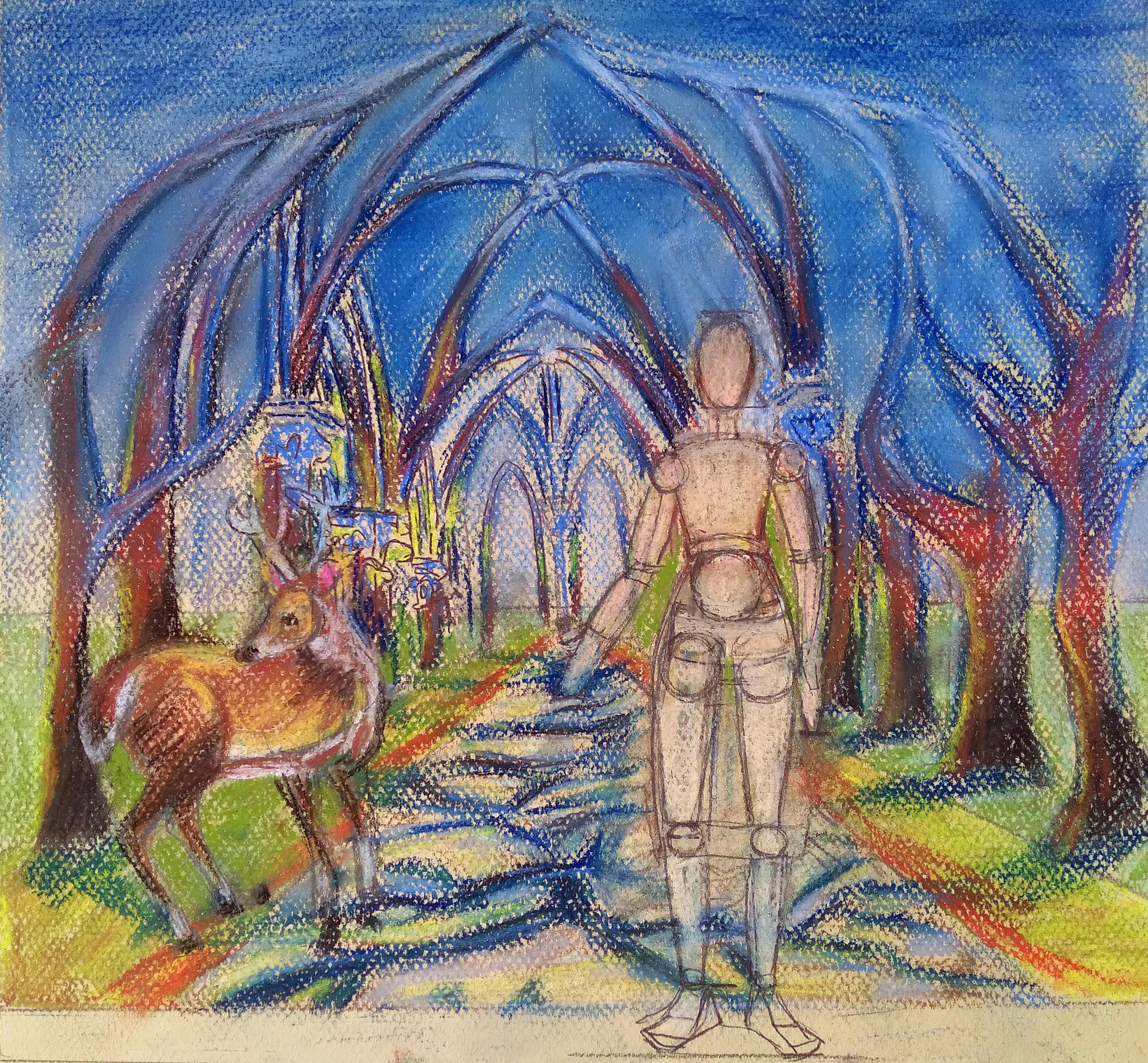
This spring I will be teaching three courses at the Delaplaine Art Center, in Frederick, MD. Here are samplings from my Classic Drawing Course, Drawing Calm: A Mixed Media Survey, and Landscapes in Pastel. Click here to learn more: https://delaplaine.org/instruction/classes-workshops/drawing/.
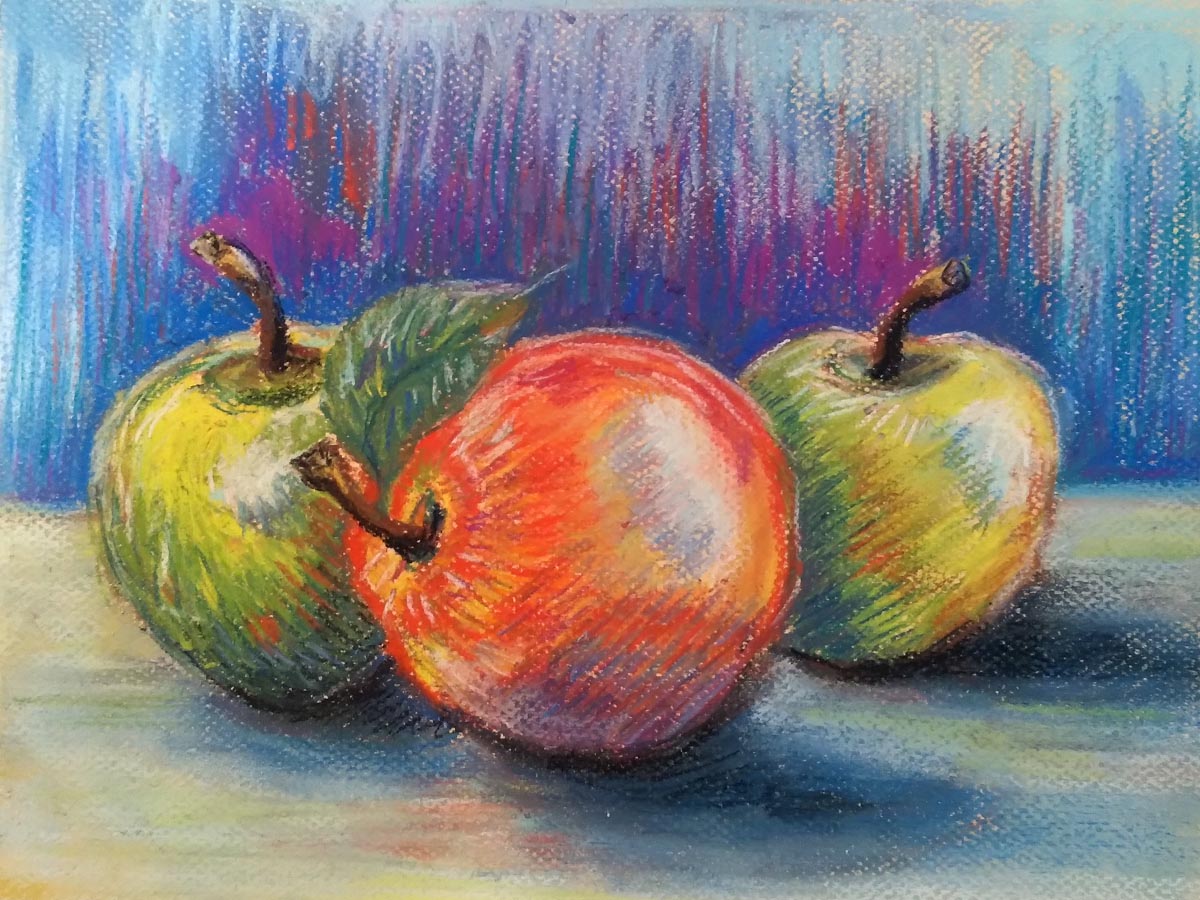
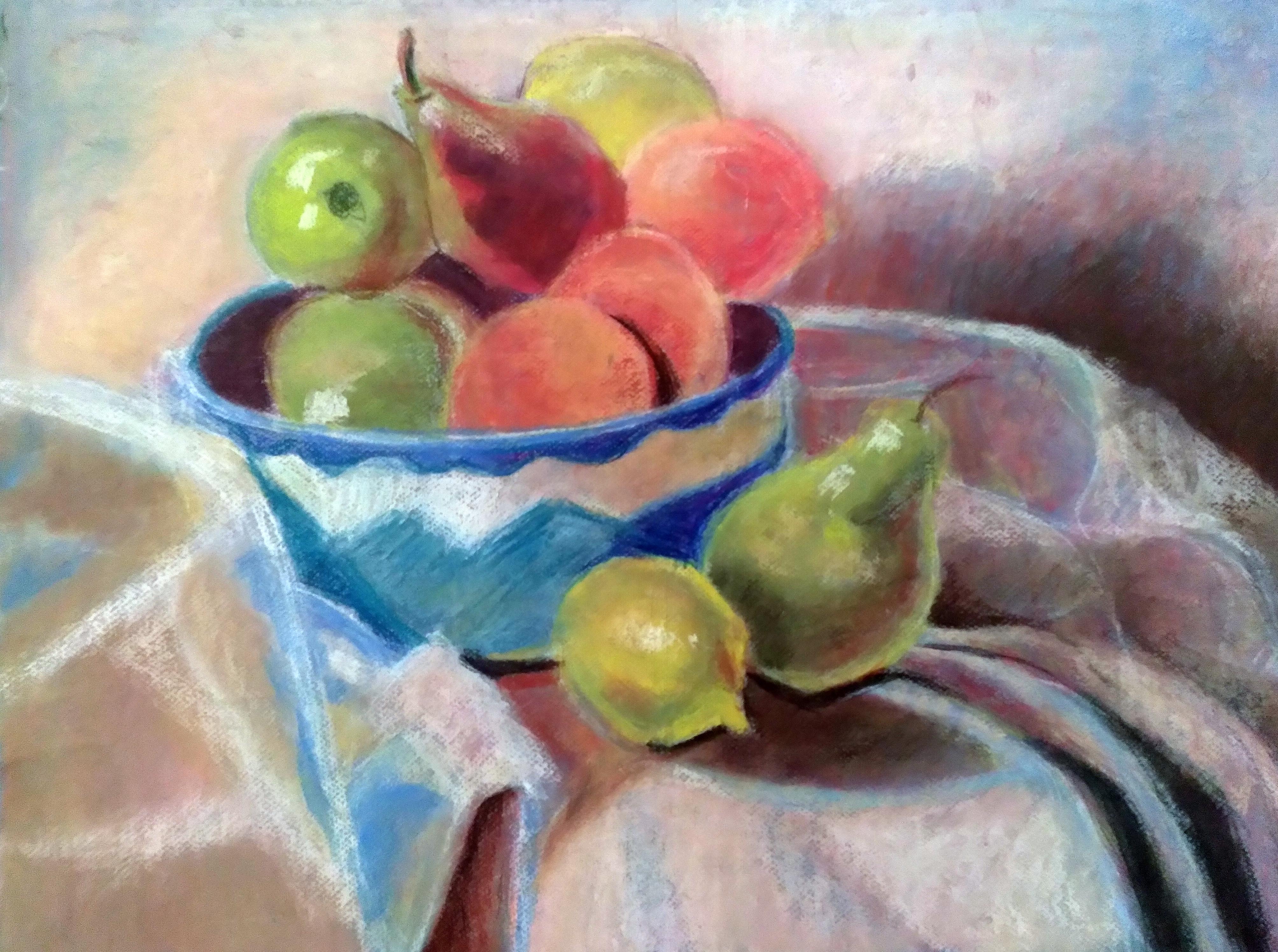
Have you ever wondered if there is a way to combine drawing and painting into one art medium? There is, and it’s called soft pastel! This medium allows you to combine the linear effects of drawing with the brilliant color and depth you can get with oil and acrylic painting! This wonderfully flexible media was used by Impressionist artists to great effects, such as Degas, Mary Cassatt, and many others! Join me this winter at the Adams County Arts Council in Gettysburg, PA to begin or continue your creative journey! Click the link to learn more: https://www.adamsarts.org/portfolio-item/introduction-to-pastel/.
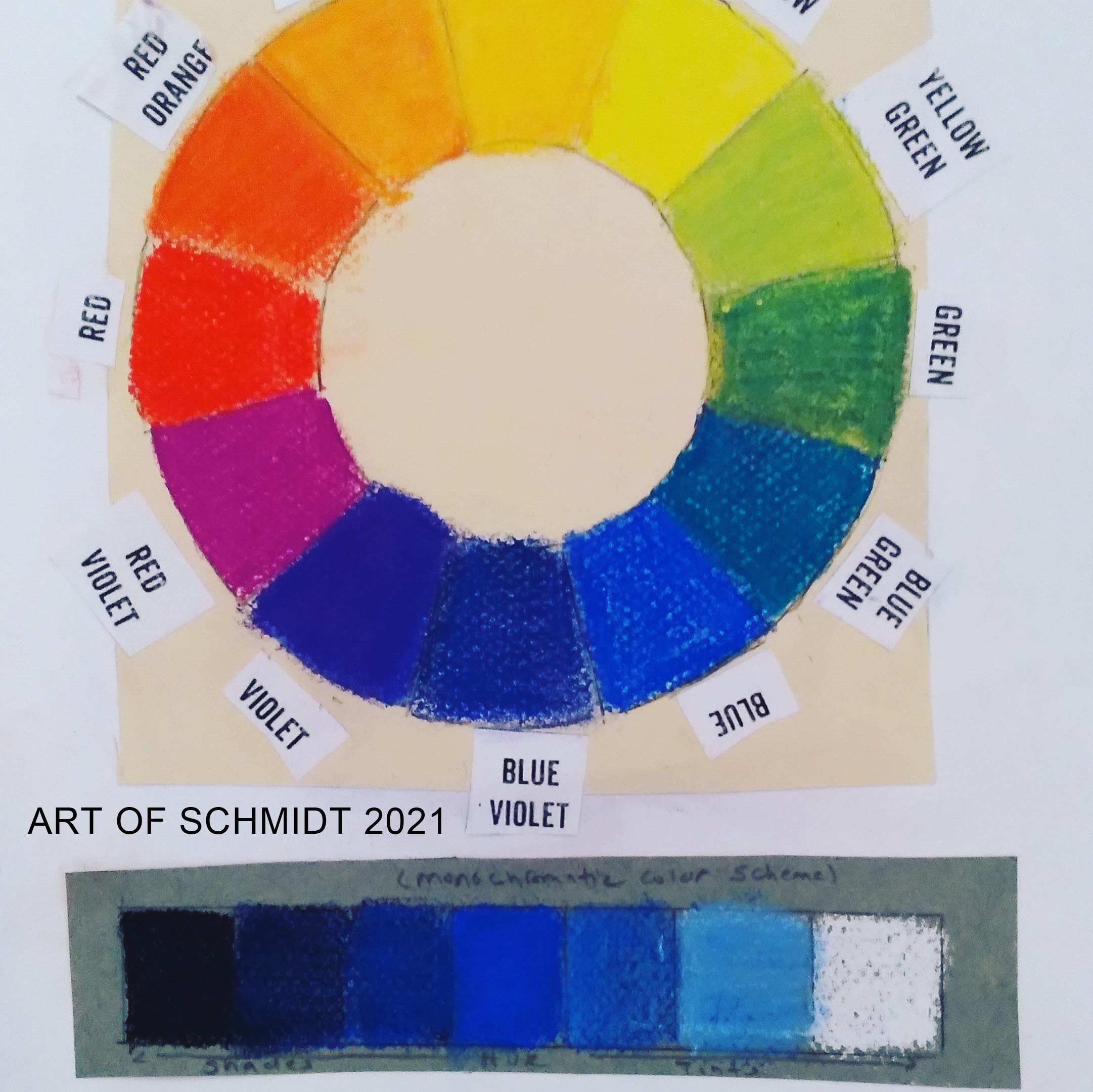
Today I am blogging about an introduction to the color wheel and how artists can use it to choose an effective color combination. Since last week, I have been consulting a reference book entitled, Color is Everything, by Dan Bartges. I wanted to try out some various color schemes for my Biographical Portrait of Sting, which I posted about in last week’s Sketchbook blog post. After consulting the book about possible color schemes, I tried out two versions of a tetrad color scheme; one is described on pg. 35, and consists of oranges, reds, and greens, while the other color combination includes blue-greens, red-oranges, yellow-oranges, and blue-violets and is described on page 36. But before I get into the definition of tetrad color schemes, I would like to give a short overview of the color wheel and how it can improve an artist’s artwork.
According to the article, “Color Psychology: The Emotional Effects of Colors”, retrieved from www. art therapy blog.com, the color wheel displays the three primary colors and its secondaries, and the twelve colors which are included on the color wheel are yellow, yellow-orange, orange, red-orange, red, red-violet, violet, blue-violet, blue, blue-green, green, and yellow-green. The most important colors displayed on the color wheel are red, yellow, and blue, from which you can mix almost any color. (ibid) However, this concept should be considered in a theoretical context, because paints do not necessarily contain only one color. (ibid) In fact, paints often contain traces of other colors which can affect the final outcome of color mixtures, towards a warmer or color tone of a specific color. (ibid) Some colors that you can mix from the two primaries include: yellow + red= orange and red + blue= violet.
According to the author, Bartges, a triadic color scheme utilizes three colors which are equidistant from each other on the color wheel, and these colors create “a strong, triangular relationship.” For example, a commonly used triadic scheme for landscapes includes: green, orange and violet. And the “most visually powerful triad is red, yellow and blue, which are called the primary colors. In my upcoming courses, I will be instigating color in a variety of media such as pastel, collage, watercolor, etc. Starting in April, I will be teaching several art courses where I will be exploring the concept of color in a variety of courses, such as: Landscapes in Pastel, The Four Seasons, and Drawing into Calm: A Mixed Media Survey Course, at the Delaplaine Art Center. To learn more, visit: https://delaplaine.org/. You can register for the classes on their website by going to the instruction link, and then going to the classes and workshops link. Thanks for stopping by!
I am back to teaching after several months’ long breaks. This month I will be teaching a beginner class about soft pastels. I will guide you through the basic elements of art such as value, color, and shape to show you how all these elements form the building blocks for success in your own artwork! Class size is limited, register as soon as possible at: https://www.adamsarts.org/classes/. The course starts on: February 23rd, 2022.
Have you ever wanted to paint like an Impressionist artist? Come join me at one of my pastel classes this winter! I will be teaching at two locations, at the Delaplaine Art Center in Frederick, MD, and at the Adams County Arts Council in Gettysburg, PA. I will teach you how to mix colors and apply techniques such as broken color to create that Impressionist style in your still life or landscape artwork. To learn more, visit either of these websites: Delaplaine Art Center, http://www.delaplaine.org, or the Adams County Arts Council in Gettysburg, PA, https://www.adamsarts.org/classes/.
As an artist, I often hear comments such as, “You’re so talented,” or some variation on that theme, whether it is a comment that is posted online or an in-person encounter. I’ve gotten this remark from friends, family, strangers, etc. And while it is always nice to hear such ego-boosting compliments, I feel the need to pull back the curtain on the mystique of the talented artist’s conception. In fact, when others interpret my completed paintings and drawings as evidence of a natural talent for art, that I was born with, my facility with drawing and painting has been the result of a systematic and long-term method of continuous practice, sometimes on a daily or weekly basis. This process is composed of some of the following ingredients: a strong passion to master drawing and painting skills, bloody-minded determination not to give up on art, and more often than not, failure. Not everything I draw or paint is successful is a masterpiece, and I am learning that that is ok; it is just part of the process of learning.
And perhaps most importantly, I grew up with parents who were very supportive of my pursuit of art education. For instance, my mom was the first one who introduced me to painting when she enrolled me in a watercolor class at the age of 9. I’ve been hooked on making art ever since! In fact, this summer I have embarked on a long-term drawing challenge to improve my drawing skills and I am realizing there is still so much I need to learn, and that I need the discipline to get better at my craft.
With regard to my weekly drawing practice, I have been working on a drawing challenge since June of this year, called, 100 Faces in 100 Days. In this challenge, I practice drawing on an almost daily basis. I focus on sketching celebrity portraits with paper and pencil, keeping the drawings simple so that they can be completed in about 45 minutes. Some days, the portraits seem to come together almost magically and I have very few drawing errors to correct, but, on other days like today, I really struggle to get things right with the portrait measurements. On days such as these, I make a lot of revisions to the drawing, erasing, measuring, and standing back to compare my drawing to the reference photo, until I am happy with the result, or the kitchen timer dings. And this phenomenon is nothing new. As an art student at McDaniel College, I had a lot of ups and downs, with paintings and drawings. Some were successful, others were not.
But, to return to my initial question, does natural talent exist? Although I am not a scholar or even a cognitive scientist, I theorize that many factors play into whether a person is able to show exceptional skill in drawing or painting or any other impressive level of aptitude in a given domain. For example, in specialties such as singing, playing an instrument or sports, etc. I think it is a combination both of one’s environment, (the conditions you grew up with), specific personality traits, such as a strong work ethic, and a strong desire to master a subject, and perhaps, introversion, since the practice of the fine arts and performing arts is often a solitary pursuit. I think if I just relied on my innate talent, (whatever that may mean), I wouldn’t grow artistically, because I would feel that no effort was required on my part to achieve growth. The question of where natural talent comes from has been discussed by Kauffman, (2013), who states that there has been an ongoing debate about whether natural talent exists or not.
Kauffman, 2013, states that in ancient time’s people believed that individual talent was linked to divinity, and that interest in this topic took a scientific turn in the nineteenth century, with the publication of the work, Francis Galton’s Hereditary Genius, which was published in 1869. Source: The Complexity of Greatness, by Scott Barry Kauffman, 2013. For example, Kauffman (2013), states that Galton made a study of “eminent lineages” and based on his findings, he theorized that talent was passed on to families from one person to another (Galton, 1874). According to Kauffman, 2013, Galton also acknowledged the importance of not giving up easily, but he discounted the significance of the environment as a determining factor of personal greatness for the individual, specifically with regard to celebrated scientists. The basis of Galton’s theory was that individuals were born with talent (Kauffman, 2013). On the other hand, Alphonse de Condole, (1873), “a French-Swiss botanist”, made the assertion that environmental factors play a critical role in the creation of exceptional talents, such as political conditions, religion, economic, social, and cultural factors. ( Source: https://blogs.scientificamerican.com/beautiful-minds/the-complexity-of-greatness-beyond-talent-or-practice/) and www.wikipedia.org.
Other theorists, such as the 18th-century painter, Sir Joshua Reynolds, argued that art students should not rely on their talent alone to produce great art, but that they should practice their craft diligently, (Kauffman, 2013). The contention about where skill or natural talent comes from has continued to be debated and studied among Scientists, scholars and researchers even as recently as the 2000s. For example, According to Lynn Helding, author of, Innate Talent, Myth or Reality?, 2011, the topic of greatness was more recently discussed by Psychology Professor, Anders K. Ericsson, who teaches at the University of Florida (Helding, 2011). Ericsson studied both the quality and amount of time it requires for an individual to achieve greatness in a specialty (Helding, 2011). In addition, some of the research he published on this topic was published as recently as 2015, in his article entitled, The effects of experience and disuse on Crossword solving, published in the periodical, Cognitive Psychology. Source: https://psy.fsu.edu/faculty/ericssonk/ericsson.dp.php. His studies into this topic have formed the basis for “the magic number 10,000 for the number of practice hours that it seems to take for anyone (including “so-called prodigies”) to attain a level of mastery at such high-level tasks such as tennis, golf, chess, piano, and violin. This term is also known as “The Ten Year Rule of Necessary Preparation.” (Helding, 2011).
However, since the well known and wealthy author and motivational speaker, Malcolm Gladwell, coined the phrase, “the 10,000-hour practice rule,” he frequently gets the credit for this theory and not Ericsson, or the eleven researchers “whose own deliberate practice, spread over more than a century, provided the data for the theory.” Source: http://scholar.dickinson.edu/cgi/viewcontent.cgi?article=1078&context=faculty_publications. Innate
Talent: Myth or Reality, Lynn Heliding, 2011, Mindful Voice. Journal of Singing 67, no. 4, pgs 451-458.
The question of whether natural talent real continues to be debated on discussion threads in Quora and Reddit, which are some forum-type websites, in which users can type in their questions and get responses to them from other community members. Users ask such as: “Does natural talent exist or are all skills learned?” cited in www. Reddit.com, in 2013. In addition, this question is much like the nature or nurture question, frequently discussed in academic psychology courses. Students and scholars alike have questioned how environment and genetics play a role in determining how an individual, “turns out.”
However, we may never know the exact percentages of how much genes or environment can affect individual outcomes, or even if there is some type of gene that gives people an advantage in subjects such as math, athletics, music, or art. But one thing I know for sure is that I am going to keep practicing and not give up my painting and drawing practice because I want to continue to grow as an artist. What about you? Do you think greatness is a skill that is solely learned by deliberate, ongoing practice or are some individuals born with some type of gene that gives them an advantage others do not have?
On that note of practicing your art, I want to add that I am now teaching two beginner art courses, at the Adams County Arts Council, and at the Delaplaine. The beginner courses I am teaching at the Adams County Arts Council are Classic Drawing and Introduction to Pastel. The first course is for beginning artists or those who want to refresh their drawing skills and focuses mainly on constructing simple shapes and forms. The second course, Introduction to Pastel, combines basic drawing skills such as shape and form and introduces students to color theory and pastel techniques. To learn more, please visit http://www.adamsart.org. I am also teaching a pastel course, Getting to Know Pastels, at the Delaplaine Art Center, in Frederick, MD. It’s the same course like the one at the Adams County Arts Council, but it has a different title. To learn more, visit www.delaplaine.org.
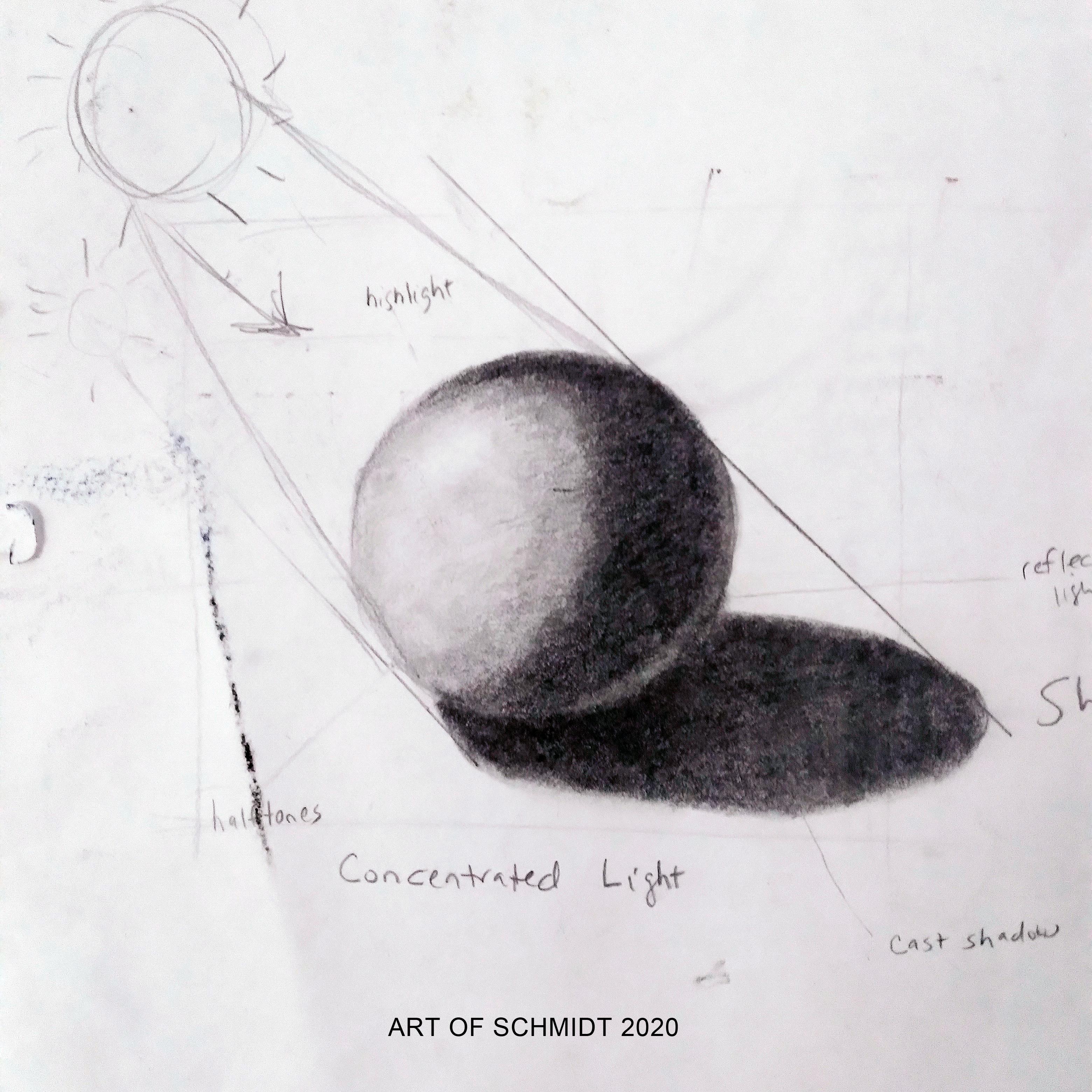
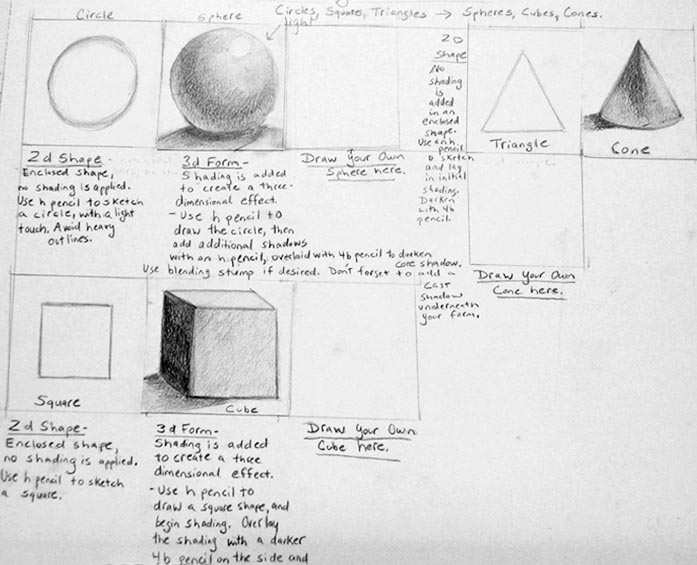
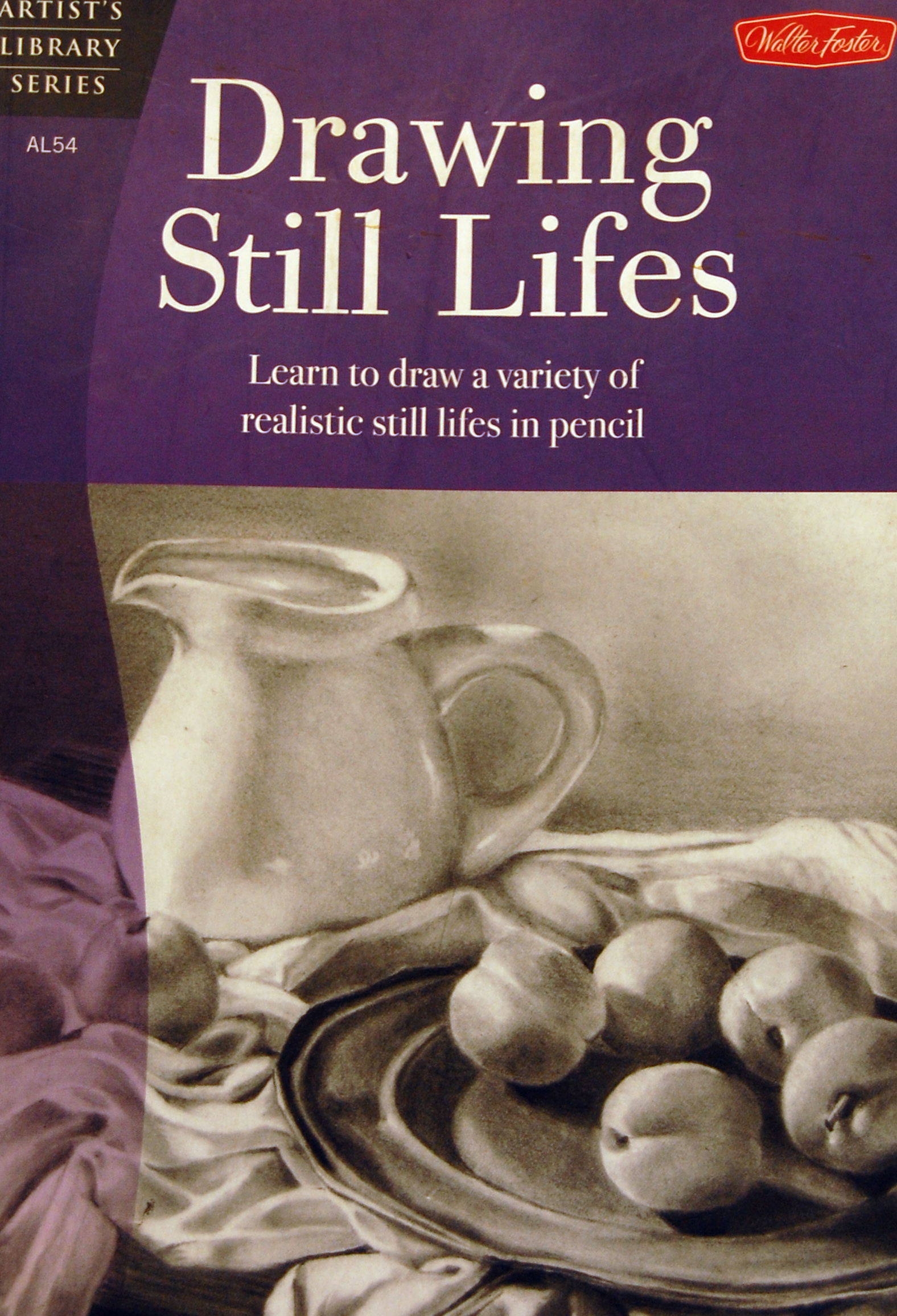
Note: This drawing is a copy I drew based on a sketch created by Steve Pearce in his book, Drawing Still Lifes, published by Walter Foster, 2013, pgs. 8-9. I use it solely for teaching beginner drawing techniques in my Classic Drawing course.Note: This drawing is a copy I drew based on a sketch created by Steve Pearce in his book, Drawing Still Lifes, published by Walter Foster, 2013, pg 7, and also from a virtual art tutorial, How to Shade with Pencil for Beginners, Rapid Fire Art, http://www.youtube.com . I make use of this sketch when teaching my Classic Drawing course to explain how a light source acts upon an object to create value.Note: This is a copy I sketched from a you tube tutorial, Gettin’ Sketchy, 30 Minute Drawing Excercise, Lemon, The Virtual Instructor, http://www.youtube.com. It’s an extra excerise I make available to my pastel students when and if, they ask for a longer demonstration for shading than I can provide in class.Note: This drawing is a copy I drew based on a sketch created by Steve Pearce in his book, Drawing Still Lifes, published by Walter Foster, 2013, pg 23. The wine and cheese sketch is a final project in my Classic Drawing course.
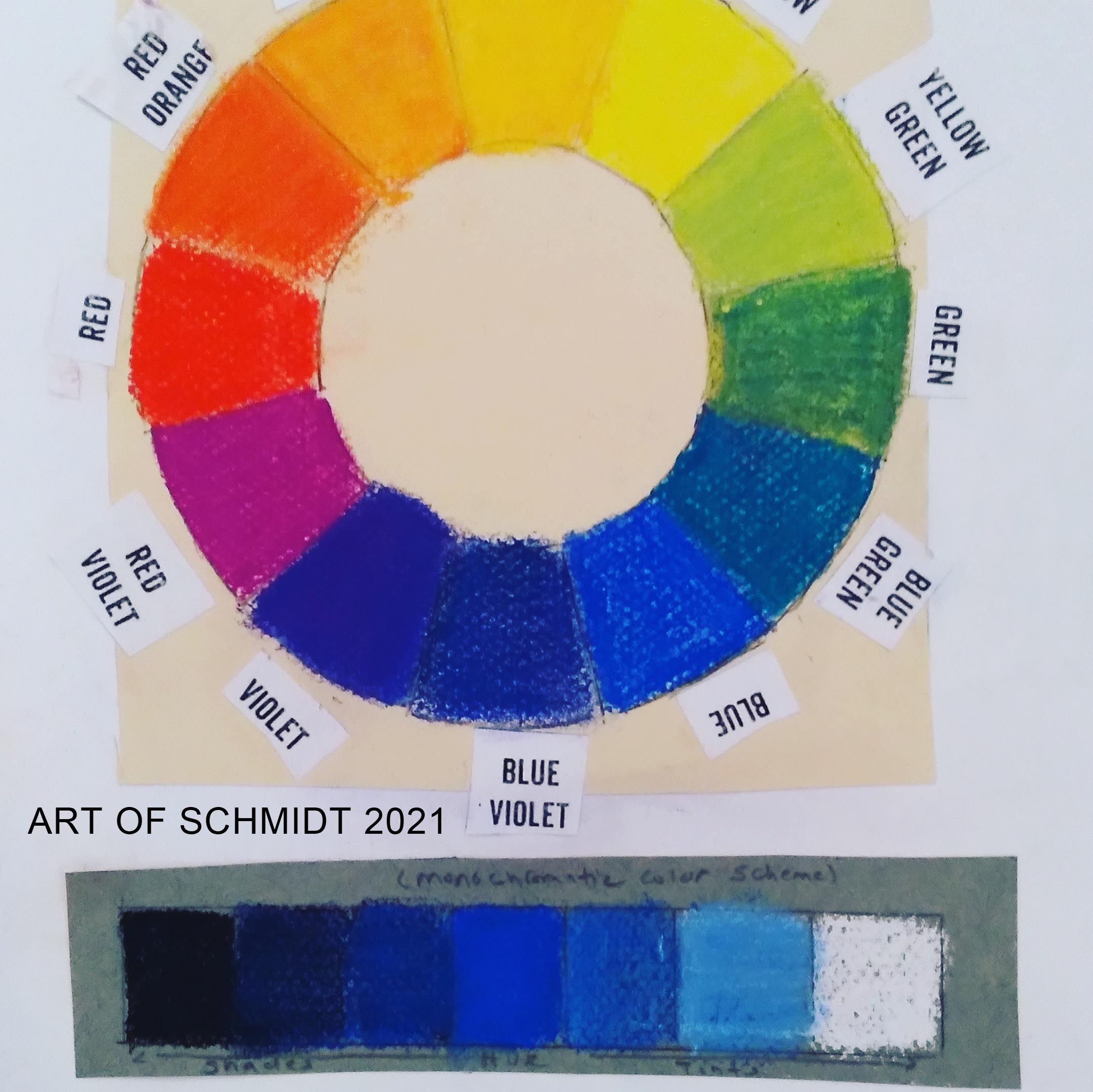
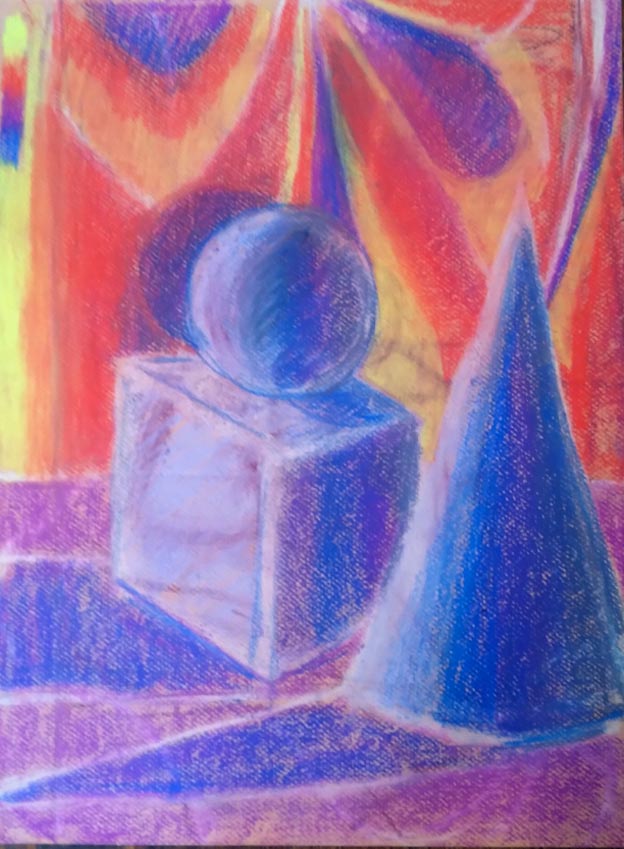
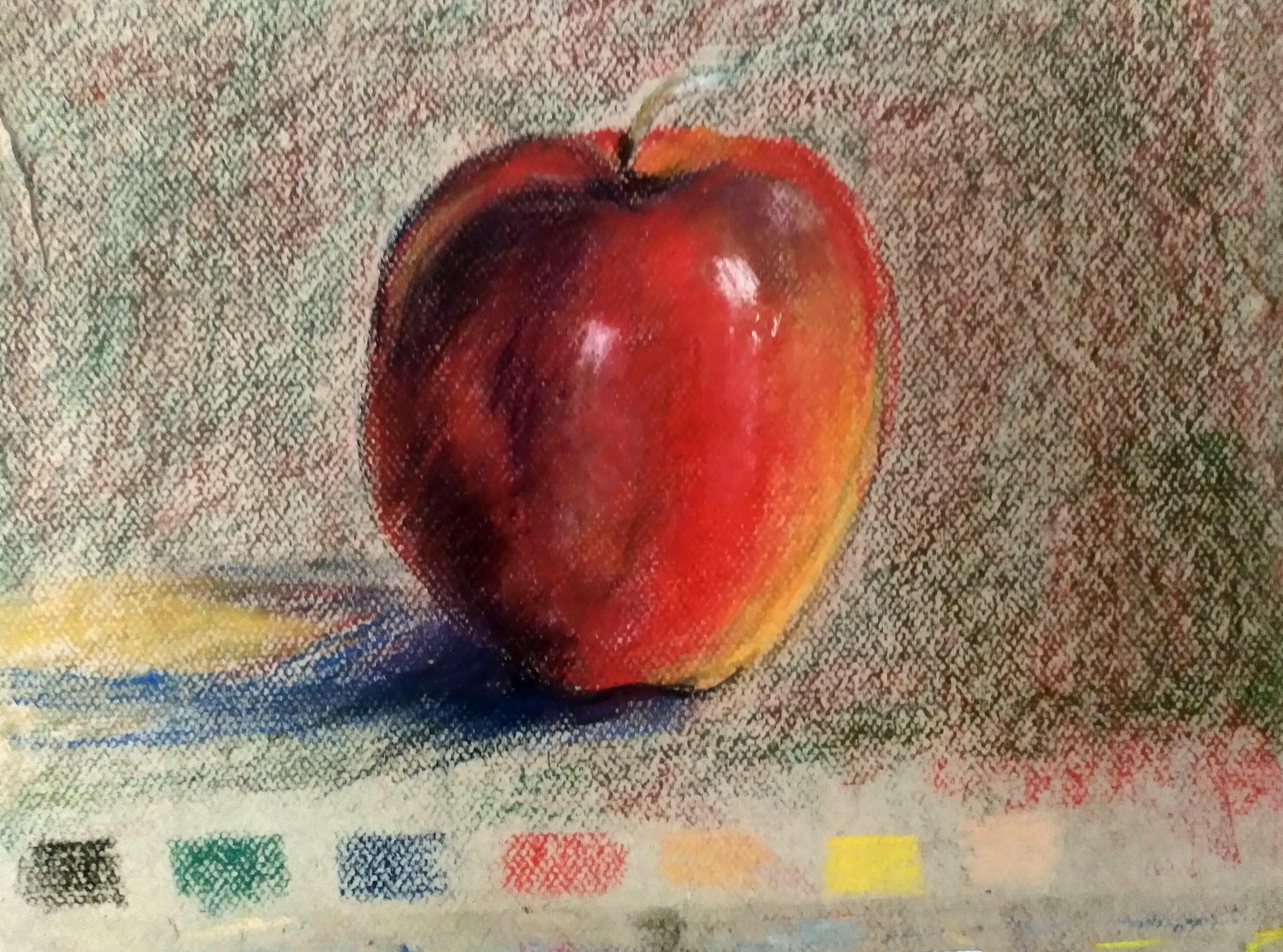
Here is an example of a technique excercise in which I teach students how to shade a sphere with blending and linear marks. It is from the beginner pastel course, Getting to Know Pastels. It’s based on several different books, one of which is from a favorite text, Enclopedia of Pastel Techniques, by Judy Martin, 2018.Here is an example of a technique excercise in which I teach students how to shade with a monochromatic value scale, (one color plus black or white to modify it), using soft pastels and pastel paper ,and how to mix colors in a color wheel. These excerices are from the beginner pastel course, Getting to Know Pastels.
About a century ago (well I exaggerate a little); I was a college student studying art at McDaniel College in Westminster, MD. I had a brilliant and successful art teacher named Steve, who demonstrated how the practice of art-making and the hatching of new ideas could be brought to life. He taught me many useful things, such as how to keep an art sketchbook pasted with photos of artwork by artists I admired, and how to write about my art in a way that expressed my unique artistic voice. Above all, his most important advice was that I should draw every day. At the time, that task seemed quite difficult. I was always an impatient artist as a student and I often rushed through the drawing stage to hurry up and get to the painting, the “good part.” Now that many years have passed since my graduation from McDaniel, I can truly see the wisdom of his advice.
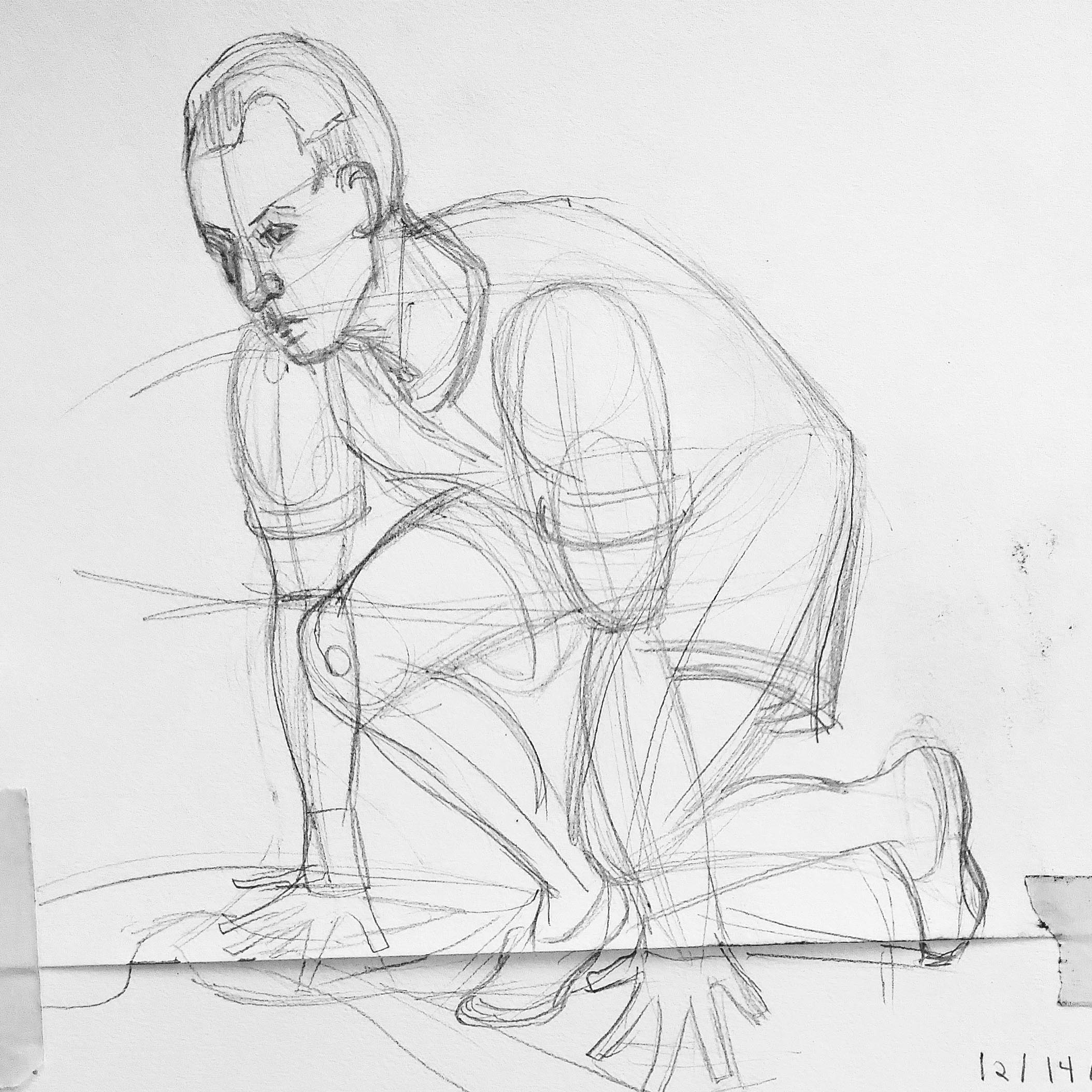
With hindsight, I realize that he was so right about drawing every day. I no longer rush artwork and I have learned to love drawing, whether it becomes a painting or not. In fact, I have embraced his advice of a daily drawing habit and I have worked on several art challenges for both human portraiture and pet portraits on my Instagram account. One of these challenges is called 100 faces in 100 days, in which I drew a pre-selected photo of a celebrity using only pencil and paper. I did not add in a lot of detail or shading and I limited myself to 45 minutes a day. My latest art challenges were in October, in which I participated in Inktober, and also in December when I challenged myself to draw figures and portraits every day for about 3 weeks, with a pencil or whatever other media I felt drawn to use for the challenge.
The most important takeaway I can say about drawing and getting good at it is that it really helps your art practice to flourish. For instance, once you have the drawing and composition mastered, you can enjoy the next step more fully, whether it’s collage, painting, or some other art form such as graphic design or sculpture. With an accurate drawing, you won’t have to worry about continuing to fix it and can fully embrace your next steps.
In conclusion, I am currently preparing myself to teach a beginner’s drawing course at the Adams County Arts Council in Gettysburg, PA this winter, and the drawing practice has been great practice. To learn more about the course, Classic Drawing, please visit http://www.adamsart.org. I am realizing just how fundamental those drawing techniques of using basic shapes and practicing observing what I see, whether it’s a photo or a real-life object, are so important for accurate drawing. Here are some examples of the drawing exercises and projects I have been working on to prepare for this class. Enjoy! Thanks for reading!
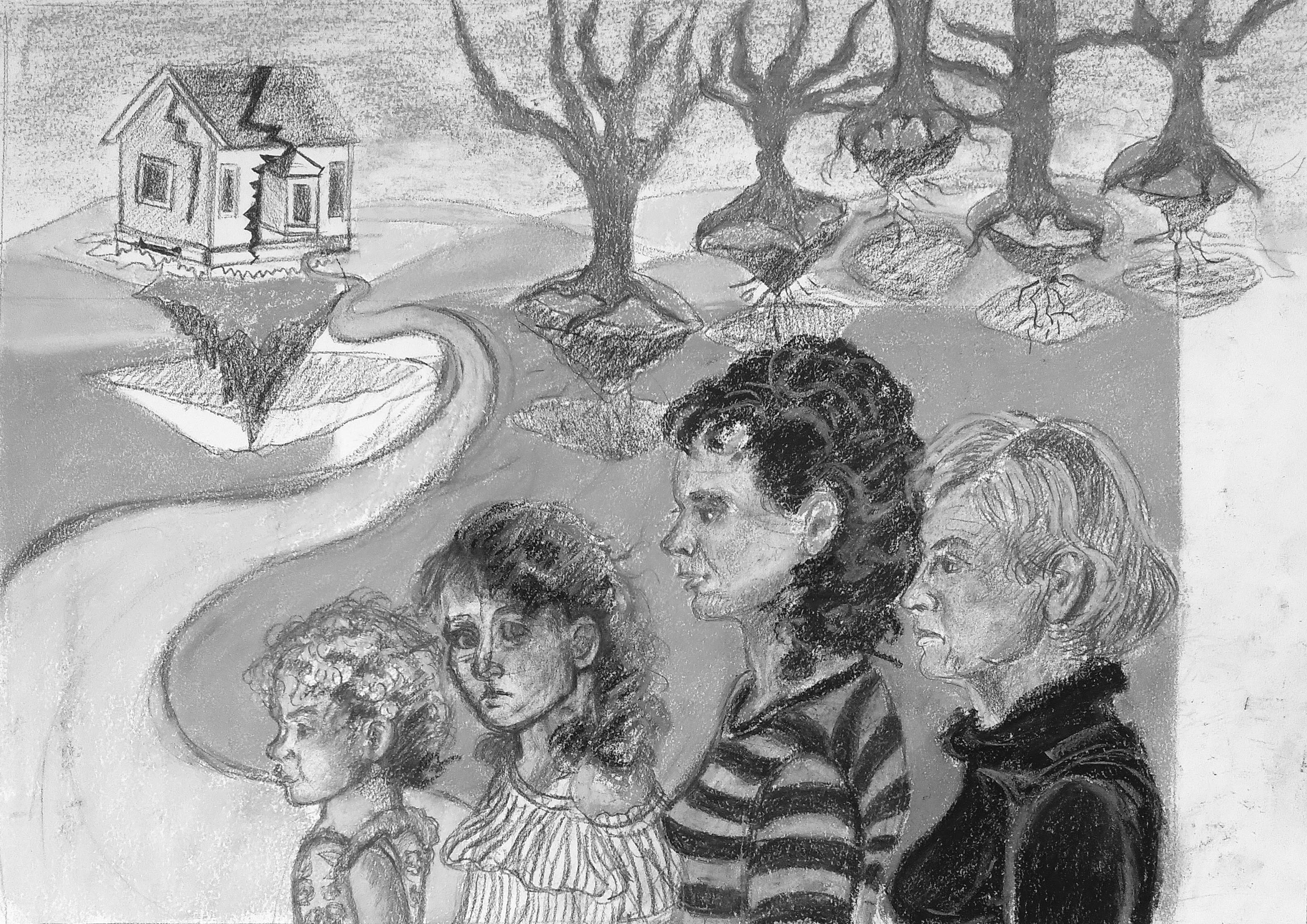
Anatomy of a Shadow with Value Scale, pencil on paper with printed value scale, 2020, Jodie Schmidt. Here is a photo of the textbook I have used in the past to teach my Classic Drawing course, at Frederick Community College, and now at the Adams County Arts Council in Gettysburg, PA. Angela Lansbury, colored pencil on gray paper, 2021, Jodie Schmidt. Emily Dickinson: A Song of Service, pastel on paper, 2021, Jodie Schmidt. Eric Liddell Figure Study, pencil on paper, 2021, Jodie Schmidt. My Broken Home, pastel on paper, 2021, Jodie Schmidt.
















 Art of Schmidt