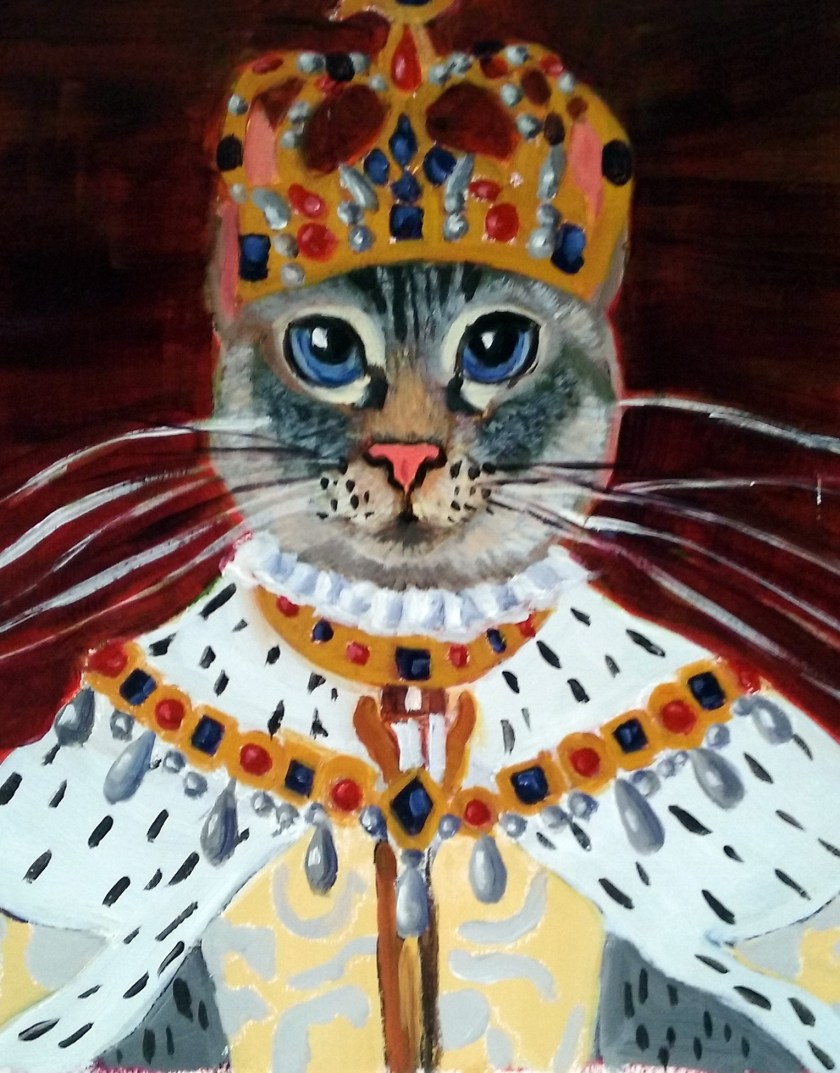
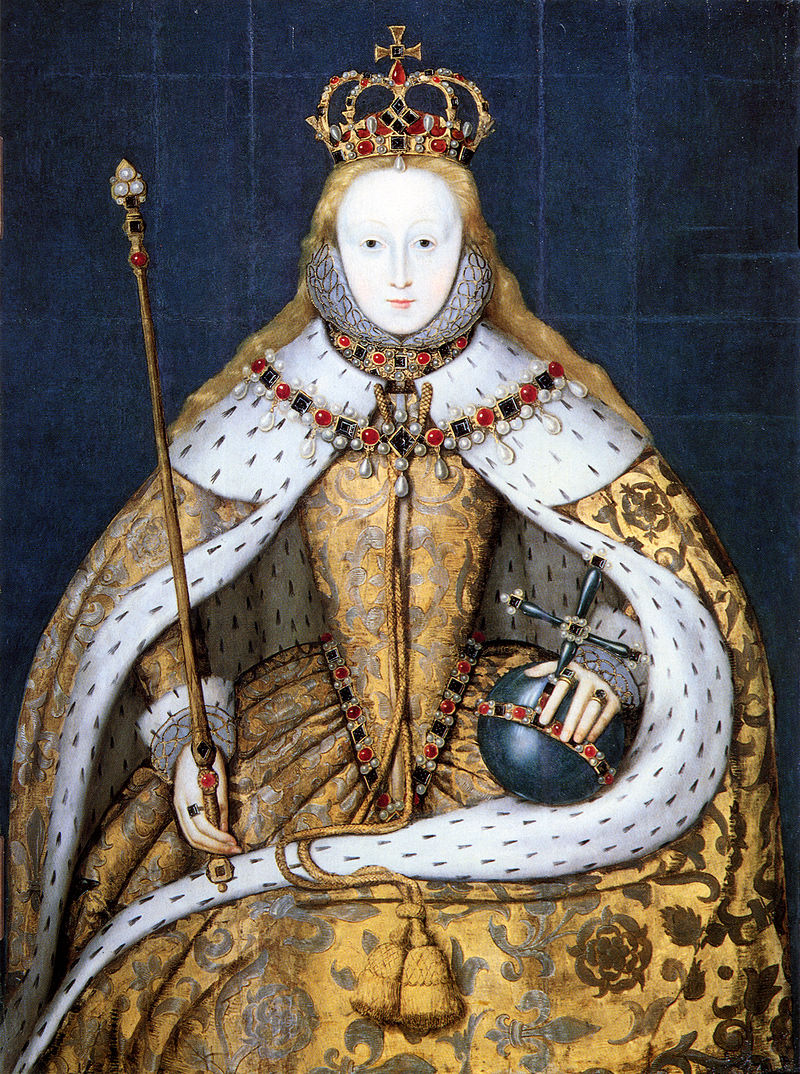
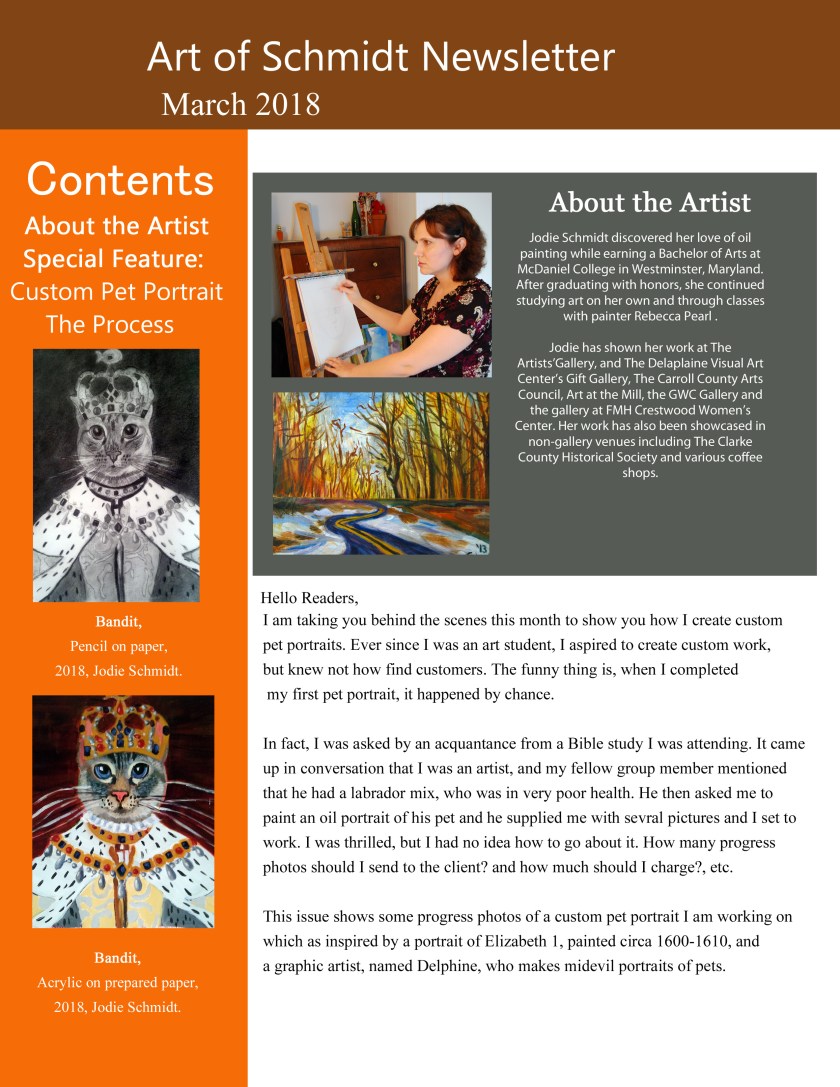
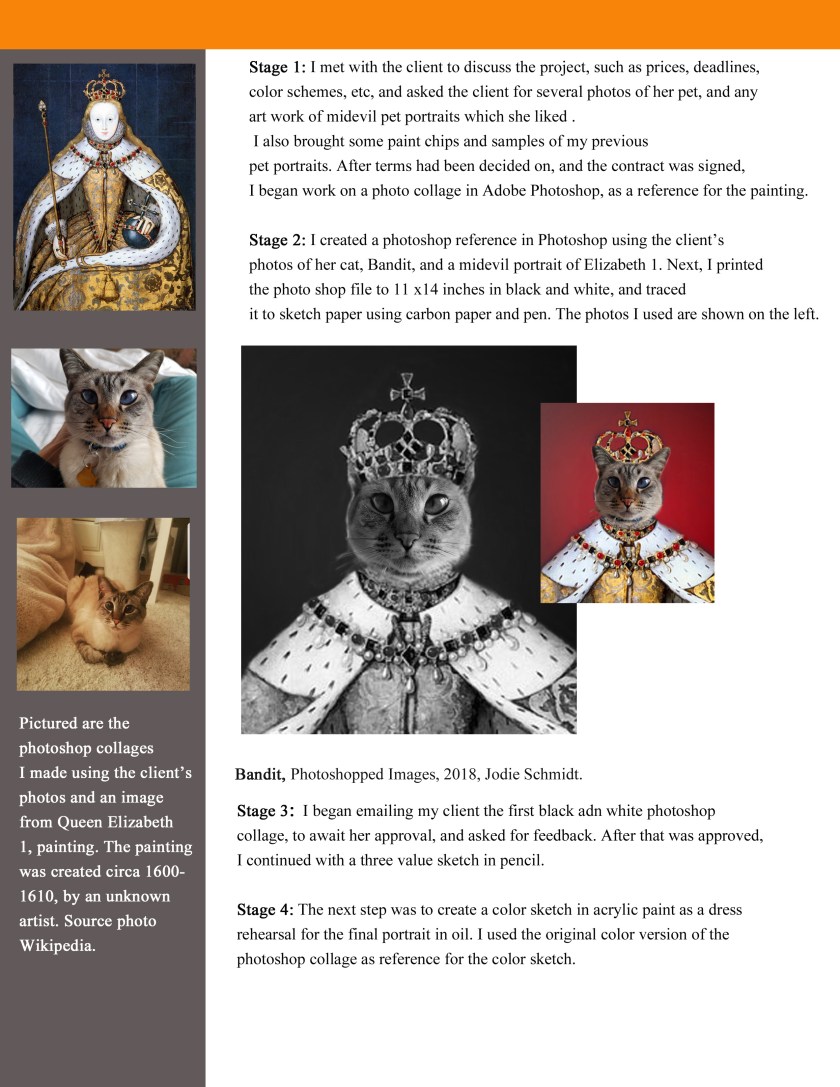
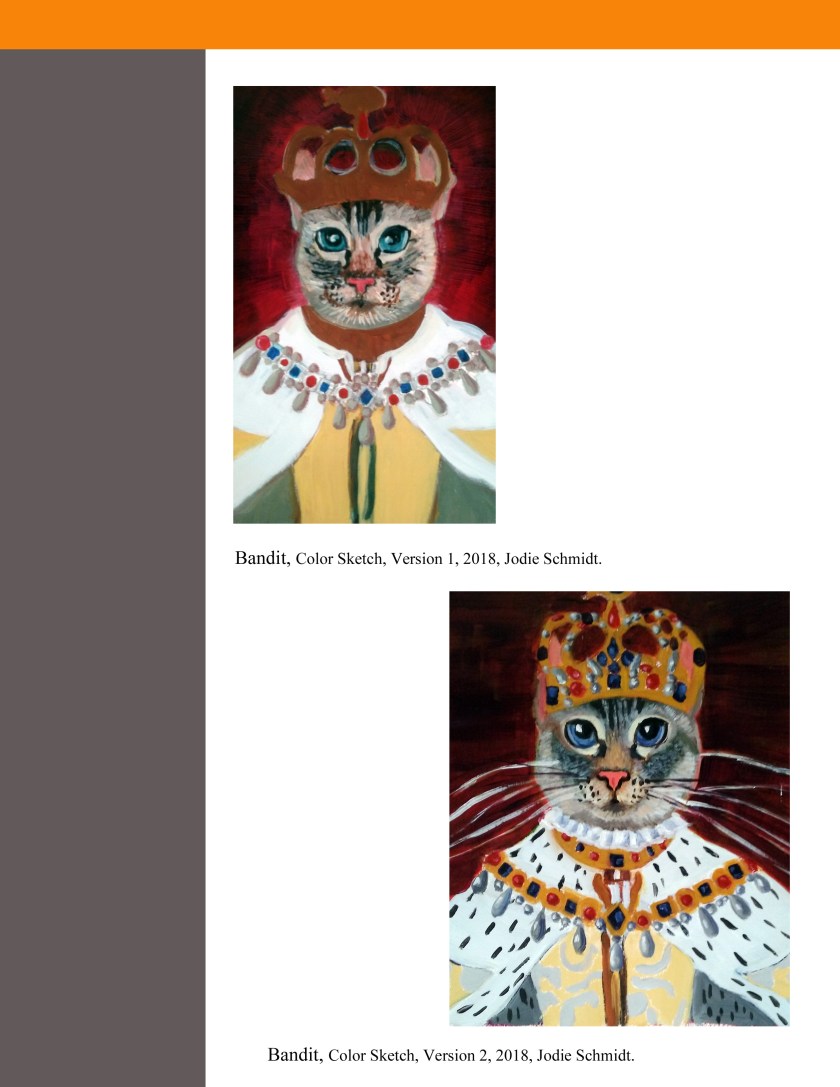
It has been a super busy season for me, managing the daily tasks of life, plus buying a new home, and various other things, so I haven’t posted as often as I would like. Meanwhile, I am researching articles that I think would inspire future blog posts that would be of interest both to artists and nonartists. While I am working on that, enjoy a peek behind the scenes into my latest pet portrait custom art order, which is inspired by a portrait of Elizabeth 1.
Last week I talked about self-doubt in the context of one’s own self-doubt and self-defeating self-talk such as, “I am not good enough.”, and this week I am switching gears and writing about how to deal with constructive feedback or, not so constructive feedback, as the case may be. This type of criticism may come from a variety of sources such as teachers, family, friends, “fellow artists,” strangers, etc. Bustamante, 2016). Sometimes it is helpful and other times it is not. At times, these people may be sincerely “trying to help you” while at other times, their motives may be less than beneficent. (Source: Gill Bustamante, “Overcoming Self-Doubt for Artists…Even When Your Art Goes Terribly Wrong,” www.emptyeasel.com09/05/2016.
For instance, according to Bustamante, 2016, “Artists often find themselves targets of people who put them down with carefully worded barbed comments or “advice” that leads nowhere, or other thinly veiled criticisms that will discourage the artist on their efforts.” (ibid) In addition, according to Bustamante, it is very important to carefully weigh what others tell you about your artwork, to decide if their opinion is valid or not, taking their advice with a hefty grain of salt. (ibid) The litmus test seems to be, how you experience these people after spending time with them. (ibid) For instance, Bustamante, 2016, asks, do you feel better about yourself after you spend time with them or worse? (ibid) If you don’t enjoy spending time with them, then stay away from them. (ibid) However, if you can’t completely escape these people because they are co-workers or your spouse, “put up a shield “ to guard yourself against what they say. (ibid)
I’ve had my own share of experiences with really bad critiques from teachers, and insensitive comments from others over the years as an art student, and a professional artist. These sorts of comments make me want to give up and are usually too vague to be of any assistance in making improvements in my art. And I have also had the reverse experience; in fact, some of my best constructive feedback has come from art students, during class critiques where there are some ground rules about constructive feedback. These types of comments tend to be more positive, like a word sandwich, such as, I think what works in this painting is, (blank) however, if you changed the color, value, etc, here, it could be even better. The paradox is, if I can’t take any feedback about my artwork, I won’t grow as an artist because I am too close to my work and have tunnel vision, or too emotionally invested in it to see the flaws. On the other hand, if I am too strongly influenced by others I might give up too soon on drawing and painting, or start to pursue art styles that are not really part of my authentic voice, in an attempt to please others or make sales.
Meanwhile, I am trying to keep on keeping on with my weekly studio practice, working in my sketchbook at least on a weekly basis. My hope is that by keeping in practice with drawing it will remind me why I fell in love with making art in the first place. My themes from my sketchbook that I am showing you this week are animals and plants, kind of apropos since spring is supposed to be around the corner…They were drawn with pencil and Prismacolor Colored Pencils. Thank you for reading! I hope this speaks to someone out there who is struggling not to give up on their art.
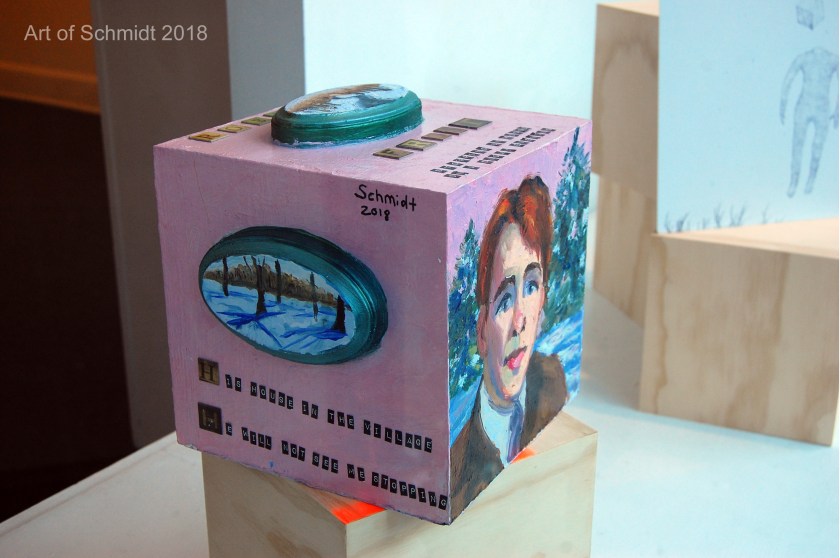
This weekend is your last chance to bid on my box, Solitude, which illustrates the poem, Stopping by the Woods on a Snowy Evening. The last night to bid is Saturday, March 24 from 5 pm-9 pm. So if you wanted to grab my box, here is your last chance! A perfect gift for people who love poetry, illustration and art. The link to the art gallery is
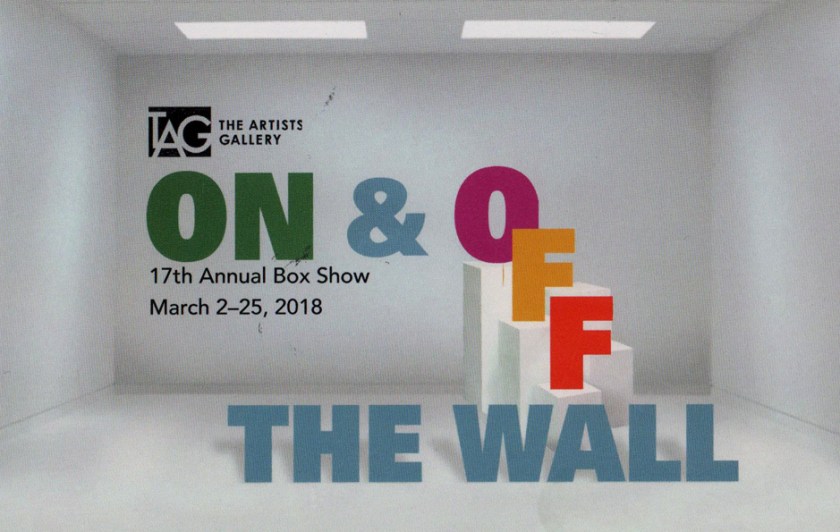
Solitude, Mixed Media, 2018, Jodie Schmidt.Solitude, Mixed Media, 2018, Jodie Schmidt.Flyer for On and Off the Wall, The Artists’ Gallery, Frederick, MD
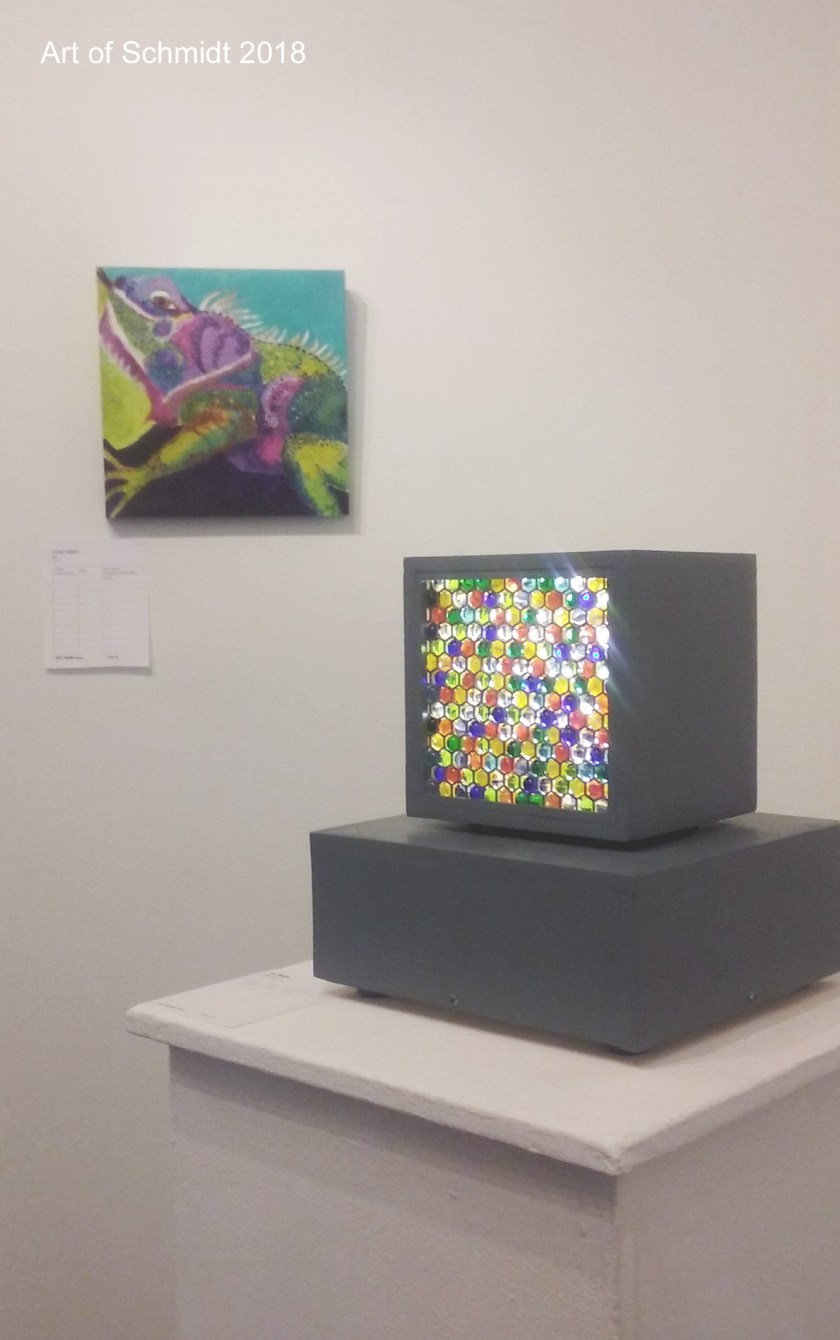
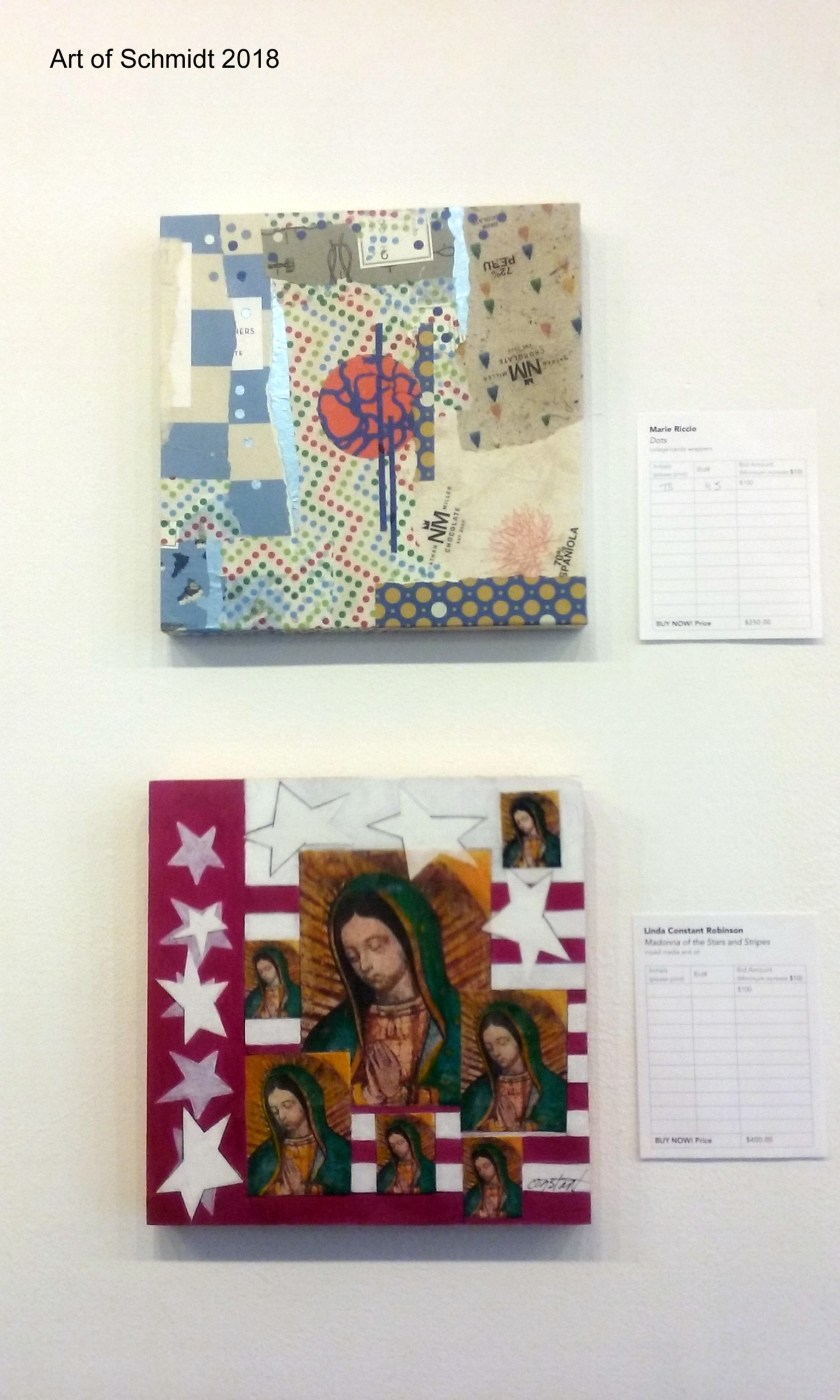
Life for me has been pretty hectic, so some things like blogging have unfortunately been tabled for a while. Today, I wanted to share some photos I took of the On and Off the Wall Box show at The Artists’ Gallery in Frederick, MD. The show features a variety of local artists’ work in a variety of mediums in everything from sculpture, collage to oil painting, etc. Since I have been short on time, this blog post is more image heavy, rather than my usual, more thoughtful and wordy blog posts. Solitude is my completed mixed media box, which illustrates the poem, Stopping by the Woods on a Snowy Night, by Robert Frost. Each panel features a vignette of a winter landscape with text from the poem, so viewers can easily make this connection between poetry and the illustration. All of the other images are works from other local artists.
Stay tuned for my next post, which will be on how artists can effectively deal with self-doubt. For today, enjoy the images of these amazing boxes. I was amazed by the creativity of these artworks and how each box was unique. If you want to learn more about the art show, visit: http://www.theartistsgalleryfrederick.com. All art is for sale at this show, and bids for the silent auction start at $100. Proceeds from the show will help ensure the continued operation of the Artists’ Gallery, which is owned and operated by local artists. These photos are just a small sample of the beautiful and inventive artwork which comprises this show. It’s so much better to see these works in person if you can. The gallery hours are Friday and Saturday, (12 noon- 9 pm) and Sunday, (12 noon-5pm). The show will be displayed for the month of March. Thanks for stopping by!
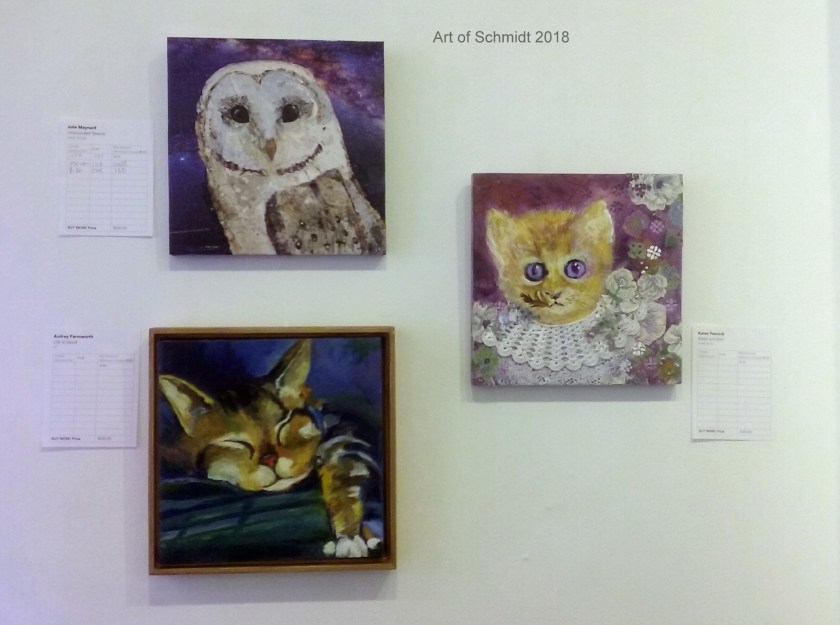
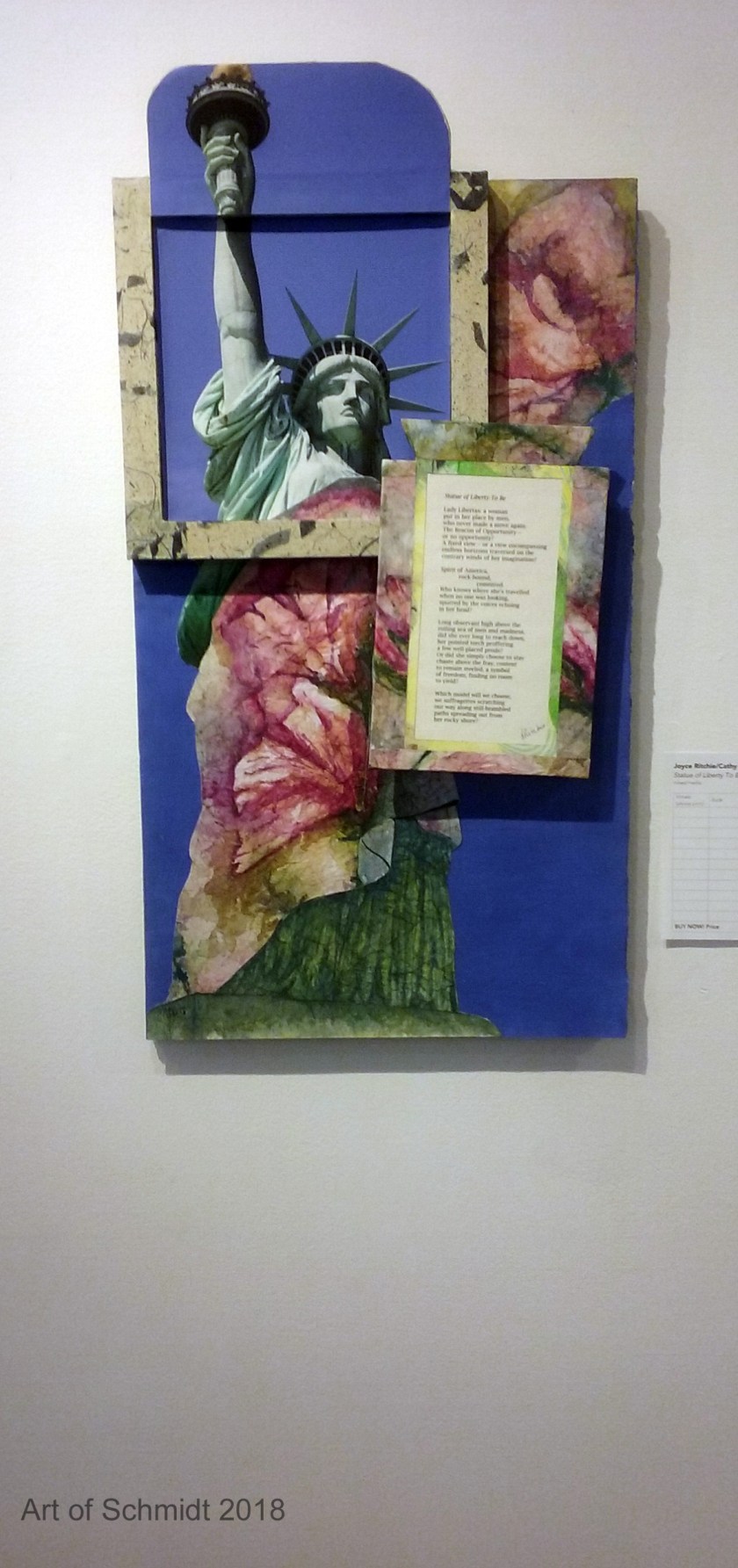
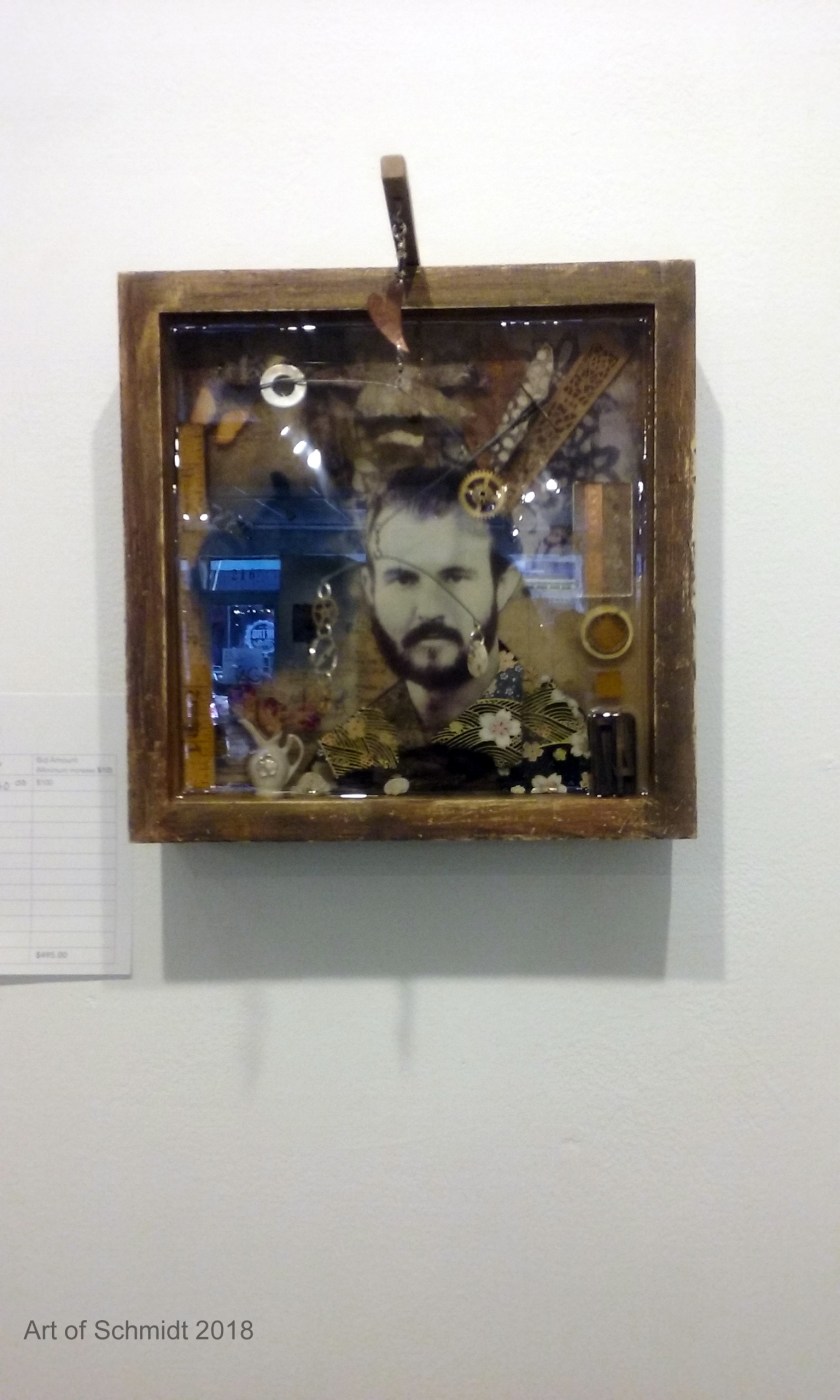
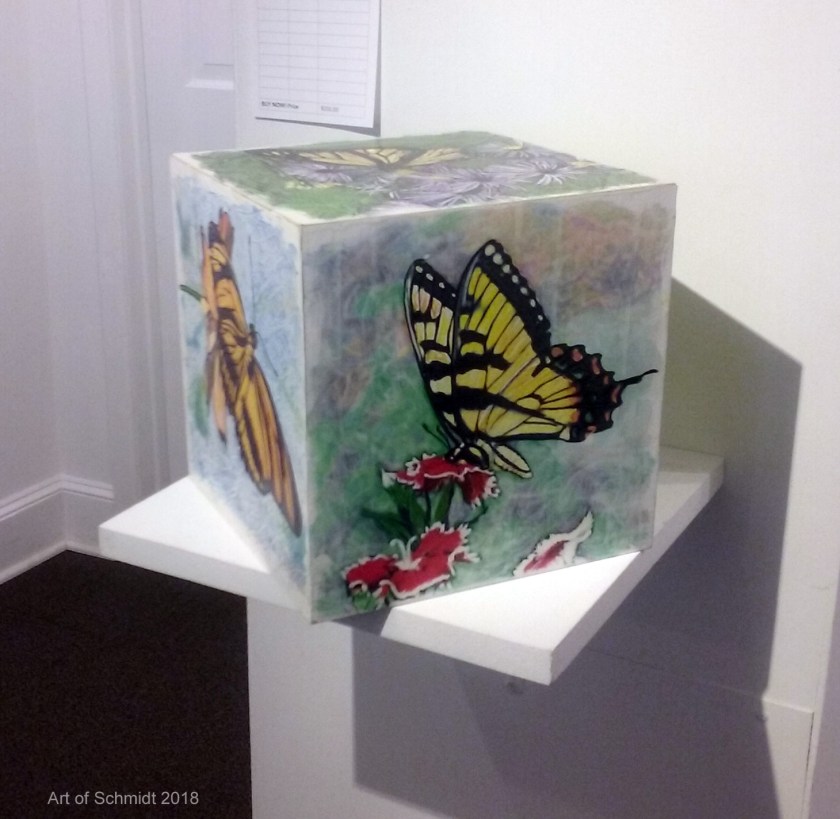
Flyer for On and Off the Wall, The Artists’ Gallery, Frederick, MDSolitude, Mixed Media, 2018, Jodie Schmidt.Solitude, Mixed Media, 2018, Jodie Schmidt.Light Box and Iguana Box, The Artists’ Gallery, Frederick, MDIcon and Geometric Collage, The Artists’ Gallery, Frederick, MDAnimal Portraits, The Artists’ Gallery, Frederick, MDLight Horses Lamp, The Artists’ Gallery, Frederick, MDLady Liberty Collage, The Artists’ Gallery, Frederick, MDMixed Media Collage, The Artists’ Gallery, Frederick, MDButterfly Box, The Artists’ Gallery, Frederick, MD
As promised, I am elaborating about marketing techniques as part of a series which will feature artist portfolios. Part 1 of this series will be about artist portfolios, and subsequent parts will follow as I research and discover content that I deem to be helpful to other artists as they travel this unconventional career path. For example, in my limited experience of this being a professional artist is a path like no other career, in that it is often difficult to navigate and make decisions about how to advance you. There are countless books, articles, and blogs that promise instant success or even urge you to quit your day job and do art full-time, or seem to imply that notion with titles like, Starving to Successful. Disclaimer: I haven’t read the book yet, so I can’t really make about its value tojudgmentartists.
It’s hard to sort the wheat from the chaff, and know what to believe or apply to your career. In addition, other career paths such as Nursing, Social Work, Teaching, etc., seem to have a more definite path, which includes: obtaining the degree, often a masters degree, procuring experience in internships, volunteer opportunities, etc., learning to network, writing a killer resume, learning to sell yourself, etc. It is my hope that these articles will bring clarity and direction to your journey as an artist, in whatever form that may take, whether you are a hobby artist, an amateur artist, or a professional artist. But I digress. Ok, so to the topic of the week “What portfolio format options are available to artists?” More importantly, what are the pros and cons of each format?
Artist Portfolios: Why are they Important?
To investigate this topic in greater depth, I read an article entitled, “How to Create a Powerful Art Portfolio,” from Lori McNee’s website, Art and Fine Art Tips. This article was written by guest blogger, Jason Horejs, who is the owner of Xanadu Art Gallery in Scottsdale, Arizona, and an astute art business consultant. Horejs states that, for artists, their portfolio is their resume and that it helps them to gain the attention of gallery owners, potential collectors, etc. (Horejs, 2009).
What Types of Artist Portfolios Exist? An Overview
According to Jason Horejs, there are three main formats for portfolios. They include, but may not be limited to 1.) The CD; which is inundated with “digital images,” of your art, and an affordable option, 2.) the printed book, published by an online provider such as Blurb.com, and 3.) The Presentation Folder, which is a binder that you fill up with clear plastic folders to house prints of your current artwork. All have both pluses and minuses, although Horejs’ favorite format is the presentation folder. (ibid) In his view, this option makes it easy and inexpensive to update, plus gallery owners don’t have to even open up a computer program to view your artwork, and perhaps, find out to their dismay that your images on CD are not compatible with their PC or Mac computer. (ibid) In the interests of length, I will just discuss two options for portfolios and they are the published book and the presentation folder.
Art Portfolio Option 1: Published Book
Another option for art portfolio formats is to create a published book of your best works through online printing. (ibid) Web sites such as Blurb.com and mypublisher.com can reproduce your artwork in a book format. (ibid) On the other hand, this format can quickly become obsolete as you develop your body of work over time, and if you want to use it, you will have to keep updating and re-printing it to stay current. (ibid) This option can be a nice addition if you have a booth of your work at an art festival. (ibid) For example, having a book about your artwork on hand can serve a talking point for potential customers who may ask the question that I dread most, “What is your art about?” (ibid)
Art Portfolio Option2: Presentation Folder
A final option and Horej’s favorite is the “Presentation Folder”. (ibid) This type of portfolio can be purchased at stores such as Staples, Office Depot and others. (ibid) These can be duplicated as many times as you need for the distribution of your portfolio to art galleries or other decision makers. (ibid) To illustrate your portfolio, print your digital images from a “high-quality inkjet printer,” and put the printed pages into your folder. Be sure to include details about the work in your portfolio such as title, medium, etc. (ibid). Remember, not to include every piece of artwork you’ve made since your first art class! Horejs recommends 20-35 images maximum to be included in your portfolio. (ibid) If you are in doubt about what pieces to include, consult a trusted friend, teacher, mentor, etc., to give you an objective opinion.
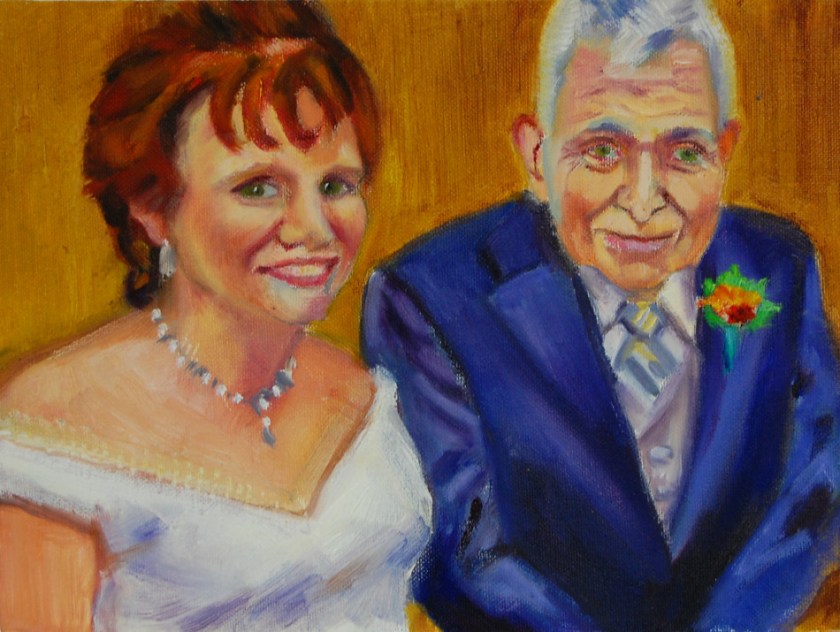
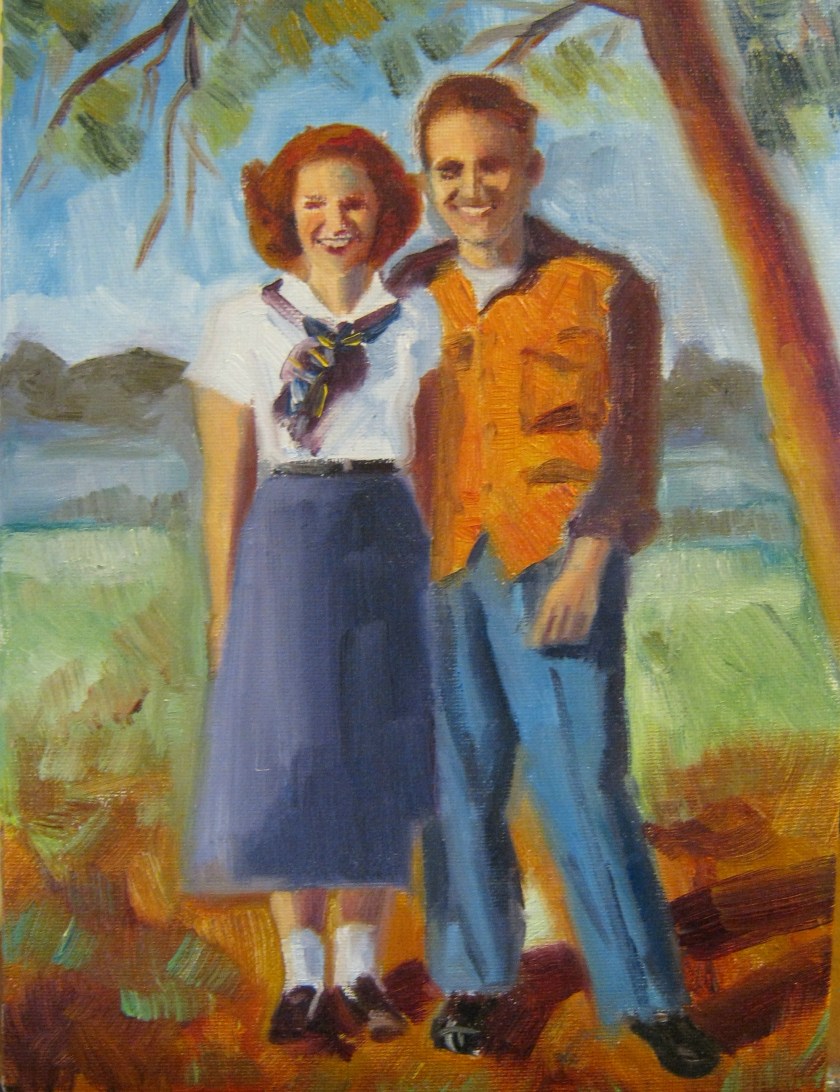
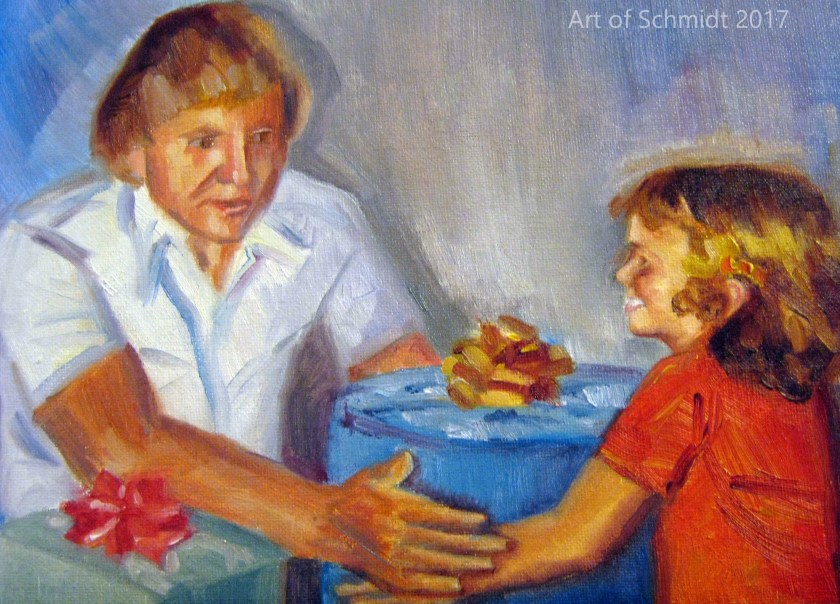
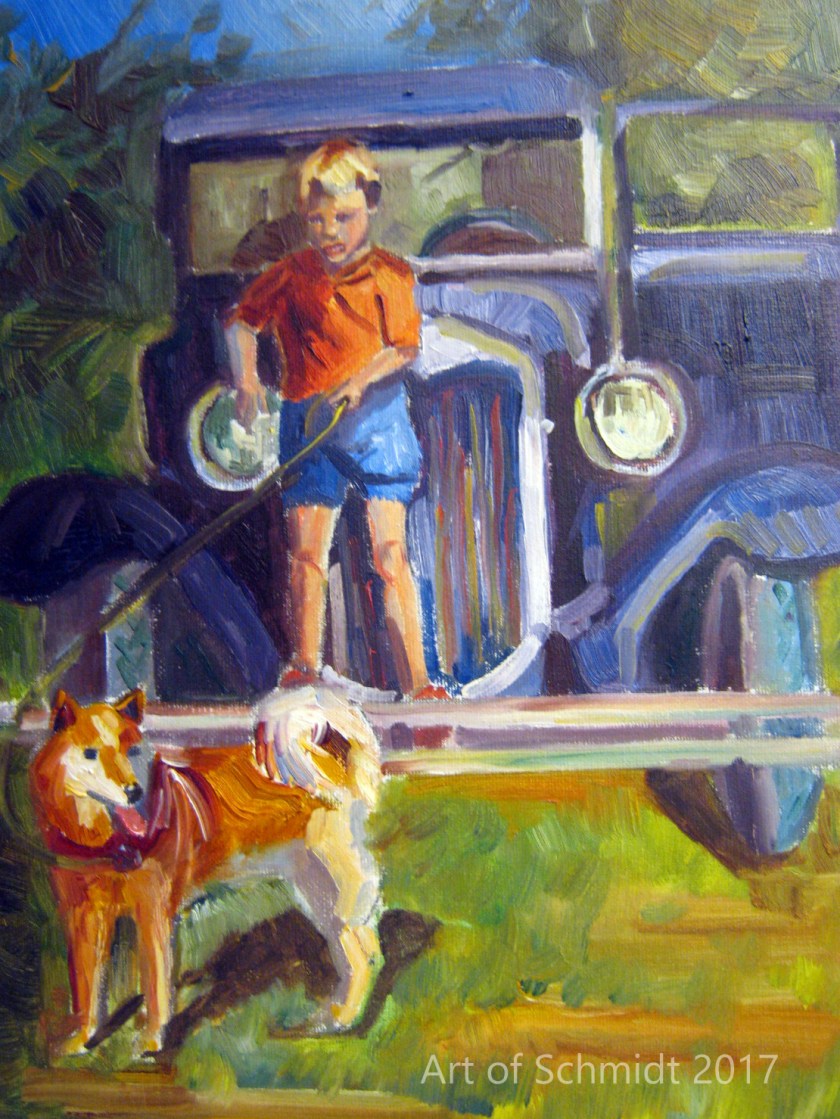
Dad and I, oil on canvas, 9 x 12 inches, 2012, Jodie Schmidt.Dad and Phyllis, oil on canvas, 11 x 14 inches, 2012, Jodie Schmidt.The Gift, oil on canvas, 9 x 12 inches, 2012, Jodie Schmidt.Dad and his 1929 Ford, oil on canvas, 16 x 20 inches, 2012, Jodie Schmidt.
Also, it might help to spread out various works of your artwork and look for patterns that define your style and subject matter of choice as an artist. Is it color, Texture, Line, Repetition, or a specific subject or topic that lights you up? What things do you like to draw paint or sculpt the most? Is it animals, architecture, landscapes, still life or portrait? Defining these attributes about your artwork will ensure that it has a consistent look to the portfolio, and it will help you know how to share your artwork when people ask you about it.
What has been my experience with Artist Portfolios?
As for me, it’s been many years since I have assembled and distributed a portfolio for an art show or for anything else. The first example that comes to mind is, my senior year at McDaniel College, in which I created a senior art project based on self-portraits painted in oil. The format I chose to organize my art was a PowerPoint presentation on CD. My second experience with building an art portfolio was when I applied to graduate school for a masters degree in Studio Art. This time, I used 35 milimiterFuji color slide film to record my artwork because that was the method that the schools had required in the application process. Both examples were from many years ago, in 2005 and in 2006 respectively, and obviously, the options have changed. I confess I haven’t kept current with all the new options for displaying portfolio work, for a variety of reasons. For one thing, I’ve had an ambivalent relationship with art for a long time, going from being fully engaged and filled with dreams and ambitions, to self-doubt, and even extended breaks from making art, and exploring other career paths through college classes, volunteering, etc. Somehow though, I always end up returning to making art.
I am still figuring out what level of involvement I want to have with art. I think my current level of involvement is now an amateur artist, as I have been trying to move in a more professional direction, by requiring that clients sign contracts for my custom art pieces to secure my services, as well as asking them for a non-refundable deposit of 50% of the custom art price. However, I have not yet been able to make a living from it yet. The earnings are always inconsistent from month to month, even when I really hustle and do lots of art shows, and events to advertise my art. I’m keeping my day job so I can focus on making art and not be worrying about paying the bills.
So what’s my next step? At the moment, I am working on reassembling a new and improved portfolio that reflects my current style, medium and subject matter of choice. A big part of meeting that goal is working in my sketchbook, Draw Every day, Draw Every Way: Sketch, Paint, and Doodle through One Creative Year, by Julia Orkin-Lewis. Here’s a link that describes the book in more detail, in case you are interested: http://augustwren.com/draw-every-day-book/. I’m including some of my sketches from this book that I made with pencil and colored pencil to give you an idea of how the book is structured.
In a follow up from last week’s blog post about copyright infringement and how to avoid it, I am looking at the other side of the coin and investigating how artists can protect their work from being stolen online. However, I must offer the caveat shared by Drew Kimble, author of the article, “Stop Stealing My Sh*t,” that there is no foolproof guarantee that any of these measures can protect an artist’s work. Indeed, according to Kimble, if a thief has the technological know-how, they can steal an artist’s work. However, in the words of Kimble, there are strategies which can be used in an effort to deter thieves from unlawfully using an artist’s content.
One of these methods which artists can use to protect their artwork is called watermarking (Kimble, https://skinnyartist.com/stop-stealing-my-images/ . This approach involves creating a mark in a photo editing program, such as PhotoShop, often incorporating your name and the year in which you created the art. (ibid) I first learned about this technique when I was taking a Business of Art Class, taught by local photographer and art business coach, Rebecca La Chance, of Thurmont, MD. Previously to taking this class, I had not thought about protecting my artwork very much, as I had viewed it more as a hobby than a business. However, since 2017, when I made the shift from hobby artist to art business entrepreneur, I have been thinking more about the issue of copyright, both with regard to avoiding copyright infringement, and also how to protect my artwork from being stolen. As I started to do research about copyright infringement, I was shocked about how much art online has been copied wholesale from celebrity photographs and is for sale as handmade art on websites such as Etsy. And there is no way to know with certainty that the artist who made this artwork actually asked the photographer for permission to use their source as a reference for their art.
It is one thing to copy another artist’s work in order to learn from it and to give credit to that artist, as I have done with my master copies. However, it’s quite another thing to steal another artist’s work and take the credit for it. I’d like to think that some artists are ignorant about this issue, and to give them the benefit of the doubt. I hope that is true, but I don’t know if that is true in all cases. Copyright infringement certainly wasn’t a topic that came up in my art classes at college. However, I think it should be addressed, since these college courses in graphic design, painting, illustration, and photography are supposed to prepare artists for the professional world after they graduate, as graphic designers, animators, photographers, professional illustrators, and artists, etc.
More to the point, I think artists who steal others artwork are robbing themselves of the opportunity to create their own work and grow as artists. Although it may take more effort to take your own photos, the hard work is well worth it, because you get an opportunity to learn about the principles of composition, light, etc., and these fundamentals are critical components of making art in any medium. These principles can help you make higher quality art in general, as composition and lighting are important aspects of making attractive artwork.
On the other hand, I admit that when I was a teenager, I used celebrity photographs to learn how to draw portraits from magazine covers. The truth is, I had no clue about copyright laws at the time. But, knowing what I know now, I wouldn’t offer these drawings for sale or display at an art gallery or any of my commerce shops, such as Etsy and Red Bubble. I have also used the celebrity photos as a learning tool in my 100 faces in 100 days drawing challenge, but these drawings were not for sale, and I frequently gave credit to the photographer’s name in my Instagram posts. I feel now though, that I want to step it up a notch, and not even use copy written photos at all as a reference, but to search for public domain photos, or better yet, learn to take good photos of my own, so that the artwork I create can be more original.
Of course, the issue of artistic theft is not a new one, because, in the past, art was stolen by artists who made forgeries of other artists work such as the famous case of the so-called Vermeer paintings, (i.e. Amsterdam vs. Han Van Meegren (1947). Source: “The Essential Vermeer,” retrieved from http://www.essentialvermeer.com/misc/van meegren.html. So with all this being said, should artists stop making their art available to others through the World Wide Web or not? And if artists decide to post their art online, what are the options to protect their art from thieves? To make this decision, I think artists need to weigh the pros and cons of posting their artwork online to decide how to market their art. And they also need to look at the options available to them to safeguard their artwork online by researching different methods, such as watermarking, slice and dice, disable right click, and shrink wrapping, (Kimble, https://skinnyartist.com/stop-stealing-my-images).
On the benefits side of posting artwork online, artists can gain a wider level of exposure for their artwork than ever before, on a worldwide level, (ibid) by using the world wide web to post their artwork on social media channels such as Facebook and Instagram. They can also sell their artwork online through online galleries such as Art Fire or Daily Paintworks. In the past, such opportunities did not exist and artists were completely dependent on currying the favor of art gallery owners in order to obtain a platform for their artwork. Now, any artist can get their artwork into the public eye without having to pay for application fees. If you have electricity, an internet connection, computer, and cell phone, you can post your artwork to a plethora of websites, for a minimal expense. Added to the social media channels I have already mentioned, are online art galleries which are subscription-based, such as Art Fire and Daily Paintworks, at www.dailypaintworks.com, created by artist Carol Marine. Many of these require only a small monthly subscription fee with an unlimited amount of posts for an artist’s artwork, which can be linked to commerce sites such as eBay and Etsy, so artists can control their sales completely. Best of all, there is often no jury panel involved to become a member of these online art galleries.
On the other hand, if artists opt out of posting their artwork online, they are much more limited in their ability to gain new followers or control their sales. It can also be more expensive to get your artwork in front of influential decision makers such as art gallery owners and art jury panel members. In this instance, you are limited to the gallery shows you are accepted into and more traditional art events such as art festivals and fairs, which often involve the traditional jury system to gain admittance. Moreover, it can be discouraging to artists (especially emerging artists), to receive one rejection letter after another, especially when they don’t know why their artwork is being rejected. To be successful with this approach, you need a thick skin, perseverance and a specific plan to find galleries who will be a good fit for your art. It can often be like trying to find a job, in that you are trying to make a match between the artwork you create and the artwork that a specific gallery already promotes. This process cannot be random to be successful.
Another option is for artists to choose to combine their art gallery shows with an online presence in social media channels such as Instagram, Facebook, and Pinterest. In this case, you can probably attract more fans and customer and the instant feedback you receive from your posts can be encouraging and help you to create more art. So, if you decide to go this route, you have several options to protect your artwork from unlawful use. These options include watermarking, slice and dice, shrink wrapping and disabling the right-click option (Kimble). The different strategies I mentioned are described in detail in Drew Kimble’s article, “Stop Stealing My Sh*t,” with an analysis of each method involved. A tutorial for watermarking is embedded in the above-mentioned article. If you are interested in learning more about these techniques you can click on the link, https://skinnyartist.com/stop-stealing-my-images/.
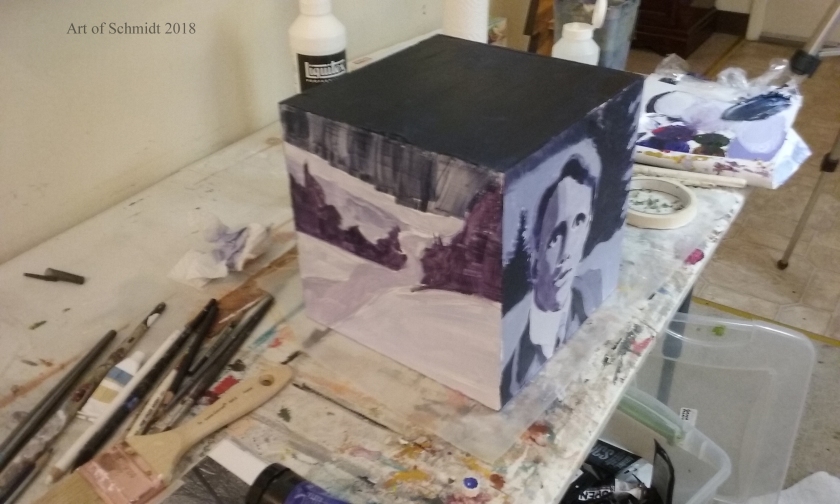
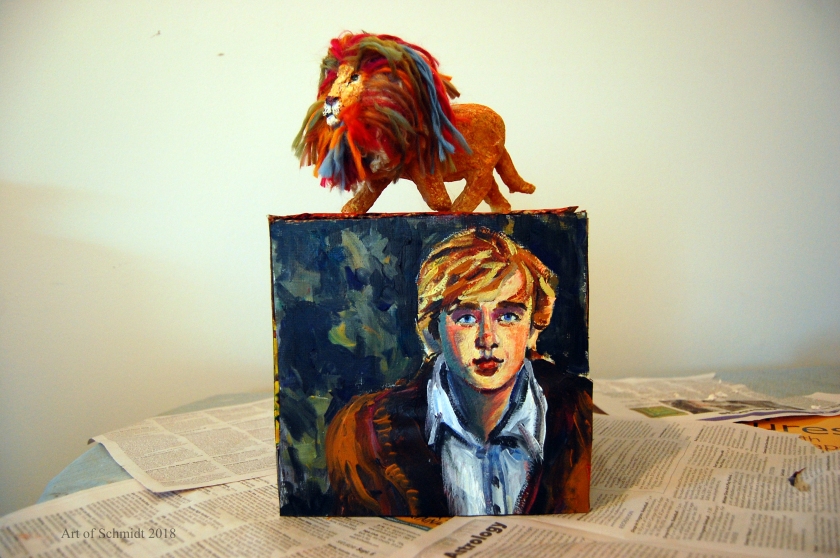
Here is a photo of my box project in progress. I used Liquitex acrylic paints to create a monochromatic underpainting. I plan to complete the box in color, and it will illustrate the poem, Stopping by the Woods on a Snowy Evening by Robert Frost.This photo shows the box from a higher vantage point and shows the other sides. I plan to include text on the lid of the box from the poem, Stopping by the Woods on a Snowy Night, so viewers can make the connection between the poem and the illustration.
It’s that time again for me to get cracking on my box for the annual Box Show which will be displayed at The Artists’ Gallery in Frederick, MD during the month of March. I have been a participant in this show for many years and every time I make artwork for it, I learn something new and literally learn to think “outside the box.” My work will be featured with several other local Frederick Artists and all art will be for sale via silent auction at the gallery. For more details about the art show, click on the following link: http://www.theartistsgalleryfrederick.com/.
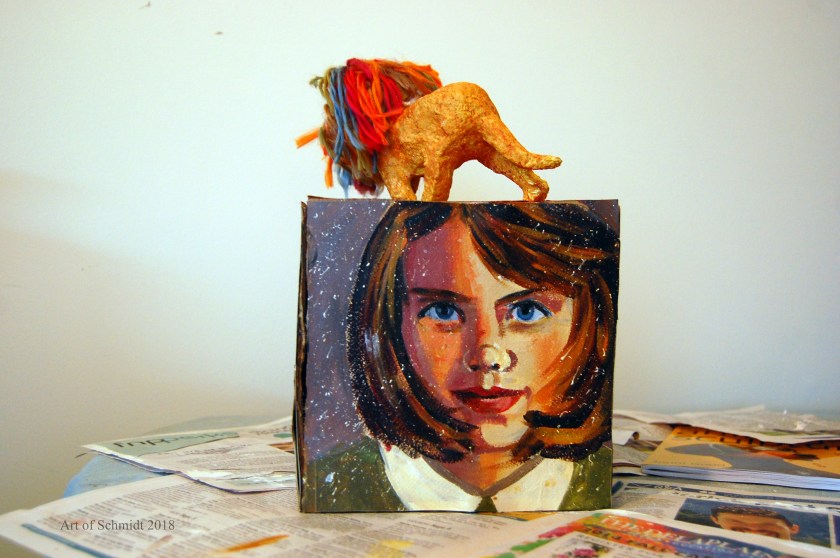
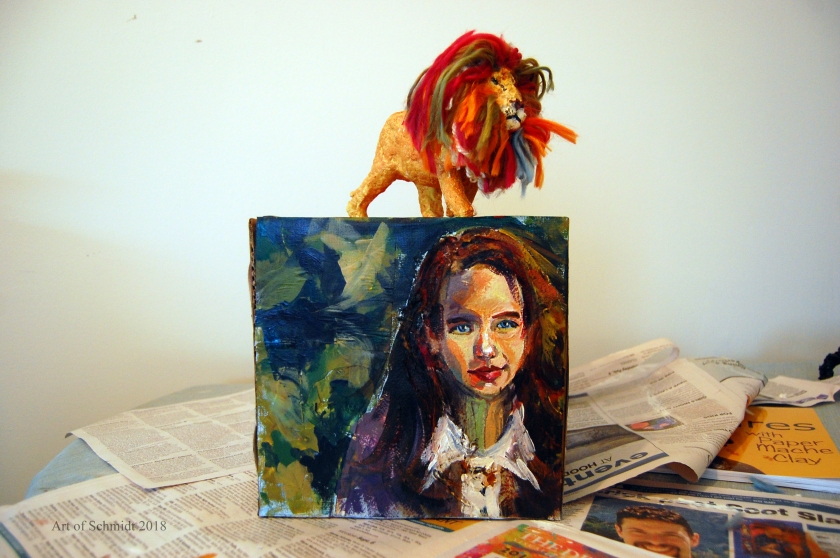
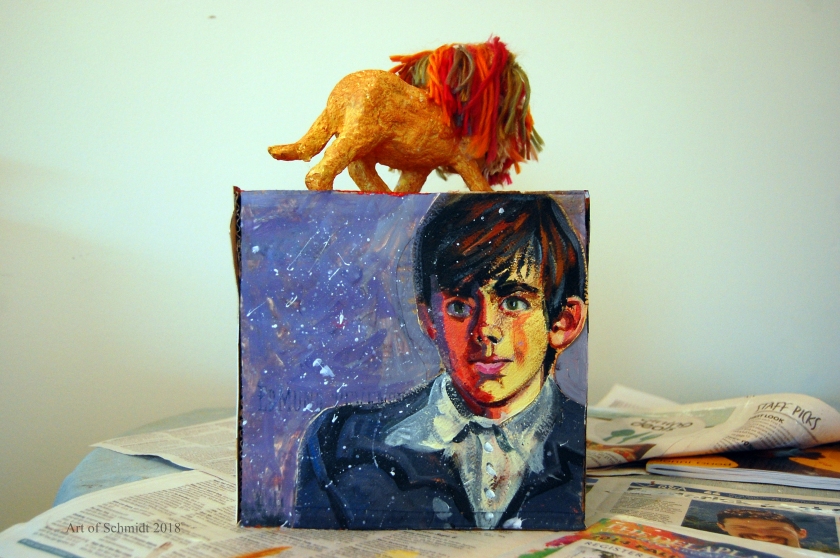
Here are a few examples of the boxes I worked on in previous box shows at the Artists’ Gallery in Frederick,
Johnny Cash, Mixed Media, 2014, Jodie Schmidt.
Johnny Cash, Mixed Media, 2014, Jodie Schmidt.
Alice in Wonderland, Mixed Media, 2016, Jodie Schmidt.
Alice in Wonderland, Mixed Media, 2016, Jodie Schmidt.
Md. The themes for the boxes range from The Chronicles of Narnia, Johnny Cash, Alice in Wonderland and this year I will be illustrating Robert Frost’s poem, Stopping by the Woods on a Snowy Evening. I will post additional photos of this year’s box as soon as I start making more progress on it. I hope to have the sketches for the box transferred to it by this weekend so I can start painting the box with acrylic paint. Thanks for stopping by!
Today I am challenging myself to finish writing my artist statement for my poetry illustration series, Voices, and Visions. After months of on and off work on this series, I am committing to working on the series at least 1x a week. Some of the activities that I engage in to get the ball rolling with this series are: to write critiques about work in progress, post paintings and sketches to Instagram on a weekly basis create tonal studies, and to create photo collages in Photoshop for subjects that require complicated themes.
This body of work, Voices, and Visions, is really stretching me, and it is unlike any other series I have worked on in the past. There have been several instances of artist’s block and resistance in general to finish the work. What is holding me back? Are life circumstances to blame for my lack of follow through with this series? Or are family crises taking up the bulk of my time and energy? Do I fear to make a mistake so much that it paralyzes me from picking up the pencil or brush? Or have I spent too much time watching British TV mystery series, such as Vera Stanhope or Inspector Morse? I’m not really sure; maybe all of these things have played a part in my inertia.
Writer’s Block: Getting started with an Artist Statement
In addition to avoiding completing this series, I have also avoided working on my artist statement for this series, which has not been helpful either. Unfortunately, I have not been reading or editing the artist statement which inspired me to create this series as I do the work. However, I realize that if I want to have a cohesive body of work with a strong message, I need to be sure that the work in progress is tracking with my original artist’s statement. Regrettably, I have made this mistake before, and as you might imagine the results of that experiment were not good. A few years back, well, more than a few, I applied for graduate school at a number of colleges for a master’s degree in art. Needless to say, I didn’t get any acceptance letters, and the artwork I created did not reflect the artist statement I had started writing because I did not adjust the statement to reflect the artwork as I was painting or vice versa. So with that in mind, I am trying to learn from past mistakes and catch this lack of synchronicity between my artist’s statement and the work in progress. I hope that writing about how to write an artist’s statement will get me out of this rut.
Why Should You Write an Artist’s Statement?
According to the Agora Gallery article, “How to Write an Artist Statement: Tips from the Art Experts”, an artist’s statement plays a crucial role in communicating your intentions about your artwork to others (“How to Write an Artist Statement: Tips from the Art Experts”, Agora Gallery, http://www.agoragallery.com, pg. 2) Sounds good right? But what if you don’t like to write? The author, and art business coach, Alyson Stanfield makes a good point in illustrating why an artist may not want to write an artist statement when she wrote: “My artwork speaks for itself.” (Alyson Stanfield, I’d Rather Be in the Studio, pg. 51.) But can it really? Can other people follow your art-making processes and really understand what you intend if you don’t give them a map to follow? To illustrate, imagine that you sent out a resume and cover letter that are very general for a specific job posting, rather than tailoring your skills to that job description.
Are you likely to get the job, or even an interview? I think the answer is, probably not, because an employer needs to see why they should consider you as a candidate specifically. In a similar manner, I think that writing an artist’s statement can also help an artist to stand out from the multiple numbers of artist entries and websites, and make their work more personal and meaningful to viewers. Most important, writing an artist statement can make a connection between you and your audience, when you are not there in person to speak for yourself. (Agora Gallery, pg. 2) But as an artist, I do empathize with those who don’t like to write and would rather express themselves visually. Despite years of writing research papers as a college student, I still don’t like to write. Hopefully, the highlights I am sharing from this article will help you to overcome any excuses or fears about writing an artist’s statement, so that people will stand up and take notice of your art. This is particularly important if you want to make the transition from being a hobby artist to a professional artist who exhibits art in galleries or other public spaces.
Who is Your Audience?
In addition, an artist statement is necessary for consideration in art competitions, art galleries, museums, etc. (Ibid, pg. 2). Occasionally, an artist’s statement may be displayed as an accompaniment to their artwork at a gallery show, art fair or on an artist’s website. (Ibid, pg. 2). One important thing to remember is to consider who your audience is as you write your artist statement. (Ibid, pg. 2) Some of the people you are communicating with could be “gallery visitors, students, or potential buyers”. (Ibid, pg. 2). To write an effective statement, an artist needs to use terms and words that are understandable to a range of people, from those who have an art background to others who may have little to no knowledge about art. (Ibid, pg.2)
How Would You Describe Your Art?
Another thing that you should include in your artist statement is an explanation of how you make your art. (Ibid, pg.2) For example, include information such as your favorite colors to paint with or your medium of choice, such as photography, sculpture, watercolor, etc. (Ibid, pg.2) What style of art do you practice? (Ibid, pg.2) Is your art abstract or realistic, or somewhere in between? (Ibid, pg.2) For instance, do you like to include texture in your brushwork by loading your brush with thick paint, or do you like to hide your brushwork and build up tone with thin glazes of paint? (Ibid, pg.2)
What Do You Paint, Draw, Sculpt or Photograph?
What imagery do you use to make your art? (Ibid, pg.3)Explain the content which you use in your artwork. (Ibid, pg.3) Does it relate to your process, or to the medium that you use to make art? (Ibid, pg.3) Do you use specific themes to illustrate a story, feeling, or memory, such as figures, landscapes, or symbols? (Ibid, pg.3) What influences inspire your art? (Ibid, pg.3) Is it political issues, memories of your childhood or your local surroundings, or formal elements of art, such as line, shape, color, value, etc?
Why Do You Make Art?
Finally, you want to include a section in your artist statement which gives an explanation of why you make artwork. (Ibid, pg.3) Tell viewers what drives or motivates you to create. (Alyson Stanfield, I’d Rather Be in the Studio, 2008, pg, 44) Be specific, don’t just say, because I have to do it. (ibid) Certain examples might include, I make art to process difficult childhood experiences, or I create artwork to bring attention to political issues I am passionate about. This article is just a brief overview to get you started with an artist statement and is by no means comprehensive. However, if you would like a more detailed resource to walk you through writing an artist’s statement, I recommend that you visit the link for the article: How to Write an Artist Statement: Tips from the Art Experts: https://www.agora-gallery.com/advice/blog/2016/07/23/how-to-write-artist-statement/. Another excellent resource I would recommend that you read to help you write an artist statement is Alyson Standfield’s book, I’d Rather be in the Studio, which is available on amazon.com or as a pdf download from her website: https://artbizcoach.com/. Chapter 4 describes a system about how to write an artist statement, with some helpful prompts to get you thinking about why you make art.
This is an infographic from the article, “How to Write an Artist Statement: Tips from the Experts,” Agora Gallery, https://www.agoragaller-gallery.com.
Waiting, Creative Block, acrylic and oil on prepared paper., 2017, Jodie Schmidt.
The Secret Sits, acrylic and oil on canvas, 2017, Jodie Schmidt.
This week I am between projects, as I have just finished the 100 Faces in 100 Days drawing challenge. I also completed some paintings for the Frederick Coffee Company Art show I just finished. So now the perennial question, what do I work on next, and what do I blog about next? I have finally picked up the brush and pencil this Monday and started to revisit the drawings and photoshop files I created for my Voices and Visions poetry illustration series. These works are in the very beginning stages and I started them with evaluating the compositions of some of these files in Photoshop and re-organizing them. After that, I worked on transferring the photocopies of these illustrations to watercolor paper and illustration board. One painting even got to the basic lay-in with acrylic painting stage, but the others need another coat of gesso before they will be ready to paint.
It seems that the bad news I got from the Doctor’s Office on Monday has helped catapult me to action with this series. For the past several months I have been focusing on promoting art shows and administrative duties such as marketing, data entry, pricing, packing up art shows and setting new ones up, etc. However, the phone call I received this Monday, reminds me of all the other times I got disturbing news but had to find a way to get through everyday life in spite of it. This week has really been a déjà vu, of all the experiences and emotions I felt during my dad’s illness from March 2011-September 2011 when he passed. But with all that being said, the real take away I have had from these experiences is that tomorrow isn’t promised and that I need to make the most of the time I have today.
In March of 2011, I got the phone call that everyone dreads; my father had had a stroke. My sister had called the ambulance and he and was at Montgomery General Hospital where they were testing him for various things. This event ushered in several months of inconclusive tests, different diagnoses, hospital visits, sleepless nights and ongoing stress and uncertainty for me and my family. I felt totally unprepared for this kind of long-term stress and I didn’t know how to cope with it. The situation was also a shock because my father had always been a healthy man and never seemed to have any ongoing illness, other than his recent bout with shingles. I turned to making art as a way to try and introduce some calm and predictability into my days so I could go on working, doing laundry, etc. I discovered that attending art classes every week with a local artist, Rebecca Pearl
Source photo for Dad and Holly painting.
Dad and Holly, oil on canvas, 8 x 10 inches, Jodie Schmidt, 2011.
A photo of my dad and a 1929 Ford was used to construct the oil painting, Dad and 1929 Ford.
Dad and 1929 Ford, oil on canvas panel, 16 x 20 inches, Jodie Schmidt, 2011.
School photo of my father as a child provided the inspiration for my painting of Dad as Young Boy.
Dad as Young Boy, oil on canvas panel, 11 x 14, Jodie Schmidt, 2011.
A photo I found of my father and his first wife, Phyllis, taken sometime in the 1940s or 1950s, provided the composition for the painting, Dad and Phyllis.
Dad and Phyllis, oil on canvas panel, 11 x 14 inches, Jodie Schmidt, 2011.
introduced some much-needed structure into my days. After my father passed in September of 2011, I was still dealing with a lot of emotions. I decided to create a series of portrait paintings about his life to try and process the grief and to create a meaningful way of honoring his memory, using family photos as references for the oil paintings. Some days I could barely paint and looking at the photos of him in happier times was really difficult. Other days, I was able to paint without feeling so sad. And now, several years later, I am turning to art again as a way to cope while waiting for answers about my diagnosis of a low platelet count. I have to wait for two more weeks for another round of tests to get some more conclusive answers, hopefully.
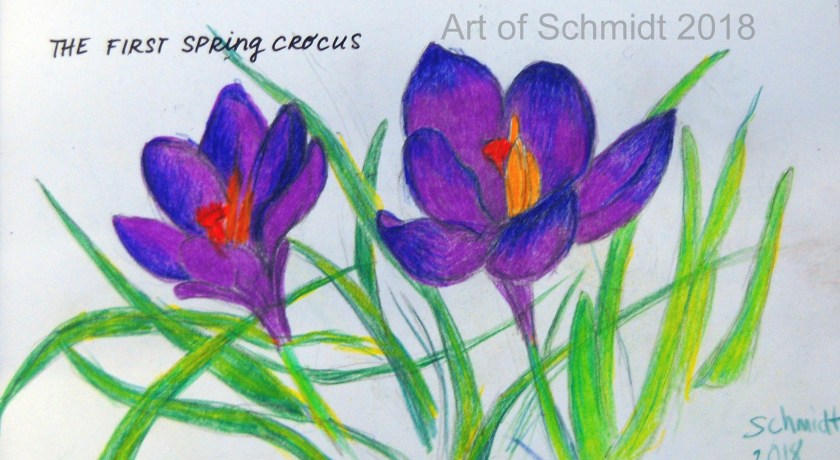
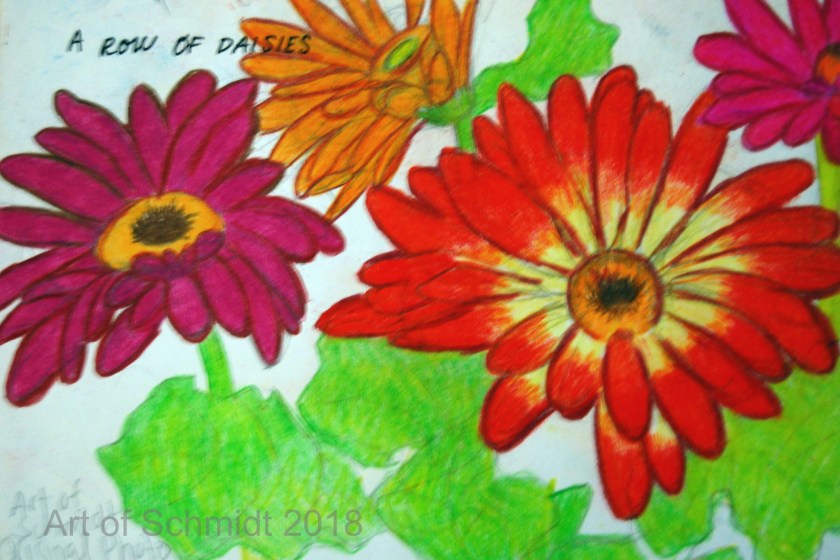
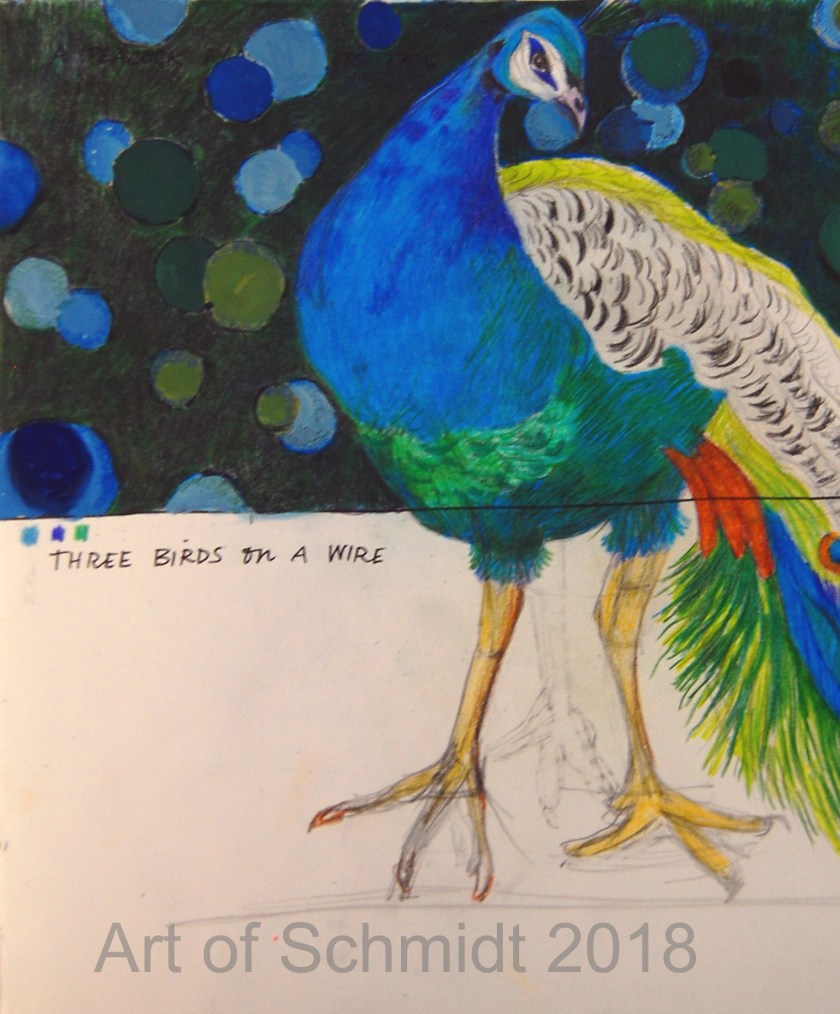
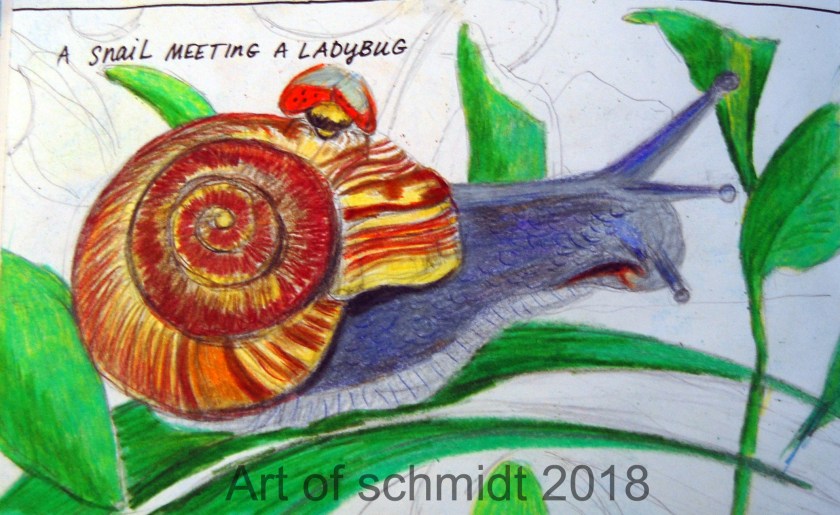
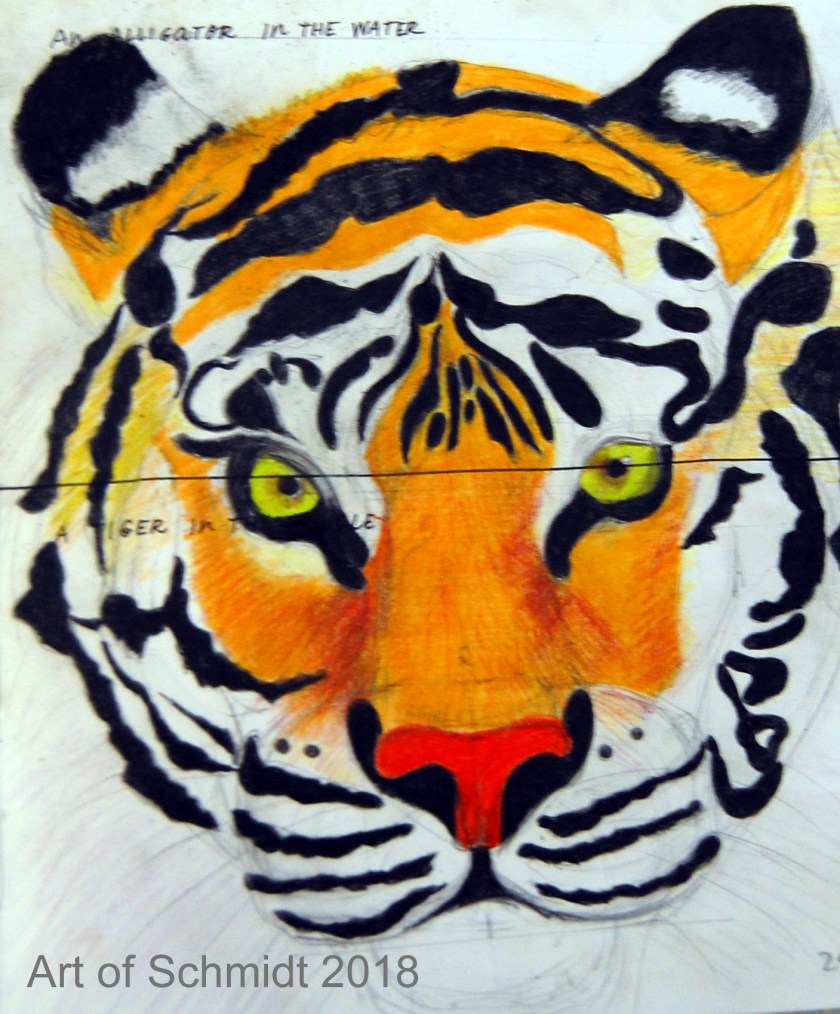 since spring is supposed to be around the corner…They were drawn with pencil and Prismacolor Colored Pencils. Thank you for reading! I hope this speaks to someone out there who is struggling not to give up on their art.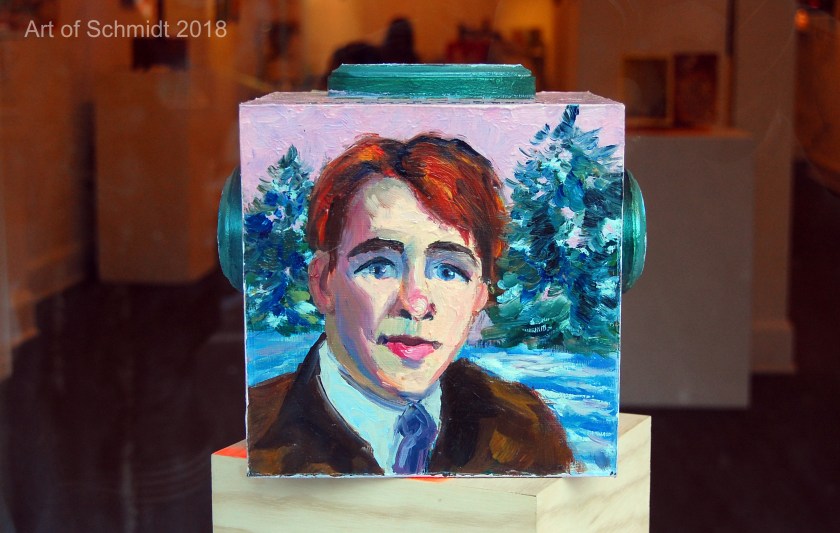







 Art of Schmidt