Why Should Artists Create Content Based Work?

Have you ever wondered why some artists, such as Andrew Wyeth, and others create their artwork in a series format? My first experience with creating artwork as a series was as an undergraduate at McDaniel College, taking art classes at the senior level. In this Senior Studio Capstone class, my fellow students and I were given the assignment to create a series of artworks that expressed a theme of interest or importance to us and to write an artist’s statement that described our artwork’s theme.  For example, according to the website The Abundant Artist, some themes that artists might explore in a series include, 1.) texture and color (Faith Ringgold), 2.) politics  (Kathe Kollwitz), 3.) death, (Hirst) or 4.) messages that uplift, like Kelley Rae Roberts.   Prior to that, my assignments in drawing and painting consisted of drawing or painting to try and copy the still life or model in front of me, to teach the skills of observation. At that time, I had no idea how to even get started and had artist’s block for two weeks while I searched for artworks that inspired, all in vain. My Teacher did give us some guidance on the process though. He suggested that we create sketchbooks in which we pasted artworks of inspiration, no matter the medium, and he suggested that we look up art magazines, such as Art in America. Pouring over art magazines and artist websites, such as Forum Gallery, I could think of nothing new to say with my artwork that hadn’t already been said. I felt I had a lot of competition since there have already been many artists who have gone before me, who have created several unforgettable artworks to boot, such as Vermeer’s, Girl with a Pearl Earring, painted in 1665.

After weeks of struggle and seeking out artwork that inspired me, I had a solution. My answer came from an unlikely source, music. I decided to illustrate some of the songs of my favorite musician, Sting, using my self-portrait as a muse, along with color, and composition to portray various feelings of uncertainty, sadness, etc. Some of the songs I illustrated in my self-portrait series were Lithium Sunset and Secret Journey. The first song talks about how medication can help bring a person out of depression and make them strong enough to get back up again. While the second song, Secret Journey, talks about a mystical journey of enlightenment. I printed out the songs from Sting’s website, www.sting.com, pasted them in my sketchbooks, and underlined words and phrases that I thought were good candidates for illustration. And I referenced these songs and artworks of inspiration as I crafted my Artist’s Statement. As I searched through artwork that inspired, it became evident that I was drawn to the subject of the portrait, but I didn’t know how to make my work unique because the portrait has been done numerous times before.

The imagery of Sting’s songs provided the perfect solution to my dilemma and I was off and running. My then boyfriend, Dan, took photos of me to provide the source photos for my oil paintings. To make a long story short, I finished the series in time and even made a power point presentation as part of the project requirements of my finished works. In addition, I crafted an artist’s statement, which helped me to define the artwork by describing what the artwork would be about and what influences had to lead me to the finished work. I learned a lot about myself as an artist, such as how to distill ideas through writing artist statements and creating sketchbooks to illustrate my ideas by pasting artwork that inspired onto its pages. In particular, I discovered that I liked to make artworks that had a message, even if the search for the solution was far from easy. But back to my main question, “Why should artists work in a series?”

To investigate that question more fully, I did what many people would do, I googled it.  The websites, Abundant Artist and Art Business.com,  shed some light on the subject of content-based art. According to the authors, some of these benefits include: 1.) Making artwork in a series gives the artist a platform to connect with their audience on an emotional level because the artwork is focused and personal, 2.) Creating artwork in a series format helps others to understand what an artist’s work is about and who they are as a person, 3.) Artists who make artwork in a series are more likely to find art galleries to exhibit their work

because they know how to market the artist and this format follow their business model, and 4.) Working in a series format helps artists to understand what topics/subjects are important to them, and which they like to draw or paint.

How to Stop Procrastinating and Get Things Done

This week’s topic focuses on a behavior that many can probably relate to, and I include myself in that number. The behavior of which I speak is procrastination. I confess that I seem to have only two settings with regard to task completion, and they are hyper speed and snail speed. At times I am hyper focused and hyper busy on whatever the project at hand may be, such as completing an art project, or writing an artist’s statement, etc.. However, at other times, I start and stop and ultimately avoid the task, if it seems too difficult or unpleasant. At present, I am battling with the dreaded enemy of time, procrastination. I procrastinate on the mundane, such as de-cluttering my studio and organizing hard copy art business files and paper work, to the more critical, like updating my web site, and balancing my checkbook, or finishing a complete body of work that features some sketches and Photoshop collages that illustrate favorite poetry quotes.  As to that later, I have started and stopped the drawings and paintings and Photoshop collages for the poetry illustration project numerous times since I came up with the idea in the summer of 2015.

Lately, I have been trying to finish one work from this series in particular, and it is an acrylic painting, entitled, Waiting: Creative Block. It has been a very challenging art piece to work on in terms of choosing the right composition and color scheme. I am being really stretched beyond my comfort zone with this series, as I have never attempted to illustrate something as ambitious as abstract thoughts and feelings such as creative block, creativity, childhood wonder, overcoming life obstacles, etc.! And though I know the stretching is good for my artistic muscles and that I will be happy with myself for completing the work, I tend to avoid the hard part. And the moment comes when you decide whether to press on despite the difficulty and finish the “run” or you give up.

Other things that I have procrastinated about completing are cataloging and watermarking my art work, getting art work framed and matted for an upcoming art show, writing this blog post, printing out my bookkeeping files for this year’s profit and loss sheet, (what fun!), to name a few. I need to find a balance between procrastination and workaholic tendencies when I don’t take time to rest and regroup. When I am unbalanced, I have very little physical energy or creative energy to finish the art work I start and all the other administrative tasks that I need to do to help support my business and market my art work.  I need to create margin in my schedule so that I can get these things done and set some deadlines for each task so that I am motivated to complete these projects!

One more thing I also need to do now is to not schedule any further art shows, and just take some time to regroup so that there will be time to get these things done, such as finishing the poetry series and updating my web site. To date, I have scheduled 9 art shows this year, and one possible art fair is currently in the works. This leaves me with little time to get these other tasks done, since I often have to get my art ready for distribution by pricing it, framing it, and marketing it on social media, such as Facebook and Instagram, in addition to making print postcards in Photoshop to give out to potential clients, fans, family, and friends. On the other hand, I have gotten to make more sales, more exposure for my art, and have met more people, which is always a good thing!

I wondered what others had to say about procrastination and how to stop doing it, so I listened to a podcast by author and art biz coach, Alyson Stanfield. In a podcast called, Getting Difficult Things Done, Alyson Stanfield and a guest, Cynthia Morris, also a coach, as well as an artist, discussed some strategies to tackle procrastination. Source: Alyson Stanfield, wwww.artbizcoach.com.  One of their main points was to envision how you will feel after you complete a challenging task, rather than settling for feeling good or just having fun.  Another idea that was mentioned in the podcast was the importance of setting deadlines and thinking about how to reward you after completing a difficult task. Alyson shared that one of her dreaded tasks as an art business coach is working on bookkeeping. She tried to start a ritual of doing her books on Monday but found that that was not the way she wanted to start her week. She was helped by some advice that her husband gave her, which was to re-frame her situation by thinking of this task as counting her money. Bookkeeping is definitely not one of my favorite tasks either. On the other hand, I am realizing that by doing my books, I can understand what is working and what isn’t in my business, rather than being in denial about how much spending I am really doing, in relationship to my sales.

In a similar vein, I also looked up goal setting and anti-procrastination strategies on a Google search, and I found an article called, Why Do You Procrastinate, by Margie Warrell, on www.forbes.com. Warell shared that many of us procrastinate on things both large and small, whether it is getting our personal files organized or updating our resume. She discussed the ways in which we avoid doing things that need to get done with excuses such as, “I don’t have the skills for that,” or “It’s too difficult.” I have definitely made those excuses and avoided tackling difficult tasks, like working on my poetry series. But this week, I made the decision to set aside time for creativity and put in some time coming up with solutions to the compositional problems plaguing my Waiting: Creative Block painting. And I could see that this progress from a much-cluttered composition to something more pleasing is going to take time, but that it is well worth the effort. I know it is stretching me as an artist to do more challenging art work that requires different solutions from my older more simple pieces.

In closing, I would like to share some strategies Warrell suggested to avoid the procrastination trap. Here they are in order: 1.) Set a deadline, and write down your goal (s), 2.) Simplify your goal (s) into smaller pieces, 3.) Envision your ideal life, 4.) Get an accountability partner, 5.) Reward your progress, and 6.) Take the first step toward your goal. Source: Why Do You Procrastinate, by Margie Warrell, on www.forbes.com.

Art Shows

Hello Family, Friends, and Followers,

I’m writing to tell you about my upcoming art shows. I’m excited that I’ve been able to secure these new opportunities to show my art work at two great venues and I hope you can stop by to one or both of these art shows! This month my painting,  Magenta Rose , will be featured along with the art work of several of my fellow Artist Angle Member friends at Frederick Community College from September 9-October 4th at the Mary Condon Hodgson Art Gallery. For more information about the Artist Angle Member’s art show, follow this link:  http://calendar.frederick.edu/site/arts/event/artistangle-gallery—members-exhibition/.

Next month, my art will be featured at the Frederick Coffee Company in Frederick, MD, as an artist of the month from October 1-31. The cafe graciously features local artists every month of the year, free of charge.  Stop by for coffee, tea, a sandwich, or live music on the weekends. My exhibit will feature landscapes and still life which was inspired by the art work of the Impressionist artist, Claude Monet. Here is the web site for the Frederick Coffee Company if you would like more information about the art show location, or cafe hours of operation, http://fredcoffeeco.com/. I’m working on an art show post card to advertise the Frederick Coffee Company art show since the cafe does not make marketing materials for the artists, like an art gallery usually does. I will add a blog post with the completed post card soon!

The Great Talent Debate

As an artist, I often hear comments such as, “You’re so talented,” or some variation on that theme, whether it is a comment that is posted online or an in person encounter.  I’ve gotten this remark from friends, family, strangers, etc.  And while it is always nice to hear such ego boosting compliments, I feel the need to pull back the curtain on the mystique of the talented artist conception. In fact, when others interpret my completed paintings and drawings as evidence of a natural talent for art, that I was born with, my facility with drawing and painting has been the result of a systematic and long-term method. This process is composed of some of the following ingredients: a strong passion to master drawing and painting skills, bloody minded determination not to give up on art, failure (not everything I draw or paint is successful), an extensive education in art technique and media, weekly practice in drawing and painting, just to name a few. And perhaps most importantly, I grew up with parents who were very supportive of my pursuit of art. For instance, my mom was the first one who introduced me to painting when she enrolled me in a watercolor class at the age of 9. I’ve been hooked on making art ever since! In fact, this summer I have embarked on a long-term drawing challenge to improve my drawing skills and I am realizing there is still so much I need to learn, and that I need the discipline to get better at my craft.

With regard to my weekly drawing practice, I have been working on a drawing challenge since June of this year, called, 100 Faces in 100 Days. In this challenge, I practice drawing on an almost daily basis. I focus on sketching celebrity portraits with paper and pencil, keeping the drawings simple so that they can be completed in about 45 minutes.  Some days the portraits seem to come together almost magically and I have very few drawing errors to correct, but on other days like today, I really struggle to get things right with the portrait measurements. On days such as these, I make a lot of revisions to the drawing, erasing, measuring and standing back to compare my drawing to the reference photo, until I am happy with the result, or the kitchen timer dings. And this phenomenon is nothing new. As an art student at McDaniel College, I had a lot of ups and downs, with paintings and drawings. Some were successful, others were not.

But to return to my initial question, Does natural talent exist? Although I am not a scholar or even a cognitive scientist, I theorize that many factors play into whether a person is able to show exceptional skill in drawing or painting, or any other impressive level of aptitude in a given domain. For example, in specialties such as singing, playing an instrument or sports, etc. I think it is a combination both of one’s environment, (the conditions you grew up with), specific personality traits, such as a strong work ethic, and a strong desire to master a subject. I think if I just relied on my innate talent, (whatever that may mean), I wouldn’t grow artistically because I would feel that no effort was required on my part to achieve greatness. The question of whether natural talent comes from has been discussed by  Kauffman, (2013), who states that there has been an ongoing debate about whether natural talent exists or not. Kauffman, 2013, states that in ancient time’s people believed that individual talent was linked to divinity, and that interest in this topic took a scientific turn in the nineteenth century, with the publication of the work, Francis Galton’s Hereditary Genius, which was published in 1869. Source: The Complexity of Greatness, by Scott Barry Kauffman, 2013.

For example, Kauffman (2013), states that  Galton made a study of “eminent lineages” and based on his findings, he theorized that talent was passed on to families from one person to another (Galton, 1874). According to Kauffman, 2013, Galton, also acknowledged the importance of not giving up easily, but he discounted the significance of environment as a determining factor of personal greatness for the individual, specifically with regard to celebrated scientists. The basis of Galton’s theory was that individuals were born with talent (Kauffman, 2013). On the other hand, Alphonse de Condole, (1873), “a French-Swiss botanist”, made the assertion that environmental factors play a critical role in the creation of exceptional talents, such as political conditions, religion, economic, social and cultural factors. ( Source: https://blogs.scientificamerican.com/beautiful-minds/the-complexity-of-greatness-beyond-talent-or-practice/) and www.wikipedia.org.

Other theorists, such as the 18th-century painter, Sir Joshua Reynolds, argued that art students should not rely on their talent alone to produce great art, but that they should practice their craft diligently, (Kauffman, 2013).  The contention about where skill or natural talent comes from has continued to be debated and studied among Scientists, scholars and researchers even as recently as the 2000s. For example, According to Lynn Helding, author of, Innate Talent, Myth or Reality?,  2011, the topic of greatness was more recently discussed by Psychology Professor, Anders K. Ericsson, who teaches at the University of Florida (Helding, 2011). Ericsson studied both the quality and amount of time it requires for an individual to achieve greatness in a specialty (Helding, 2011). In addition, some of the research he published on this topic was published as recently as 2015, in his article entitled, The effects of experience and disuse on Crossword solving, published in the periodical, Cognitive Psychology. Source: https://psy.fsu.edu/faculty/ericssonk/ericsson.dp.php.  His studies into this topic have formed the basis for “the magic number 10,000 for the number of practice hours that it seems to take for anyone (including “so called prodigies”) to attain a level of mastery at such high-level tasks such as tennis, golf, chess, piano, and violin. This term is also known as “The Ten Year Rule of Necessary Preparation.” (Helding, 2011).

However, since the well known and wealthy author and motivational speaker, Malcolm Gladwell, coined the phrase, “the 10,000 hour practice rule,” he frequently gets the credit for this theory and not Ericsson, or the eleven researchers “whose own deliberate practice, spread over more than a century, provided the data for the theory.” Source: http://scholar.dickinson.edu/cgi/viewcontent.cgi?article=1078&context=faculty_publications. Innate Talent: Myth or Reality, Lynn Heliding, 2011, Mindful Voice. Journal of Singing 67, no. 4, pgs 451-458.

The question of whether natural talent real continues to be debated on discussion threads in Quora and Reddit, which are some forum type websites. Users ask such as: “Does natural talent exist or all skills learned?” cited in www. Reddit.com, in 2013. In addition, this question is much like the nature or nurture question in determining how a person will turn out, and what determining factor plays the most crucial part in that process. We may never know the exact percentages of how much genes or environment can affect individual outcomes, or even if there is some type of gene that gives people an advantage in subjects such as math, athletics, music or art. But one thing I know for sure, I am going to keep practicing and not give up my painting and drawing practice, because I want to continue to grow as an artist. What about you? Do you think greatness is a skill that is solely learned by deliberate, ongoing practice or are some individuals born with some type of gene that gives them an advantage others do not have?

Note: To read more about Professor Anders K. Erickson’s fascinating studies into “deliberate practice and expert performance” go to

https://psy.fsu.edu/faculty/ericssonk/ericsson.dp.php.


The Lost Art of Drawing

About a century ago (well I exaggerate a little); I was a college student studying art at McDaniel College in Westminster, MD. I had a brilliant and successful art teacher who was able to make the practice of art making and the hatching of new ideas come alive like no other teacher I had before.  He taught me many useful things, such as how to keep an art sketchbook pasted with photos of art work by artists I admired, and how to write about my art in a way that expressed the message I wanted to share with it. Above all of the tips and advice, he gave I remember him telling me that I should draw every day. At the time, that task seemed quite difficult. I was always an impatient artist as a student and I often rushed through the drawing stage to hurry up and get to the painting, especially oil painting, because I enjoyed working with the buttery texture of the oil paint and I loved working in color. Now that many years have passed since my graduation from McDaniel and I am a professional artist seeking out new avenues to showcase my art and making custom pet portraits, I can truly see the value in his advice.

With hindsight, I can see that he was so right about drawing every day. I no longer rush art work projects and I have learned to love drawing, whether it becomes a painting or not. A few years ago, I took a drawing class at Frederick Community College, with instructor Cynthia Bausch, who taught me how to use charcoal, pastel, and pencil to create compelling drawings with a high degree of finish. This experience started my love for drawing, even though getting the drawings right was extremely difficult. Frequently, I would do the sketch over and over again until I was pleased with the result. For instance, the self-portrait in charcoal, pictured in this post, was drawn a total of three times before I  handed in the final piece to the art teacher. Since then, I have embraced my former art teacher’s advice, Steve Pearson, from McDaniel College,  to draw every day. at present, I am working on a drawing challenge I like to call 100 faces in 100 days. In this challenge, I draw a pre-selected photo from the Internet or a coffee table book, Icons, of a celebrity using only pencil and paper. I do not add in a lot of detail or shading and I limit myself to 45 minutes a day. This time frame for drawing sessions tends to be more like 5 days a week for me since I often work on weekends and feel pretty fried when I come home. The drawings are strictly for practice and not intended for sale at this time.

To see what others in the art world had to say about the importance of drawing, I did a web search, with the query term, Why Artists Should Draw More.  Artist and blogger, Lori McNee, states that drawing can give the artists a multitude of benefits to help them improve their craft as an artist, not the least of which is learning to observe a subject, which is a skill that is important both to the practices of painting and drawing. Source: http://www.finearttips.com/2012/10/10-reasons-why-artists-should-draw-more/.  Drawing more can also help you plan out your compositions better and give you a road map to follow for your design before you get to the painting stage when it is more difficult to make changes.

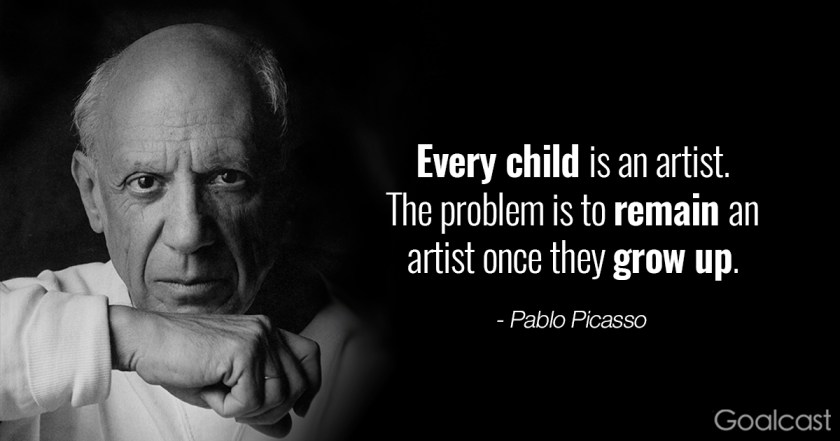
McNee, (2012), also states that many children enjoy coloring with crayons. For example, I have observed this tendency in the day care setting, (McNee, 2012),  when I was working as an Assistant Teacher at La Petite Academy when I was a high school student. However, over time many children stop drawing or making crafts and self-consciousness drifts in, stealing the spontaneous joy of creating something new. I observed this tendency when I volunteered as an assistant in a middle school art class back in the early 200s. A lot of the kids in this art class would say, “I can’t draw this,” or “You do it,” to me when I walked around to work one on one with the students.Picasso-quotes-every-child-is-an-artist  In fact, even artists (such as Mc Nee) who have been trained to draw, often let this essential art practice slide over time, (McNee, 2012) and may come to rely on tracing, especially if they need to get a project done quickly for a client. I admit, I am guilty of this tendency and until a few years ago, I rarely had a daily drawing practice, and I often struggled to get my proportions in portraits correct, often giving up in futility to join all the other drawings on the reject pile.

However this summer, I was inspired to tackle my fears about drawing and making mistakes by the drawing challenge artist and blogger, Julie Fan Fei completed which she called, 100 15 minute Balzer Faces, in which she made a daily drawing practice using a variety of media such as ink, acrylic paint, and jelly plate printing, among others. Source: http://balzerdesigns.typepad.com/balzer_designs/100-15-minute-balzer-faces/.  This challenge and my art teacher’s wise advice, motivated me to complete my own drawing challenge which I like to call 100 Faces in 100 days.  I post progress photos of my celebrity sketches on my Instagram account almost every day, but it tends to be more like 5 days a week because of my work schedule, in which I often work weekends.   I spend 45 minutes on each sketch, with minimal sketching, and I simplify this process by working only in with paper and pencil.

I also keep a visual photo file of celebrity imagery I would like to draw from. One important note of caution here: If you want to sell a portrait or sketch, it is best to use your own photos if possible to avoid copyright violation, or to visit the Wikipedia web site, http://www.wikipedia.org, where you can do image searches by the name of the celebrity and find out the photo’s provenance, such as the name of who took the picture and whether it is in the public domain. Here is a link Wikipedia with a public domain photo of Cary Grant: https:enwikipedia.org/wiki/Cary_Grant#/media/File:Grant,_Cary_(Suspicion)-01_Crisco_edit.jpg. I have attached my sketch of Cary Grant based on this photo.

 To be on the safe side, you want to choose photos in the public domain if you plan to show your work or sell it or publish it in any way unless you can get written permission from the photographer to reproduce their work.  If you’re drawing is just for practice, no need to worry. But do try to give credit to the photographer if you can find out that information, and include that photographer’s name in your sketch when you sign and date it. Here are two web sites you can refer to learn more about copyright violation and terms: https://www.copyright.gov/help/faq/faq-fairuse.html, and https://blog.kenkaminesky.com/photography-copyright-and-the-law/.

In conclusion, I am still working on my drawing challenge and I am really enjoying the process.  I feel like I am getting more comfortable with drawing and the pressure if off because this work is not for a custom art order, or for an art show entry. I am learning how to slow down and not be in a rush to finish a project. What really matters is that I have passion, determination, and am willing to put in the time to learn to draw, paint, etc.  It takes time to acquire these skills and is similar to learning a sport or an instrument, which requires hours, days, weeks, and years of practice. I’m trying to be patient with the process and remember that most of what I know how to do now with ease, had to be practiced and (and often!), whether it was walking, talking, reading, writing, cooking, etc., etc.  to reach a level of mastery.

How to Make Time for Art

This week I would like to talk about one of my greatest struggles, and that is, making time to create art. It probably seems ironic for me to say that since I think of myself as an artist and I make art for art shows, clients, and I studied art in college. However, sometimes the things I want to do the most, such as painting and drawing, seem to be the most, difficult to make time for in my schedule. So many things battle for competition of my time: everyday stuff like laundry, cooking and balancing my checkbook, administrative tasks for my art business, like marketing and accounting, time wasters like internet surfing and excessive social media use, etc., etc. All these need to get done, but if I am not careful, they can crowd out too much of my time. And if that isn’t enough, I have been battling with artist’s block and self-doubt about my abilities to succeed as an artist, (whatever that means), ever since I have taken my art to a more professional level, by showing at art galleries and art fairs, and creating custom art for clients. My standards for making art have really skyrocketed, (and they were already ridiculously high) since I now feel the pressure to try and please others by making art work that “sells.”

However, in all this, I have lost my joy in making art, and don’t even know what it is that I want to say with my art anymore. This period of my life reminds me of another time period when I faced the same kind of self-doubt, when I was a senior in at McDaniel College in Westminster, MD, studying art. I was in my final year at McDaniel and taking an art studio thesis course, where I had to make art work that demonstrated something I wanted to say and write an artist statement to support that work. After I got that assignment, I felt paralyzed with indecision. It took me two weeks to come out of that episode of artist’s block, and I really wasn’t sure what I would do during that time. When I was going through this ordeal,  I felt that everything there is to say about art has already been said by many famous artists such as Michelangelo, Da Vinci, Vermeer, Rembrandt, etc. and that every art subject has already been done in the thousands of years of art history. I felt I had to come up with some really “original” idea and I looked everywhere I could think to find inspiration: art magazines, art books, etc. I finally found my inspiration in the songs of singer/songwriter, Sting, which seemed an unlikely solution to me. I decided to try and illustrate the feelings in some of his songs like Lithium Sunset, by using myself as subject, and color as a way to express emotions. The crisis was solved and I made it through, but I really struggled to climb out of that pit.

Unfortunately, I am finding myself in that awful place again of uncertainty and doubt. So this week I am writing about how to make time for art, in hopes that it will help me to focus my time better and to get back into the habit of regular studio practice. I’d like to share with you some insights from two blog articles I read by Lisa Congdon, entitled, How to Find Time to Make Art When You Work Full Time, (2017) and an article entitled, How to Find Times for Art in a Busy Life, Tara Leaver, (2014) in hopes that you will find it helpful to you in managing your life and making time for creativity. According to Lisa Congdon, there are a few things you can do to help make time for art. For example, she recommends that artists and other creative types set aside a block of time every week, even if it’s only for a few minutes or a few hours, and that these small increments of time will add up over time. She also mentions an all important habit and that is to limit your time on your computer or phone screen. Another blog writer, Julie Fan Fei-Balzer, recommends a few time management apps she uses to track her time online, such as Flipboard, Tweetdeck, and Alinoff (an online computer app that records the amount of time you spend online.) I’ve been taking this advice by setting aside small increments of time daily, just working on demonstration paintings from art technique books to try and get myself back in the groove. And slowly I am getting my courage back to work on original art, which I really need to get back to doing more often, because I realize that if I don’t make art, I have nothing to share with others, as was so wisely said by Art Biz Coach, Alyson Stanfield on her podcast, on Art Marketing Action series,  at http://www.artbizcoach.com.

For example, she recommends that artists and other creative types set aside a block of time every week, even if it’s only for a few minutes or a few hours, and that these small increments of time will add up over time. She also mentions an all important habit and that is to limit your time on your computer or phone screen. Another blog writer, Julie Fan Fei-Balzer, of Balzer Designs, recommends a few time management apps she uses to track her time online, such as Flipboard, Tweetdeck, and Alinoff (an online computer app that records the amount of time you spend online.) I’ve been taking this advice by setting aside small increments of time daily, just working on demonstration paintings from art technique books to try and get myself back in the groove. And slowly I am getting my courage back to work on original art, which I really need to get back to doing more often, because I realize that if I don’t make art, I have nothing to share with others, as was so wisely said by Art Biz Coach, Alyson Stanfield on her podcast, on Art Marketing Action series,  at http://www.artbizcoach.com.

In addition, Tara Leaver, author of the article, How to Find Time for Art in a Busy Life, (2014), states that one way to make time for art is to schedule in blocks of time during the day when you feel you are at your best, whether it’s early in the morning, in the afternoon or late at night. I personally prefer the afternoon or mid-morning, but I know it would be pointless for me to get up early to try and fit art into my schedule because I am not a morning person. She also mentions that having healthy boundaries and the ability to say “No” to others can help you make time for art, although you can occasionally say yes to say, a meeting with friends over coffee.

For me, the saying “No”, might be to a variety of things such as additional art shows, (since they often require much more than just making art, such as marketing, or pricing the work, or getting it ready for distribution, e.g. (framing, matting or pricing). Or it might mean saying “No”, to watching movies or surfing the internet. Even a well-intentioned visit to Pinterest to look for inspiration for my art work can turn into a rabbit hole that keeps me away from my work and instead results in mindless scrolling through other’s people’s art work, recipes, fashion ideas, etc. if I don’t limit my time there. The biggest takeaway I am getting from this journey out of artist’s block, is that I fear to make mistakes so much that I have been avoiding doing my art work, staying busy with other things, such as cleaning the house, art business stuff, or anything else I can think of to stay away from the easel and my fears about whether I might mess something up. I seem to have a pattern of getting excited about projects, and then giving up, when I get to the hard part. However, today I choose to make art in spite of the fear because it’s what I truly love to do, and I want to share my work with others. It’s been my dream to be an artist for as long as I can remember, and despite many setbacks and self-doubt, it seems to be something I return to again and again. I hope it will bring some light and joy to your day viewing my paintings. The Geese drawing and paintings are my original art work, and the landscape is a demonstration from the Jerry Smith book, Expressive Landscapes in Acrylic.

Inspiration: The Creative Process

For me, finding inspiration for my art work can be like chasing after the wind sometimes, or perhaps like banging my head against a brick wall, ad infinitum. While some people would describe inspiration as an aha moment, that seemingly comes out of nowhere, I believe it is more likely to be the result of a lengthy process of actively seeking new ideas, art techniques, or studying the art work of others, or simply a reaction or interpretation of our everyday surroundings or even our pasts that can ignite the spark of inspiration. Once brought to mind, it may seem sudden, but it really isn’t.

To try and stem the tide of artist’s block and the inertia that inevitably follows; I need to take the time to fill my creative tank by purposefully seeking inspiration in whatever form it may take. According to the Brittish periodical, The Guardian, one artist, Isaac Julien, described his “magpie approach” to seeking out new ideas. For example, he states that he is always actively seeking new fodder, from his immediate surroundings, such as people watching, viewing

Childhood memories revised
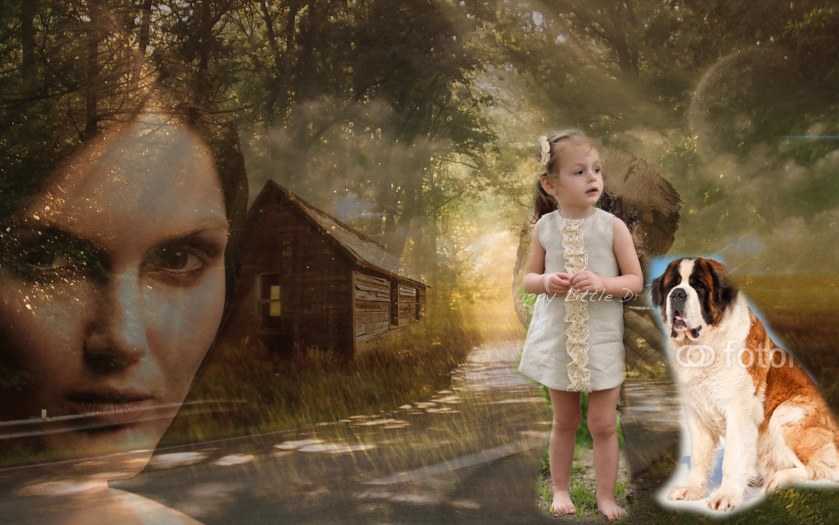
After reading the article about inspiration by William R. Beebe, I was reminded of a photo collage I created in Adobe Photoshop last summer, in which I illustrated the feeling of nostalgia. Pictured is my older self, looking back at the child version of me, with my loyal St. Bernard dog, Barney. Maybe this digital photo collage might become a more finished work sometime in the near future!

films, reading books, and even culling subject matter from conversations he is having with others. Source: https://www.theguardian.com/culture/2012/jan/02/top-artists-creative-inspiration.  Another artist, William R. Beebe, suggests that artists should visit art galleries to ignite their imaginations. In fact, in the article he wrote, Finding Inspiration in Art, he shares how a visit to the Muscarelle Museum at the College of William and Mary,  led him to create a series of impressionistic landscapes of the Virginia Area. Source: http://emptyeasel.com/2012/02/16/finding-inspiration-in-art/.


Meanwhile, I am going to try taking Mr. Bebe’s advice and either make a trip to an art gallery or to visit a gallery “virtually” online, to see if I can regain new energy and creativity for a painting or drawing.

What is Artist’s Block? Part 2

Last week I wrote about my struggles with artist’s block and I identified two specific types of artist’s block that were keeping me from producing art work, and they are 1.) a mental block and 2.) an emotional barrier. Both of these symptoms seem to culminate in negative self-talk that makes  me afraid to put pencil to paper. In spite of these things, I have been soldiering on. How about you? Did these types of artist’s block relate to you, or maybe you might be dealing with different types of artist’s block, such as work habits that don’t work for you, or personal issues, or a shortage of time, money, or resources, or feeling overscheduled? These types of artist’s block were discussed in the article: Seven Types of Artist’s Block and What to Do about Them by Mark McGuiness, which I mentioned in last week’s blog post. Here is the website if you want to read more about the article:  http://99u.com/articles/7088/7-types-of-creative-block-and-what-to-do-about-them.

This week my main difficulties with artist’s block have been feeling overwhelmed and pulled in too many directions, and my work habits and time management, which are keeping me from being able to consistently produce art. Now that I have made the transition from a hobby artist to a professional artist, there are much more demands on my time than there was when I was just painting for fun. Now there are a myriad of tasks that I need to complete to keep my art business organized (such as taking inventory of my works, so that I know what is available and what has been sold), marketing my art work and sharing my art show events with others via Facebook, personal emails or Instagram, and keeping my web site updated with blog posts to keep people coming back to the site, just to name a few. The ante has really been upped this past month because I have signed up for more art events, which is a good thing because it opens up the door for more sales and personal connections with clients and patrons, but it also means that my administrative tasks increase exponentially. To cope with the added stress, I have been trying to incorporate self-care into my schedule again, whether it’s taking the time to journal, go for a walk, going to my favorite coffee shop, coloring in my coloring books, or just taking a long drive to get away from it all. A little anxiety is a good thing because it motivates me to work, but too much anxiety can make me feel paralyzed and unable to work.

The second aspect of my artist block is dealing with my time management skills and avoiding distractions which can keep me away from making art. Distractions can come in many forms, whether it’s social media, email checking, etc. And I might justify this by saying that it is for my business, and it might well be, say a Facebook post to advertise my upcoming art show at Art Pops! Everedy Square. However, I am learning I need to limit my time on the computer, both for administrative tasks such as data entry for inventory of my art work, or conducting marketing campaigns on Facebook or Instagram.  I also am a person who lacks structure and discipline, so I have to create an outside structure for myself by creating deadlines for myself, writing to-do lists, writing due dates on the calendar and setting my kitchen timer for what I like to call Pomodoro.

These Pomodoro’s are 25-minute increments in which I focus on only one task, whether it’s working on a drawing to post for Instagram for my 100 faces in 100 days drawing challenge or updating my Art of Schmidt web site. Sometimes to maintain my focus, I also need to turn off my phone and not answer emails. Afterward, I take 5-minute breaks to re-group. To learn more about the Pomodoro technique, visit the following web site: https://www.focusboosterapp.com/the-pomodoro-technique.    If I don’t apply discipline and self-control to my routine, I get really behind on my projects, especially since there is no one who will keep me accountable for these tasks but myself.  The insecurity and negative chatter I mentioned in my post last week can really make me want to distract and procrastinate on getting into the studio. I am trying to be more gentle with myself and allow the art to unfold as it will, seeing it as part of a process of learning for me, and not an ultimate destination.

Part Two: How do Artists Make Money?

Hello, Friends, last week I posed the question, “Can artists make money from their artwork”? It’s a question I’m sure other artists have asked themselves in the past and certainly one that I have been asking myself lately, and more specifically, “What can I do to make that money”? In last week’s post, I discussed two specific traditional methods, listed on the Art Bistro.com article, How do Artists Make Money? by Valerie Atkisson. Some of the methods listed in this article are: 1.) exhibiting artwork at art galleries and museums, and 2.) Exhibiting artwork at not for profit art galleries. Both methods have pluses and minuses. With the former, the artist may have to submit their work to juried shows, where the competition can be tough, and the entry fees can add up, the more shows that artists apply to. Also, many for-profit galleries take a commission for artworks that are sold, which can be up to 60%, so artists need to price their work accordingly so that they can be sure to make a profit. Source: How do Artists Make Money? by Valerie Akisson, http://artbistro.monster.com/careers/articles/5848-how-do-artists-make-money?page=2.

In a Business of Art Class, I took this January with teacher and Photographer, Rebecca La Chance, at The Artist Angle Gallery, in Frederick, MD; I learned that there are some ways of coping with the competition for art show entries. For example, a guest artist, Bill Watson, taught a class on Artist Branding. One of his points was that before you choose an art gallery to submit artwork too, be sure that your artwork is a good fit for the style of artwork that is exhibited there. For instance, you can visit the art gallery website to review the types of artists and artwork that has already been exhibited, and you can take the time to visit the gallery and get to know the staff there before you decide if you would like to work with them. I think this strategy can help artists to find their target audience of people who are likely to like their artwork and sell it, rather than simply submitting art portfolios to every art gallery in the area without a specific goal. That would be kind of like throwing darts at a dartboard with your eyes closed, not a very effective strategy. It’s kind of like when you are job hunting and you tailor your resume to fit the job description advertisement of jobs you wish to apply for. This can save you a lot of time and headaches to have a targeted plan, and hopefully this method gives you time to create a fantastic portfolio, which I am learning is the foundation I need to build onto first, before getting caught up in the newest craze of how I should be marketing my artwork, etc.  Moreover, your chances of success in this venture should surely increase if you are giving galleries the type of work they already love.

But to return to the topic of,” How do Artists Make Money?” I will reference a few more methods that the Art Bistro.com article mentioned. Another method that artists can utilize to sell their work is to host an open studio event where they can sell their artwork from their studio and invite friends, family, collectors, etc.  (Akisson).Using these method artists can retain 100% of the sales, provided they don’t have a contract with an art gallery limiting how they sell their artwork. (Akisson).  However,  artists  also need to be 100% responsible for marketing their open studio and collecting RSVP, getting refreshments, as well as setting up the show, collecting cash, updating their inventory, deciding on what  payment methods to use, such as cash, check, or credit card payments using Square or a commerce site, such as Etsy or Shopify,  and posting online marketing to advertise their show using Mail Chimp, Facebook, Instagram, or other social media channels to let people, specifically collectors know about an artist’s art show.

I have tried this method of hosting an Open Studio with mixed results. The first show I hosted, I had a great turn out and a lot of art sales from friends and family who attended. I used Facebook’s event page tool and I printed fliers I had made in Photoshop to advertise the art sale which was last July. However, the second Open Studio sale I hosted this past February was very disappointing. Many people did not respond to my invitations even though I made a Facebook page and texted their cell phones, or people said they were coming and didn’t, etc. Only a few people came to the art show and I felt like it was a wasted day with very few sales for so much effort, setting up the art show, making labels for art, marketing the artwork for sale, creating an inventory list, etc. It was a frustrating experience and I don’t think I will be trying this method again, but maybe I will try some other new things instead.

And finally, here is the last method I will discuss today from the Art Bistro article, and that is, selling artwork online. Source: (Akisson, 2014). This particular method seems to get a lot of positive press, especially on websites that talk about how great it is to sell your artwork online, how easy, etc.  To use this method, artists can create online commerce sites with their artwork on websites such as Etsy.com, Art Fire.com, Fine Art America.com, Red Bubble.com, Shopify.com, etc. I am sure there are many more sites, but these are the first examples that come to mind. One thing I learned a few years into setting up my own Etsy site is that I need to take into account the commission taken by Etsy and price my artwork accordingly, so I make a profit from it. However, an advantage of building my own commerce site and selling my artwork directly to others is that there are no gatekeepers who can reject my artwork, although there is usually a subscription fee or other fees associated with membership on the website.  Another thing is that it is not enough for artists to build the Etsy shop and just wait for customers to buy their artwork. In fact, many of the people who buy my artwork are friends and family who have seen my artwork on Facebook or have commissioned artwork from me, not strangers who have visited my website or Etsy store.

Because there are many, many artist commerce shops out there, artists need to advertise their artwork on Facebook, Instagram etc. and make sure that collectors and friends know about their shop so there will be a greater share of online sales. Furthermore, artist commerce sites need to be updated frequently with a variety of artwork, but not so much that buyers don’t recognize your personal art style.

One more thing, I highly recommend is that artists host art shows in person as much as they can, and not just relying on their art website or commerce store to sell their work. It seems to me, base don my own experiences that people want to meet the artist in person and sell the physical artwork before they will buy it. It is also a chance for the artist to build a personal connection with collectors and to find out why they like the artist’s artwork. Sometimes even the best photography will not show details such as texture, etc. of specific mediums like an oil painting or acrylic. However,  it is important to take the best possible photos of your artwork that you can before posting these on your commerce site or artist website. If you aren’t good with photography, take a photography class, or hire a professional photographer so you can present your artwork

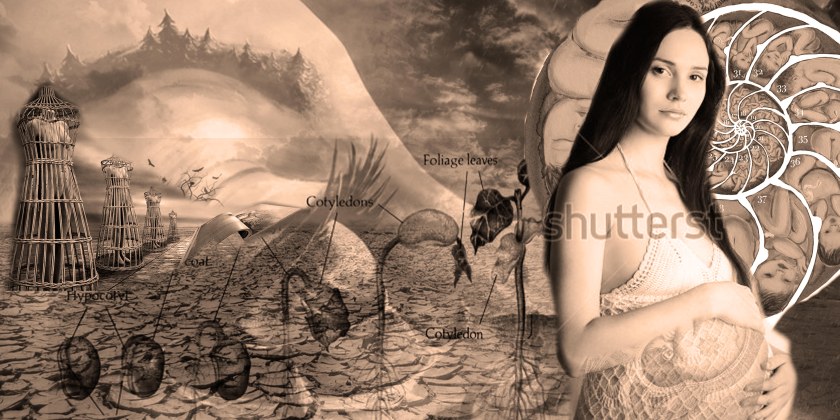
photo collage, pregnancy, desert, eye, dress forms, seeds, woman, process, artist's block.
Here is a photo collage I made in Adobe Photoshop which I made by combining various photographs in the Photoshop program. I wanted to illustrate the feeling of artists’ block, which can feel like a time of dormancy. I plan to translate this collage into a watercolor painting soon.

in the best possible light. It is your visual resume and your most effective selling tool to show the world who you are as an artist. Best of luck!


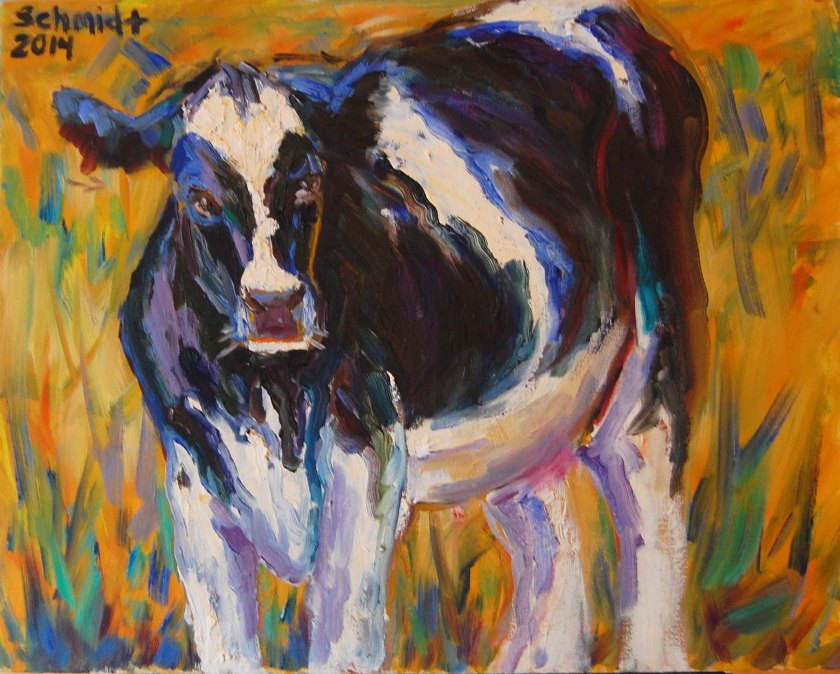
Sold! Cow in theMeadow

Hello, Friends,

I am pleased to share that my oil painting, Cow in the Meadow, sold to a client this May. If you wanted to purchase the painting but didn’t get a chance, I have reproductions of this painting for sale on my Redbubble store at https://www.redbubble.com/people/jsjschmidt2017/works/26919397-cow-in-the-meadow. There are canvas prints, iPhone cases and more with this painting on it! Iphone cases are selling for $25 each. cow portrait small