Mixed Media Art: Explained, Part 1

Mixed Media Art: Explained (A brief definition)


Hello friends, family, and fans,

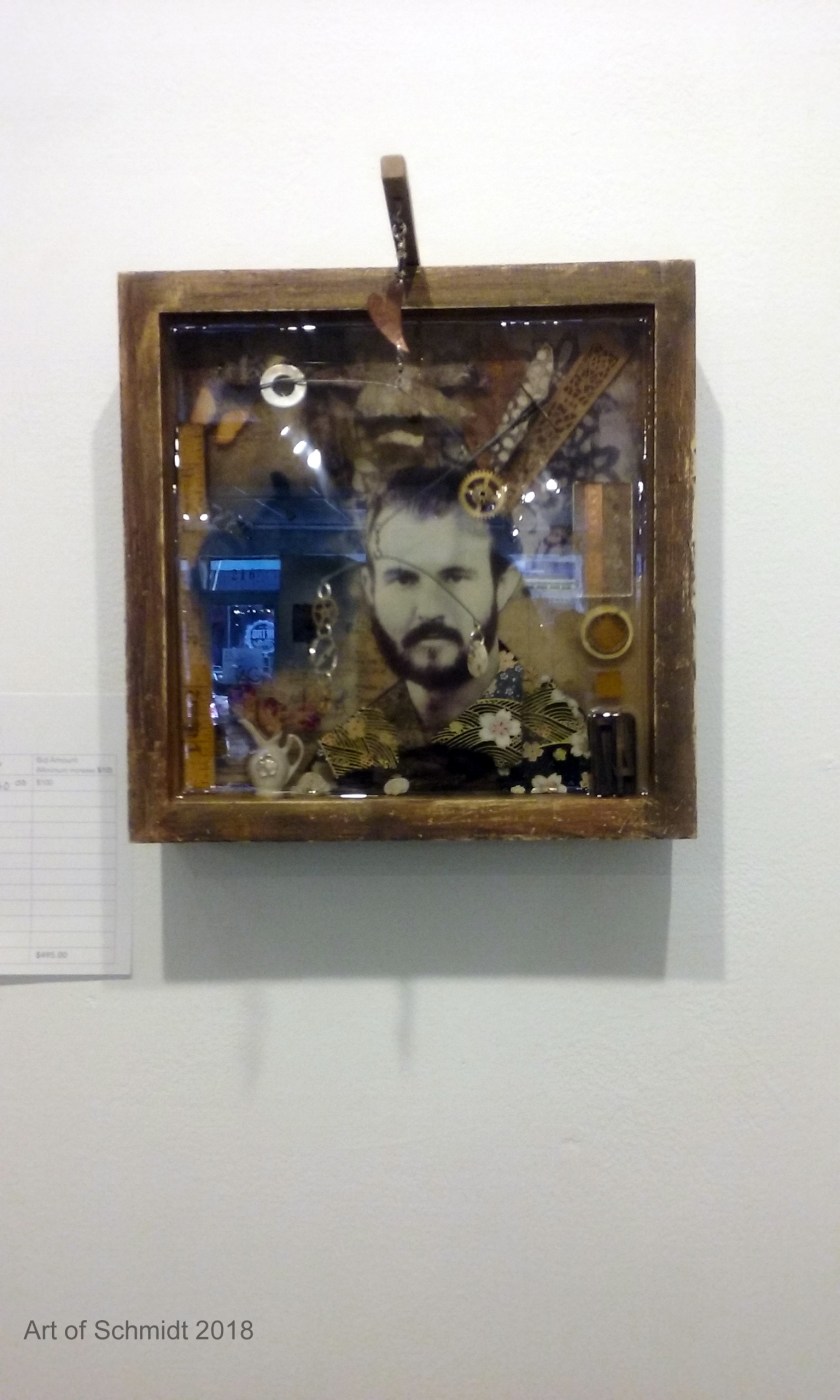
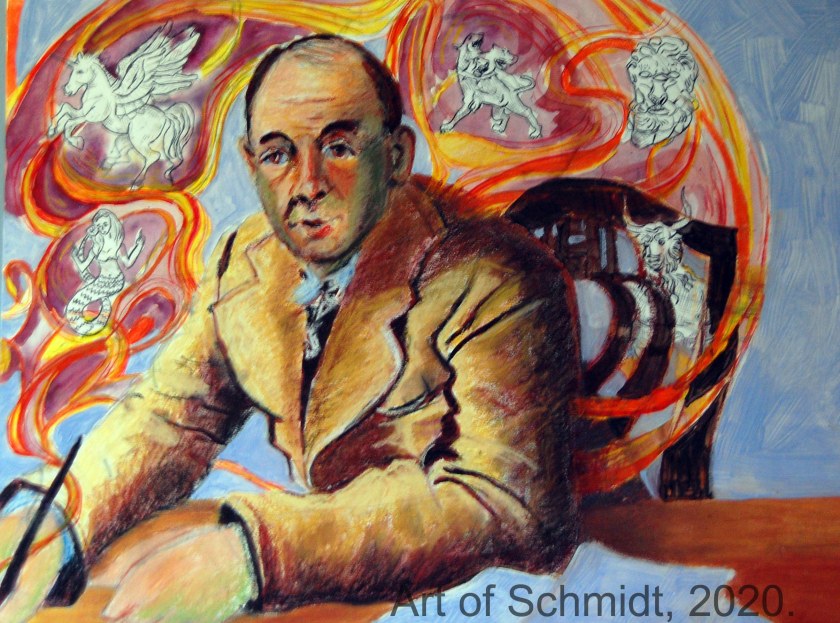
Have you ever gone to an art gallery and observed a work of art that was labeled mixed media, and wondered what it meant? I know I have, and I have wondered, how might I incorporate these mediums in my artwork? This question was the catalyst for starting my new art series, Constructed Realities, which combines a variety of mediums including, gouache, soft pastel, acrylic, pencil, and oil paint with a cold press illustration board as a substrate. In some ways, my art is a mixture of mixed media and traditional techniques; because I use realism for the style, but I also combine it with a variety of media, rather than working on one media, such as in oil painting, as has been the traditional practice for painting.

Today, I am focusing on describing mixed media art, in terms of a broad definition, and more specifically to explain what I mean when I label my own art, mixed media. And now, I’d like to offer a brief definition of mixed media art. Mixed media is a type of art that doesn’t limit people who have limited experience with art skills such as drawing. (Source: Eapen, Boaz. 15 Inspiring Mixed Media Art Portfolios that You Must See, retrieved from November 12, 2019, www.pixpa.com.) Instead, it is an art form that is accessible to anyone, even beginners. (Source: ibid)  However, one caveat is that after you decide what type of mixed media art you want to focus on, you will need to develop some familiarity with specific processes and specific media, (Source: ibid), such as watercolor interact with other media.

Did you know that mixed media art has been around for about 100 years? I didn’t until I started researching this subject in more detail. Some historical examples of mixed media art include the artwork of the cubist artists, Pablo Picasso and Georges Braque, his cohort. About 1912, they began to incorporate collages into their artwork. (Source: ibid) In addition, “Surrealists, abstract expressionists, pop artists and brit artists” followed suit, and added mixed media to their repertoire of art-making. (Source: ibid)

In recent years, there has been an explosion of mixed media artwork on the internet on websites such as Youtube and Cloth Paper Scissors, (which also had a periodical format with artwork featuring a variety of artists), and in art technique books, by authors/artists such as, Pam Carriker, Mixed Media Portraits (2015) and Jean Oliver, The Painted Journal (2018). These artists have used a combination of wet and dry media, charcoal and paint, and or gesso, in their portraits. On youtube, you can find art journaling technique video demonstrations by artists such as Dina Wakely and one of my favorite artists and teachers, Julie Fan Fei Balzer.  It’s a fun and free way to learn new art techniques from the comfort of your own home, which is really important these days, since so many colleges and art centers are closed, due to the pandemic.

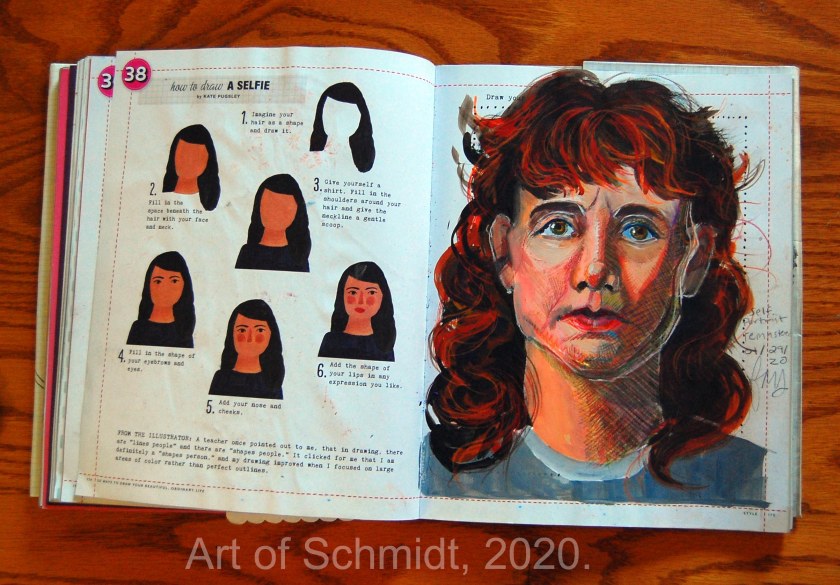
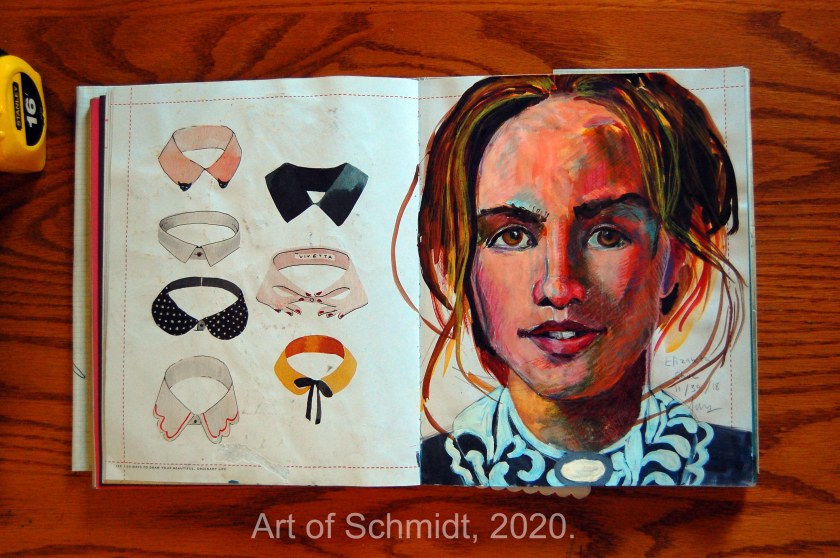
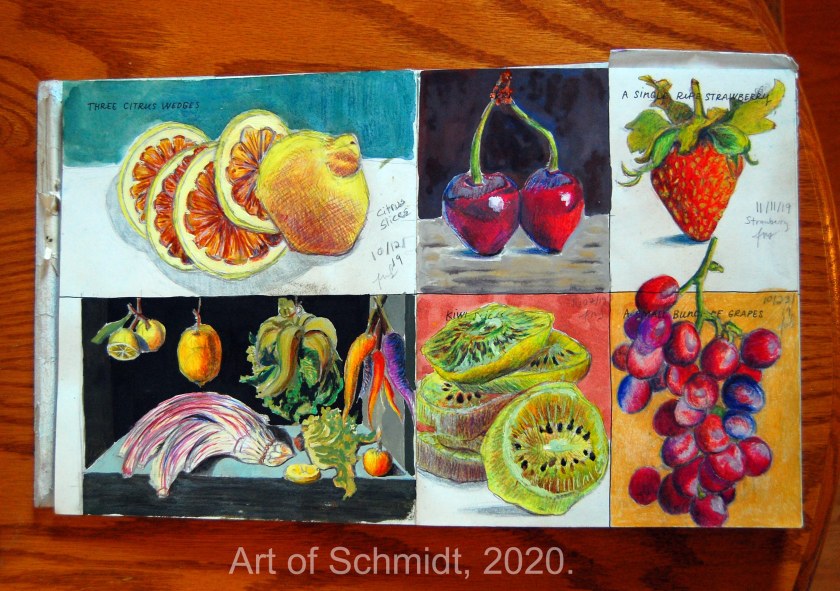
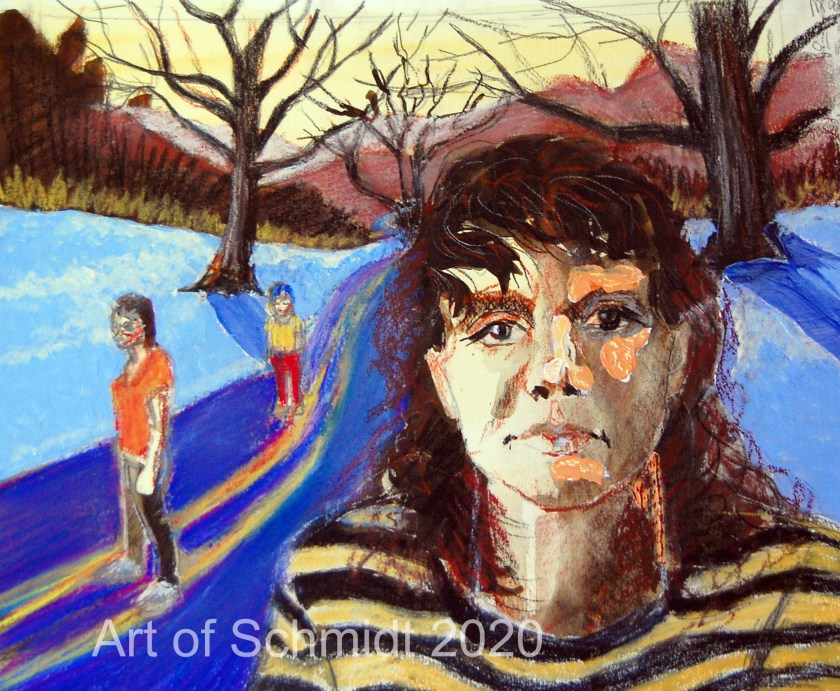
I started out my mixed media art journey by working in a sketchbook to conquer my fears about mixed media, and it gave me the courage to explore mixed media in this new series. There is little to lose if you don’t like the artwork, and you can simply turn the page, rather than worry about ruining an expensive art canvas. Creating artwork with mixed media techniques is also helpful if you find yourself caught in the dreaded state of mind called the artist’s block, where you know you want to create something but feel stale in your chosen medium and want to learn something new and feel excited about making art again. My favorite website for looking up art tutorials is youtube. If you have a specific artist you are looking for, you can search for them, such as Pam CarrikerCS Lewis with watermark, flatEmily Dickinson portrait, flatmixed media self-portrait sketch, flatElizabeth Shue sketch, flatstill life sketches, flatunfinished sketches, flat, who has many instructional videos. And to learn more about art journals, visit: https://mymodernmet.com/art-journal-ideas/, to read the article, “How to Combine Drawing and Writing into Deeply Personal Art Journals”, by Sarah Barnes, October 11, 2017. Thanks for stopping by!
Constructed Realities: Part 3, A Focus on My Childhood

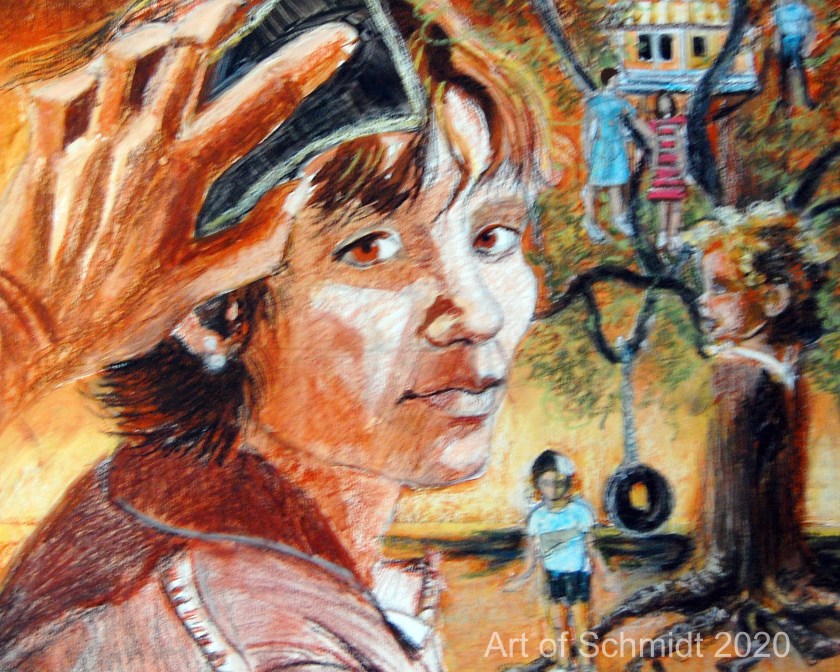
I am slowly making progress toward my goal of making 20 new artworks based on poetry quotes. When complete, I am hoping to submit them as a portfolio to apply to graduate school for a masters in fine art, so I can teach college-level art classes.  Over the past few weeks, I have been noticing a thread of common themes, one of which is my childhood. For some its a time of nostalgia, and for others, something to forget. For me, its a mixed bag, and the few memories I have from early childhood are fragmented, with few details. I took inspiration for this piece from many personal photos and from Billy Collin’s poem, Forgetfulness. The piece was created in stages with gouache sepia-toned paints, acrylic paints, gesso, and soft pastel with a limited color palette.

Childhood Collage memory loss, watermark
Childhood Memory Loss, Gouache and soft pastel, and acrylic paint, 16 x 13 inches, Jodie Schmidt, 2020. 

I took additional inspiration from this artwork by searching for poems written about the subject of forgetfulness. I found this gem of a quote from Billy Collin’s poem, “Forgetfulness,” “As if one by one, the memories you used to harbor decided to retire to the southern hemisphere of the brain, to a little fishing village with no phones.” Though the poem does not specifically address the issue of childhood amnesia, I felt it captured the feeling that memories are unstable and sometimes inaccessible.

I can remember small details, like elementary school book fairs, and my love of reading, library visits with my father, and being outdoors a lot on my favorite tire swing. However, more specific details have been more difficult to access, such as specific memories of how I got along with my sisters, who were many years older. It’s as if a giant hand has wiped out these memories, and without the aid of family photos and my mother’s memories, I would really be at a loss. All of this inspired me to make a pastel and gouache collage based on family photos of things I can no longer remember. This series has been a marathon, and a mirror, endless practice, mistakes, and setbacks. And all the while, it’s holding up a mirror to all of the weaknesses I have as an artist, especially in figure drawing and composition. How I wish I had paid more attention to figure drawing class as an art student! So, whatever the outcome of this series might be, getting into graduate school or not, it has been a journey chock full of lessons and opportunities to grow as an artist. Thanks for reading! 

Constructed realities: Part 2, Taking stock of my progress.

Hello Friends, family, and fans, At long last, I am posting some progress photos of my series, Constructed realities. They are still mostly in the phase 2 stage of color sketches, but they are coming along. So many things seem to get in the way of making time for art, I have got to start making this more of a priority. I often wonder how other creative types, such as Jane Austen, made time to write so prodigiously despite overwhelming household chores that were required during the 19th century in a family without servants or modern conveniences. Even when she was dying she managed to crank out a new book, Sanitation, which was left unfinished because of her death.

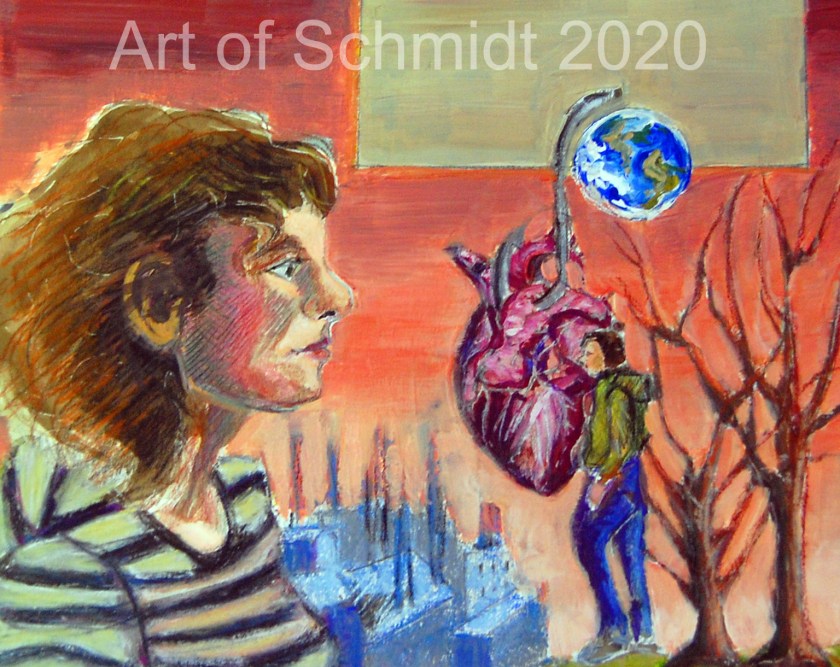
The world is too much with us, with watermark
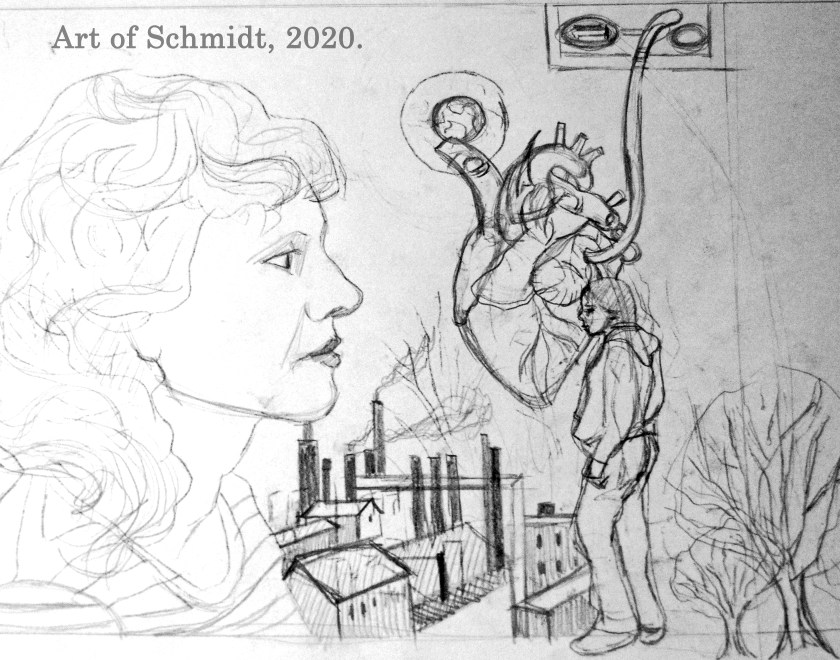
This poem is inspired by a poem by William Wordsworth, entitled The World is too Much with us, about the dangers of industrialization and how we may lose our connection with nature, and eventually with ourselves, due to greed. “The world is too much with us; late and soon, Getting and spending, we lay waste our powers,;-Little we see in nature that is ours; We have given our souls away, a sordid boon! Wordsworth
The Dream of Time travel
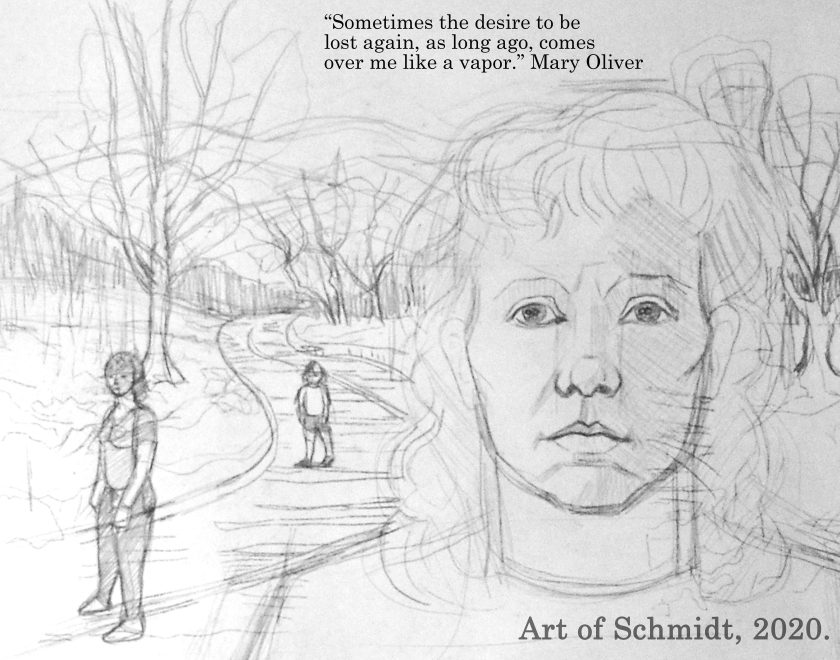
Here is another mixed media piece in progress. It’s based on a fantasy I have about going back to being a child, as represented by the multiple figures that get smaller as you follow the path. Sometimes adulting is just too hard, and I long for carefree days full of energy, health, and creativity. Here is a quote from a writer Mary Oliver which nicely sums up this idea: “Sometimes the desire to be lost again, as long ago, comes over me like a vapor.” Mary Oliver
Gather Ye Rosebuds
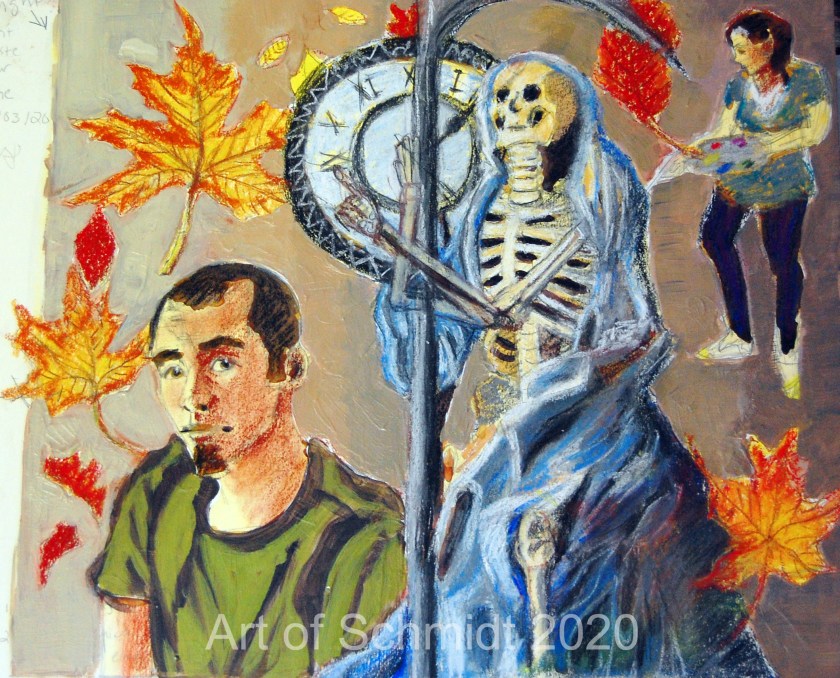
This is an unfinished piece about the fleeting nature of time and youth. I have used several symbols to illustrate this, such as the clock and the grim reaper. The other supporting characters are myself and my husband, back when we were about 12 years younger. It’s about not letting too much time pass before you make important decisions. For us it was about getting married. The poem which inspired this piece states: “Gather ye rosebuds while ye may, Old time is still a-flying, And this same flower that smiles today Tomorrow will be dying.” Robert Herrick, To the Virgins, Make Much of Time.
Anxiety collage, with green paint
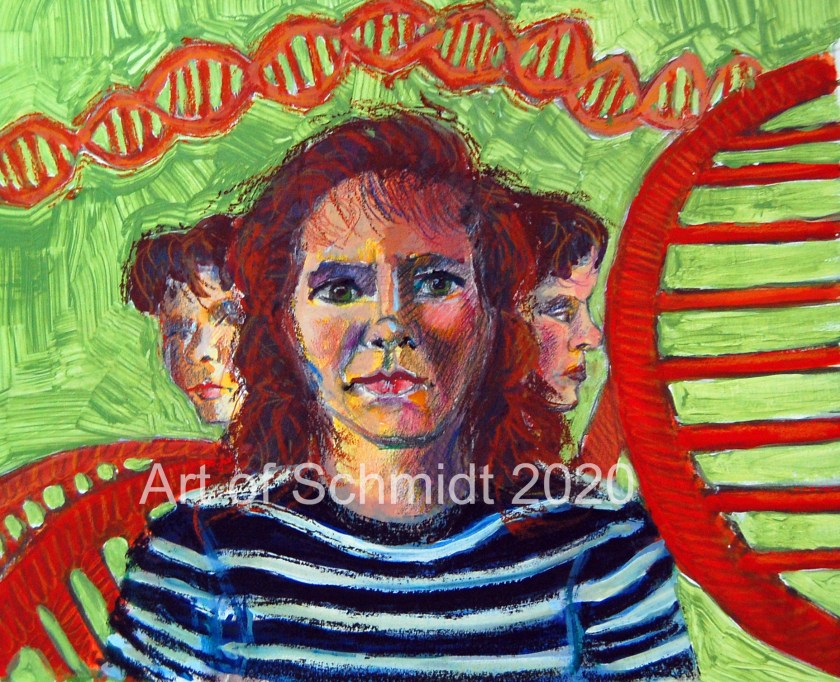
This piece is about emotionality, and especially about anxiety. I used bright contrasting colors here to try and emphasize the jarring and explosive nature of anxiety and symptoms associated with it, which can easily turn your world upside down, difficulty breathing, making decisions, sleeping, avoidance behaviors, etc. Its a subject close to my heart, because I suffer from generalized anxiety disorder and have had to work very hard to not let it take over my life. Several of my family members have it too, hence the DNA strands. Here is a quote from Emily Dickinson that inspired it: “In this short Life that only lasts an hour How much- how- little is within our power.

Despite the obstacles of daily life, she made time to write. I hope I can follow her example and bring my passion, time, and energy into making art, no matter what obstacles I face. I am taking stock of my progress so far to try and gain some more objectivity about the work still to be done, and to see the progress in hopes that it will motivate me to make more art! As mentioned in earlier blog posts this series is based on quotes from poetry, and a small portion of the quote will be added to the artwork so you can get the gist of what feelings and moods I hoped to convey in these pieces.

What is Artist’s Block?

Hello Friends, I am recycling an old blog post here, because it seems so relevant to the struggle I have had in getting this new series, Voices, and Visions off the ground. It has taken me several months to get traction, but I finally have some sketches to share! At last! The series is about the human condition, The World with waternarkLONGIN~1, with watermark and is inspired by poems, by writers such as Williams Wordsworth, who wrote the poem, “The World is too much with us.” Though it was written several hundred years ago, in 1807,  about the conflicts between our connection to nature, and the pull of materialism driven by the industrial revolution in England during the 19th century, it still seems so relevant today. Anyways, on to the blog post, which is about the Artist’s Block.
What is Artist’s Block?

Art of Schmidt Blog Post


This year has been a difficult one with lots of transitions and changes. One of these big changes was my decision to drop out of the Human Services Associate’s degree program at Frederick Community College, after 18 months of double-mindedness between feeling like I had to finish it because I didn’t have any other solid plans for my career, and I had already put in countless hours writing papers, studying and completely fieldwork.  I had felt burnt out and unmotivated to finish the program, and I also felt split in half between my desire to be a professional artist and the need to carve out a definite career plan for myself. It was a difficult decision but I finally decided to drop out after some soul searching and talking with my academic advisor for a variety of reasons. In addition, the workload that this academic program demanded left very little time for creating art. And if I am 100 percent honest with myself, I have always wanted to take my art to the next level beyond just a hobby, but felt unsure of how to pursue this goal after I graduated from McDaniel College with a degree in Art in 2005, and it didn’t seem “practical” to pursue art as anything more than a hobby. I always felt somewhat unsure if Social Work was really the right path for me in contrast.


Lately, I have been learning that creative time is important to me and my well being. Creating artwork has been an outlet for me at various times in my life during stressful moments and personal struggles, especially during my father’s long illness and eventual death in 2011 from heart disease.  Making paintings and drawings in oil, watercolor, pastel, and pencil has provided me with a safe way to process difficult feelings and emotions. However, lately, making art has been very challenging and more like a test of endurance and skill than the oasis or refuge it used to be. In spite of the difficulties, I have been pressing on with sketches and paintings to prepare for my October art show at the Frederick Coffee Company as Artist of the month. However, the joy I once felt in making art seems to have deserted me.  I am making very slow progress with starting only 1-2 paintings a week, after looking at some reference photos I took of Catoctin State Park, here in Thurmont, MD.  What is going on here? How can I go from feeling like creating artwork is my lifeline, to it has become my enemy and tormentor and relentless critic?  After reading an article, entitled, “7 Types of Creative Block(And what to do About Them)”, by Mark McGuiness, I think I am beginning to understand that this lack of forwarding motion is the dreaded  Artist’s Block that seems to afflict creative types from a variety of field from musicians, writers, and artists.

Artists: What Should You Do with Unfinished Work?

It all started with a bad day

It was a tough day in the art studio today. I woke up this morning with very little energy; however, I was determined to make time for art regardless of my lethargic state. Several cups of coffee and a long walk around my neighborhood later, I was ready to begin. I set out to start a cat portrait I have wanted to work on for a while from one of my art technique books. I set my timer for 25 minutes and I started drawing from an art demonstration book. Suffice it to say, the drawing did not go well, at all, despite several attempts to get the proportions of the cat’s body correct. Each attempt just brought on more feelings of frustration. After the third attempt, I finally gave up and put my supplies away and went to do something else, probably laundry or reading a book. After working on the cat portrait, I realized that I am really out of practice when it comes to doing animal portraits, as I have been focusing a lot more on floral subjects, which is made up of simpler shapes and less precise in their proportions than animals and people. And I realized that I needed to practice drawing much more often like I did last summer when I completed a drawing challenge, 100 Faces in 100 days, which featured celebrity portraits.

What I observed from the day

I tried not to beat myself up about it, or obsess about what my failure to meet my expectations might mean, but I think that this drawing might end up in the growing pile of unfinished artworks. This observation brings me to today’s topic, which is, what to do with your unfinished artwork. As I mentioned in a previous post, I have several unfinished or unsatisfactory art projects residing in my art studios, such as pastels, drawings, watercolors and some oil paintings that did not turn out as I had envisioned. This makes me wonder, what should I do with this collection of art misfits? Earlier last week, I serendipitously found the article, “50 Ways to Use Your Unfinished Art,” by Carrie, on https://www.artiststrong.com/50-ways-to-use-your-unfinnished-art/.

What I have done in the past with unsatisfactory art

In the past, I have usually tried to resolve issues with unfinished artwork, sometimes starting over from scratch; i.e. creating a brand new drawing on a new substrate and re-surfacing the canvas by sanding it with heavy grit sandpaper so it can be re-gessoed. Other days, when I am more desperate or frustrated, I throw it in the trash, never to be seen again. Unless of course, my husband gets to it before I take out the trash. In which case, he fishes it out and says, ‘Why did you throw this away?” Or, some variation upon that theme usually ensues when he finds my rejected art. Ok, so now on to some information I would like to share with you about the article I read, “50 ways to Use Your Unfinished Art.” Here are a few highlights from the article.

  • Take a photo of the artwork and “”manipulate the photos” to re-design it. Adobe PhotoShop is a good photo editing program to try for this option, with editing tools such as cropping, filters, light and dark balance, and photo filters. The possibilities here are really endless!
  • “Abandoned art project, anyone?” (Source: 50 Ways to Use Your Unfinished Art”)
  • Cut the artwork into pieces to construct a college. For example, the artist and author, Ann Blockley, has an excellent book, which describes this technique called, Experimental Landscapes in Watercolor, and it’s available on Amazon.com.
  • Cut the artwork and create a background for another piece of art.
  • Select a completely different art medium to finish the art. For instance, make it a mixed media piece.Amazon.com or your local library will probably have lots of books on mixed media art from which you can gain inspiration and techniques.
  • Re-use it in a reconditioned item of furniture.
  • Create a tray from your art using epoxy.
  • Throw the painting away-if it makes you feel better.
  • Take a break from it for two weeks or a month, to get some objectivity about your work. After that, re-assess your incomplete work, but only complete the pieces that you feel led to work on, and let go of the ones you aren’t sure how to resolve.
  • Post a photo of your artwork in a community where artists give each other feedback, such as http://www.emptyeasel.com, and ask for help from others.
    Self-Portrait, unfinsihed, flat
    Self-Portrait, pastel on paper, 18 x 24 inches, 2014, Jodie Schmidt.


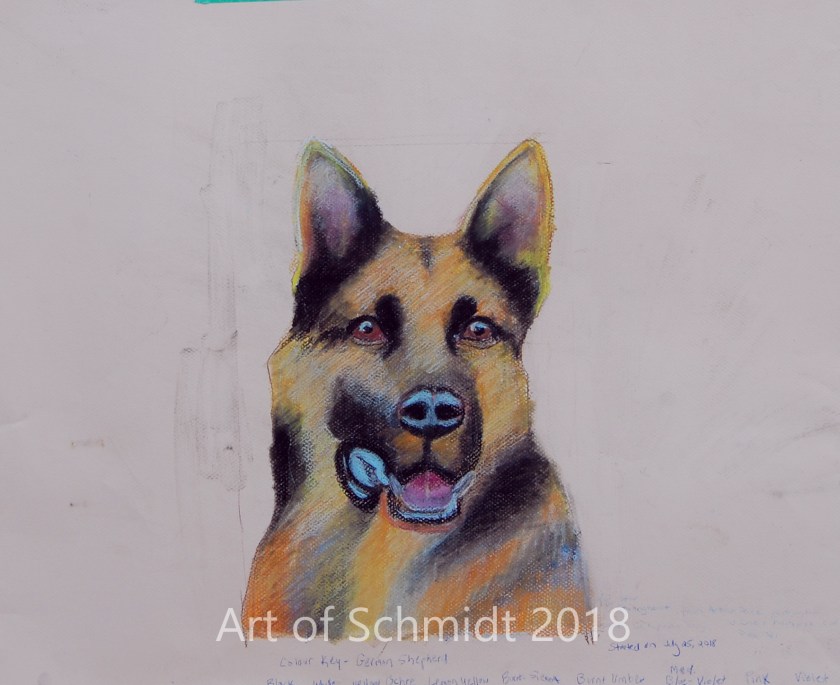
    German Shepherd, pastel, flat, final
    German Shepherd, pastel on paper, 18 x 24 inches, 2018, Jodie Schmidt.
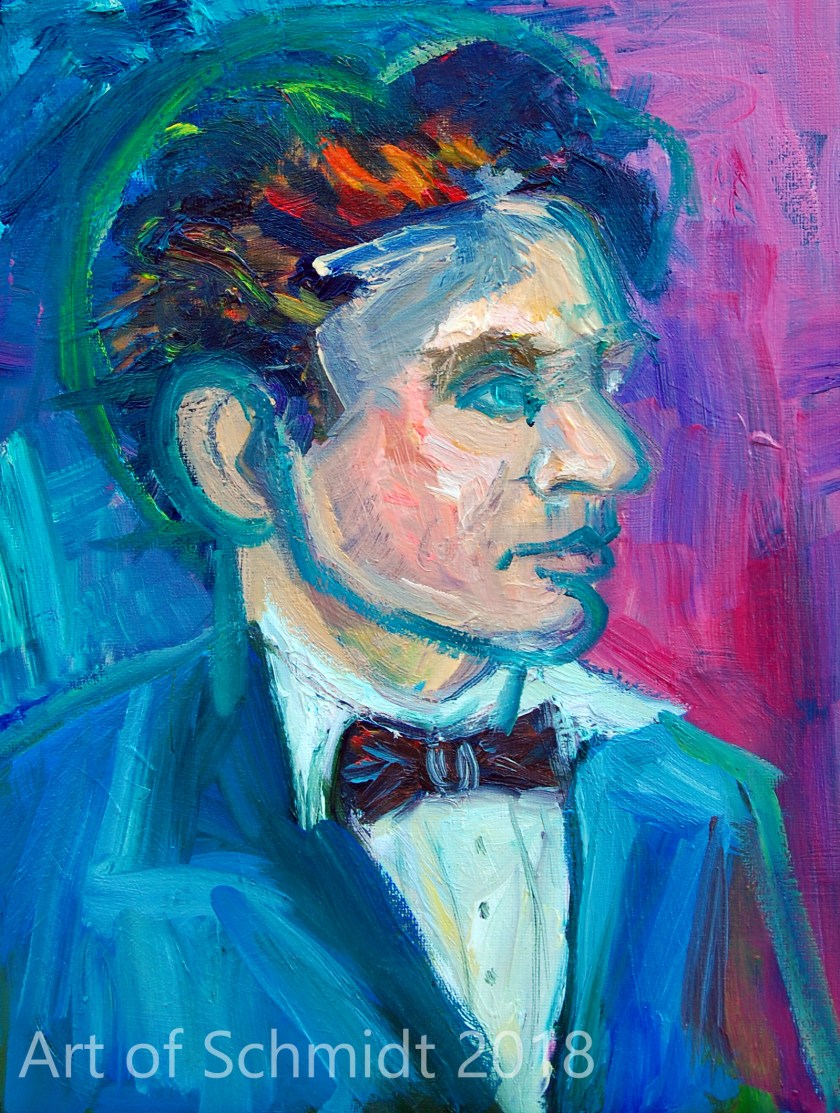
    Lincoln, unfinished, flat
    Abraham Lincoln, oil on canvas, 9 x 12 inches, 2018, Jodie Schmidt.
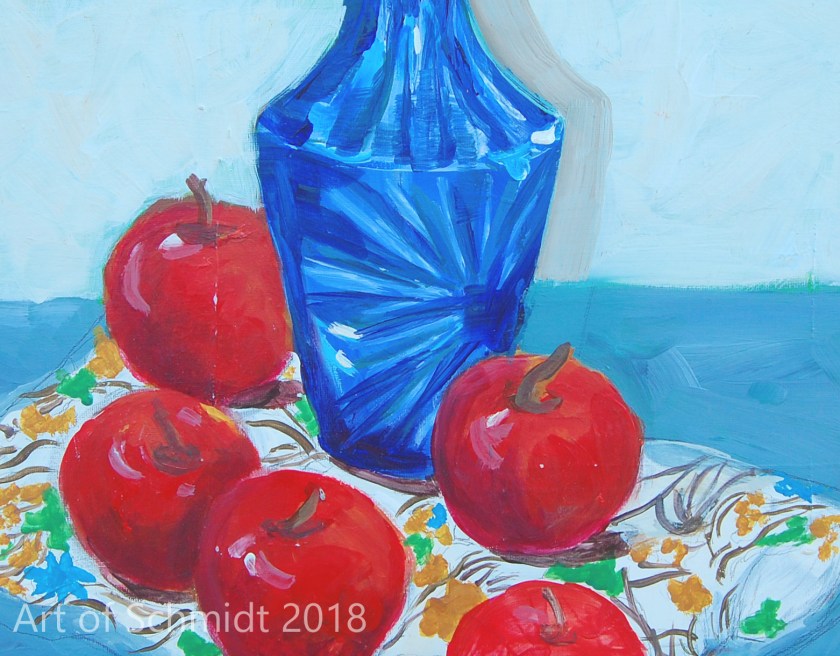
    Apple Still Life with blue bottle, flat
    Apple Still Life, acrylic on canvas, 11 x 14 inches, 2017, Jodie Schmidt.

    Cows grazing, unfinsihed, flat
    Out to Pasture, oil on canvas, 11 x 14 inches, 2014, Jodie Schmidt.


Below are some links to websites that can help you get started with some of the techniques listed in this article, such as collage. Another website to visit for ideas on how to re-invent your art might include, youtube or Pinterest. YouTube is a great way to see techniques demonstrated, it’s almost as good as being in a class. Just be sure to look for art tutorials with narration so you can learn what techniques and materials the artists are using to make their work. It’s harder to figure that out with the speeded up variety called, time lapse. Thanks for stopping by! I hope this article is helpful to someone out there who is struggling to complete their art. I am definitely going to try out some of these techniques myself to try and complete some of my unfinished art, which is posted in this week’s blog! I’ll let you know how it turns out.

.

On and Off the Wall, Art Show at the Artists’ Gallery in Frederick, MD

Hello Friends, Family, and Fans,

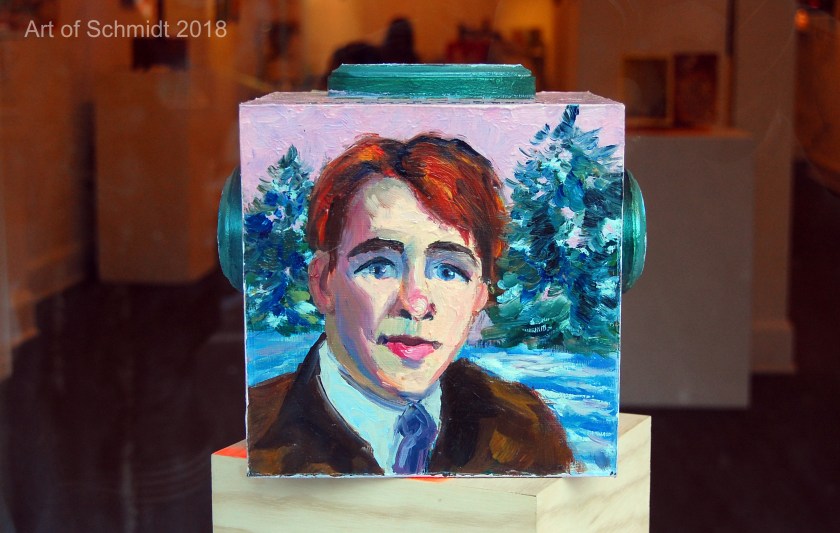
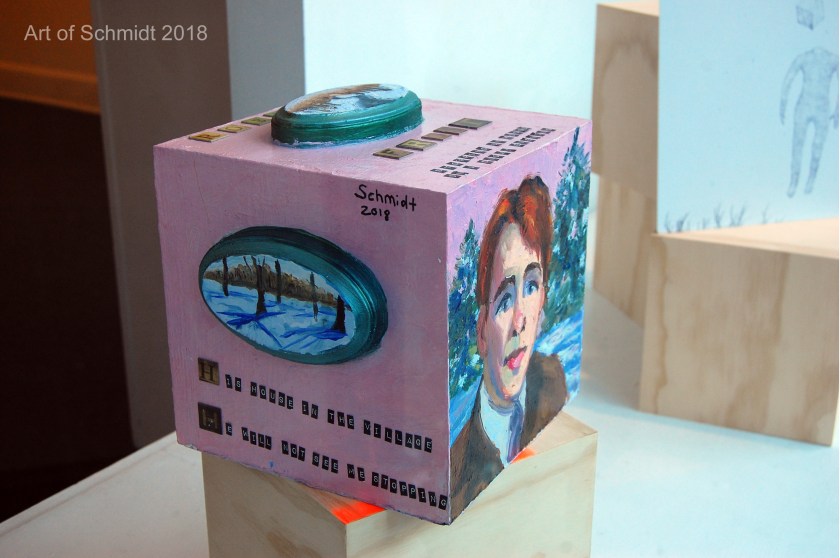
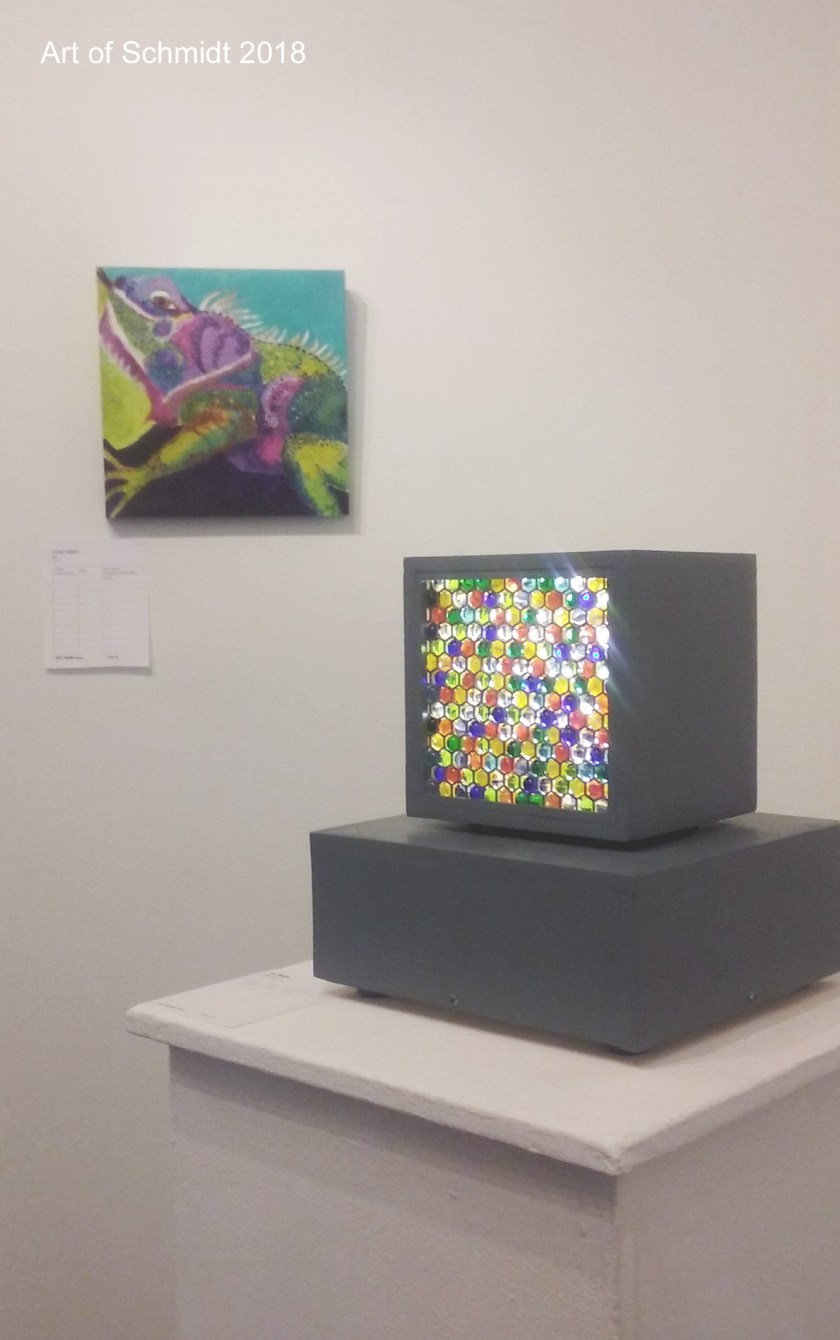
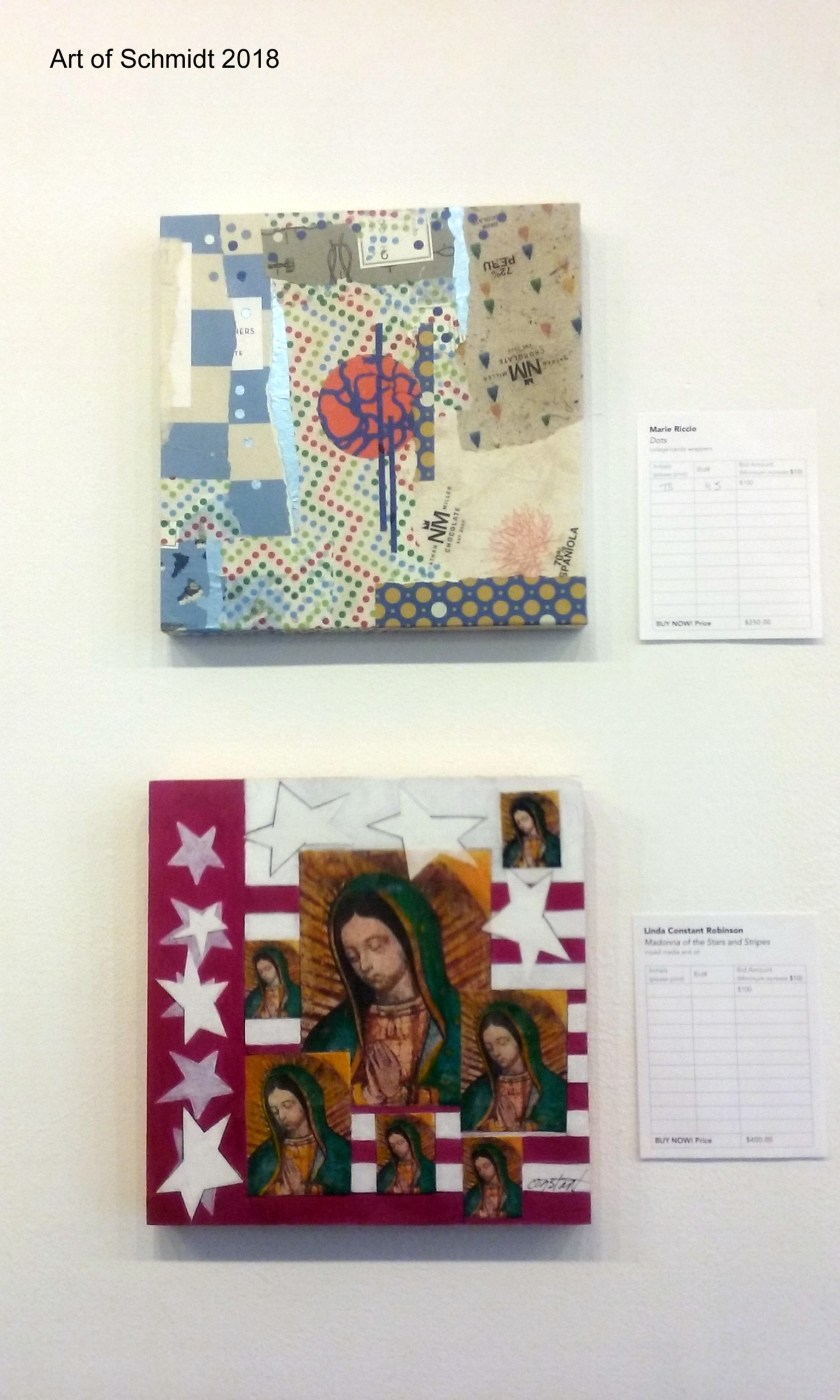
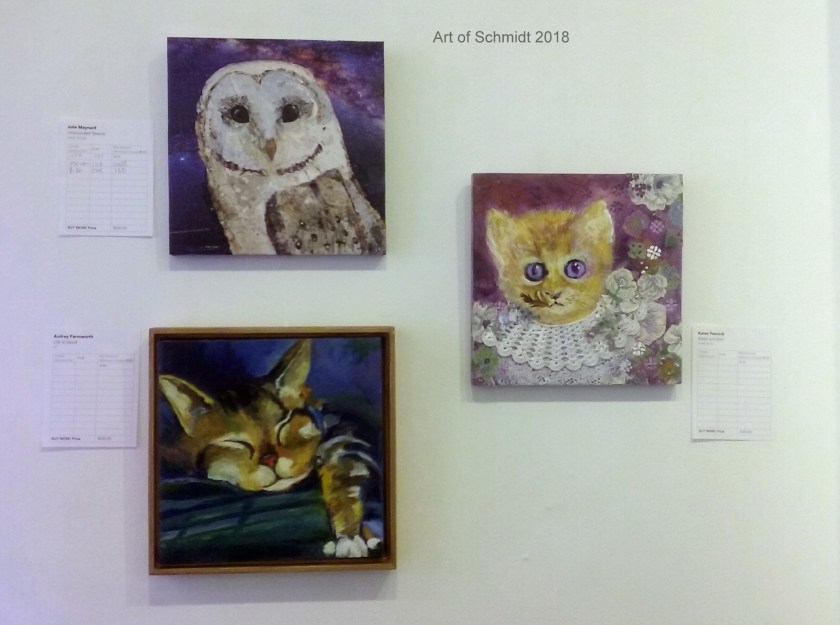
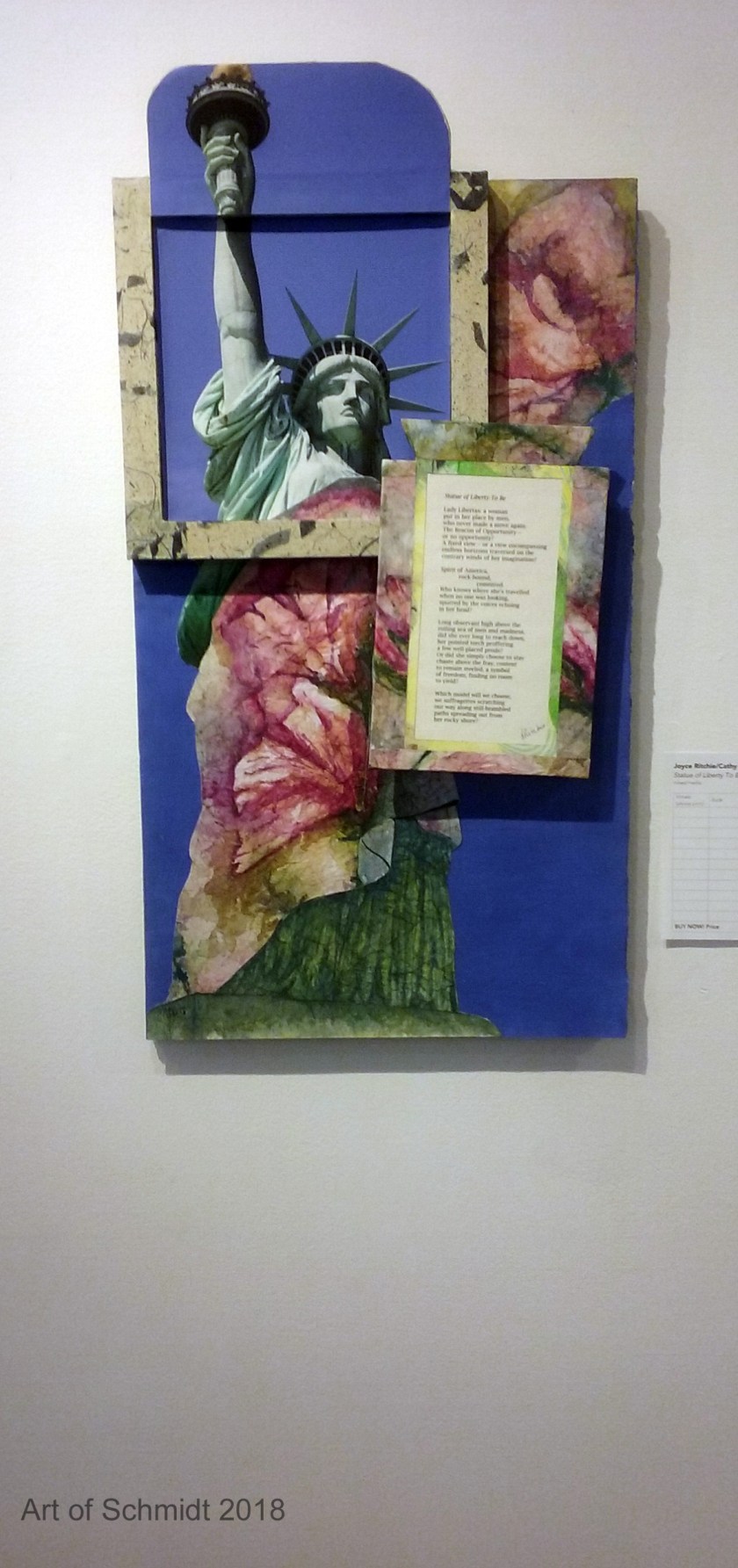
Life for me has been pretty hectic, so some things like blogging have unfortunately been tabled for a while. Today, I wanted to share some photos I took of the On and Off the Wall Box show at The Artists’ Gallery in Frederick, MD. The show features a variety of local artists’ work in a variety of mediums in everything from sculpture, collage to oil painting, etc. Since I have been short on time, this blog post is more image heavy, rather than my usual, more thoughtful and wordy blog posts. Solitude is my completed mixed media box, which illustrates the poem, Stopping by the Woods on a Snowy Night, by Robert Frost. Each panel features a vignette of a winter landscape with text from the poem, so viewers can easily make this connection between poetry and the illustration. All of the other images are works from other local artists.

Stay tuned for my next post, which will be on how artists can effectively deal with self-doubt. For today, enjoy the images of these amazing boxes. I was amazed by the creativity of these artworks and how each box was unique. If you want to learn more about the art show, visit: http://www.theartistsgalleryfrederick.com. All art is for sale at this show, and bids for the silent auction start at $100. Proceeds from the show will help ensure the continued operation of the Artists’ Gallery, which is owned and operated by local artists. These photos are just a small sample of the beautiful and inventive artwork which comprises this show. It’s so much better to see these works in person if you can. The gallery hours are Friday and  Saturday, (12 noon- 9 pm) and Sunday, (12 noon-5pm). The show will be displayed for the month of March.  Thanks for stopping by!

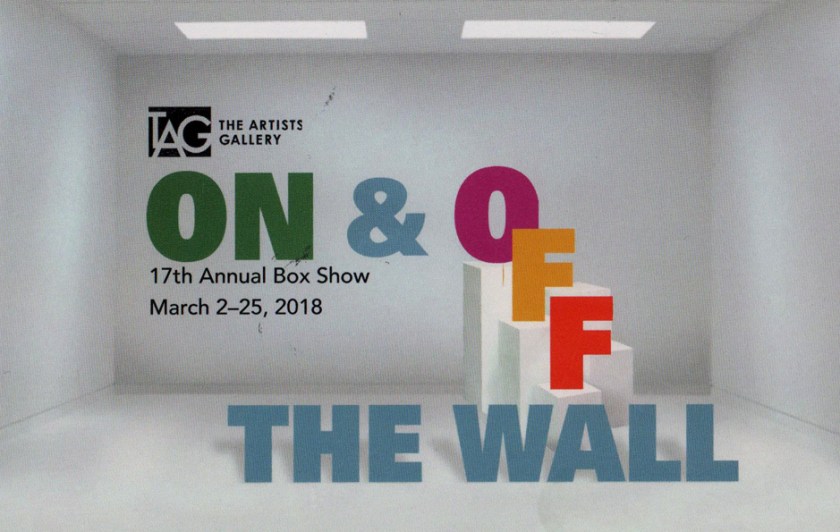
On and Off the wall flier,jpg_edited-1
Flyer for On and Off the Wall, The Artists’ Gallery, Frederick, MD
Solitude front of box, with watermark
Solitude, Mixed Media, 2018, Jodie Schmidt.
Solitude side of box, with watermark_edited-1
Solitude, Mixed Media, 2018, Jodie Schmidt.
gallery wall three with watermark, final
Light Box and Iguana Box, The Artists’ Gallery, Frederick, MD
gallery wall 4, with watermark, final
Icon and Geometric Collage, The Artists’ Gallery, Frederick, MD
gallery wall five, final
Animal Portraits, The Artists’ Gallery, Frederick, MD
light horse lamp, with watermark, final
Light Horses Lamp, The Artists’ Gallery, Frederick, MD
lady liberty collage, with watermark, final
Lady Liberty Collage, The Artists’ Gallery, Frederick, MD
Mixed Media collage, final
Mixed Media Collage, The Artists’ Gallery, Frederick, MD
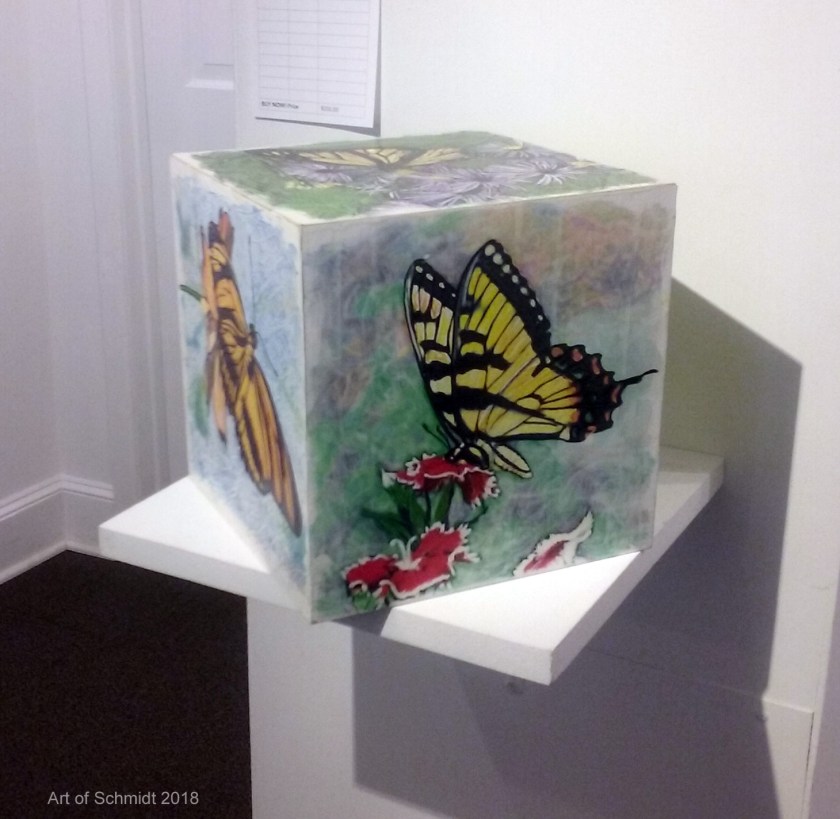
Butterfly Box, final
Butterfly Box, The Artists’ Gallery, Frederick, MD