What to Do When a Painting Goes Wrong

If you are a creative type or if you like to make things, you have probably encountered the moment when the finished product you imagined, does not live up to your expectations. Creative types such as musicians, composers, producers, dancers, writers, artists, photographers, cooks, and makers of all types, can probably tell you what it feels like to hit a wall with a project, how it felt, and what they did to navigate that feeling of utter frustration. As an artist, I have experienced this frustration more times than I can count. Some paintings and drawings are simply learning projects and are difficult to salvage, while others can be fixed.

I know it’s been said that you learn more from your mistakes than your successes, but when I get to a point in a painting or drawing and I realize that the painting or drawing doesn’t look right, it can be really frustrating. I start doubting myself, feel like giving up, or doing something that I am not good at, like cooking or cleaning because I know that I am not good at these things, so my expectations of success in these domains are much lower than for painting or drawing since I have no training in cookery or housekeeping.  Since I know I am not a good cook, if it doesn’t turn out so well, it’s a waste of ingredients but I don’t feel as emotionally attached to the outcome as I would to a painting or drawing.
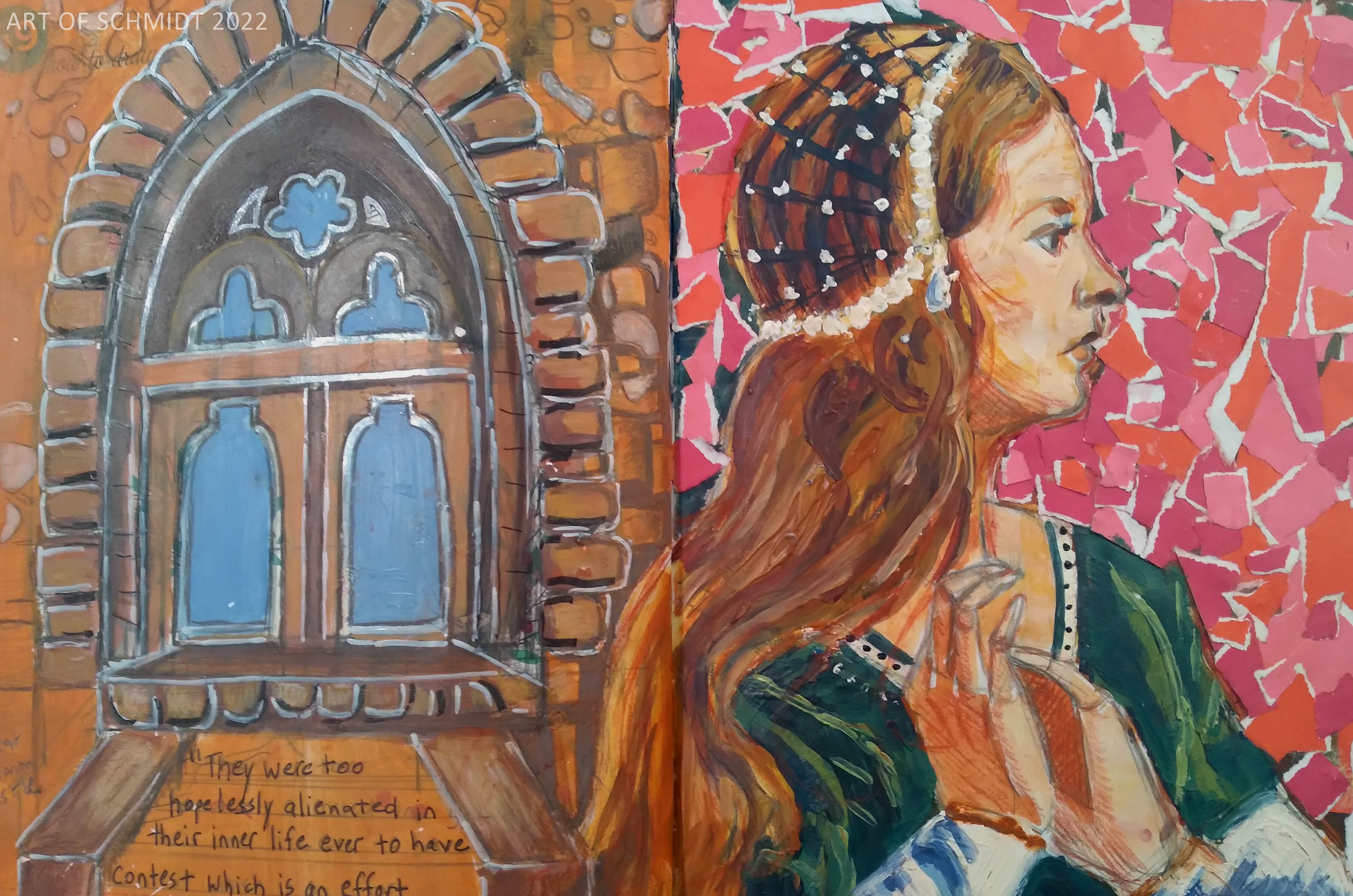
Romola Illustration with Lillian Gish, Mixed Media, Jodie Schmidt, 2022.

I recently read a forum question on the website, Wet Canvas.com, and the question of the day was,” When should I stop working on a painting? I was intrigued by the question, and wondered how other artists dealt with paintings that can “look like a dog’s breakfast.” I read about a variety of solutions suggested by artists who had hit the wall creatively. Some were familiar to me, like my tendency to put the painting away and stop looking at it for a few days, weeks, months, or even longer. Others were not as familiar such as putting the painting somewhere where you can see it, such as on an easel in a living room, and then taking time to look at it from time to time to diagnose the problem. Another favorite technique is to write a list of things I want to change in the painting, be it the drawing, colors, value, edges, etc.  In my case, some of the artwork I have abandoned was started about two years ago, and I am just now starting to look at the sketches and Photoshop files.

This week I took some time to work some more on my acrylic painting, Waiting: Creative Block. I realized that there were several things bothering me about it. The colors and values, and composition were some of the biggest glaring errors.  I am realizing there are many reasons why this painting series of poetry illustration works have been abandoned. One of which was being too busy with other things to give the series the proper amount of time it requires to get things right, such as the composition and the drawing. Since I dropped out of the Social Work program at Frederick Community College, I do have more time to work on paintings.

And since I have deliberately looked at my schedule e and started marking studio days on the calendar, I have more “intentional “time. But I am also realizing just how hard this series is, as I am making some paintings almost entirely from scratch by combining different photo references in Photoshop and then drawing and painting them, with this technique, I do not have the luxury of working from reference photos already taken. I have to look for source material and then combine it to make it my own.  This project is highlighting areas of weakness in me as an artist, and one of them is composition. I have a tendency to put everything in the middle and don’t often use more unconventional compositional styles. I want to change that and start looking to master artworks to try and broaden my skills in this area.

Another great way to improve your painting skills is to draw, yes draw. Regularly and in a sketchbook if you can, as much as you can so that you can practice things like composition, color, proportions, etc. It can also help you see patterns in your work, such as a favorite subject you return to, or a color palette. A sketchbook is also a great place to try out a variety of art media since it doesn’t feel as precious as a large painting can sometimes feel. This week I am featuring photos from my old sketchbook to show just how diverse you can be in art media. I include mixed-media collages and colored pencil drawings. The sky really is the limit with sketchbooks!
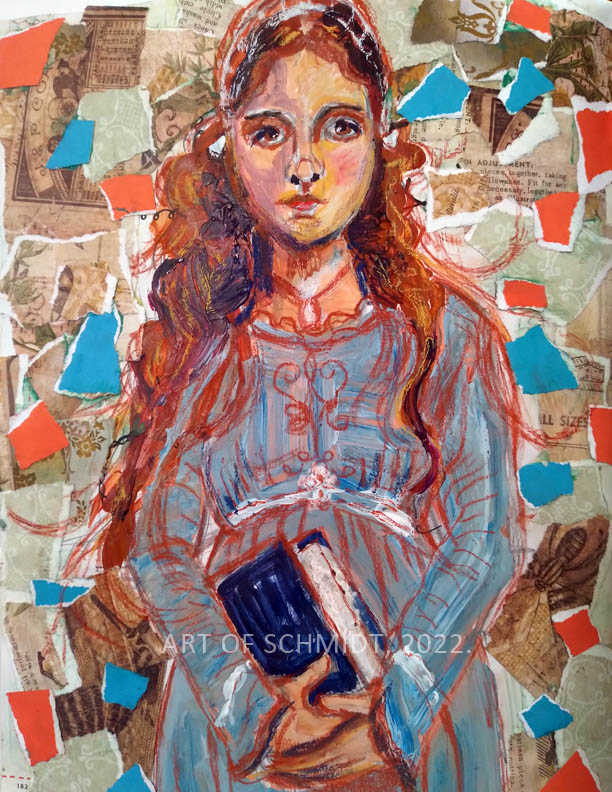
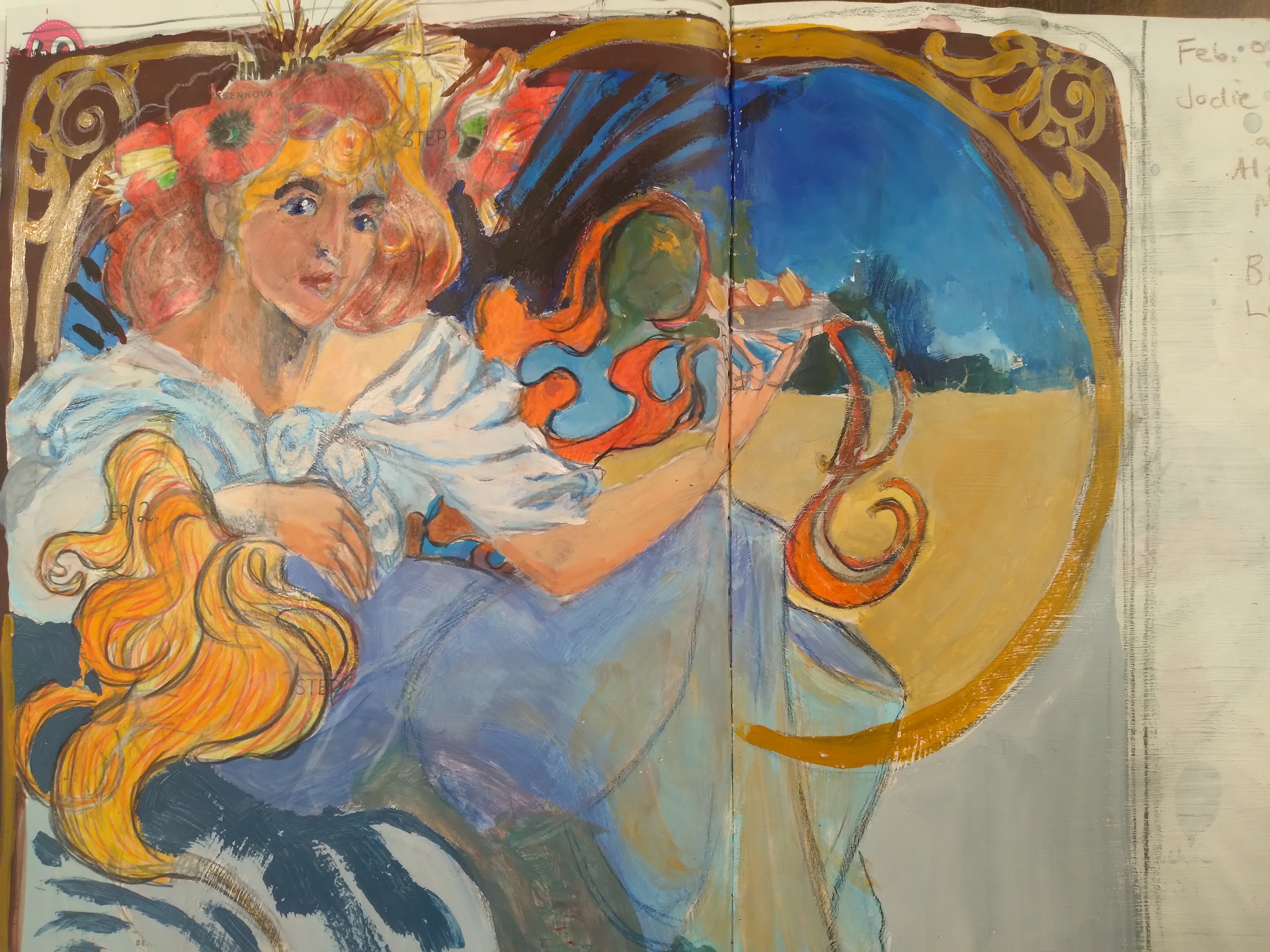
Lillian Gish as Romola, Mixed Media, Jodie Schmidt, 2022.
Jodie Schmidt, After Alphonse Mucha, Mixed media, 2022.
Fruit Bowl Drawing, Colored pencil, Jodie Schmidt, 2022.
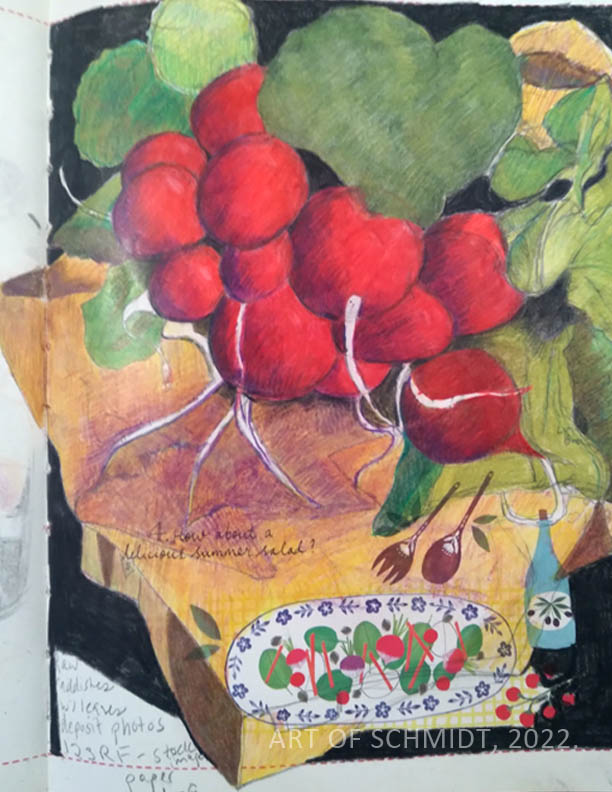
Radishes with paper bag, Colored Pencil, Jodie Schmidt, 2022.

Artists: What to Do with Your Incomplete Art?

Hello family, friends, and fans,

This is an archived blog post that I edited today, but the artwork that accompanies it is fresh. It’s a mixed media art collage that tells a story about my family history, growing up in a rural area of Howard County, MD.

It all started with a bad day

It was a tough day in the art studio today. I woke up this morning with very little energy; however, I was determined to make time for art regardless of my lethargic state. After several cups of coffee and a long walk around my neighborhood, I set out to start a cat portrait I have wanted to work on for a while. I set my timer for 25 minutes and started drawing from an art demonstration book. Suffice it to say, the drawing did not go well, at all, despite several attempts to get the proportions of the cat’s body correct. Each attempt just brought on more feelings of frustration. After the third attempt, I finally gave up and put my supplies away, and went to do something else. After working on the cat portrait, I realized that I am really out of practice when it comes to doing animal portraits, as I have been focusing a lot more on floral subjects, which are made up of simpler shapes and less precise in their proportions than animals and people.

What I observed from the day

I tried not to beat myself up about it, or obsess about what my failure to meet my expectations might mean, but I think that this drawing might end up in the growing pile of unfinished artworks, which brings me to today’s topic, which is, what to do with your unfinished artwork. As I mentioned in a previous post, I have several unfinished or unsatisfactory art projects residing in my art studios, such as pastels, drawings, watercolors, and some oil paintings that did not turn out as I had envisioned. This makes me wonder, what should I do with this collection of art misfits? Earlier last week, I serendipitously found the article, “50 Ways to Use Your Unfinished Art,” by Carrie, on https://www.artiststrong.com/50-ways-to-use-your-unfinnished-art/.

What I have done in the past with unsatisfactory art

In the past, I have usually tried to resolve issues with unfinished artwork, sometimes starting over from scratch; i.e.  Creating a brand new drawing on a new substrate and re-surfacing the canvas by sanding it with heavy grit sandpaper, so it can be re-gessoed. Other days, when I am more desperate or frustrated, I throw it in the trash, never to be seen again. Unless of course, my husband gets to it before I take out the trash. In which case, he fishes it out and says, ‘Why did you throw this away?” Or, some variation on that theme usually ensues when he finds my rejected art. At this point, the amount of unsatisfactory art and even uncompleted art is starting to grow and I am wondering what should I do with all of this stuff? Give it away to friends/family, donate it to Goodwill, toss or recycle it, or if I am liking this idea more, try to finish the unfinished art and post about it to keep myself accountable. And finally, what about those unsatisfactory pieces that I would otherwise throw away? Can they find a new life in my sketchbook, or in a mixed media piece? In one of my latest collages, I did just that, up-cycled old sketches into a totally new piece! It was so much fun and really got my creative juices flowing! This brings me to another point, I wanted to share that plans are in the works to teach a course that teaches you how to upcycle your old sketches and ephemera and tell your family story through narrative art. I will let you know when the details get finalized!

Spring Course: Drawing Calm: A Survey of Mixed Media

This spring I am teaching a new course called, Drawing Calm: A Survey of Mixed Media. Have you ever wondered if you can combine more than one art medium? You can, and this course might just be what you are looking for! Click here to learn more: https://delaplaine.org/class/?id=22-4-DR03.

A sneak Peek at my Pastel Course

Hello friends, fans, and family,

I am teaching a beginner pastel art course at Adams County Arts Council starting on February 25th! To learn more, click here: https://www.adamsarts.org/portfolio-item/introduction-to-pastel/.

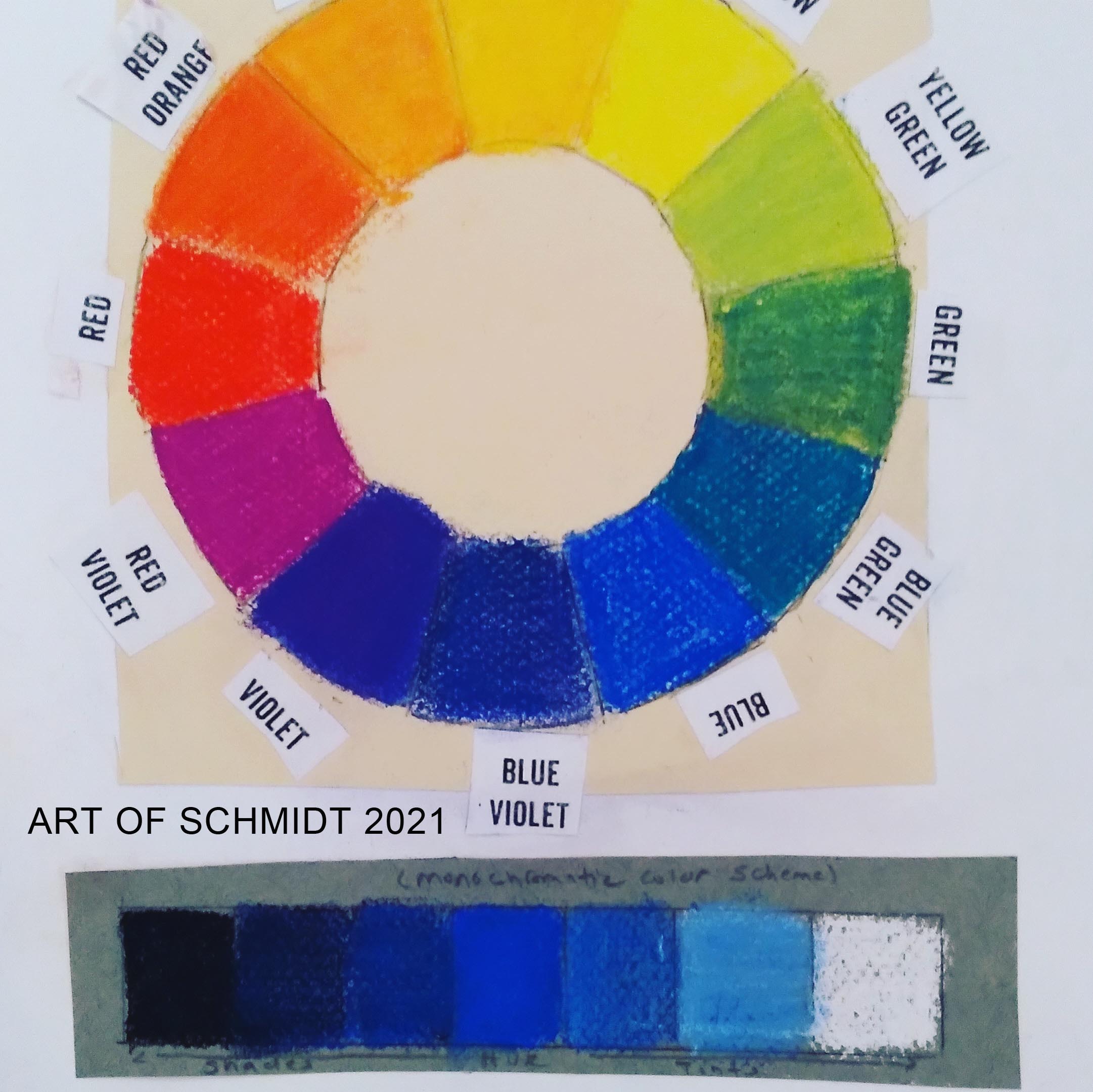
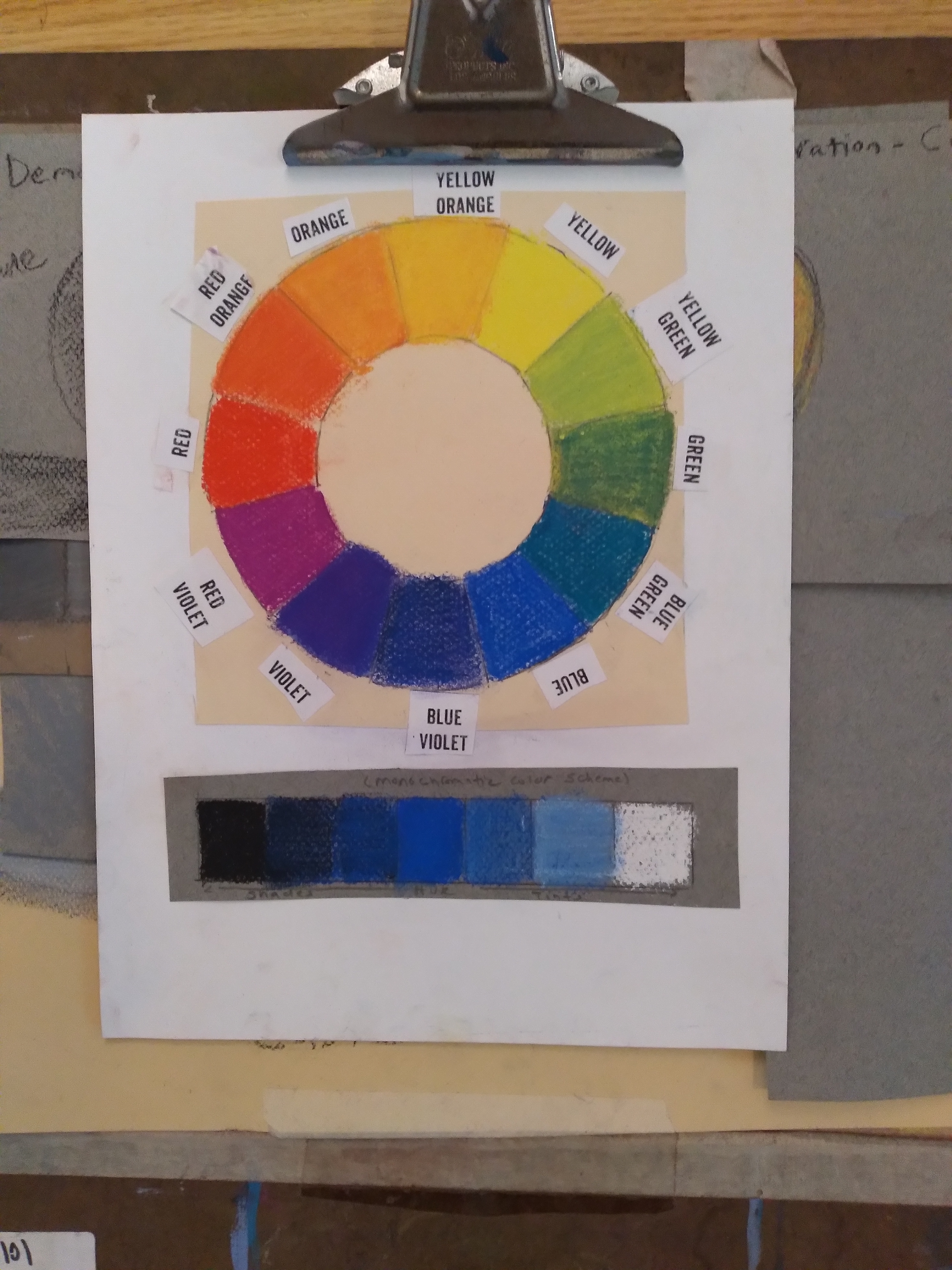
To watch a sample tutorial art video, you can click on the link for my youtube channel, Art of Schmidt: https://studio.youtube.com/video/_NLUVxpCJQ8/edit. In this lesson, I teach you how to make a color wheel with soft pastels. A color wheel is an integral tool for artists to learn how to use, no matter what medium, whether it’s watercolor, acrylic, oil, pastel, etc. It will help you learn how to mix colors and find color harmonies that will create a more cohesive piece. Thanks for stopping by!

The Importance of Color in Art: Choosing a Color Palette

Today I am blogging about an introduction to the color wheel and how artists can use it to choose an effective color combination. Since last week, I have been consulting a reference book entitled, Color is Everything, by Dan Bartges. I wanted to try out some various color schemes for my Biographical Portrait of Sting, which I posted about in last week’s Sketchbook blog post.  After consulting the book about possible color schemes, I tried out two versions of a tetrad color scheme; one is described on pg. 35, and consists of oranges, reds, and greens, while the other color combination includes blue-greens, red-oranges, yellow-oranges, and blue-violets and is described on page 36.  But before I get into the definition of tetrad color schemes, I would like to give a short overview of the color wheel and how it can improve an artist’s artwork.

According to the article, “Color Psychology: The Emotional Effects of Colors”, retrieved from www. art therapy blog.com, the color wheel displays the three primary colors and its secondaries, and the twelve colors which are included on the color wheel are yellow, yellow-orange, orange, red-orange, red, red-violet, violet, blue-violet, blue, blue-green, green, and yellow-green. The most important colors displayed on the color wheel are red, yellow, and blue, from which you can mix almost any color. (ibid) However, this concept should be considered in a theoretical context, because paints do not necessarily contain only one color. (ibid) In fact, paints often contain traces of other colors which can affect the final outcome of color mixtures, towards a warmer or color tone of a specific color. (ibid) Some colors that you can mix from the two primaries include: yellow + red= orange and red + blue= violet.

According to the author, Bartges, a triadic color scheme utilizes three colors which are equidistant from each other on the color wheel, and these colors create “a strong, triangular relationship.” For example, a commonly used triadic scheme for landscapes includes: green, orange and violet. And the “most visually powerful triad is red, yellow and blue, which are called the primary colors. In my upcoming courses, I will be instigating color in a variety of media such as pastel, collage, watercolor, etc. Starting in April, I will be teaching several art courses where I will be exploring the concept of color in a variety of courses, such as: Landscapes in Pastel, The Four Seasons, and Drawing into Calm: A Mixed Media Survey Course, at the Delaplaine Art Center. To learn more, visit: https://delaplaine.org/.  You can register for the classes on their website by going to the instruction link, and then going to the classes and workshops link. Thanks for stopping by!

Update: Winter Art Courses I am Teaching

I wanted to share with you that I am teaching art classes at a variety of locations this winter! My first venue is at the Adams County Arts Council, where I will be teaching Classic Drawing and Introduction to Pastel. Both are beginner classes, but Classic Drawing focuses more on value than color mixtures, which I focus on in the Introduction to Pastel course. Click here to learn more about these classes, https://www.adamsarts.org/classes/.

I will also be teaching at the Delaplaine Art Center in February. Here is a link for that course: https://delaplaine.org/instruction/classes-workshops/.

How to Make Time for Art: Tips and Strategies

This week I would like to talk about one of my greatest struggles, and that is, making time to create art. It probably seems ironic for me to say that since I think of myself as an artist and art teacher, and I make art for art shows, clients, and I studied art in college. However, sometimes the things I want to do the most, such as painting and drawing, seem to be the most, difficult to make time for in my schedule. So many things battle for the competition of my time: everyday stuff like laundry, cooking, balancing my checkbook, or other activities such as marketing my art classes or time-wasters like internet surfing and excessive social media use on Instagram or Facebook, etc., etc. All these need to get done, but if I am not careful they can crowd out too much of my time. And if that isn’t enough, I have been battling with artist’s block and self-doubt about my abilities to succeed as an artist, (whatever that means), ever since I have taken my art to a more professional level, by showing at art galleries and art fairs. My standards for making art have really skyrocketed, (and they were already ridiculously high) since I now feel the pressure to try and please others by making artwork that “sells.”

However, in all this, I have lost my joy in making art, and don’t even know what it is that I want to say with my art anymore. This period of my life reminds me of another time period, when I was a senior at McDaniel College in Westminster, MD, studying art. I was in my final year at McDaniel and taking an art studio thesis course, where I had to make artwork that demonstrated something I wanted to say and write an artist statement to support that work. After I got that assignment, I felt paralyzed with indecision.

It took me two weeks to come out of that episode of artist’s block, and I really wasn’t sure what I would do during that time, as I felt that everything there is to say about art has already been saying and that everything has already been done in the thousands of years of art history. I felt I had to come up with some really “original” idea and I looked everywhere I could think to find inspiration: art magazines, art books, etc. I finally found my inspiration in the songs of singer/songwriter, Sting, which seemed an unlikely solution to me. I decided to try and illustrate the feelings in some of his songs like Lithium Sunset, by using myself as subject, and color as a way to express emotions. The crisis was solved and I made it through, but I really struggled to climb out of that pit.

Unfortunately, I am finding myself in that awful place again of uncertainty and doubt. So this week I am writing about how to make time for art, in hopes that it will help me to focus my time better and to get back into the habit of regular studio practice. I’d like to share with you some insights from two blog articles I read by Lisa Congdon, entitled, How to Find Time to Make Art When You Work Full Time, and an article entitled, How to Find Times for Art in a Busy Life,  Tara Leaver, in hopes that you will find it helpful to you in managing your life and making time for creativity. According to Lisa Congdon, there are a few things you can do to help make time for art. For example, she recommends that artists and other creative types set aside a block of time every week, even if it’s only for a few minutes or a few hours, and that these small increments of time will add up over time.

She also mentions an all-important habit and that is to limit your time on your computer or phone screen. Another blog writer, Julie Fan Fei-Balzer, recommends a few time management apps she uses to track her time online, such as Flipboard, Tweetdeck, and Alinoff (an online computer app that records the amount of time you spend online.) One final really helpful way to make time for art is to schedule it, and that could mean enrolling in an art class either virtually through subscription websites like Domestika, SkillShare, and if you want free tutorials, YouTube has many excellent art tutorials. Some of my favorite YouTube channels are Rapid Fire Art and Virtual Instructor.

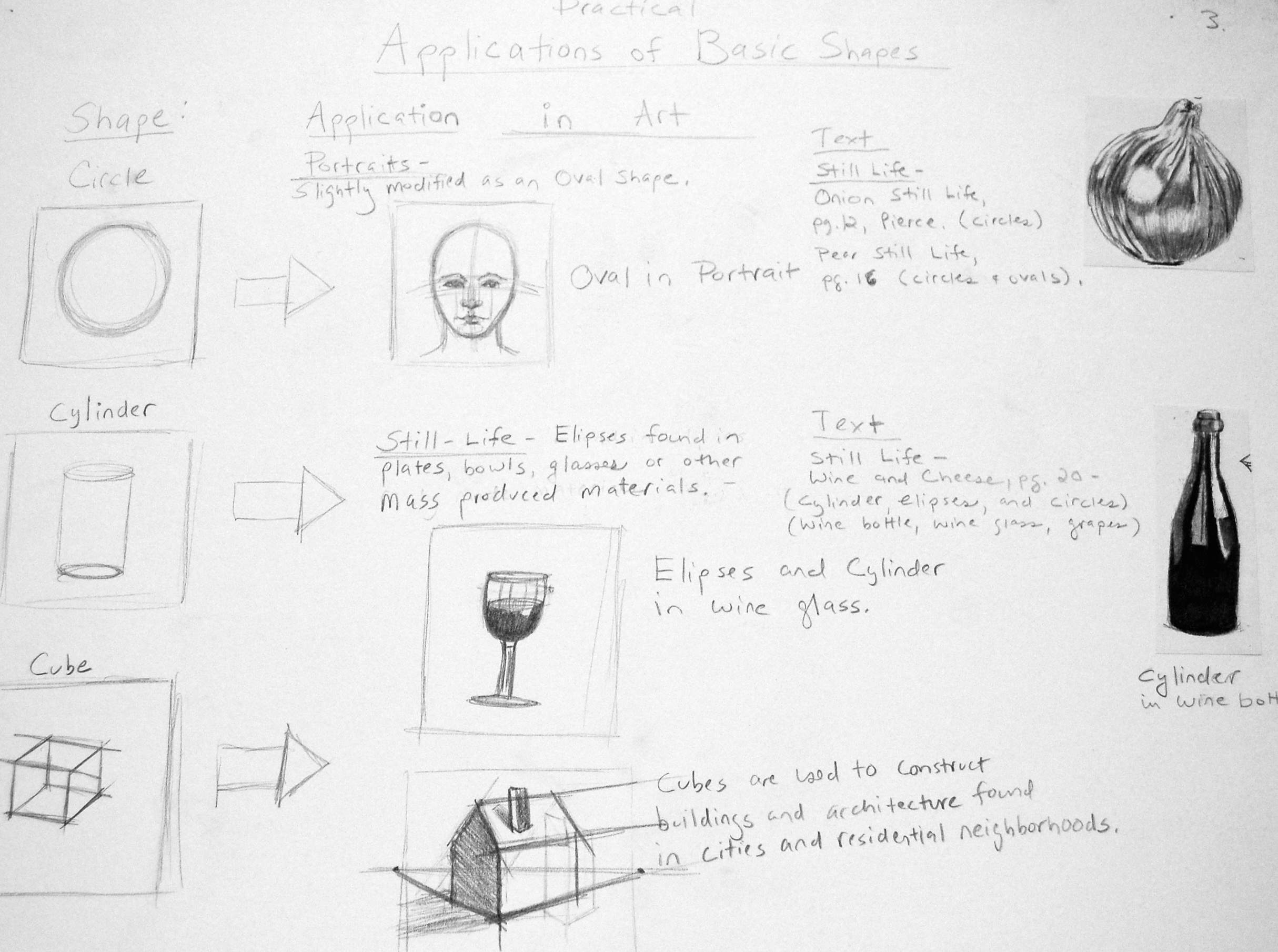
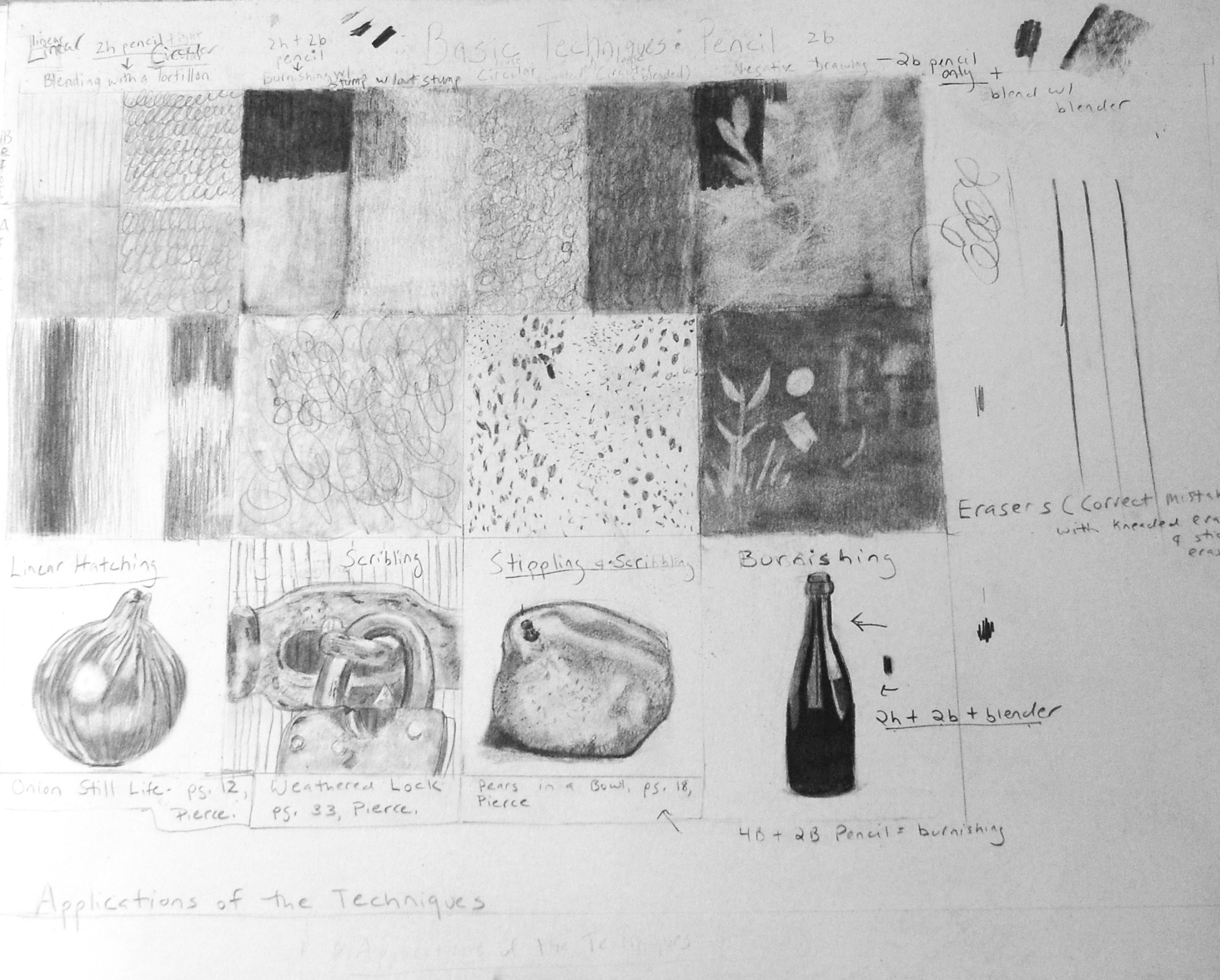
The first channel is mainly drawing tutorials in pencil, while the other YouTube channel, The Virtual Instructor includes a variety of media from pencil to pastel and many other media. I find this method to be the most helpful, especially when you are paying for a course, you might be less likely to renege on the time commitment. On that note, I want to share that I will be teaching several in-person art courses for beginners at two locations, The Delaplaine Art Center in Frederick, MD, and at the Adams County Arts Council in Gettysburg, PA. To learn more about my pastel courses you may visit: www.delaplaine.org or www.adamsarts.org. I am also teaching a beginning drawing course at the Adams County Arts Council, called Classic Drawing. This week’s featured images include some sneak peek images of the pencil and pastel drawings and exercises I offer in my Classic Drawing and Introduction to Pastel courses! Thank you for stopping by! Now, go make some art!
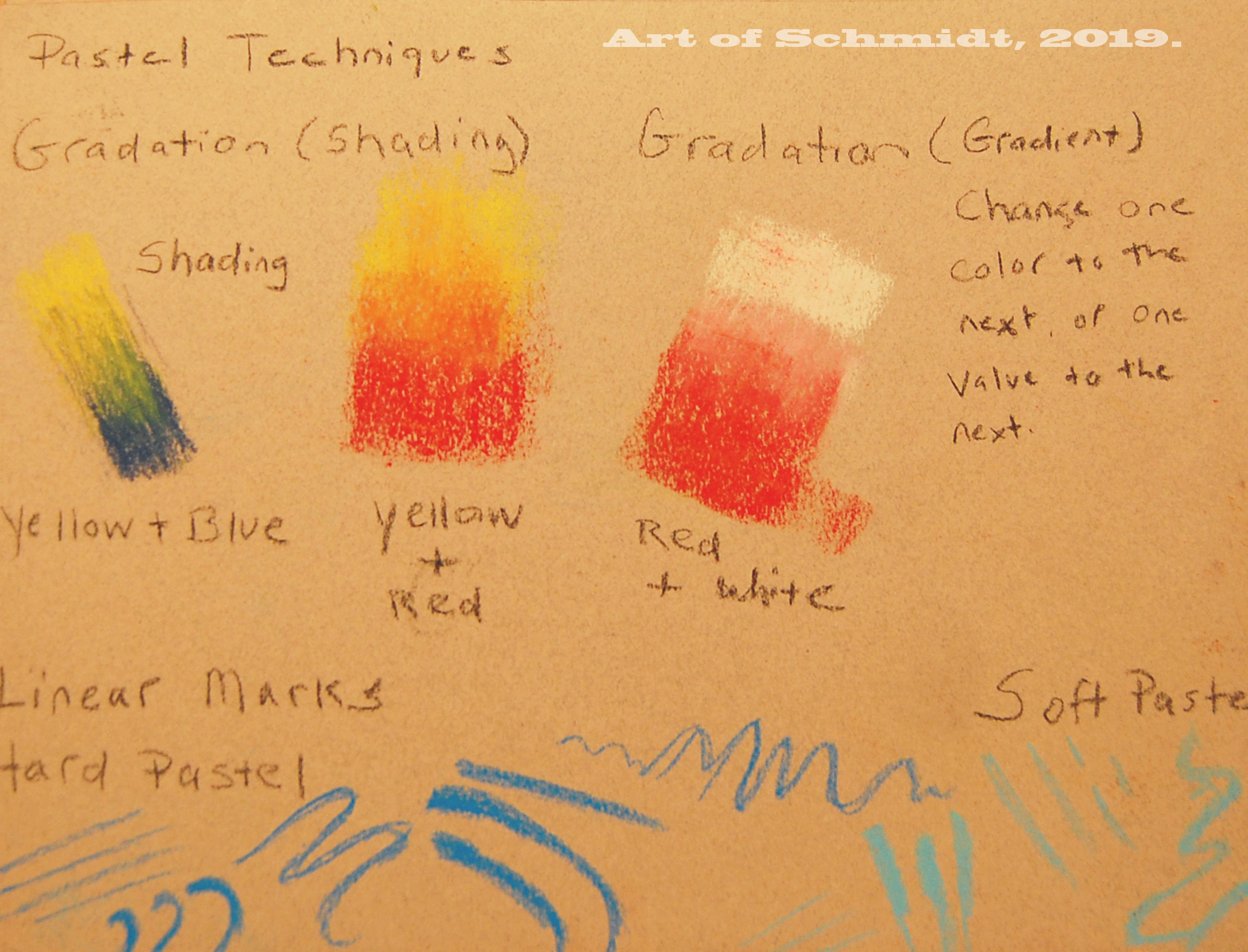
Here’s an example of a technique board, which I use to introduce students to pastel techniques, such as gradients and making linear marks. These techniques serve as a strong foundation to prepare you for the more challenging projects in still life.
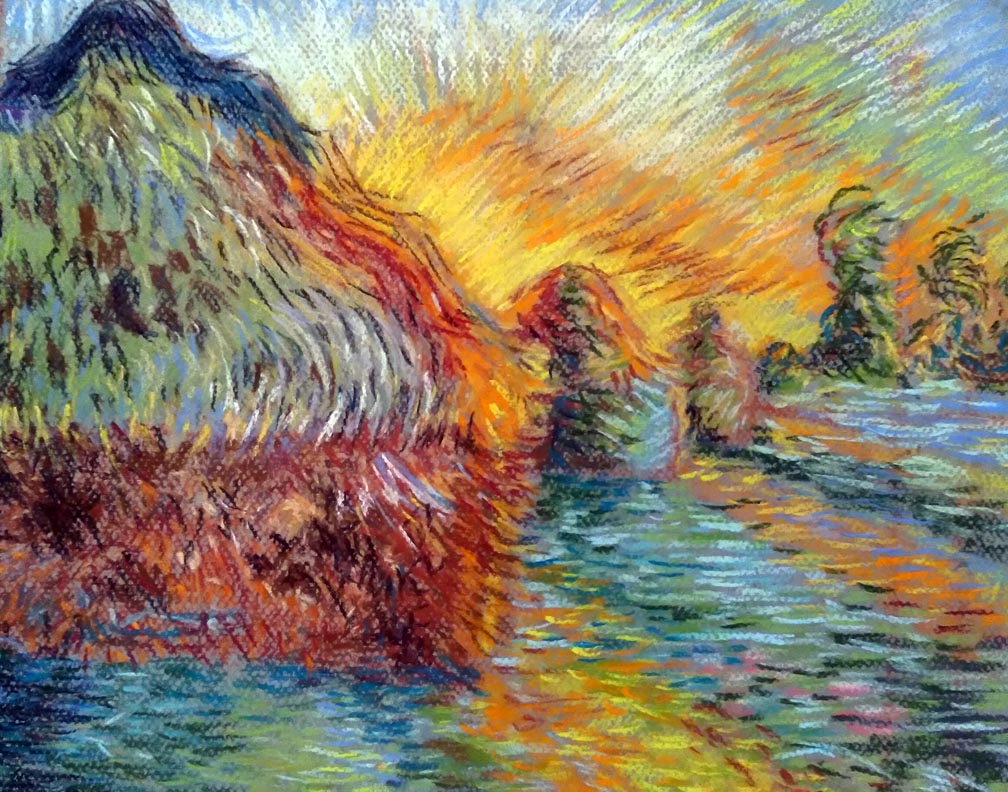
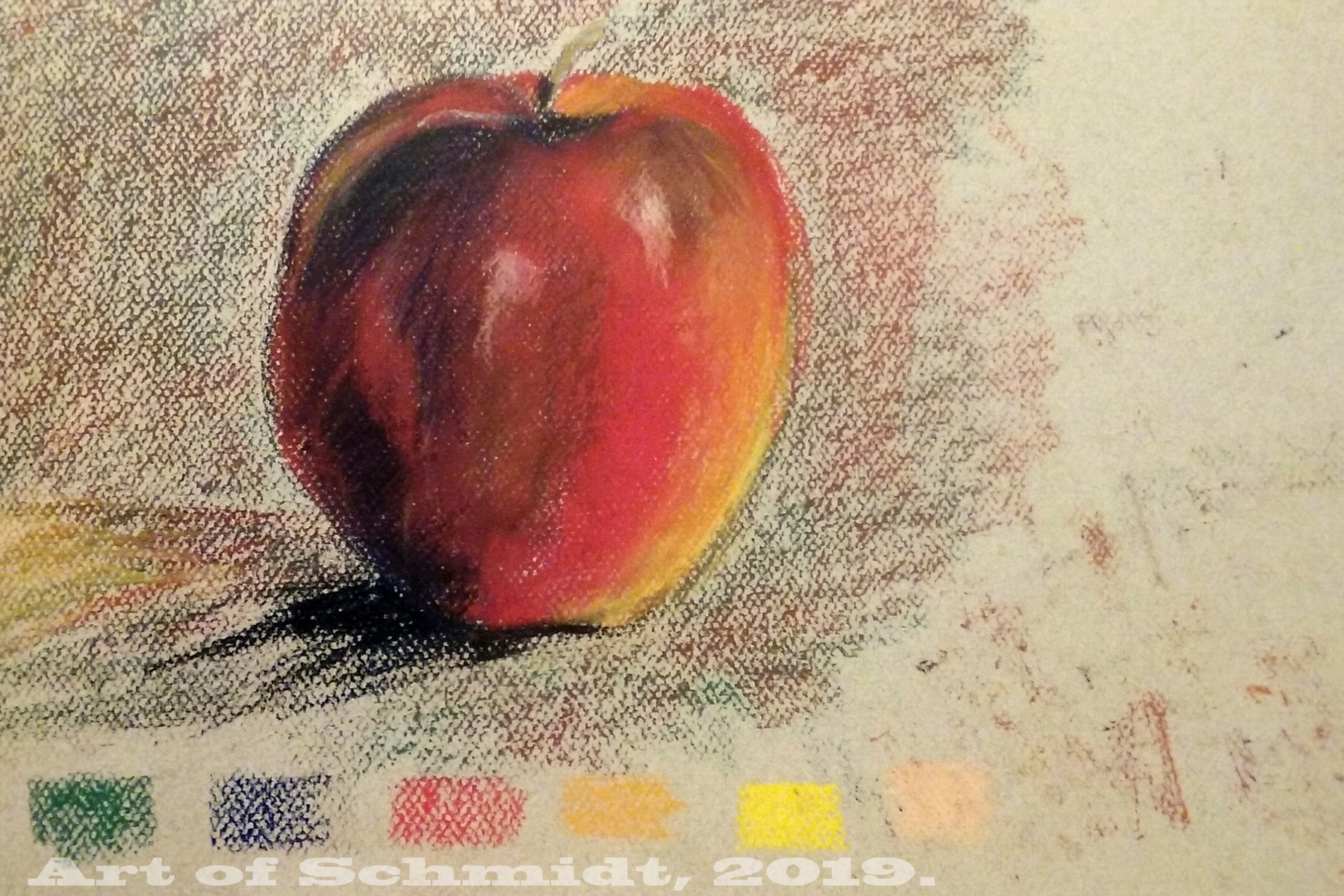
Example of a medium-hard pastel art tutorial in which I used blending and mark-making techniques such as scribbling.
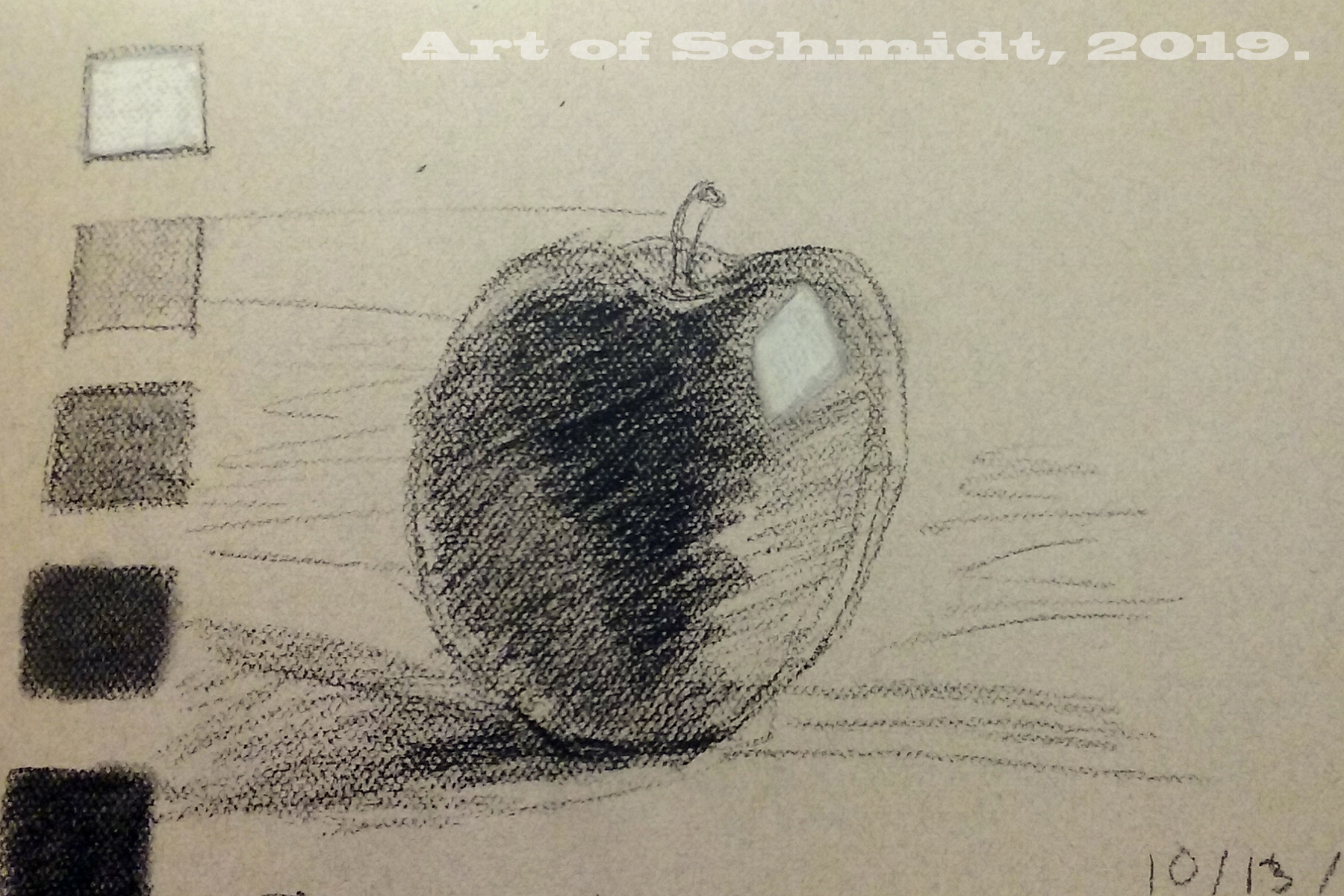
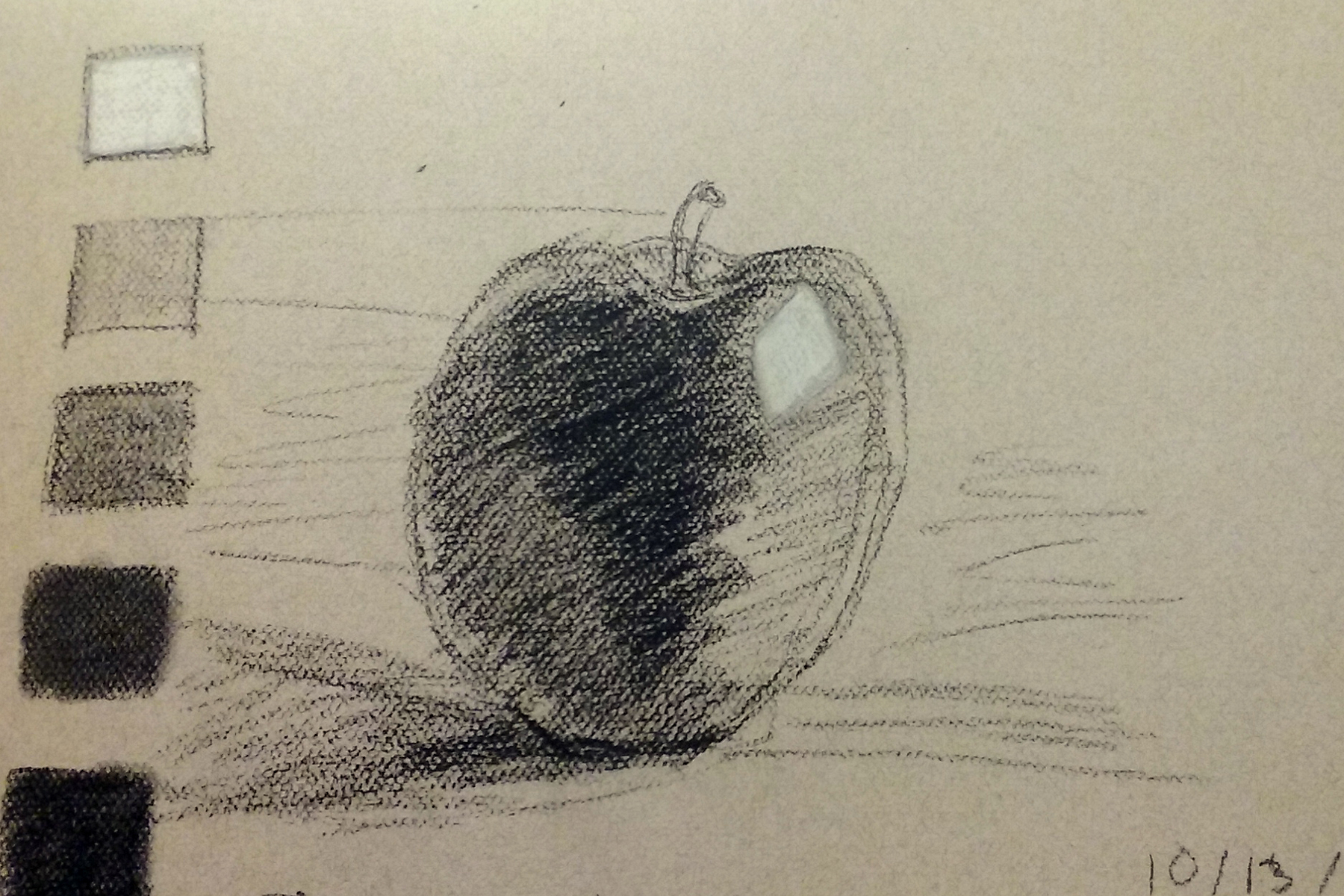
Example of a 5 value exercise I teach early in the course to teach students how to recognize value or light and shade in a still life object.
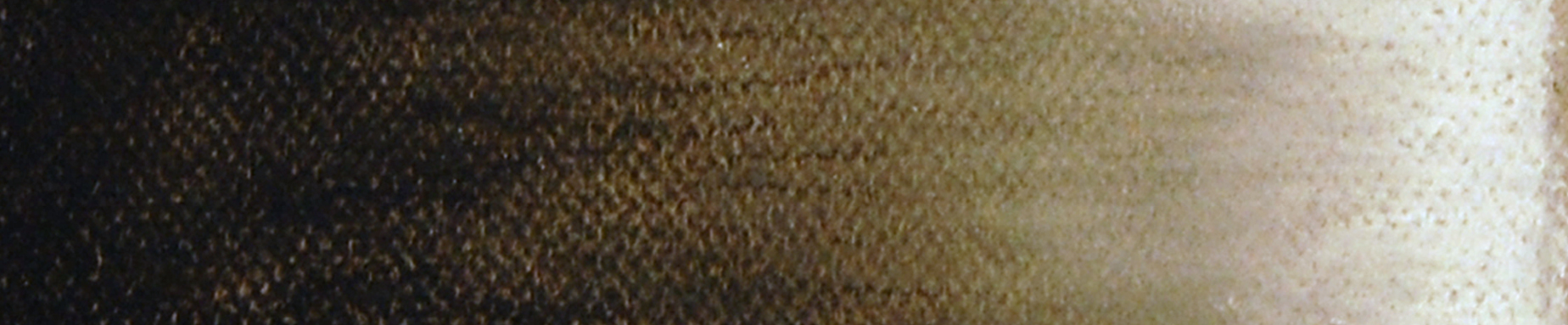
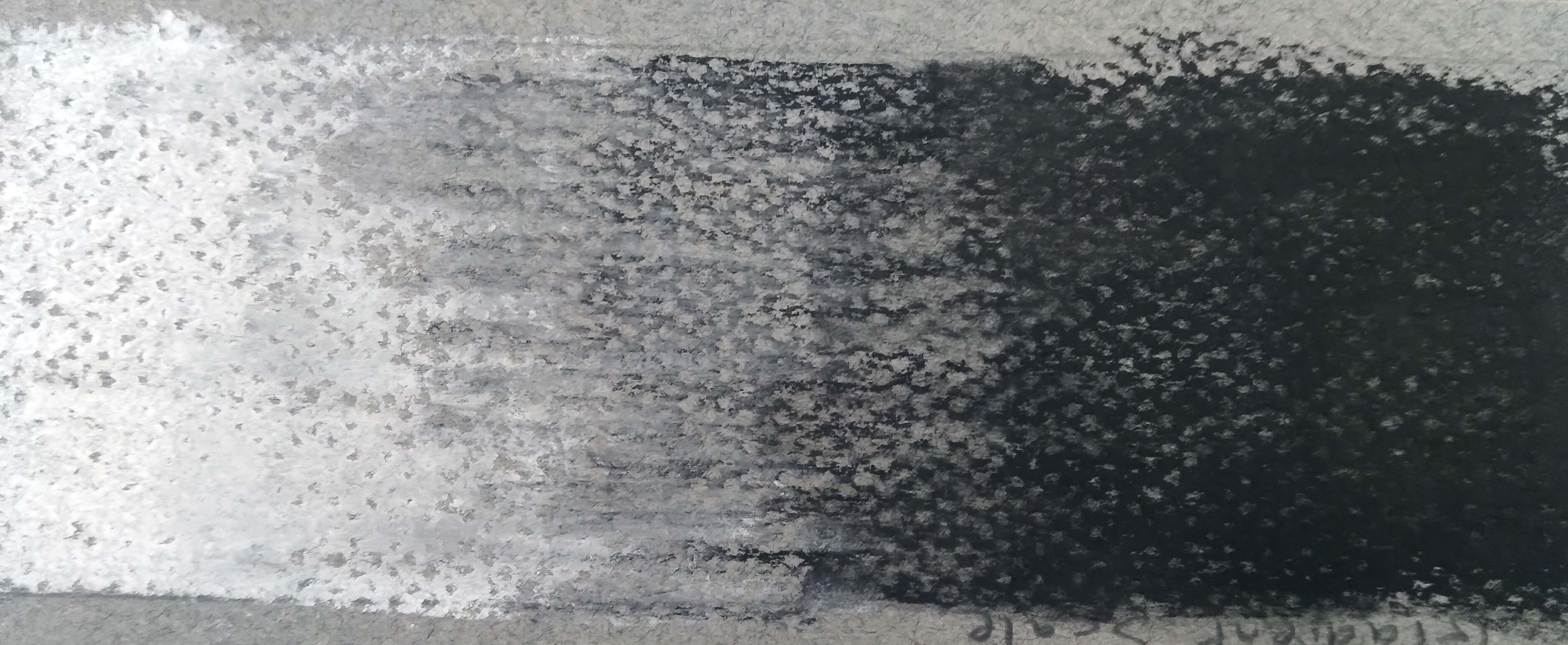
Here is an example of a gradient, a wonderful exercise to learn how to shift from one value to the next, and which teaches you how to blend pastels and make softer edges.
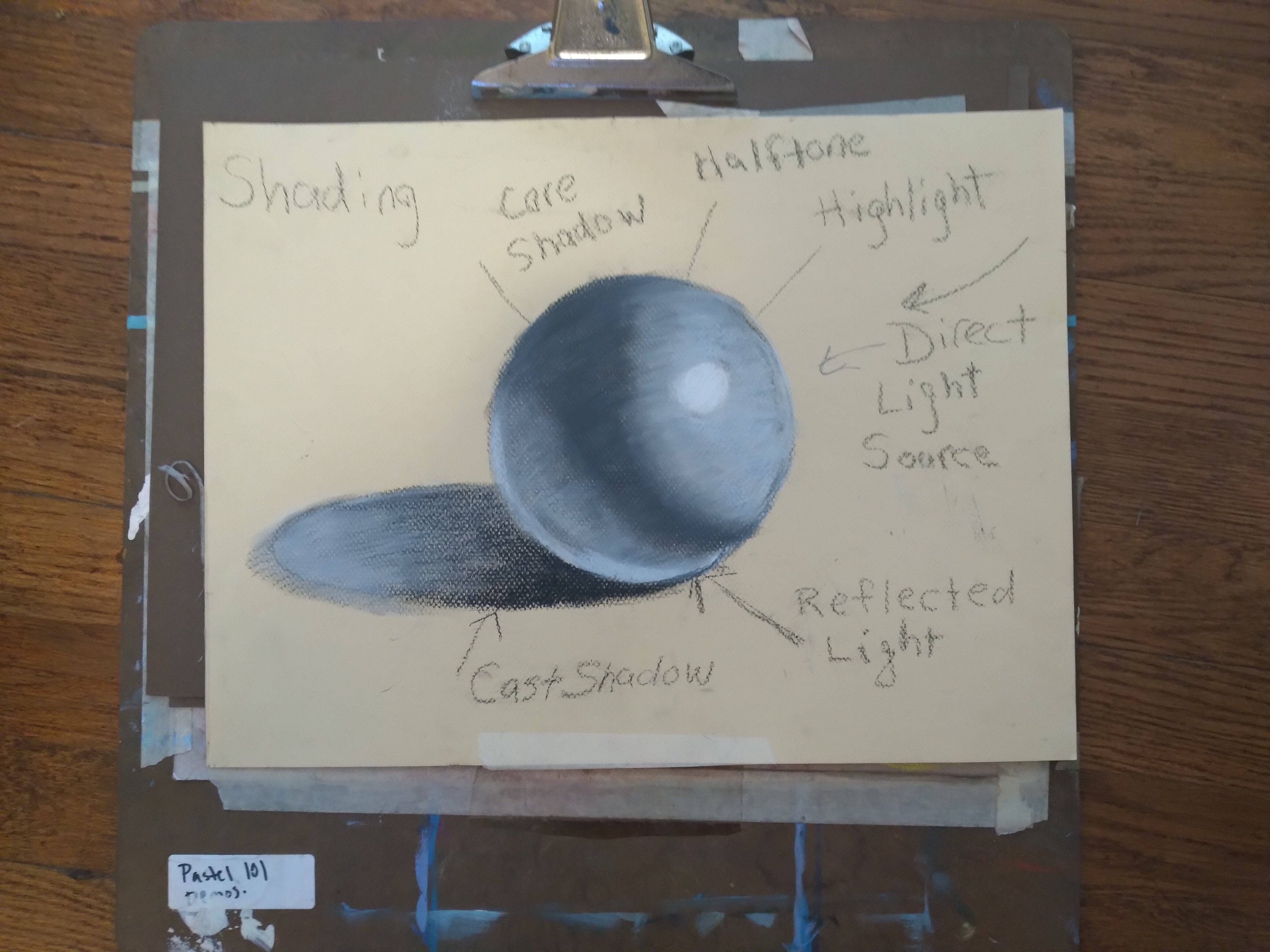
An example about how to understand the effects of light and shade on a rounded object. It’s a great exercise for beginners, and especially those who like to draw portraits as the sphere provides an excellent example of how light might be dispersed on a face.

Drawing: The Power of Thumbnail Sketches

Would you like to learn a new skill to add to your drawing toolbox? Or, did you want to learn drawing , but felt intimidated by the prospect of drawing and the many approaches you can take to it, such as contour drawing? Enter thumbnail sketches. Source: Brummer, Carrie. “10 Creative Prompts for Thumbnail Sketching,” Artist Strong Blog, www.artiststrong.com. Accessed 09/11/2020.

A thumbnail sketch is a quickly drawn small sketch, hence the name, thumbnail sketch. It could be any subject you choose, such as animals, portraits, landscapes, city scenes, etc.  the only guidelines are to make it small, about 2 inches by 2 inches for height and width. Your thumbnail sketches can be composed of boxes, rectangles or any shape you choose. And you can use pencils or pens. If you wish, you can add color to your sketches with colored pencils or watercolor paints. Think of your thumbnail sketches as gesture sketches, which can be done in seconds, and which can be used as a dress rehearsal for more complex art projects, such as paintings. Source: Brummer, Carrie. “10 Creative Prompts for Thumbnail Sketching,” Artist Strong Blog, www.artiststrong.com. Accessed 09/11/2020.

Want to know how to get started? To begin your thumbnail sketches, you can begin by gathering pencils, pens, rulers and watercolors or colored pencils, if you wish. Start by drawing a series of small squares, with pencils, papers and rulers. Then decide what you want to draw and gather your source materials, such s photos, a still life, or go out on location, such as to a park to draw people and landscapes from observation. Source: Brummer, Carrie. “10 Creative Prompts for Thumbnail Sketching,” Artist Strong Blog, www.artiststrong.com. Accessed 09/11/2020.

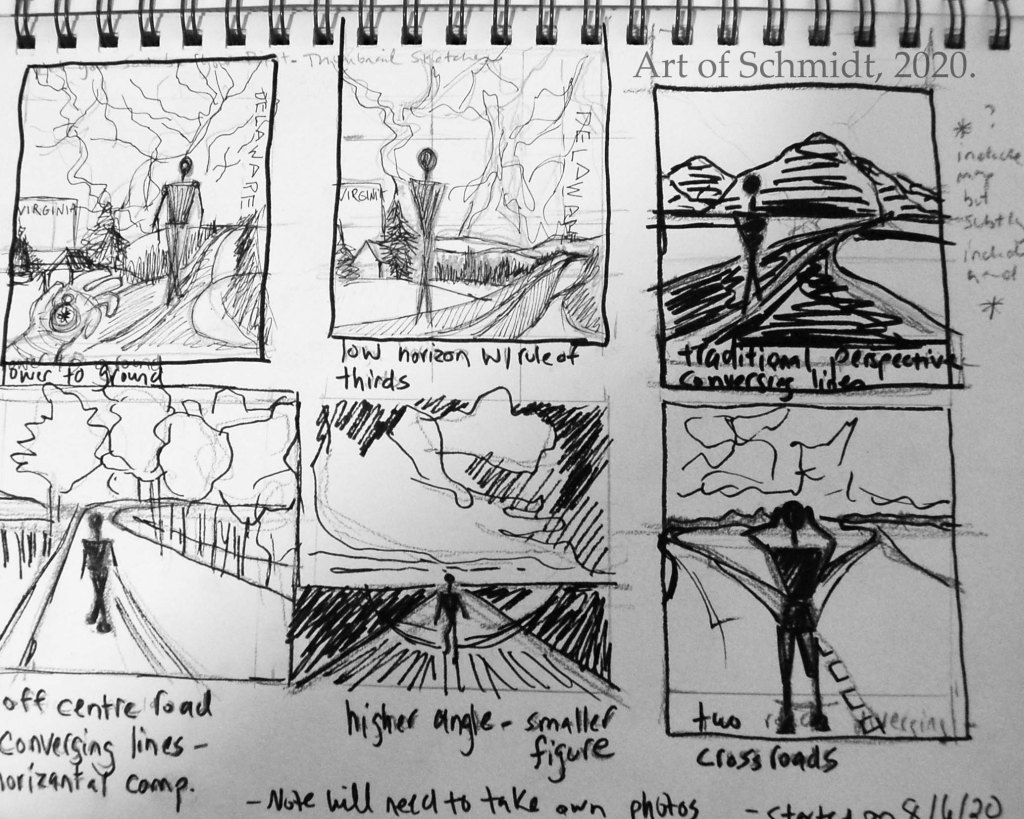
 I began with six squares to test out different compositional concepts for my paintings, Let Your Soul be Your Pilot and Song of Service, using pencil, ruler, and pen to outline my drawings. If you can’t get outside, use your old vacation photos as a source, such as a beach vacation, etc. Be sure to try out different compositions for each box, such as: close ups, and eye level viewpoints, etc. Trying out the compositions now, will help you make the best choice for your projects and give you practice and confidence in your drawing skills. But don’t spend more than a few minutes on each sketch, keep it loose and free of detail. If you feel stuck, check out the list of prompts I am including below, from the blog post, 10 Creative Prompts for Thumbnail Sketching, by Carrie Brummer, posted on her website, www.artiststrong.com.

  1. Draw a house plant, using close up views, details of leaves, etc.
  2. Choose your favorite photo and abstract it, by simplifying it into smaller sections.
  3. Compose a still life using objects from your home, such as plates, dishes, vases, or fruits and vegetables.
  4. Draw the scenery at a park, while sitting on a park bench.
  5. Drive to the beach, or look for old vacation photos if you can’t get outside this summer.
  6. Look for patterns in your home, such as: fabric patterns in your curtains, throw pillows, or futon covers.
  7. Get your family involved and participate in a scavenger hunt on a rainy day. Ask your family members to look for an element of art, such as: line, in your home and then share your sketches of these subjects as a group.
  8. Bring your sketchbook to your appointments and draw the offices you are waiting in.
  9. Design sketches that illustrate your favorite cookery recipe.  10.) Make a storyboard from your thumbnails to illustrate your favorite fairy tale.

 I began with six squares to test out different compositional concepts for my paintings, Let Your Soul be Your Pilot and Song of Service, using pencil, ruler, and pen to outline my drawings. If you can’t get outside, use your old vacation photos as a source, such as a beach vacation, etc. Be sure to try out different compositions for each box, such as: close ups, and eye level viewpoints, etc. Trying out the compositions now, will help you make the best choice for your projects and give you practice and confidence in your drawing skills. But don’t spend more than a few minutes on each sketch, keep it loose and free of detail. If you feel stuck, check out the list of prompts I am including below, from the blog post, 10 Creative Prompts for Thumbnail Sketching, by Carrie Brummer, posted on her website, www.artiststrong.com.

Pictured in this week’s blog is my progress for the Let Your Soul be Your Pilot painting. I began with a somewhat busy composition and decided to simplify it, even though I liked all the symbolic imagery of map and compass. It felt like the figure, which was the main narrative was getting lost in all the detail, but I wasn’t sure how to proceed. Making thumbnail sketches helped me to see my options. The painting still isn’t finished, but I have a better idea of where I want to go next with the painting. I also began making some color sketches to try out color schemes for the finishing painting. I am hoping to have the final oil painting based on this new thumbnail posted to my blog or Instagram account by next week. Thanks for reading!

A variety of thumbnail sketches were explored here to try different viewpoints for my drawing, Let your Soul be Your Pilot. I used pencil, pen, and ruler to sketch on mixed media paper in my sketchbook.
Basic sketch for the chosen thumbnail sketch. I used this sketch as a basis for my oil painting on masonite board.
Photo collage I made in Adobe Photoshop of the revised composition from thumbnail sketches, reduced into a black and white image to focus on values, from darkest black to shades of grey and light gray. Doing this gave me more freedom to choose different color combinations, as I started to do below in watercolor paints on mixed media paper.
Color Study one of the revised composition, with analogous colors of blue, blue-green and green as the main color scheme.
This is the original sketch which I had started with before I made thumbnail sketches. I thought it was too busy and so I looked at different thumbnail compositions to try out, pictured at the top of the gallery.

Portfolio Progress completed works

This week I am taking time to inventory my completed artworks for my series Constructed Realities. This mixed media series is a collection of poetry inspired works that incorporate both text and imagery with a variety of media such as soft pastel, oils, acrylics, and gouache. I am making these paintings as part of a portfolio in preparation for applying to graduate school in two years’ time. I’ve been stretched in ways I hadn’t thought possible working with a variety of media, and the challenge of translating abstract ideas into visual art. Here’s a snippet of my Statement of Purpose, which describes these works in more detail.

In my new works, I have incorporated mixed media and text, which is inspired by art journaling and mixed media art. For example, texts from selected poems or songs, such as the writings of Emily Dickinson, Maya Angelou, Robert Frost, and T.S. Elliot, Dylan Thomas, and Thomas Hardy are included in my paintings to give viewers clues about the content of my work.  Other influences include the song lyrics of Sting, and other musicians, psychological theories of human development, and current events.  These texts are incorporated into my paintings to help the view draw connections between the emotional content in my art and the written word.

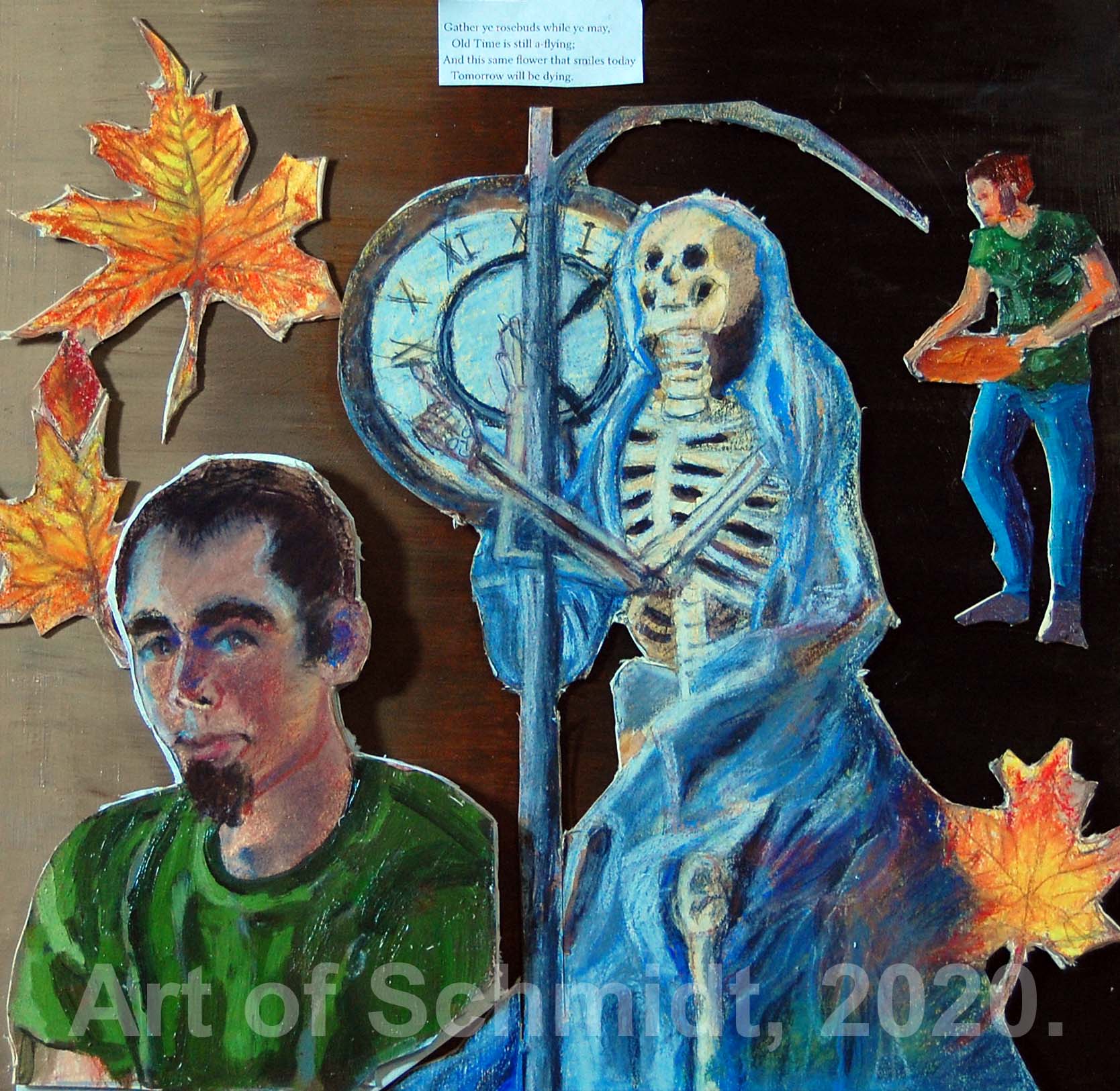
Gather ye rosebuds final, small
Jodie Schmidt, Time waits for no one,  August 2020, mixed media: oil, acrylic, gouache, illustration board on masonite, 12 x 12 inches. Photo of Grim Reaper photo credit: Jbuzbee, 21 September 2008, Statue in the Cathedral of Trier, Germany, originally sourced on https://commons.wikimedia.org/wiki/File:CathedralOfTrier_Skeleton.JPG. The photo has been re-mixed into a fine art image with the addition of pastel, gouache and other pictorial elements have been added to the composition such as the clock and figures. The original photo source is liscensed under wikimedia commoms.

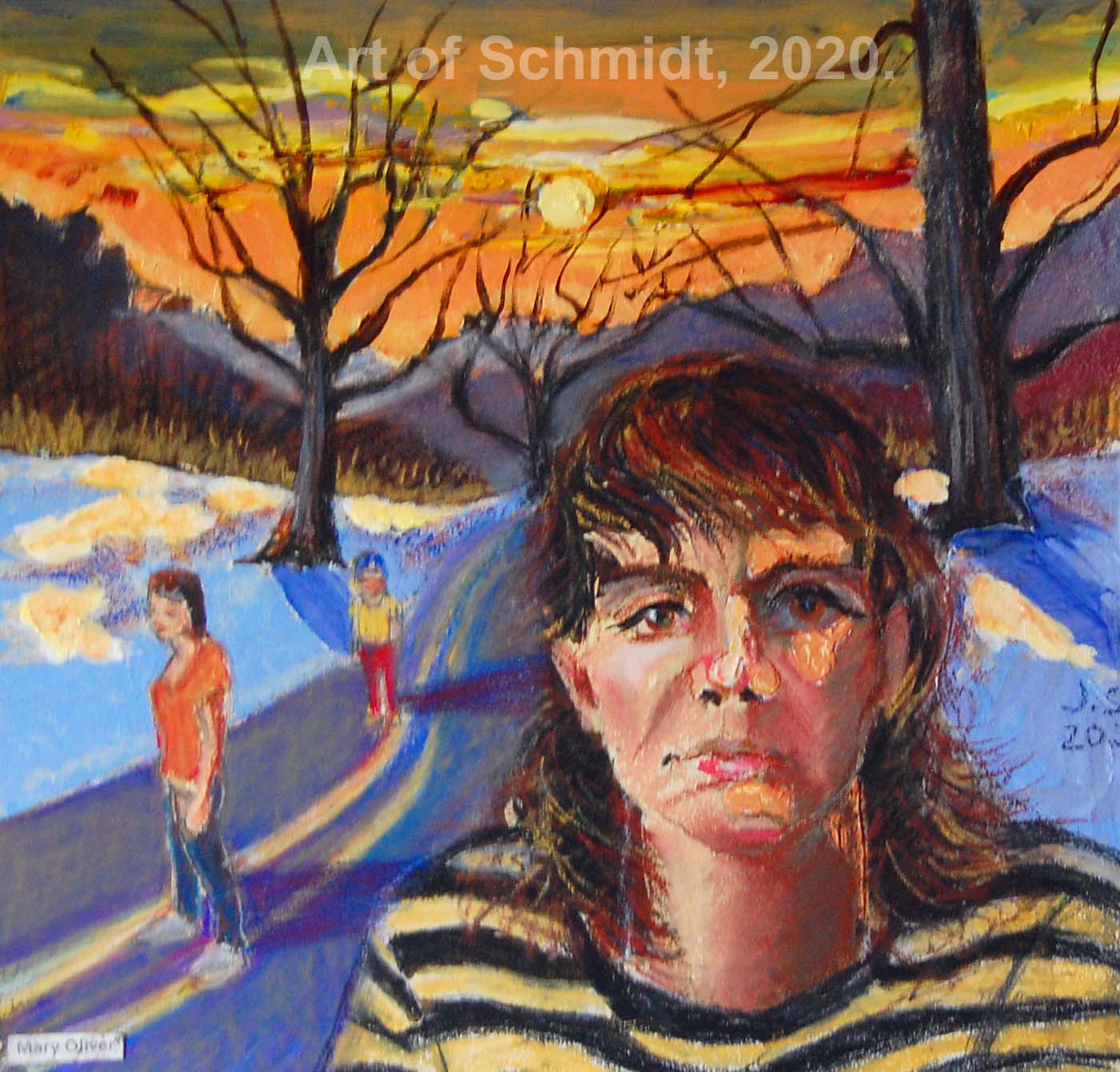
Dream of time travel, final, small
Jodie Schmidt, Dream of Time Travel, July 2020, mixed media: oil, soft pastel and gouache on illustration board, 12 x 12 inches.

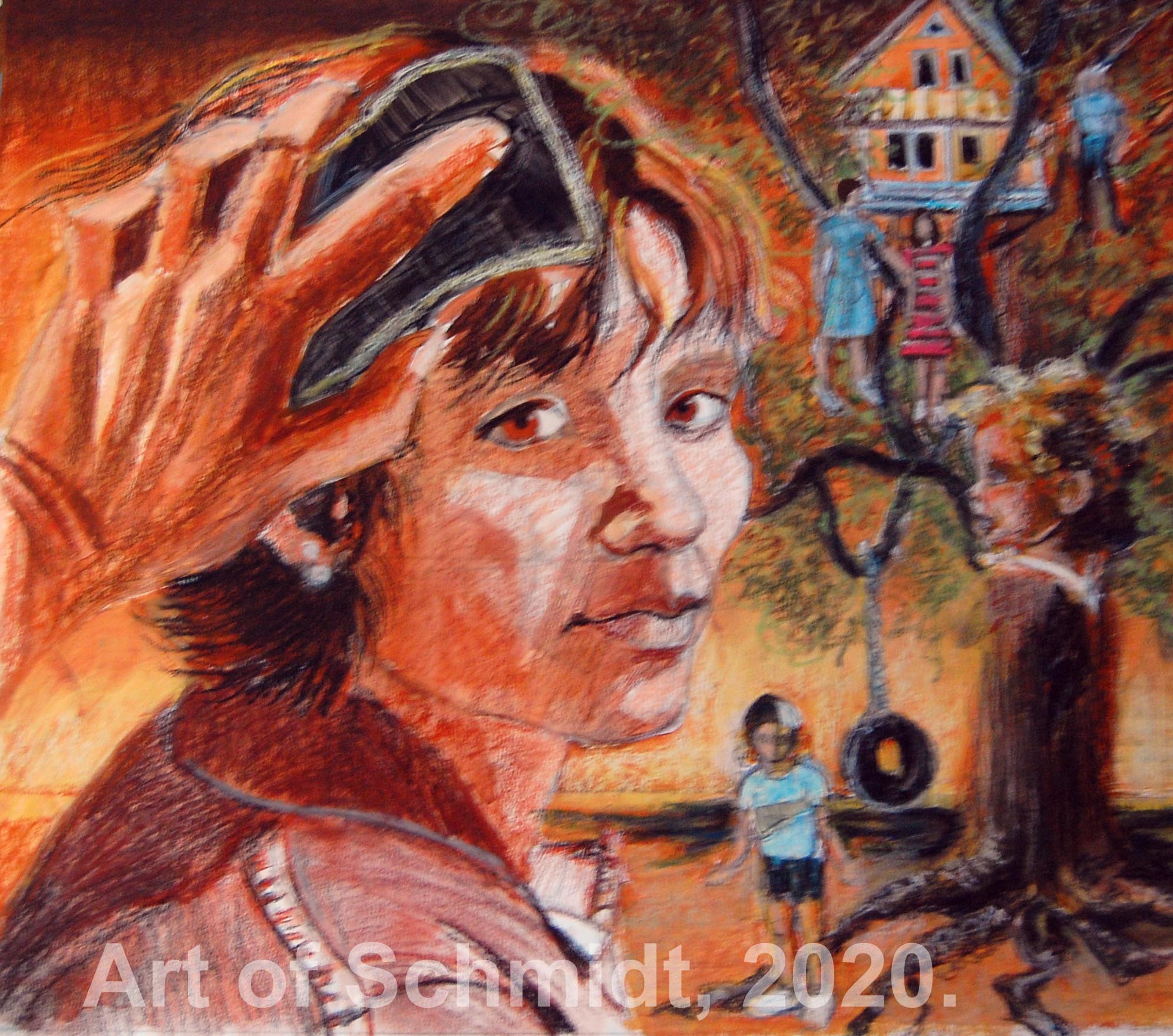
Pictures of You, with watermark
Jodie Schmidt, Childhood Memory Loss, June 2020,  mixed media: Soft pastel and gouache on illustration board, 16 x 20 inches.

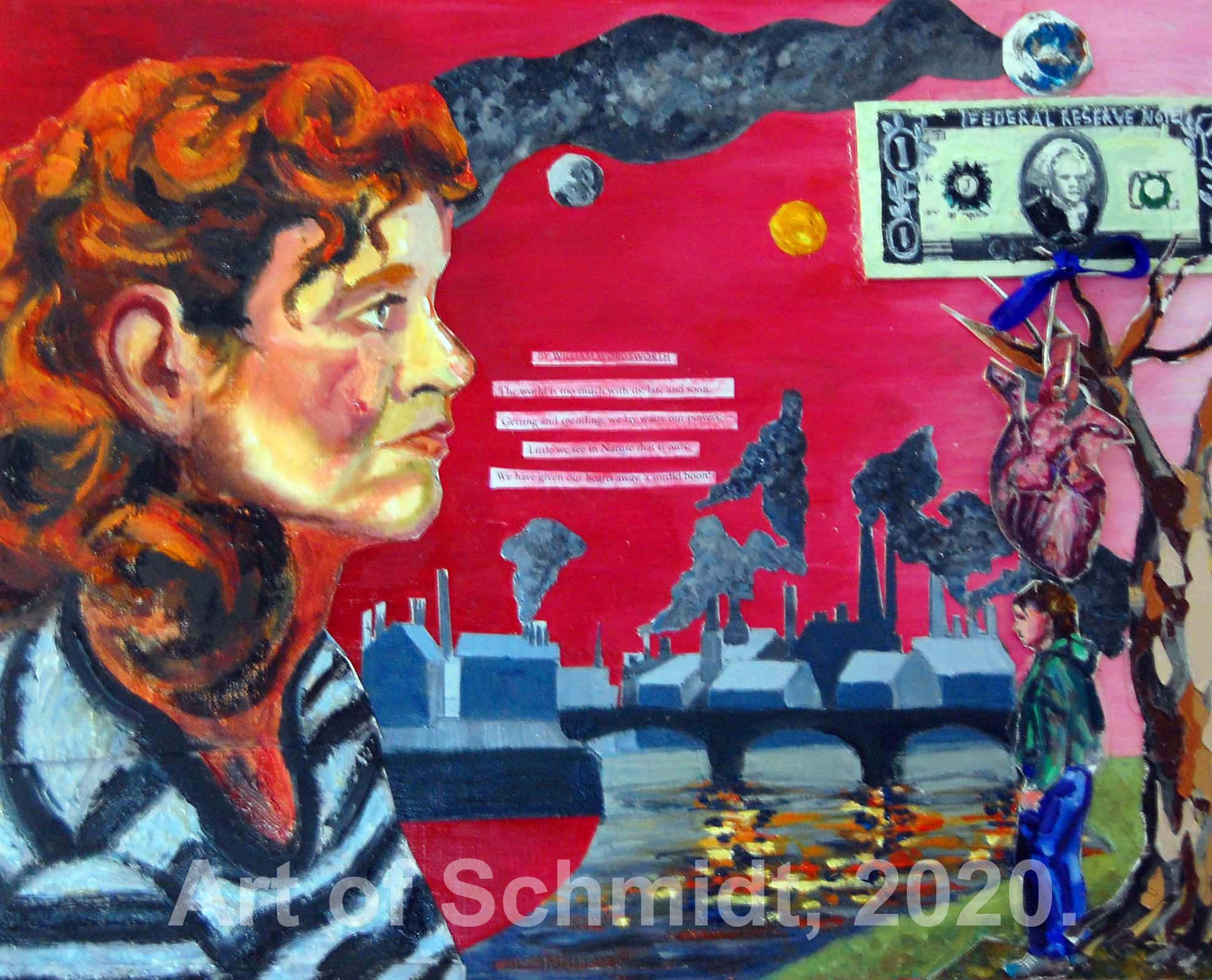
The world, final version
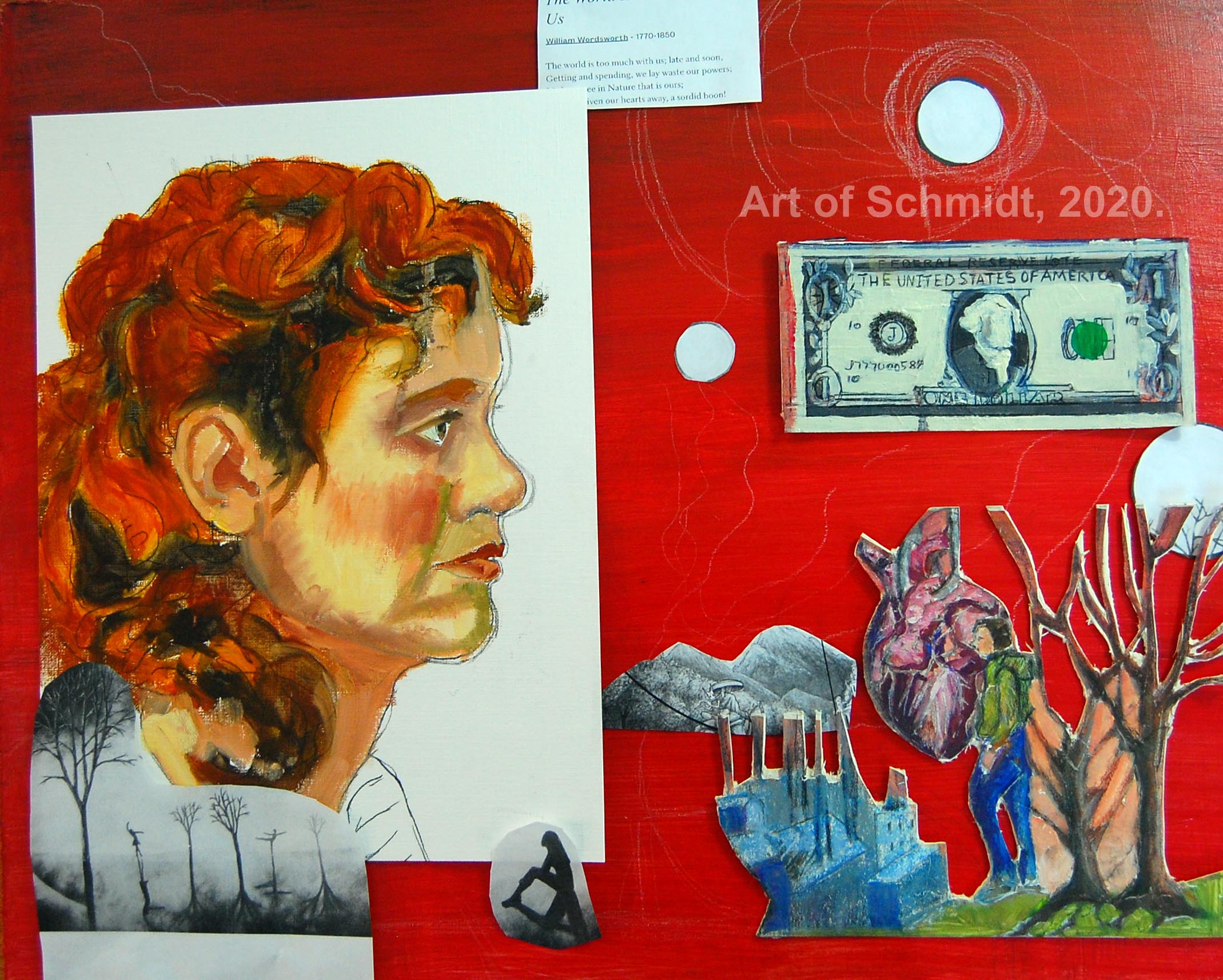
Jodie Schmidt, Money is the Bait, August 2020, Mixed media: oil, acrylic, paint chips, canvas paper, and illustration board on masonite, 16 x 20 inches.

What to do when a painting goes wrong?

What to Do When a Painting Goes Wrong


Hello Friends, family, and fans,

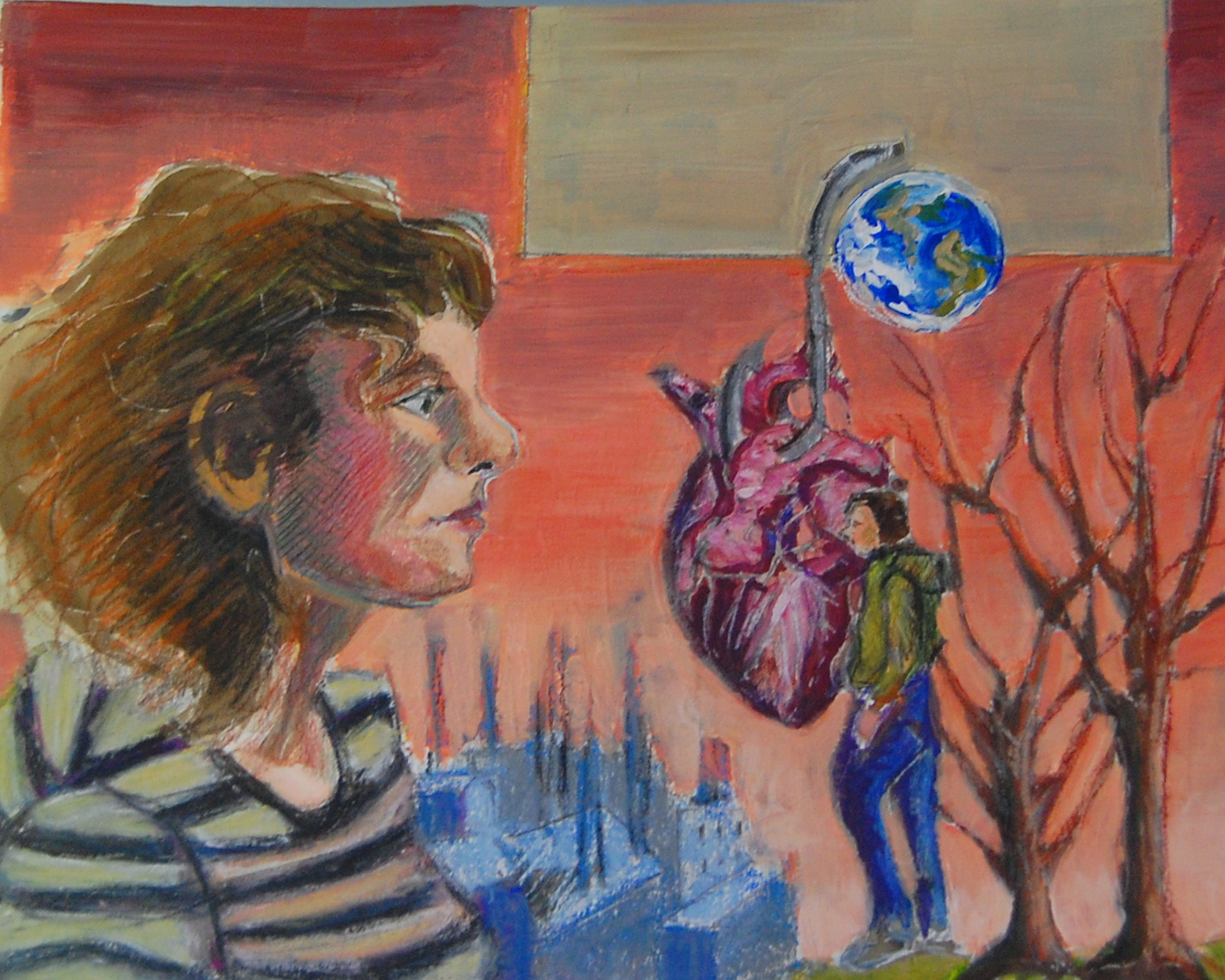
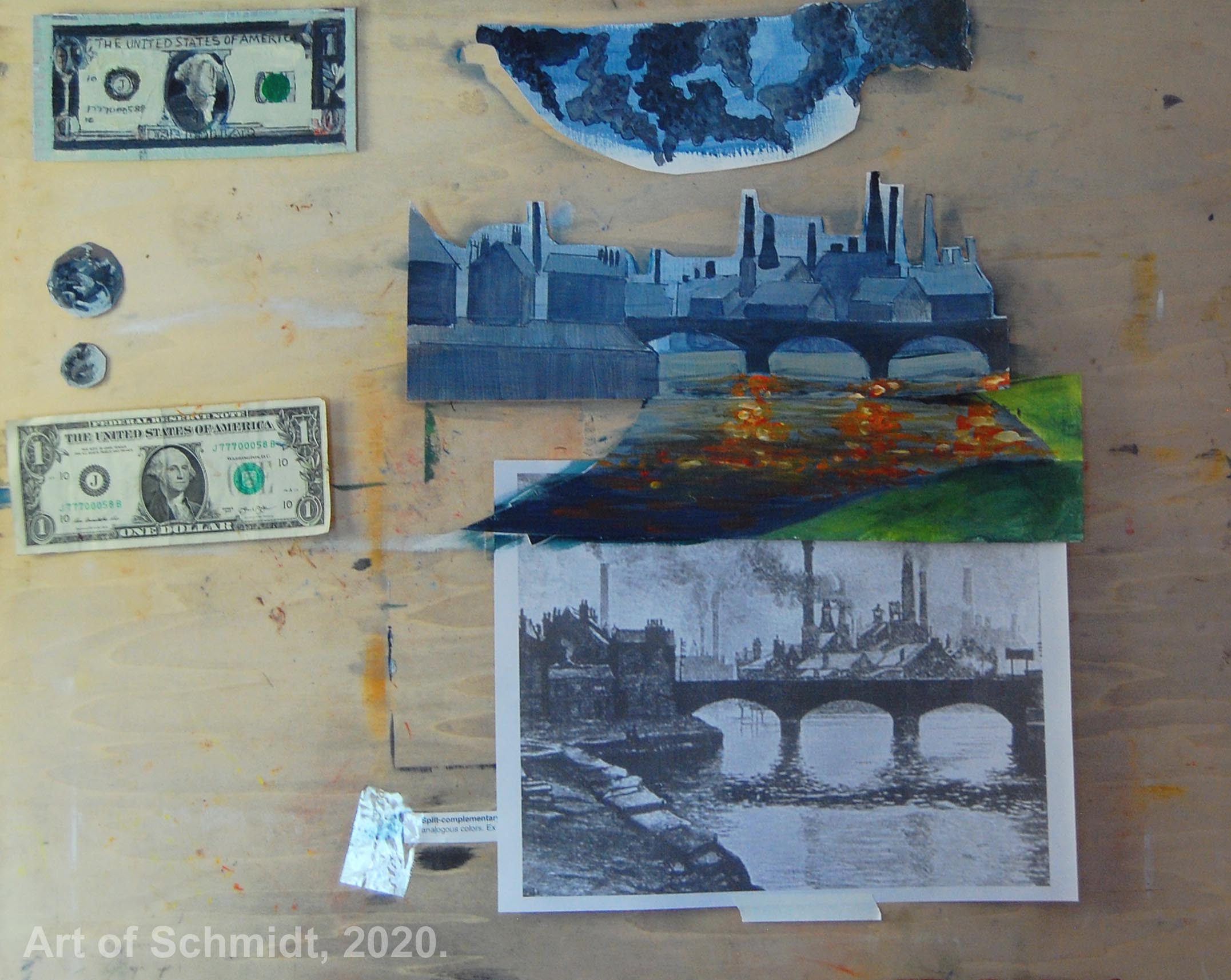
I am so glad you stopped by to read my post today!  While this blog post is a recycled one written several years ago, the artwork I am posting is completely new, and part of my new art portfolio. This week I am featuring the painting process of my latest work in progress, The Almighty Dollar. Its a mixed media collage which illustrates the poem, The World is Too Much with Us, written in 1807,The world is too much with us, flatStage 1, Almighty dollar, flatMasonite board. stage 2, flatcomposition stage 3, flat by William Wordsworth. Although this poem was written in the 19th century, the theme of capitalism and greed is still relevant today. I think that’s what makes great art and poetry, something is written or painted in the past, which still resonates today! If you are working on an artwork or other creative project and feel stuck, I hope this post will help give you encouragement to carry on, or just start over again.

If you are a creative type or if you like to make things, you have probably encountered the moment when the finished product you imagined, does not live up to your expectations. Creative types such as musicians, composers, producers, dancers, writers, artists, photographers, cooks, and makers of all types, can probably tell you what it feels like to hit a wall with a project, and how it felt, and what they did to navigate that feeling of utter frustration. As an artist, I have experienced this frustration more times than I can count. Some paintings and drawings are simply learning projects and are difficult to salvage, while others can be fixed. I know it’s been said that you learn more from your mistakes than your successes, but when I get to a point in a painting or drawing and I realize that the painting or drawing doesn’t look right, it can be really frustrating. I start doubting myself, feel like giving up, or doing something that I am not good at, like cooking or cleaning because I know that I am not good at these things, so my expectations of success in these domains are much lower than for painting or drawing since I have no training in cookery or housekeeping.  Since I know I am not a good cook, if it doesn’t turn out so well, it’s a waste of ingredients but I don’t feel as emotionally attached to the outcome as I would to a painting or drawing.

I recently read a forum question on the website, Wet Canvas.com, and the question of the day was,” When should I stop working on a painting? I was intrigued by the question, and wondered how other artists dealt with paintings that can “look like a dog’s breakfast.” I read about a variety of solutions suggested by artists who had hit the wall creatively. Some were familiar to me, like my tendency to put the painting away and stop looking at it for a few days, weeks, months, or even longer. Others were not as familiar such as putting the painting somewhere where you can see it, such as on an easel in a living room, and then taking time to look at it from time to time to diagnose the problem. Another favorite technique is to write a list of things I want to change in the painting, be it the drawing, colors, value, edges, etc.  In my case, some of the artwork I have abandoned was started about two years ago, and I am just now starting to look at the sketches and Photoshop files.

This week I took some time to work some more on my acrylic painting, Waiting: Creative Block. I realized that there were several things bothering me about it. The colors and values, and the composition were some of the biggest glaring errors.  I am realizing they there are many reasons why this painting series of poetry illustration works have been abandoned. One of which was being too busy with other things to give the series the proper amount of time it requires to get things right, such as the composition and the drawing. Since I dropped out of the Social Work program at Frederick Community College, I do have more time to work on paintings. And since I have deliberately looked at my schedule e and started marking studio days on the calendar, I have more “intentional “time.