Hello Family, friends and fans, I am excited to share that I have been invited to be a vendor at the Unplugged Festival hosted by Brunswick Main Street and Pop Up Frederick. My artwork will be for sale, and I will be part of a larger group of artisans and makers. There will also be games and “battery-free” fun for the whole family. Here is a link to learn more about this exciting event: https://www.facebook.com/events/2232929753595902. 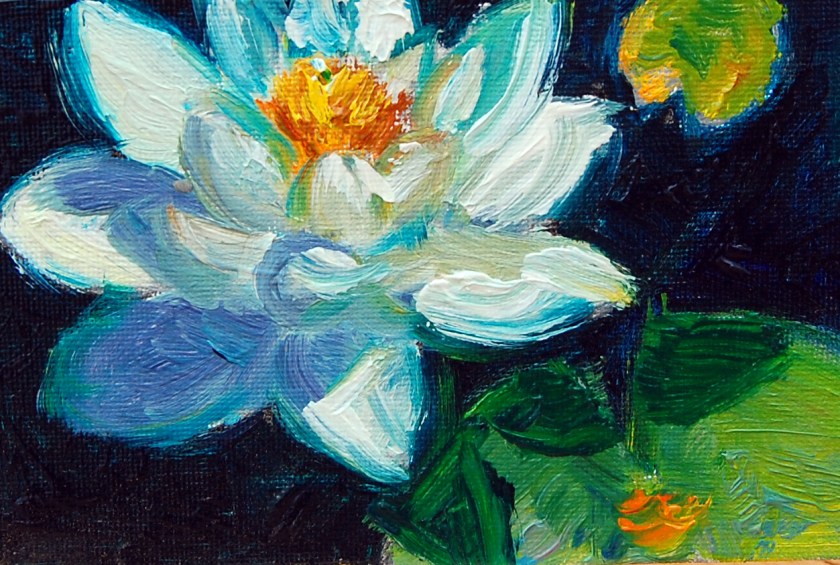
Tag: art
Art of Schmidt August 2018 Edition

Artists: What Should You Do with Unfinished Work?
It all started with a bad day
It was a tough day in the art studio today. I woke up this morning with very little energy; however, I was determined to make time for art regardless of my lethargic state. Several cups of coffee and a long walk around my neighborhood later, I was ready to begin. I set out to start a cat portrait I have wanted to work on for a while from one of my art technique books. I set my timer for 25 minutes and I started drawing from an art demonstration book. Suffice it to say, the drawing did not go well, at all, despite several attempts to get the proportions of the cat’s body correct. Each attempt just brought on more feelings of frustration. After the third attempt, I finally gave up and put my supplies away and went to do something else, probably laundry or reading a book. After working on the cat portrait, I realized that I am really out of practice when it comes to doing animal portraits, as I have been focusing a lot more on floral subjects, which is made up of simpler shapes and less precise in their proportions than animals and people. And I realized that I needed to practice drawing much more often like I did last summer when I completed a drawing challenge, 100 Faces in 100 days, which featured celebrity portraits.
What I observed from the day
I tried not to beat myself up about it, or obsess about what my failure to meet my expectations might mean, but I think that this drawing might end up in the growing pile of unfinished artworks. This observation brings me to today’s topic, which is, what to do with your unfinished artwork. As I mentioned in a previous post, I have several unfinished or unsatisfactory art projects residing in my art studios, such as pastels, drawings, watercolors and some oil paintings that did not turn out as I had envisioned. This makes me wonder, what should I do with this collection of art misfits? Earlier last week, I serendipitously found the article, “50 Ways to Use Your Unfinished Art,” by Carrie, on https://www.artiststrong.com/50-ways-to-use-your-unfinnished-art/.
What I have done in the past with unsatisfactory art
In the past, I have usually tried to resolve issues with unfinished artwork, sometimes starting over from scratch; i.e. creating a brand new drawing on a new substrate and re-surfacing the canvas by sanding it with heavy grit sandpaper so it can be re-gessoed. Other days, when I am more desperate or frustrated, I throw it in the trash, never to be seen again. Unless of course, my husband gets to it before I take out the trash. In which case, he fishes it out and says, ‘Why did you throw this away?” Or, some variation upon that theme usually ensues when he finds my rejected art. Ok, so now on to some information I would like to share with you about the article I read, “50 ways to Use Your Unfinished Art.” Here are a few highlights from the article.
- Take a photo of the artwork and “”manipulate the photos” to re-design it. Adobe PhotoShop is a good photo editing program to try for this option, with editing tools such as cropping, filters, light and dark balance, and photo filters. The possibilities here are really endless!
- “Abandoned art project, anyone?” (Source: 50 Ways to Use Your Unfinished Art”)
- Cut the artwork into pieces to construct a college. For example, the artist and author, Ann Blockley, has an excellent book, which describes this technique called, Experimental Landscapes in Watercolor, and it’s available on Amazon.com.
- Cut the artwork and create a background for another piece of art.
- Select a completely different art medium to finish the art. For instance, make it a mixed media piece.Amazon.com or your local library will probably have lots of books on mixed media art from which you can gain inspiration and techniques.
- Re-use it in a reconditioned item of furniture.
- Create a tray from your art using epoxy.
- Throw the painting away-if it makes you feel better.
- Take a break from it for two weeks or a month, to get some objectivity about your work. After that, re-assess your incomplete work, but only complete the pieces that you feel led to work on, and let go of the ones you aren’t sure how to resolve.
- Post a photo of your artwork in a community where artists give each other feedback, such as http://www.emptyeasel.com, and ask for help from others.

Self-Portrait, pastel on paper, 18 x 24 inches, 2014, Jodie Schmidt. 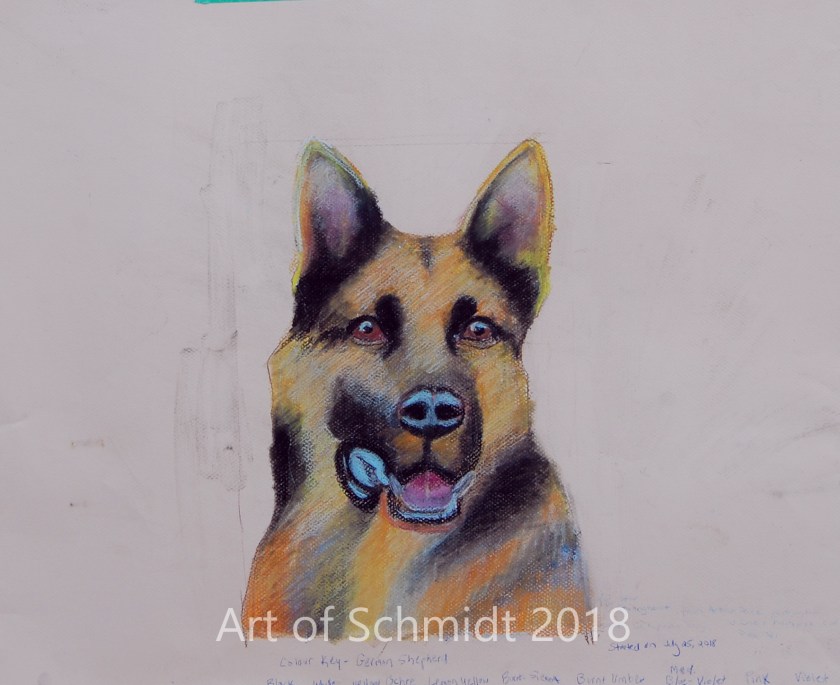
German Shepherd, pastel on paper, 18 x 24 inches, 2018, Jodie Schmidt. 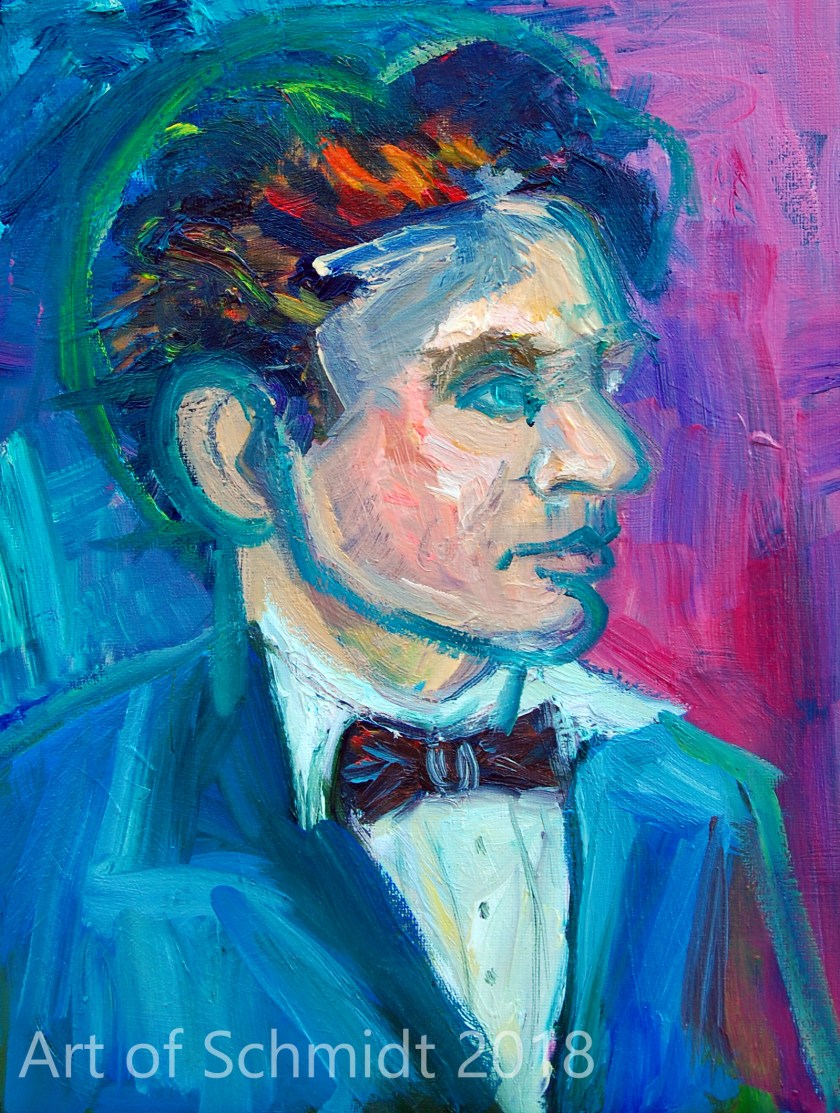
Abraham Lincoln, oil on canvas, 9 x 12 inches, 2018, Jodie Schmidt. 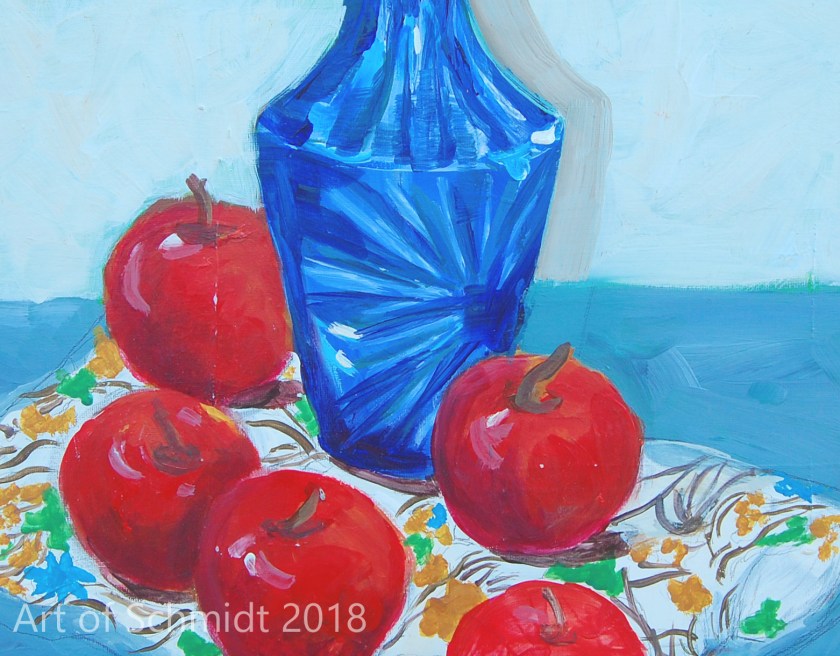
Apple Still Life, acrylic on canvas, 11 x 14 inches, 2017, Jodie Schmidt. 
Out to Pasture, oil on canvas, 11 x 14 inches, 2014, Jodie Schmidt.
Below are some links to websites that can help you get started with some of the techniques listed in this article, such as collage. Another website to visit for ideas on how to re-invent your art might include, youtube or Pinterest. YouTube is a great way to see techniques demonstrated, it’s almost as good as being in a class. Just be sure to look for art tutorials with narration so you can learn what techniques and materials the artists are using to make their work. It’s harder to figure that out with the speeded up variety called, time lapse. Thanks for stopping by! I hope this article is helpful to someone out there who is struggling to complete their art. I am definitely going to try out some of these techniques myself to try and complete some of my unfinished art, which is posted in this week’s blog! I’ll let you know how it turns out.
- Collage: https://www.artistsnetwork.com/art-mediums/mixed-media/create-collage-landscape/.
- Mixed Media Art: https://medium.com/prikabylove/beginners-guide-to-mixed-media-art-5199d920082d. http://www.createmixedmedia.com/make/mixed-media-memories-and-mementos, and http://www.clothpaperscissors.com/mixed-media-art-techniques/.
- Intuitive Painting: https://creativejuicesarts.com/what-is-intuitive-painting/, https://creativejuicesarts.com/what-is-intuitive-painting/,
.
New Art for Sale!
Hello Family, Friends, and Followers,
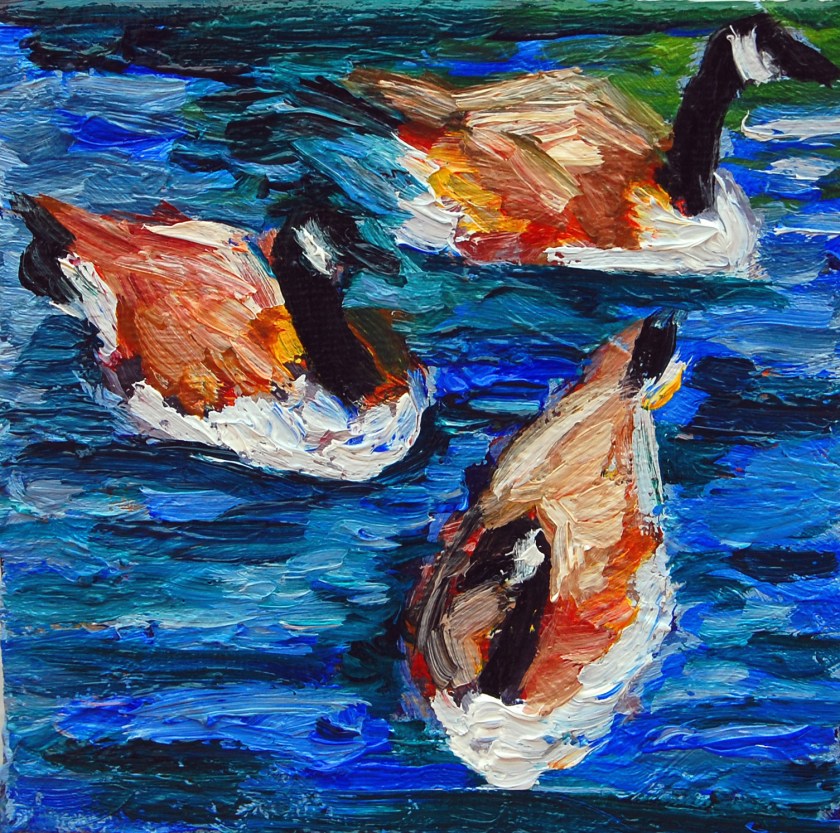
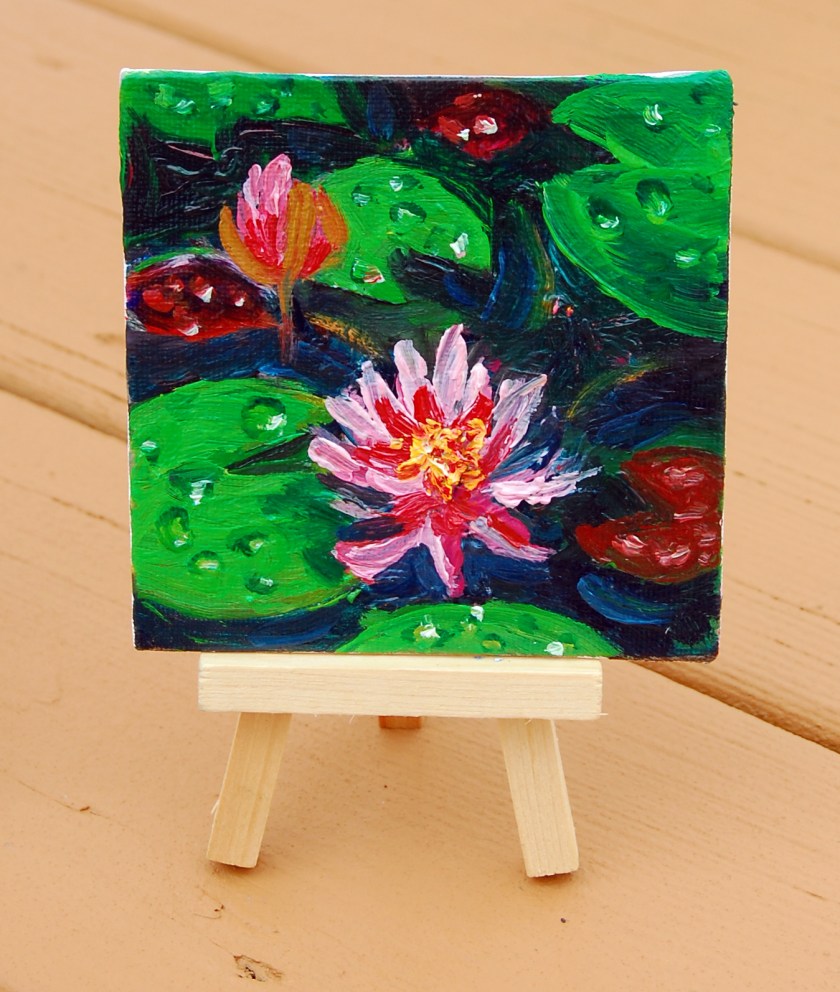
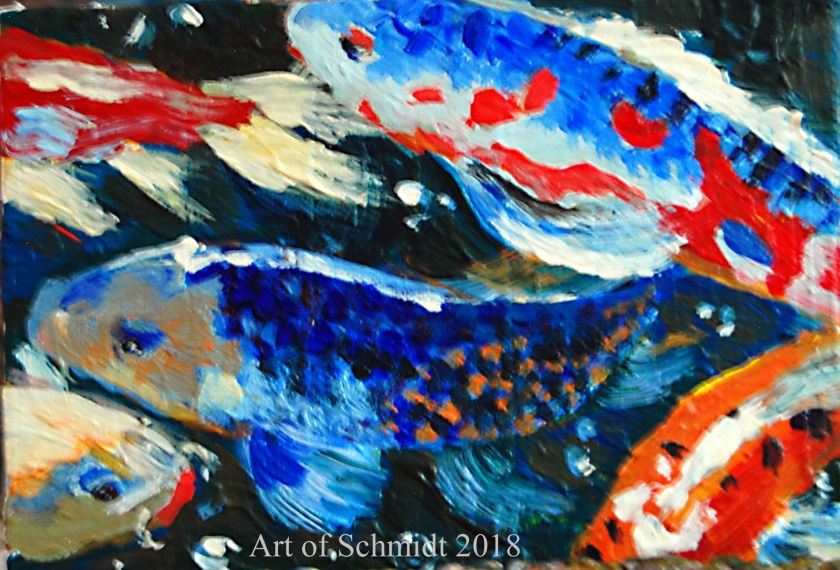
I have been adding some of my new miniature oil paintings to my Etsy Shop at https://www.redbubble.com/people/jsjschmidt2017, and the reproductions are available at my Red Bubble shop: https://www.redbubble.com/people/jsjschmidt2017. The original oil paintings include some of my favorite subjects, Canada Geese, and water lily gardens and most of them, measure about 4 x 4 inches. They are priced starting at $25.00 each and make a wonderful addition to your bookshelf, desk, bedside table, or cubicle. All of my paintings come with a small easel for easy display. The first photo here gives you an idea of the scale of some of my paintings. Thanks for stopping by! 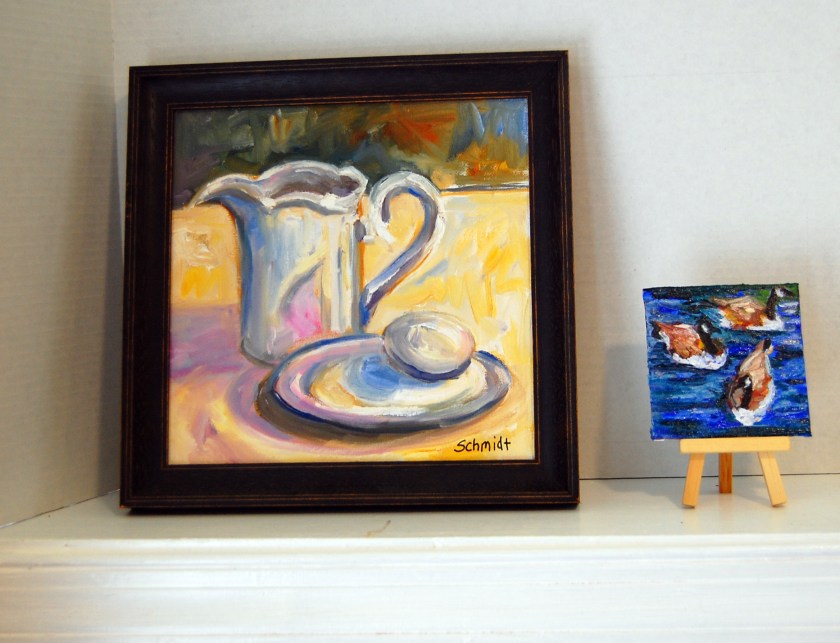

Surviving and Thriving in a Creative Desert
Things I have tried to do to get creative again
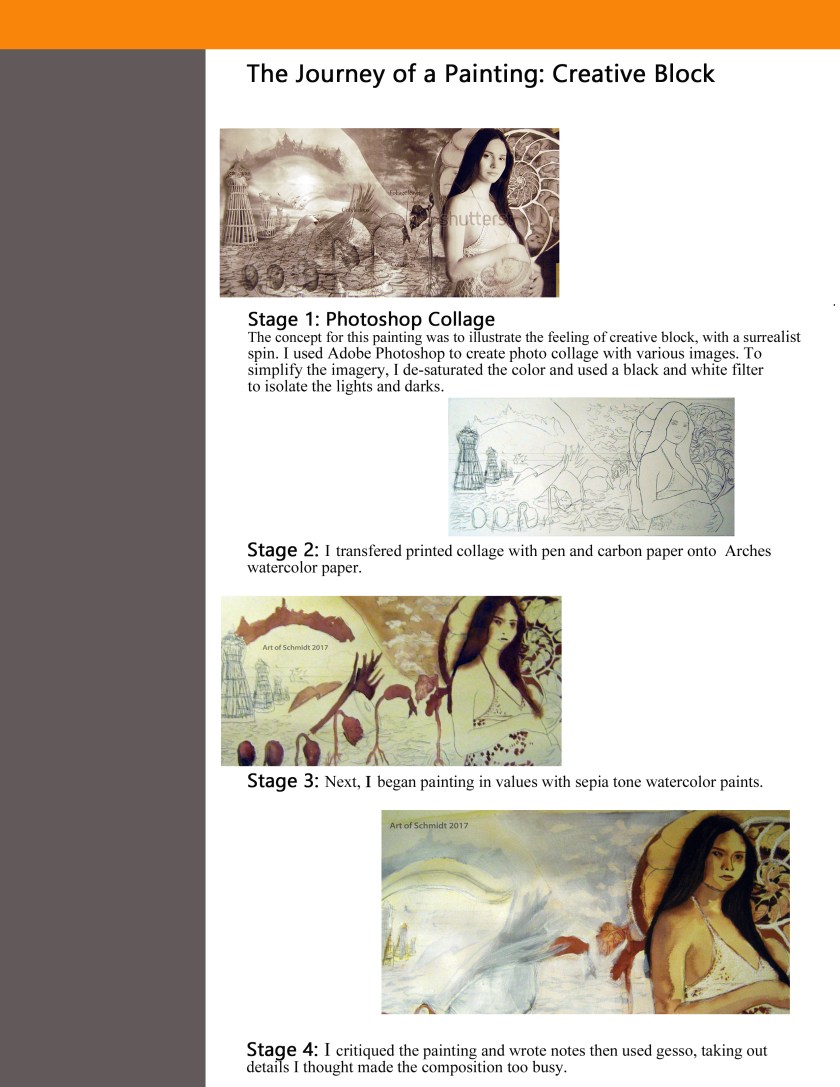
As I mentioned in last week’s post, I have been struggling with artist’s block this summer. During this journey, I’ve tried various things to break out of it, such as: copying art demonstrations from art technique books, re-touching/re-working old paintings, and working in a prompt driven sketchbook. Unfortunately, the later project hasn’t been working out so great lately. I’ve been procrastinating on doing the daily prompts, and have felt uncertain as to which mediums to work in for the sketchbook pages, should it be watercolor, colored pencil, acrylic, gouache or something else that I use? I have been unhappy with the colored pencils because they take so long to build up color and tone and I want to get some momentum and finish the nature section so I can keep moving along. It’s also difficult to correct mistakes with this medium, and I am finding that a lot of my prompts are not living up to my expectations. All of which keeps me stuck in neutral, and not making new work consistently.
Some insights I have gained about my artist’s block
Maybe it’s also the heat of the summer, which seems extraordinarily hot, even for Maryland. Or perhaps it’s the dislocation I feel in adjusting to a new house, guilt (genuine or otherwise, about abandoning household chores to make time for art), or something else entirely. Whatever the cause, I want to come up with some solutions so I can move forward and make more art, and hopefully at least some of the pieces will turn out the way I envision or will be at least good enough to post on social media. This year there’s been a mix of both good paintings and some not so good paintings. The paintings I’m not happy with might get thrown out, or sanded and re-worked, depending on the state of the canvases. I feel dry and uninspired, and I feel I have reached the limit of my skill set in art. In fact, I feel I need more fuel for my creativity and knowledge base.
Tips for breaking through a creative block
While I am pondering these thoughts, I’d like to share some tips I picked up from an article, “How to Survive a Creative Slump,” by Our Daily Craft, on http://www.ourdailycraft.com/2017/02/21/survive-creative-slump, by Sarah White, February 21, 2017. A few suggestions that the author offers include: 1.) starting with a small creative project, 2.) working quickly, 3.) reading a book you enjoy, and 4.) organizing or cleaning something in your home. For instance, the author suggested a few small projects to help jumpstart your creativity such as 1.) “sewing a cloth napkin,” 2.) “knitting a headband,” 3.) Paint on a 4 x 4-inch surface, or “writing a haiku.” (Source: ibid) Since I am not particularly good at crafts or anything DIY, which I learned after re-finishing some furniture and all of my kitchen cabinets in my new home, I have settled on painting a 4 x 4-inch canvas of Canada Geese. I re-worked this miniature canvas in oil paints about a week ago, and I am fairly happy with the result. Another suggestion that the author makes is to re-visit old projects that you had left unfinished. (Source: ibid) I certainly have a pile of unfinished works-such as unfinished drawings, pastels, and pages in my sketchbook where things just didn’t come together. Perhaps it would be a good problem-solving exercise to utilize my creativity.
In addition, the author also discussed making something quickly-which I’m not sure I would do


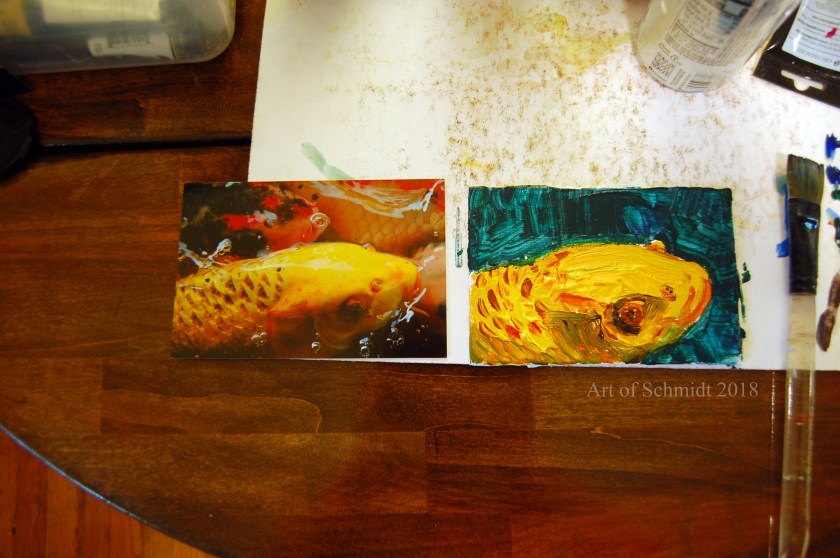


since most of the problems I have had with my art have been poor planning. Another problem which leads to unsatisfactory art for me is not spending enough time checking the accuracy of the drawing, as unfortunately happened with my latest portrait of Lincoln, which I decided to re-work and re-draw with oil paints. Needless to say, it didn’t turn out that well. Maybe if I were an abstract painter I could get away with a more intuitive approach to painting, than a more structured one with specific steps, but I am not. Since I am a more traditional painter, I am sticking with what works for me, which is starting with a drawing, adding three values in pencil to the sketch, and then making a colored sketch to base the final painting upon. Unfortunately, the more I tried to fix the drawing, the worse it got. In the end, I finally decided to abandon it, and start with a new sketch on a totally different substrate on a larger scale. It hasn’t become a painting yet, but I think I identified some drawing errors in the painting, by making a new sketch.
However, one thing I do want to try is to read a novel, article, or poem, to try and get some new ideas flowing. Some of my best works have been inspired by the poetry of Dickinson and Frost. Maybe reading literature will also help me to become a better writer and get me out o this writer’s block I seem to be assailed with lately. How about you? Do you have any suggestions for breaking out of a creative rut? I’d love to hear! Just post in the comments section of this blog. Thanks for stopping by!
ATC, artist trading card inspired Art, Canada Goose trio
Hello friends, family, and fans,
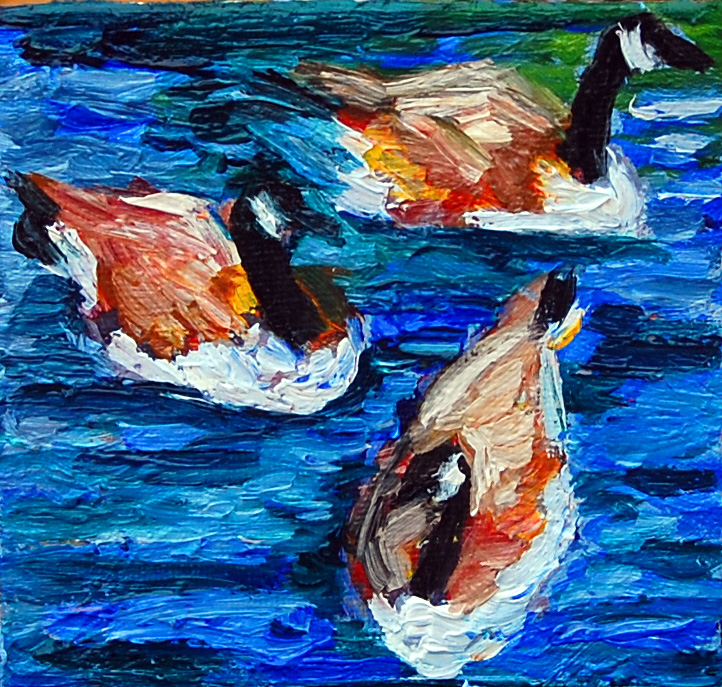
I am working on a new series of art inspired by the artist trading cards movement in which artwork is created on a 2.5 x 3.5-inch canvas or paper substrate. I’m hopeful that working more often will help me to improve my painting skills and help me to jump start my creativity again. The paintings will be based on photos I have taken and drawings in my sketchbook, Draw Every Day, Draw Every Way, by Julia Orkin-Lewis. My new painting is called, Canada Goose trio and was painted with artist quality oil paints on cotton duck canvas. I started this painting several months ago but stopped when I got to a part I didn’t know how to finish. The painting was inspired by a trip I took to a favorite local park, called Hagerstown Community Park. There is an abundance of wildlife there, including Canada Geese, Swans, and Mallard Ducks. A large lake encircles the art gallery in front of the park, called the Washington County Museum of Art. This newest painting is now available on my Etsy site for sale at https://www.etsy.com/shop/ArtofSchmidt.
Art of Schmidt, June 2018 Newsletter


Artists: What Kind of Artist are You?
Artists: What kind of Artist Are You-Amateur, Hobbyist or Professional?
Why I decided to Write about Artist Types
It’s been awhile since I last posted on this blog, and I have debated off and on within myself, whether to continue blogging about the series I started in May called, and famous failures. However, at the end of the day, I decided that I would switch gears and write about a more arts-based topic. Instead, I decided to examine the topic of different artist types and the pros and cons of each type. It’s my belief that there is no superior type of artist, and that it is all about what type works best for you. However, I do think that it takes a very unique person to be able to combine the roles of both artist and entrepreneur.
In my opinion, such individuals must be extremely dedicated to making art their life’s work, no matter what it takes, or how much time they have to invest in learning their craft and other business skills to make a profit. On the contrary, not every artist has that sort of drive or wants their art to be consumed by the public as a commodity. Perhaps for some, art is an outlet for their feelings and experiences and they would rather keep that private, which is perfectly fine. Meanwhile, there are other artists who find themselves somewhere in the middle between hobbyist and amateur artist. These artists, sometimes called, “double jobbers,” want to take their art to a more professional level, but also work a day job, such as the British artist described in the article, “The Double Jobbers, Making a Living into eh Arts, by Kathy B. Sweeney, posted on The Guardian, https://www.theguardian.com/culture/2012/jul/29/living-working-in-the-arts. Consequently, they are not pressured to make a living from their art. On the other hand, there are artists who cannot imagine doing anything else with their lives and spend almost all of their time marketing and making their artwork. The three types of artists which I will discuss in this blog post are a hobbyist, amateur, and professional artists, along with the pros and cons of each type.
Why is it important to know what type of artist you are?
I picked this topic because I have been wrestling with the question about what category I fall into as an artist: Amateur, Hobbyist or Professional? In my opinion, it’s important to know which category of artist that you fall into because there are specific actions that you need to take if you want to go beyond making artwork for pleasure and start making it with a business mindset. According to author, Alyson Stanfield, who wrote the art business book, I’d Rather Be in the Studio, it is not enough just to make art, you need to learn about how to market and sell your art, as well as to sharpening your artistic skills and creating a specific body of work that showcases your unique style as n artist. (Sources: Artwork Archive, “Alyson Stanfield Shares Her 10 Best Marketing Tips,” https://www.artworkarchive.com/blog/alyson-stanfield-shares-her-10-best-art-marketing-tips, accessed on 06/14/18, and Alyson Stanfield, I’d Rather Be in the Studio!, preface, pg. 1, 2008, Pentas Press, Golden. Colorado, and Aletta de Wal, “Hobbyist, Amateur or Professional Artist: Which Are You?” http://emptyeasel.com/2011/02/01/hobbyist-amateur-or-professional-artist-which-are-you accessed on June 6, 2018. )
My Journey as an Emerging Artist
After my father died in 2011, I realized that I wanted to make the most of the time I had left. I wanted to live without regrets about not pursuing art to the highest extent possible. For as long as I can remember, it has been my dream to be an artist. In fact, my grandmother reported in her scrapbook that I began drawing at the age of 3. When I first started making art with the intention of selling it, back in 2011, my catalyst for making art was that I needed an avenue to express my grief.
Deciding what level of involvement in art I want to have in my life has modified my choices and informed my decisions about my career, how I spend my time, and how I spend my money. I’ve gone from being a wide-eyed dreamer of a someday art career, as an art student, who lived amongst the bubble of the art community, to living life after college with all its startling reality. This world I now live in includes: bills, student loan debt, working as much as I can on my art while balancing a night job, experiencing frequent rejections for art shows, and feeling unrelenting and crushing self-doubt about my abilities as an artist. I feel I have been drifting without many purposes in my quest to be a professional artist, and it’s making me wonder whether this is the life I really want.
Making the Jump from Hobbyist Artist to Amateur Artist
In more recent years, I have really stepped up my activity to bring my art to a more professional level, such as: creating profit and loss sheets in Excel, designing an art catalog of inventory, launching an artist website, blogging about art, participating in more frequent art shows, hosting studio sale events at my home, producing custom art, and starting commerce shops on Etsy and Red Bubble, etc. However, all of this activity has been challenging and sometimes disappointing. It seems to me that no matter how hard I try, I am still struggling to sell my art consistently. I have also made efforts to connect with people on a personal level through writing blog posts, and producing artist newsletters.
However, I am still not making a profit and instead, I find myself falling into debt to pay for framing, art supplies, and marketing expenses. Even more importantly, I feel I have lost the joy of making art in the midst of all this business related activity. Consequently, I’ve had severe doubts about whether I want to be a professional artist, because of the amount of work, time, emotion, skill, and unflagging confidence a professional artist must have to survive. I wonder, are I any other artists are struggling with this situation? And I’m also asking myself, do I really want to be a professional artist, or not? If not, then what type of artist do I want to be?
What are some Specific Types of Artists?
To investigate and to define the different types of artist that anyone can be, I read an article entitled, “Hobbyist, Amateur, or Professional Artist-Which are you?” written by Aletta de Wall on the website, Empty Easel, at http://emptyeasel.com/2011/02/01hobbyist-amateur-or-professional-artist-which-are-you. The author, De Wall, states that there are three categories of artists and they are: Hobbyist, Amateur, and Professional and that each type is distinctly different. (Source: ibid)
The Hobby Artist
For example, hobby artists are not trying to make a living from their art, and they may only make art when the creative bug bites. (Source: ibid) In addition, hobby artists may study for many years and hone their craft by taking classes and workshops, but they may not ever receive the recognition that their work deserves because they are not taking actions which would promote their art effectively, such as having a business or marketing plan. (Source: ibid) On the other hand, an advantage of being a hobby artist is that there is no pressure on them to cater to a specific audience or make a profit, so they are free to experiment with a variety of media and subject matter and styles and techniques. They may also have more time to make art because there is no imperative to make a profit and engage in business-related activities such as marketing, bookkeeping, or sales.
The Amateur Artist
Another category of artist types is the amateur artist. This type of artist has started to play with the idea of making their art into a profession. (Source: ibid) Perhaps they have started to think that they need to start selling their art to help foot the bill for their art supplies, and to start being able to deduct their art expenses from taxes. (Source: ibid) An important distinction between hobby artists and amateurs is that amateurs are willing to give up their personal time in order to learn how to sell their art and creating new works. (Source: ibid) However, they may be uncertain about how to turn their passion into a viable business. (Source: ibid)
The Professional Artist
Finally, the last category of artists that this article discussed is professional artists. This type of artist is distinguished from the other two types of hobby artist and amateur artist because they consider art to be their profession. (Source: ibid, and Drew Kimble, “9 Warning Signs of an Amateur Artist,” https://skinnyartist.com/9-warning-signs-of-an-amateur-artist, accessed on June 7, 2018. )
These types of artists want to make a profit from their art, build a following, and continue to build their business skills at the same time. They have an intense level of dedication to their art and are willing to sacrifice time, money, sleep and do whatever it takes to make a profit. (Source: ibid, and Drew Kimble) They might work another day job to help support their business or eventually quit their day job when they are able so that they can devote more time to making art and learning how to sell it. Other activities that they engage in are: making studio time a daily habit, applying for grants, writing artist newsletters, submitting their artwork for review at galleries and art fairs, write business plans, extend their knowledge of effective business practices by attending art business workshops, etc. (Source: ibid, and Hayley Roberts, “Twelve Things No One Ever Tells You About Being An Artist,” The Huffington Post, https://www.huffingtonpost.com/hayleyroberst/twleve-things-no-one-tell.html. accessed on June 7, 2018.) They also promote their artwork online and offline through social media, their artist website, and in real life artist events, such as art gallery openings, art festivals, etc. (Source: ibid)Some may also make a living by teaching their craft to others. (Source: Aletta De Wal, “Hobbyist, Amateur, or Professional Artist-Which are you?”, and Hayley Roberts, “Twelve Things No One Ever Tells You About Being An Artist,” ) .
These artists may receive more recognition for their artwork, but they may also experience more criticism and rejection than the two other types because they are more aggressively pursuing art gallery representation, etc. In addition, they may have less time for making artwork because they have to balance making art with business-related duties. Furthermore, they may struggle to sell their art or make consistent income and they may face stiff competition from other artists because it is such a saturated field. It is a long road for these artists towards building a following and making a success from their art, but they are dedicated for the long haul. (Source: Drew Kimble, “9 Warning Signs of an Amateur Artist,” https://skinnyartist.com/9-warning-signs-of-an-amateur-artist, accessed on June 7, 2018. )
What about You? What Type of Artist are you?
So what about you, reader? What type of artist are you? I would love to hear about your dreams and hopes with regards to making art. Thanks for taking the time to stop by and read this. Next week, I will be talking about this topic of artist types in more detail, with a slight twist. The twist will be a more in-depth look at what it really means to be a professional artist and why it has been traditionally so difficult to be successful in this field.
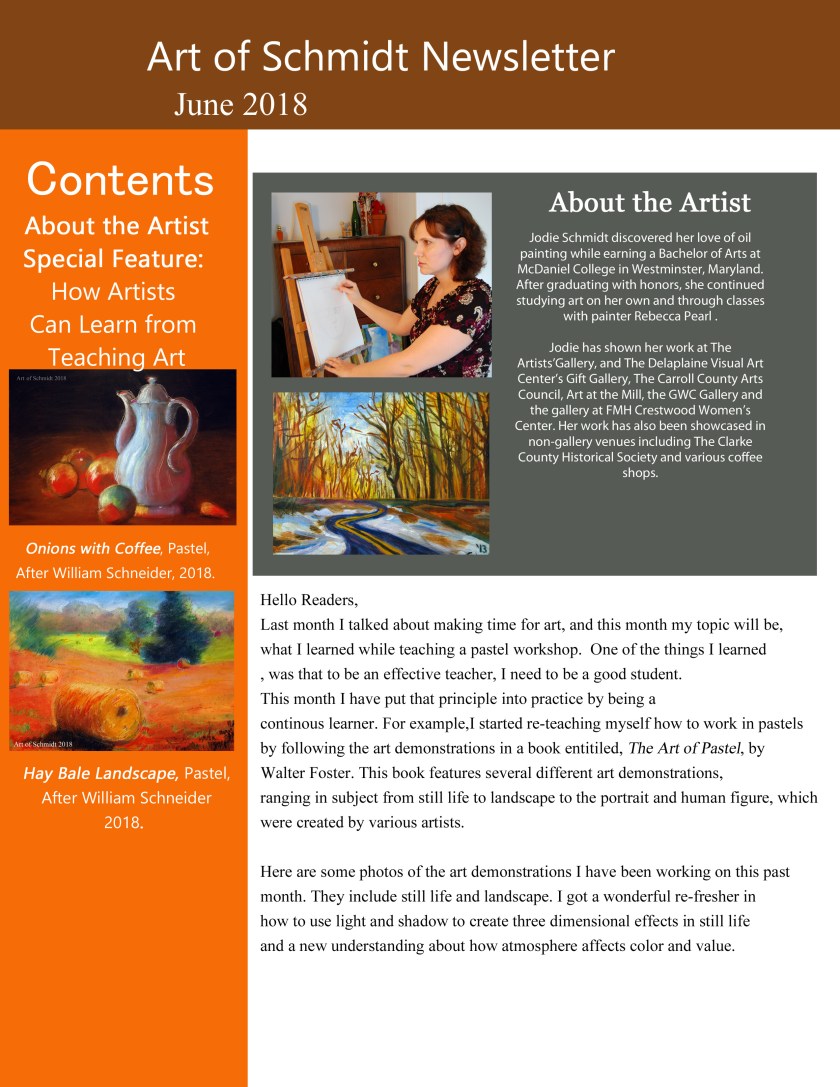
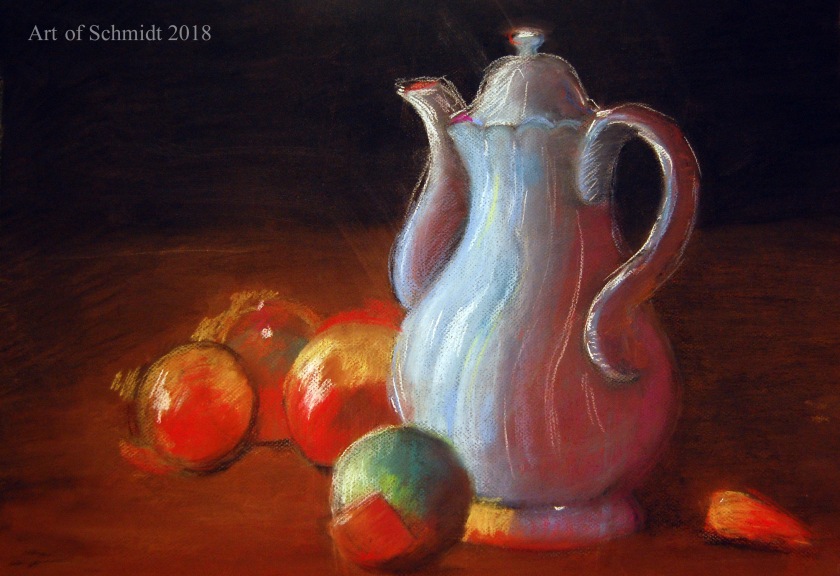
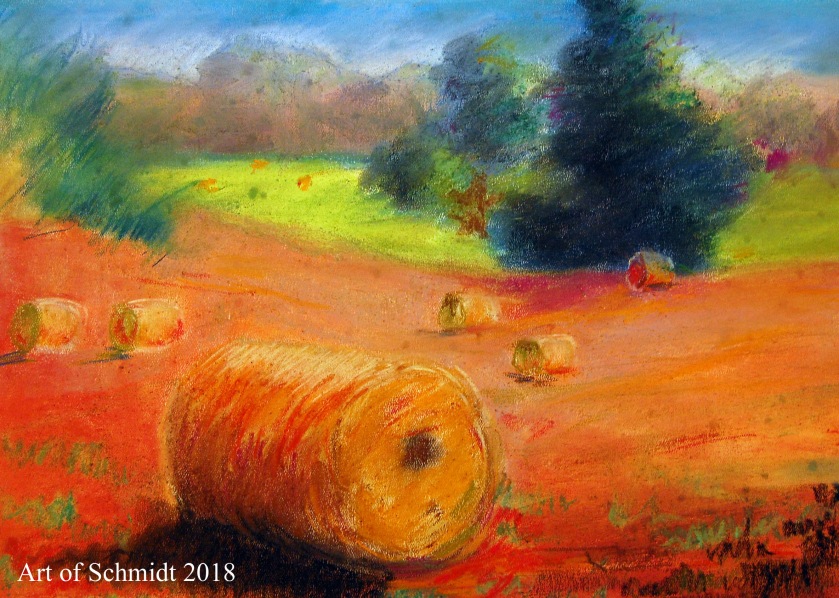
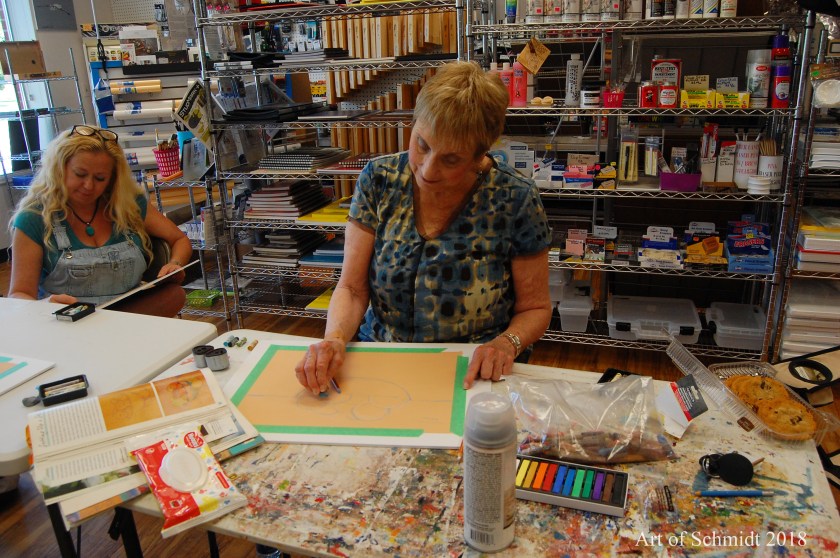
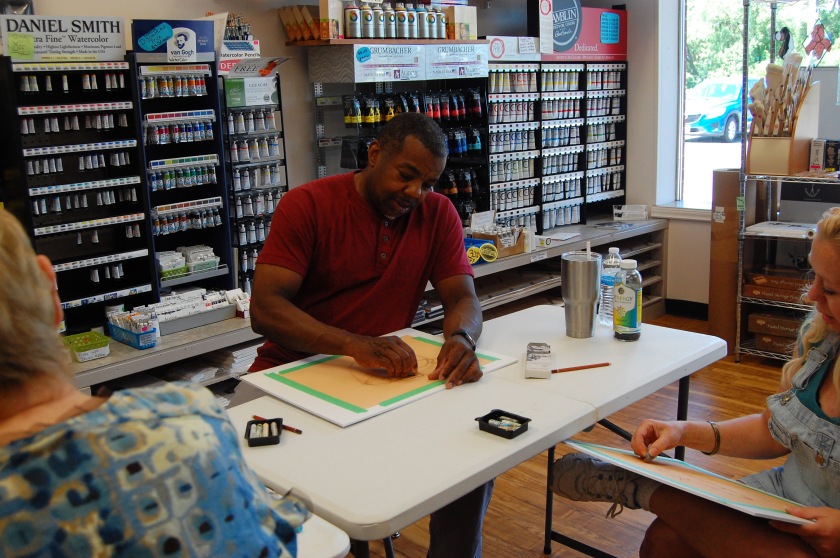
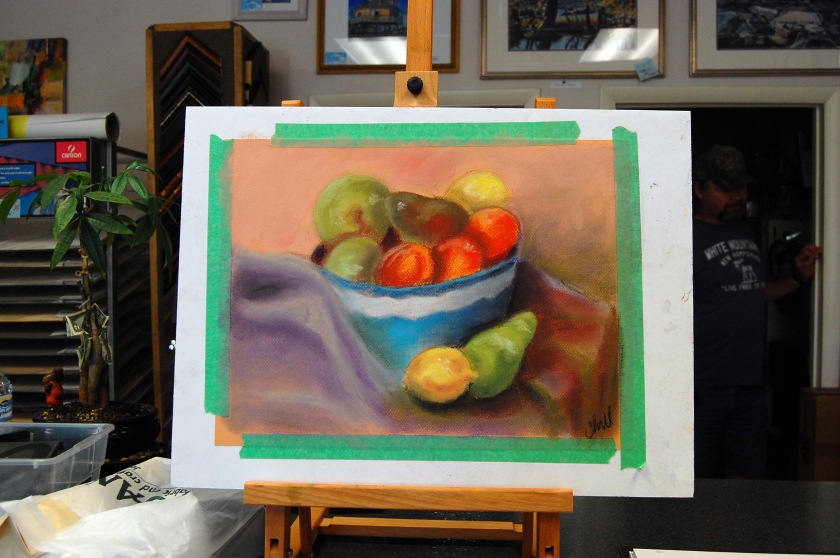
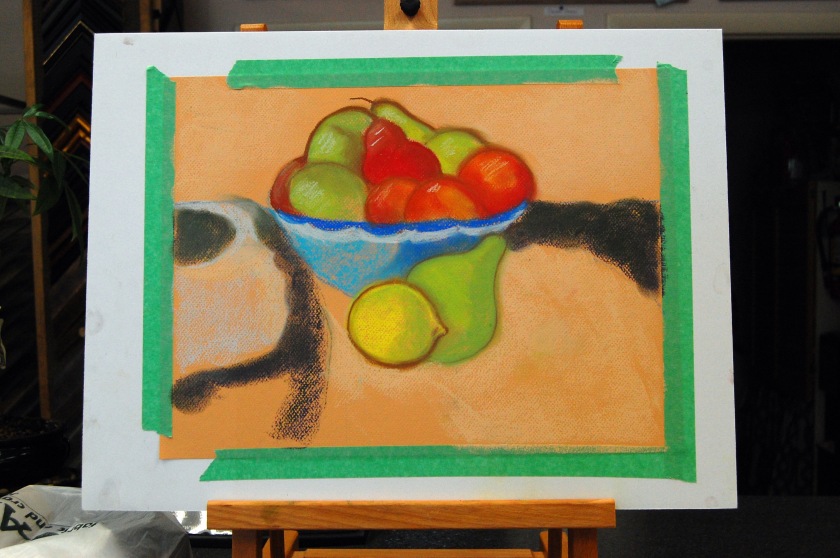
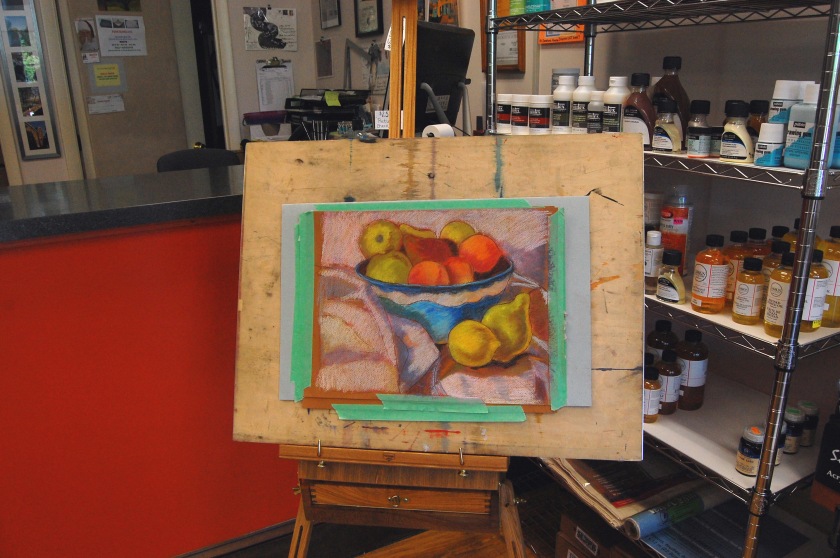
The photos below are a collection of art demonstration paintings that I created to help re-teach myself how to draw in pastels and to prepare for the pastel workshop I taught on June 16, 2018, at the Colorful Canvas art supply store. Also included are photos of my art students at work and the pastel drawings they created at the class. Please note, the pastel drawings pictured here are based on the art demonstrations found in the book, The Art of Pastel, published by Walter Foster, in 2010. These pastel drawings are not my original works and are not intended for sale. The works were made simply to practice pastel drawing techniques and help my students to have a demonstration format to follow. In addition, the pastel drawings were originally created by the artists, William Scheider and Marla Baggetta, and no copyright violation is intended.
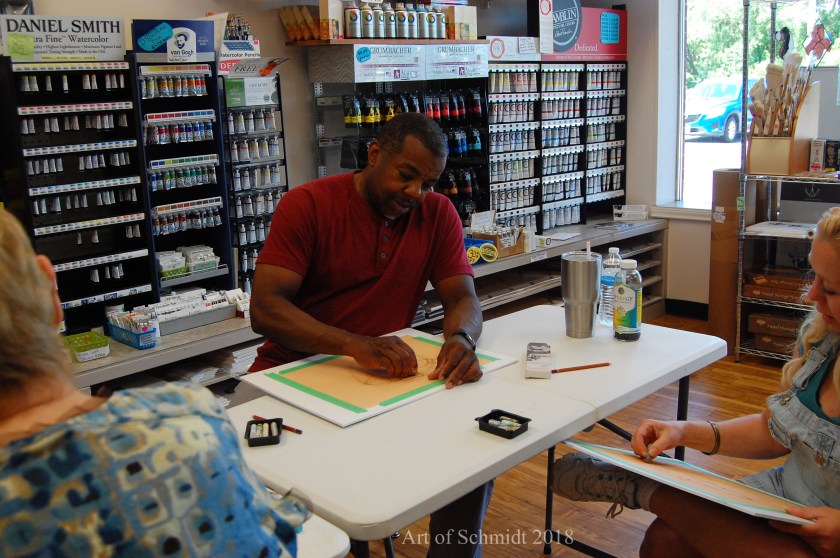
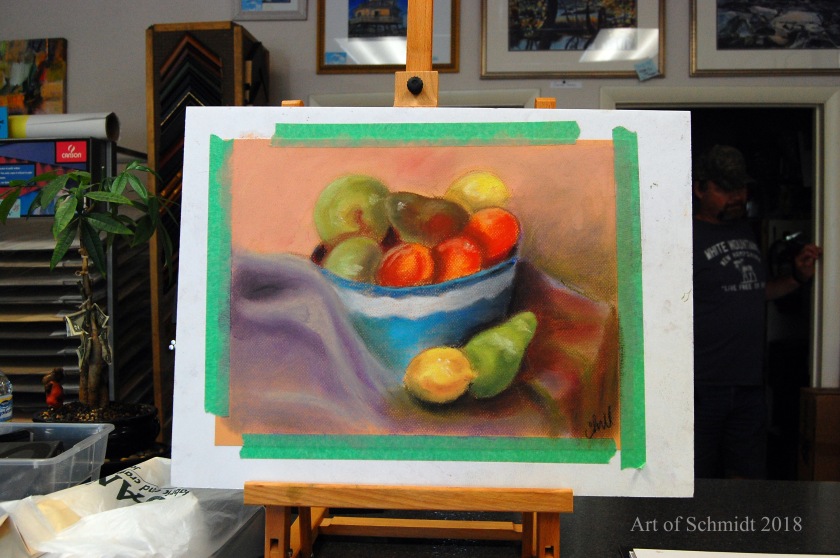
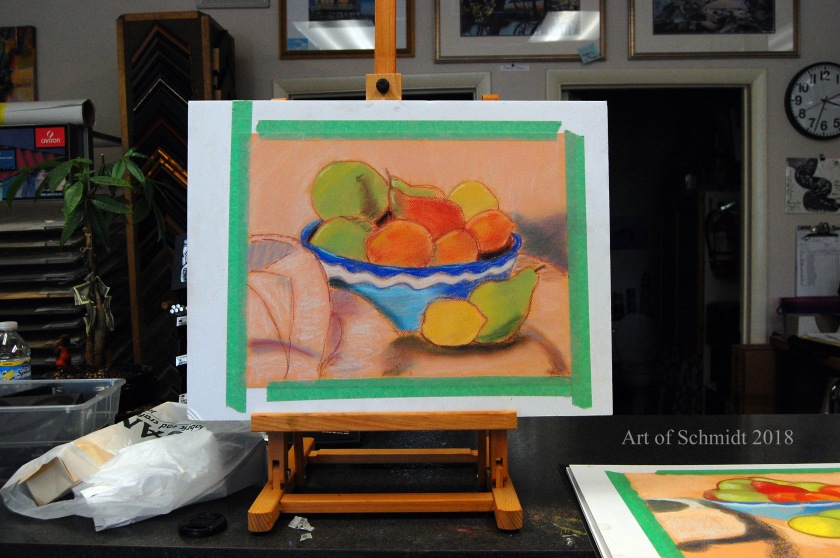
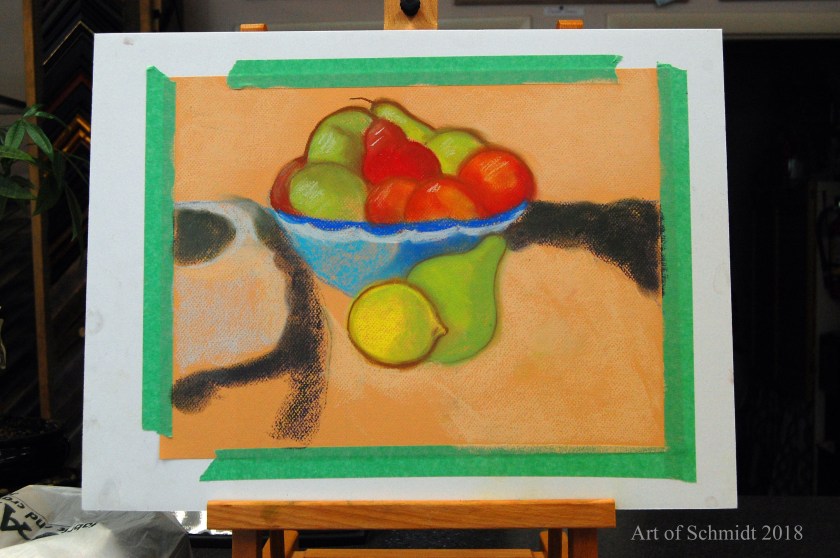

Pastel Workshop at the Colorful Canvas Art Supply Store in Frederick, MD
Today I taught a pastel workshop at the Colorful Canvas art supply store in Frederick, MD. It was quite a change stepping into the teacher’s shoes after years of being a student. I was amazed at how quickly my students picked up all the various concepts I tossed out at them including line, shape, color, and value. I started with a drawing and broke down the fruit still life into basic shapes. After I had done that, I broke down the colors and values to their most basic levels and continued to refine them. In addition, I took breaks in between each step, so the students could follow along and not get lost in the process. I hope to be able to teach another pastel class soon! Below are some photos of the art class students I taught today and the artwork they created. Thanks for stopping by!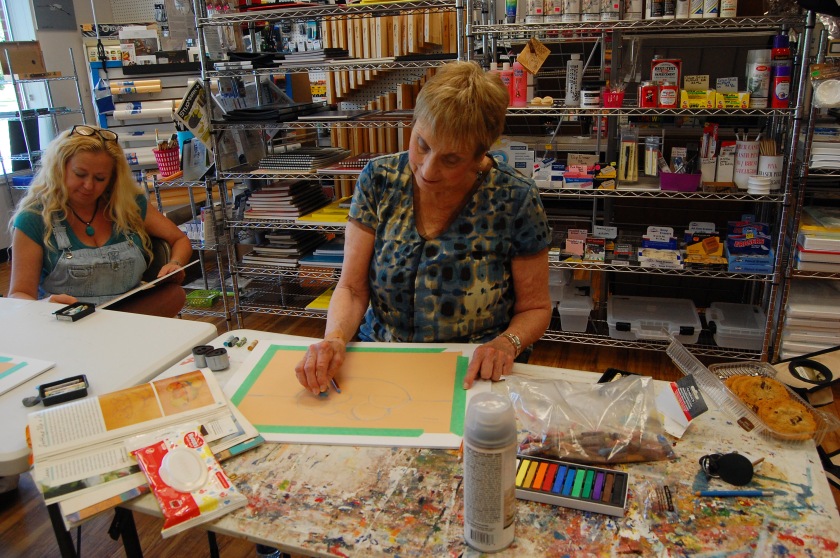

Pastel Workshop
Hello friends, family, and fans,
I am planning to host a pastel workshop this June at the Colorful Canvas in Frederick< Md on June 30th from 1pm-3pm. I will be giving a live demonstration of how to use pastels to create a three-dimensional drawing with a fruit still life. Call me or email me if you have questions or would like to register for this event. Beginners are welcome! 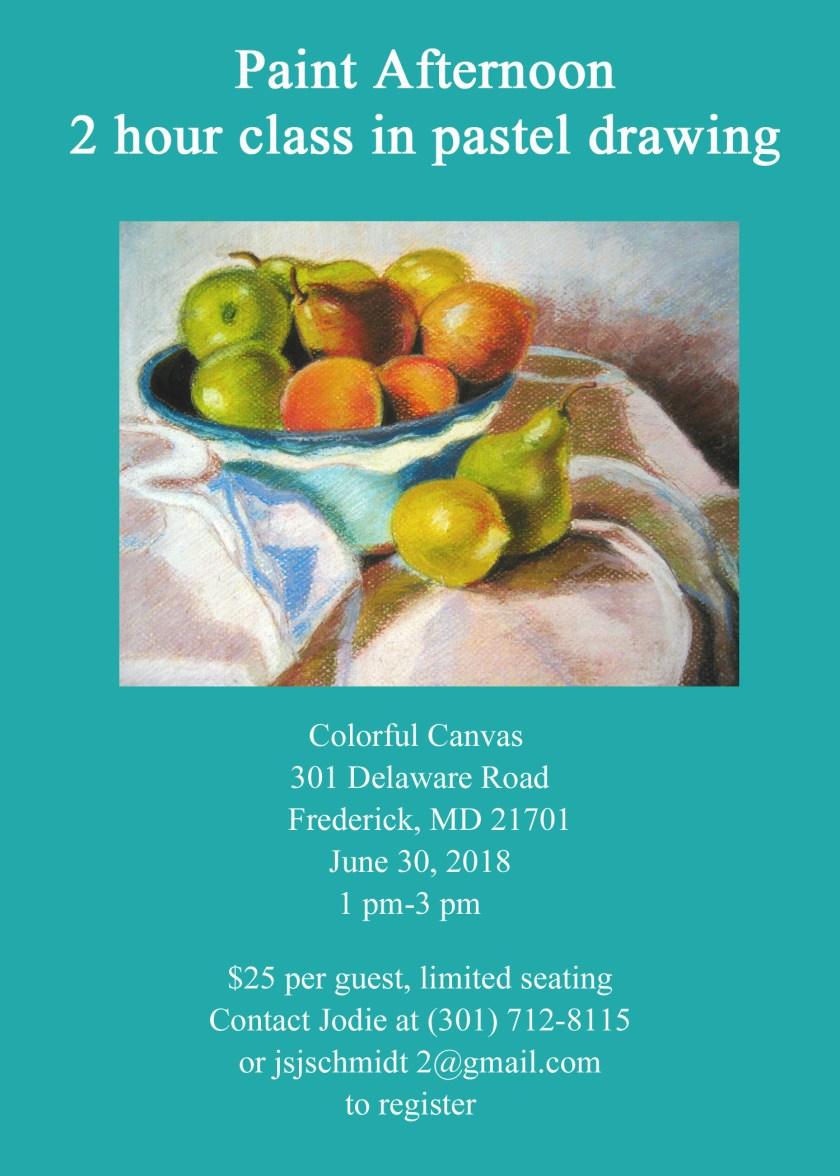
 Art of Schmidt