About a century ago (well I exaggerate a little); I was a college student studying art at McDaniel College in Westminster, MD. I had a brilliant and successful art teacher named Steve, who demonstrated how the practice of art making and the hatching of new ideas could be brought to life. He taught me many useful things, such as how to keep an art sketchbook pasted with photos of art work by artists I admired, and how to write about my art in a way that expressed my unique artistic voice. Above all, his most important advice was that I should draw every day. At the time, that task seemed quite difficult. I was always an inpatient artist as a student and I often rushed through the drawing stage to hurry up and get to the painting. Now that many years have passed since my graduation from McDaniel, I can truly see the wisdom of his advice.
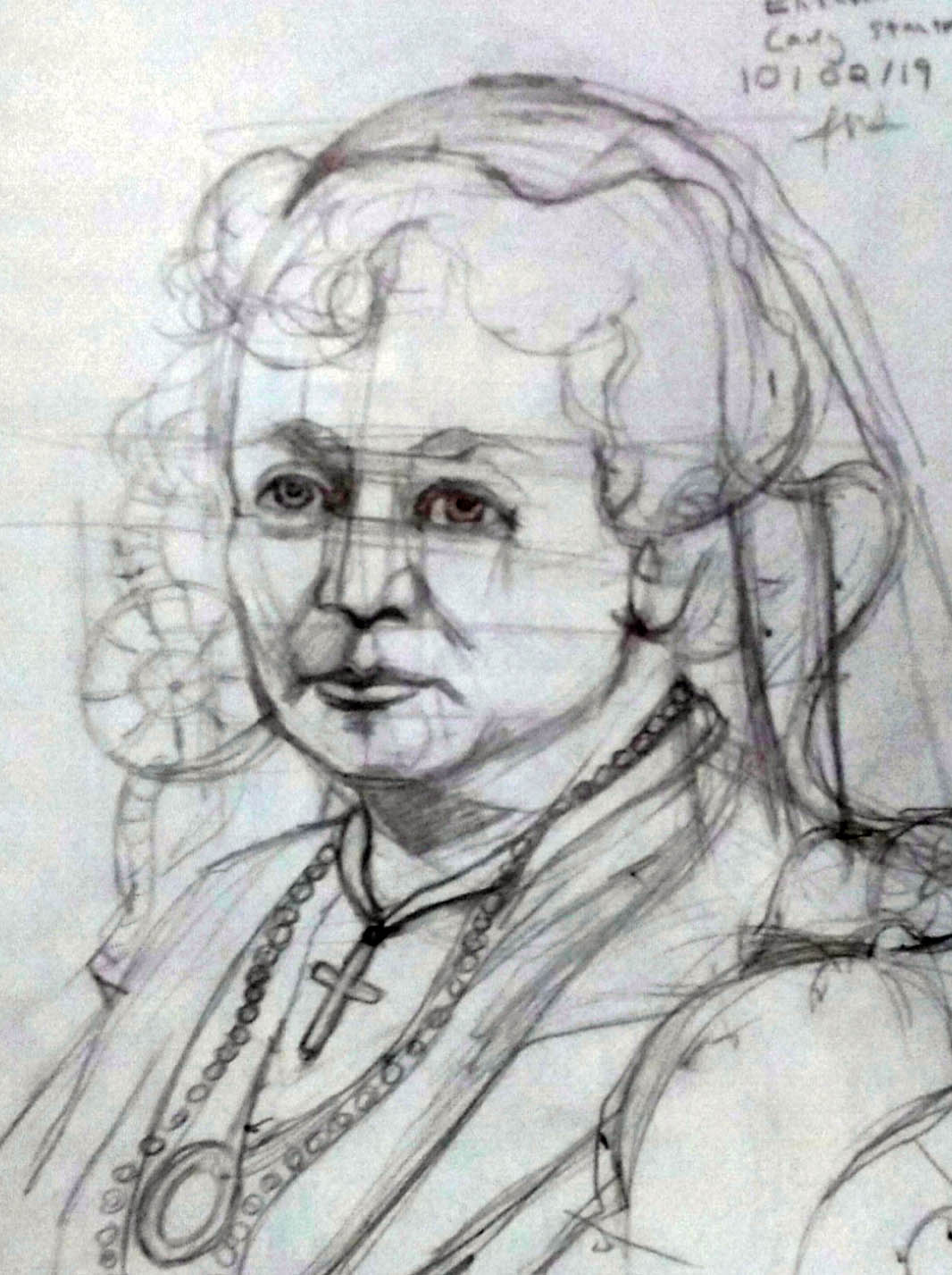
With hindsight, I realize that he was so right about drawing every day. I no longer rush art work and I have learned to love drawing, whether it becomes a painting or not. In fact, I have embraced his advice of a daily drawing habit and I have worked on several art challenges for both human portraiture and pet portraits on my Instagram account. One of these challenges is called 100 faces in 100 days, in which I drew a pre-selected photo of a celebrity using only pencil and paper. I did not add in a lot of detail or shading and I limited myself to 45 minutes a day.
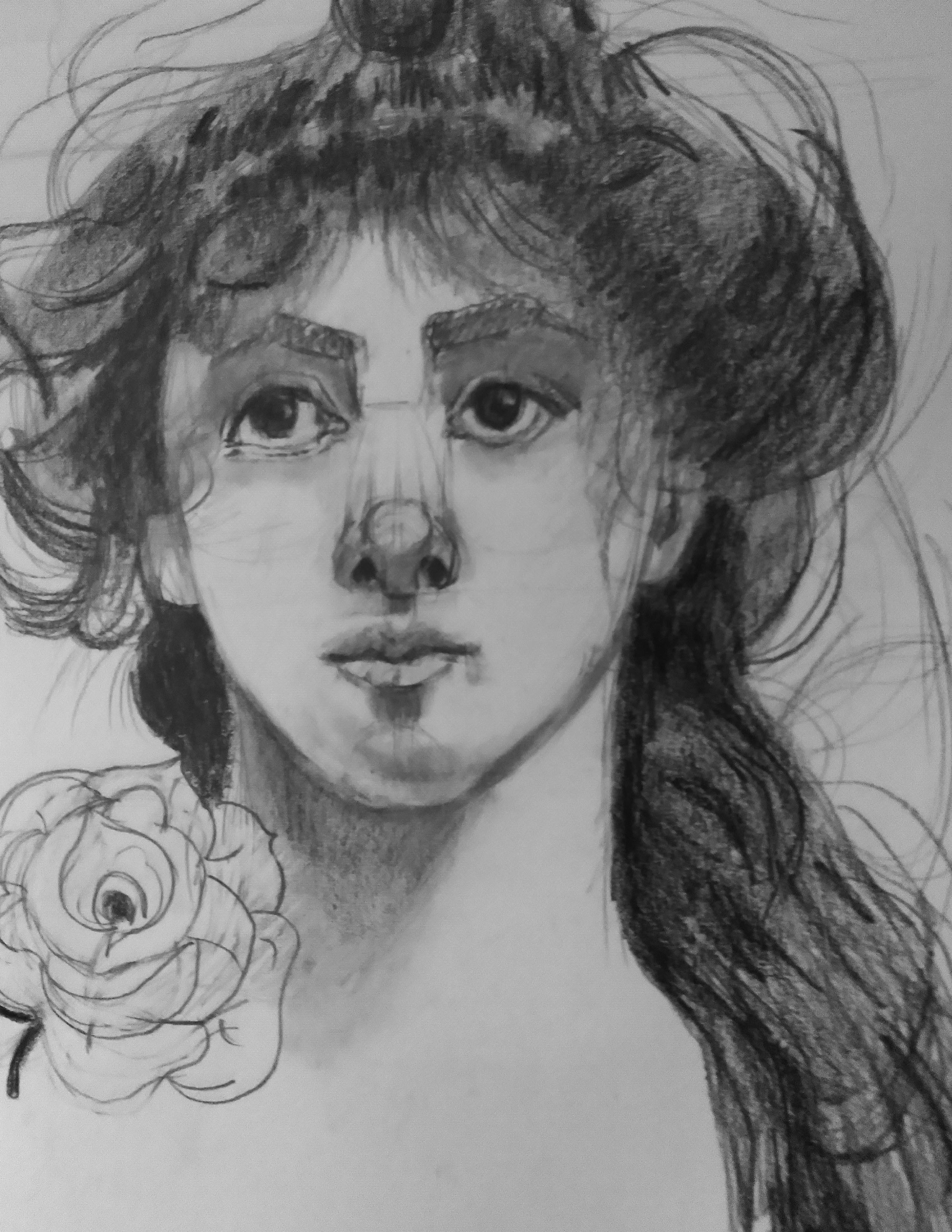
At present, I am struggling to carve out time for drawing. Sandwiched in between working, and other responsibilities, I am striving to make time at least 1x a week to draw. This time, I am focusing on making simple graphite sketches in my sketchbook, mostly portraits or figures.
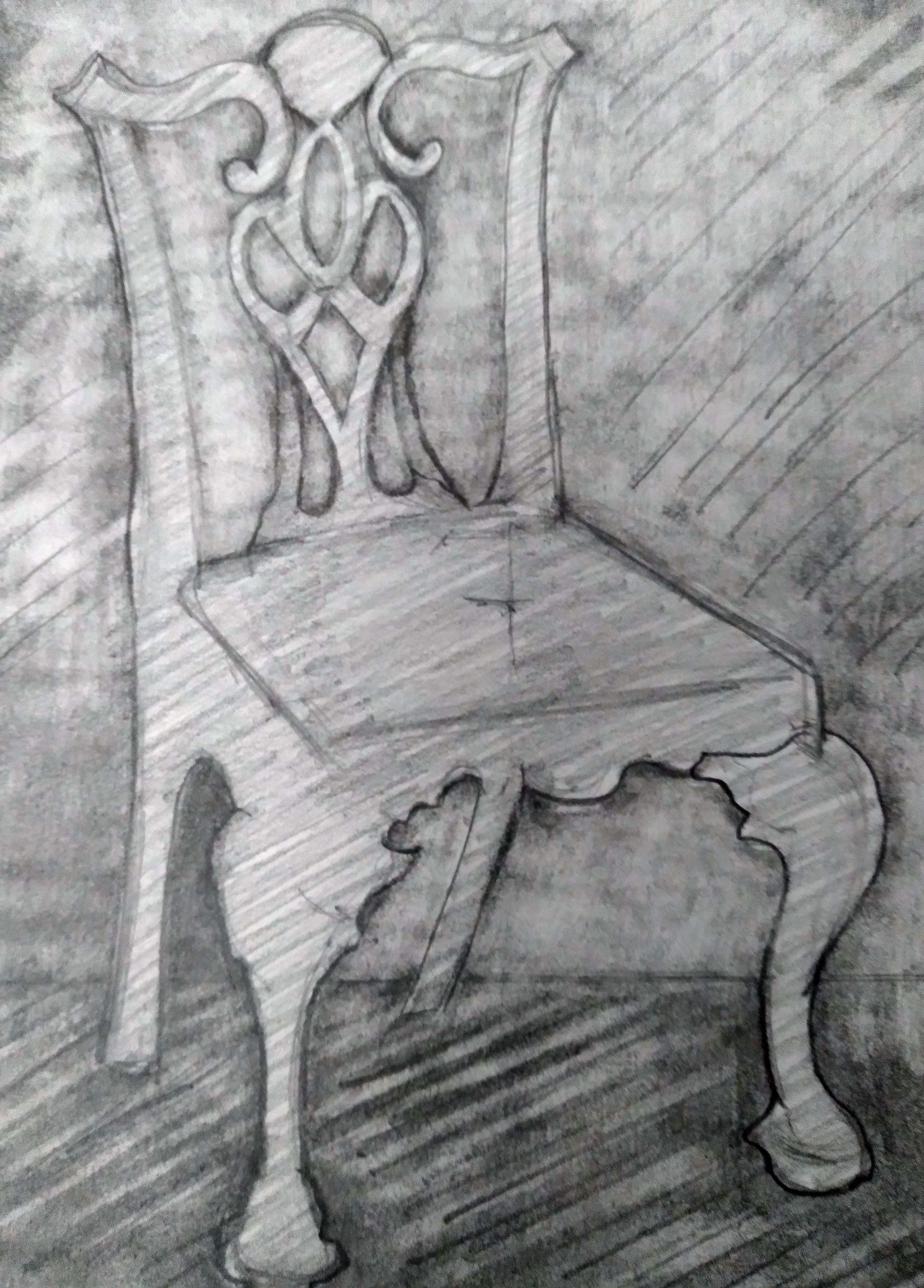
The most important take away I can say about drawing and getting good at it, is that it really helps your art practice to flourish. For instance, once you have the drawing and composition mastered, you can enjoy the next step more fully, whether its collage, painting or some other art form such as graphic design or sculpture. With an accurate drawing, you won’t have to worry about continuing to fix it and can fully embrace your next steps.
If you want to put this idea of drawing as a practice into effect, you are in luck! I will be teaching two drawing classes at Delaplaine Art Center this Fall. The first class, Drawing for the Absolute Beginner, is tailored on those who have never taken an art class, and need the basics such as shading, measuring, and drawing techniques such as contour and blind contour drawing.
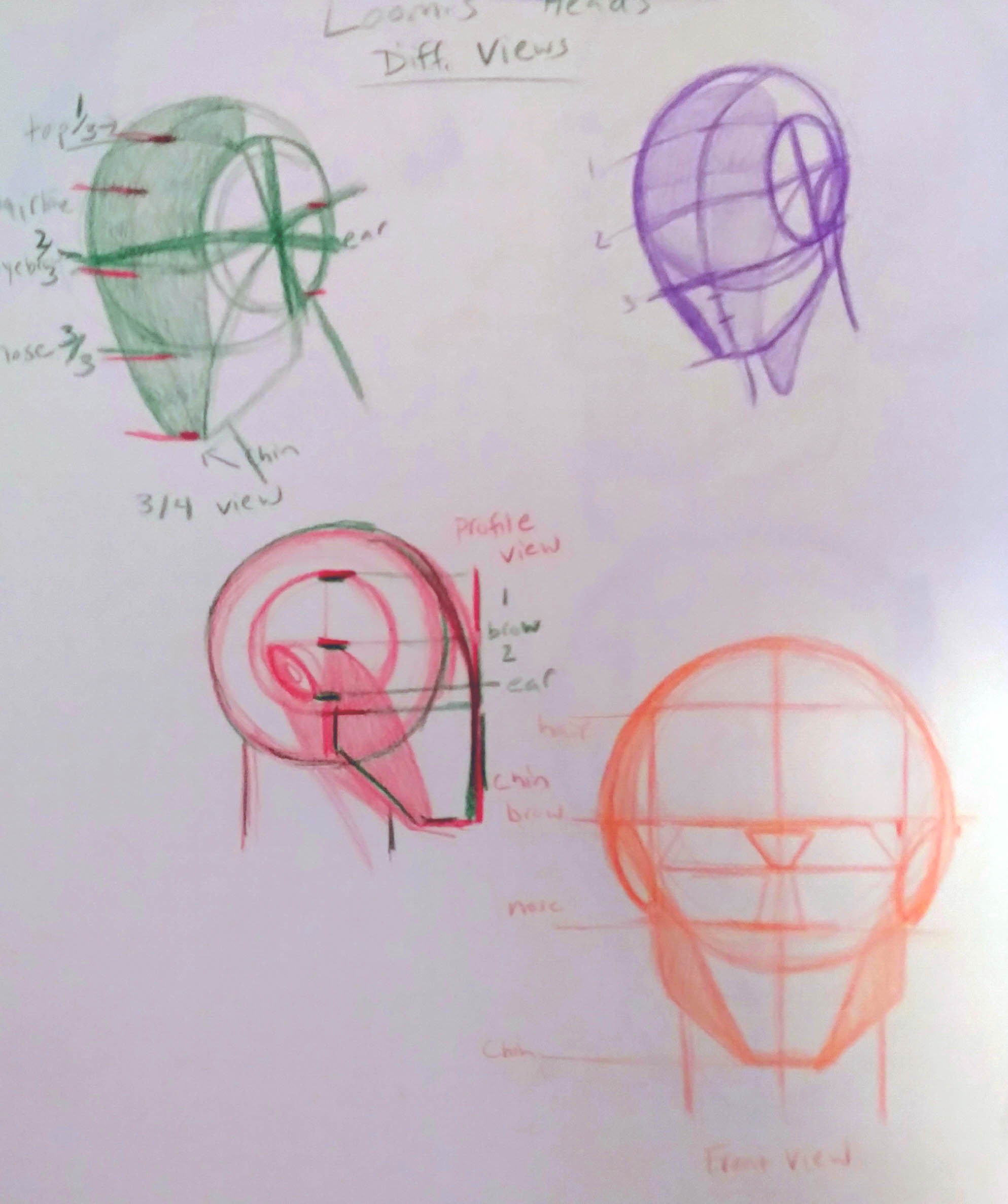
And the second class is for more seasoned artists who want to learn how to draw a portrait. This is a great class for those who have always wanted to draw portraits but don’t know where to start. I will teach you construction techniques such as using shapes to construct, the Loomis Method and anatomy to give you a solid foundation to build upon. Check out this links to learn more: https://delaplaine.org/class/?id=25-2-DR06(Drawing for the Absolute Beginner) and (Advanced Drawing: How to Build a Portrait):https://delaplaine.org/class/?id=25-2-DR07.
I wanted to share my latest art course news. This fall I will be teaching two art courses at the Delaplaine Art Center in Frederick, MD. Do you think you can’t draw? Take my beginner drawing course, Drawing for the Absolute Beginner, and challenge your assumptions! Drawing for the Absolute Beginner, will focus on basic drawing skills, inspired by the teachings of art teacher, Betty Edwards, and incorporate various drawing media, such as: pencil, charcoal, and ink. Class starts on 10/15/24 at the Delapaline Art Center, Frederick, MD.
Did you know that drawing is a learned skill, and that you can improve your skills with guided instruction and practice? Based on my experience as an artist and art teacher, I have learned that it really isn’t about talent, and there are specific skills which you can learn such as: drawing from photos, drawing from life, sighting, smooth shading and incorporating drawing templates like the Loomis method, to help you achieve more realistic results. Both of my courses, Drawing for the Absolute Beginner, and Advanced Drawing will explore these fundamental skills, and provide you with plenty of open studio time to practice what you learn. Step by step instruction will be provided, and constructive critiques are available upon request to help develop your skills.
Have you always wanted to draw portraits, but didn’t know where to begin? The other course, Advanced Drawing, is tailored for artists who want to advance their drawing skills, and will focus on techniques for drawing the portrait. Techniques including: the Loomis and Reilly method, will give you a frame work for constructing a portrait in a realistic style. I will provide you with the skills you need to draw in beginner level or advanced level, so there is a place for everyone!
Whichever course you choose, making art work in my class can bring peace, calm and creativity to your life. Make time for self care, meet other artists, and re-engage with your creativity! In one of my courses, a former student reports that: “Now I have many tools to use for practicing art!”
Tap the link below to learn more about my Beginner and Advanced Art Courses: http://www.delaplaine.org. Don’t wait, sign up today before classes fill up. Fall is one of the busiest seasons for art courses at the Delaplaine! If you wait, you might not be able to get a spot, and I only teach these courses two times a year.
If you are a creative type or if you like to make things, you have probably encountered the moment when the finished product you imagined, does not live up to your expectations. Creative types such as musicians, composers, producers, dancers, writers, artists, photographers, cooks, and makers of all types, can probably tell you what it feels like to hit a wall with a project, how it felt, and what they did to navigate that feeling of utter frustration. As an artist, I have experienced this frustration more times than I can count. Some paintings and drawings are simply learning projects and are difficult to salvage, while others can be fixed.
I know it’s been said that you learn more from your mistakes than your successes, but when I get to a point in a painting or drawing and I realize that the painting or drawing doesn’t look right, it can be really frustrating. I start doubting myself, feel like giving up, or doing something that I am not good at, like cooking or cleaning because I know that I am not good at these things, so my expectations of success in these domains are much lower than for painting or drawing since I have no training in cookery or housekeeping. Since I know I am not a good cook, if it doesn’t turn out so well, it’s a waste of ingredients but I don’t feel as emotionally attached to the outcome as I would to a painting or drawing.
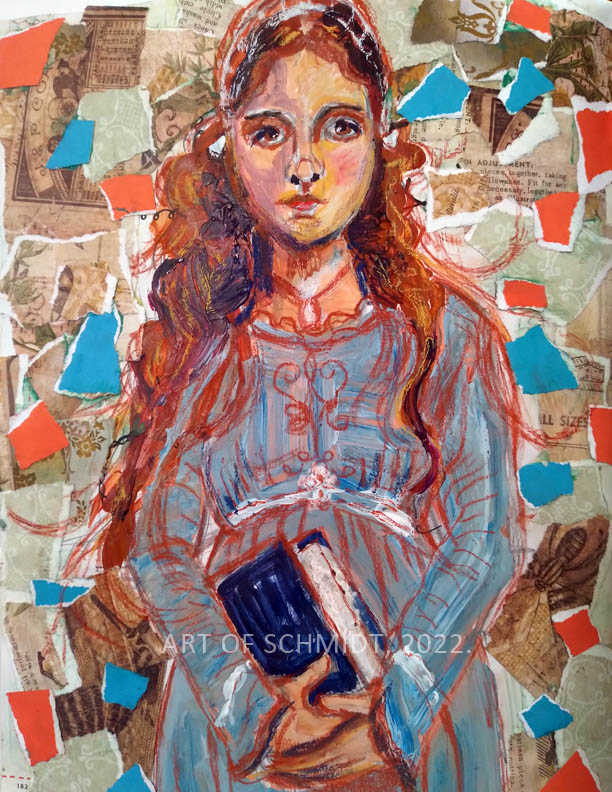
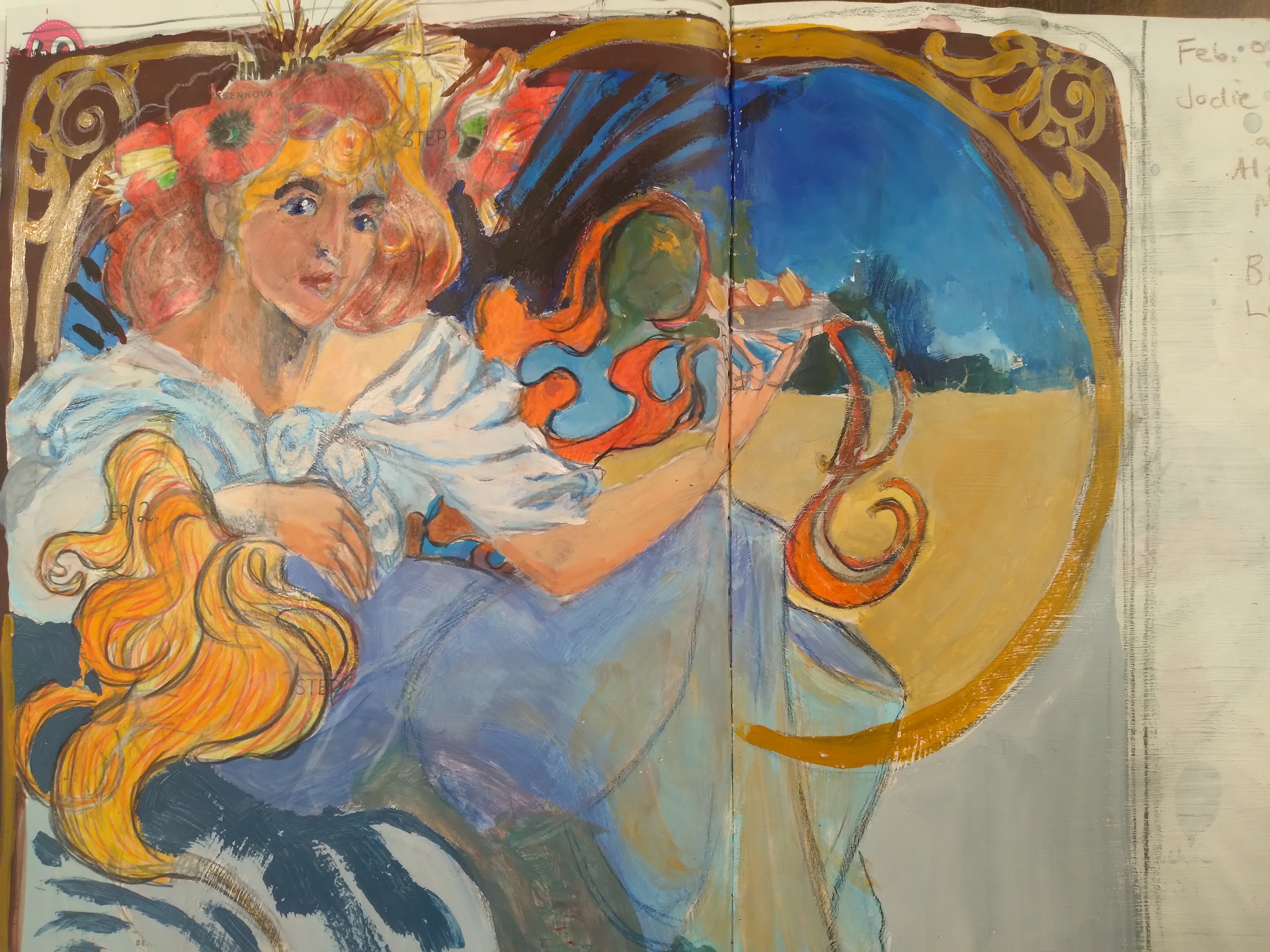
Romola Illustration with Lillian Gish, Mixed Media, Jodie Schmidt, 2022.
I recently read a forum question on the website, Wet Canvas.com, and the question of the day was,” When should I stop working on a painting? I was intrigued by the question, and wondered how other artists dealt with paintings that can “look like a dog’s breakfast.” I read about a variety of solutions suggested by artists who had hit the wall creatively. Some were familiar to me, like my tendency to put the painting away and stop looking at it for a few days, weeks, months, or even longer. Others were not as familiar such as putting the painting somewhere where you can see it, such as on an easel in a living room, and then taking time to look at it from time to time to diagnose the problem. Another favorite technique is to write a list of things I want to change in the painting, be it the drawing, colors, value, edges, etc. In my case, some of the artwork I have abandoned was started about two years ago, and I am just now starting to look at the sketches and Photoshop files.
This week I took some time to work some more on my acrylic painting, Waiting: Creative Block. I realized that there were several things bothering me about it. The colors and values, and composition were some of the biggest glaring errors. I am realizing there are many reasons why this painting series of poetry illustration works have been abandoned. One of which was being too busy with other things to give the series the proper amount of time it requires to get things right, such as the composition and the drawing. Since I dropped out of the Social Work program at Frederick Community College, I do have more time to work on paintings.
And since I have deliberately looked at my schedule e and started marking studio days on the calendar, I have more “intentional “time. But I am also realizing just how hard this series is, as I am making some paintings almost entirely from scratch by combining different photo references in Photoshop and then drawing and painting them, with this technique, I do not have the luxury of working from reference photos already taken. I have to look for source material and then combine it to make it my own. This project is highlighting areas of weakness in me as an artist, and one of them is composition. I have a tendency to put everything in the middle and don’t often use more unconventional compositional styles. I want to change that and start looking to master artworks to try and broaden my skills in this area.
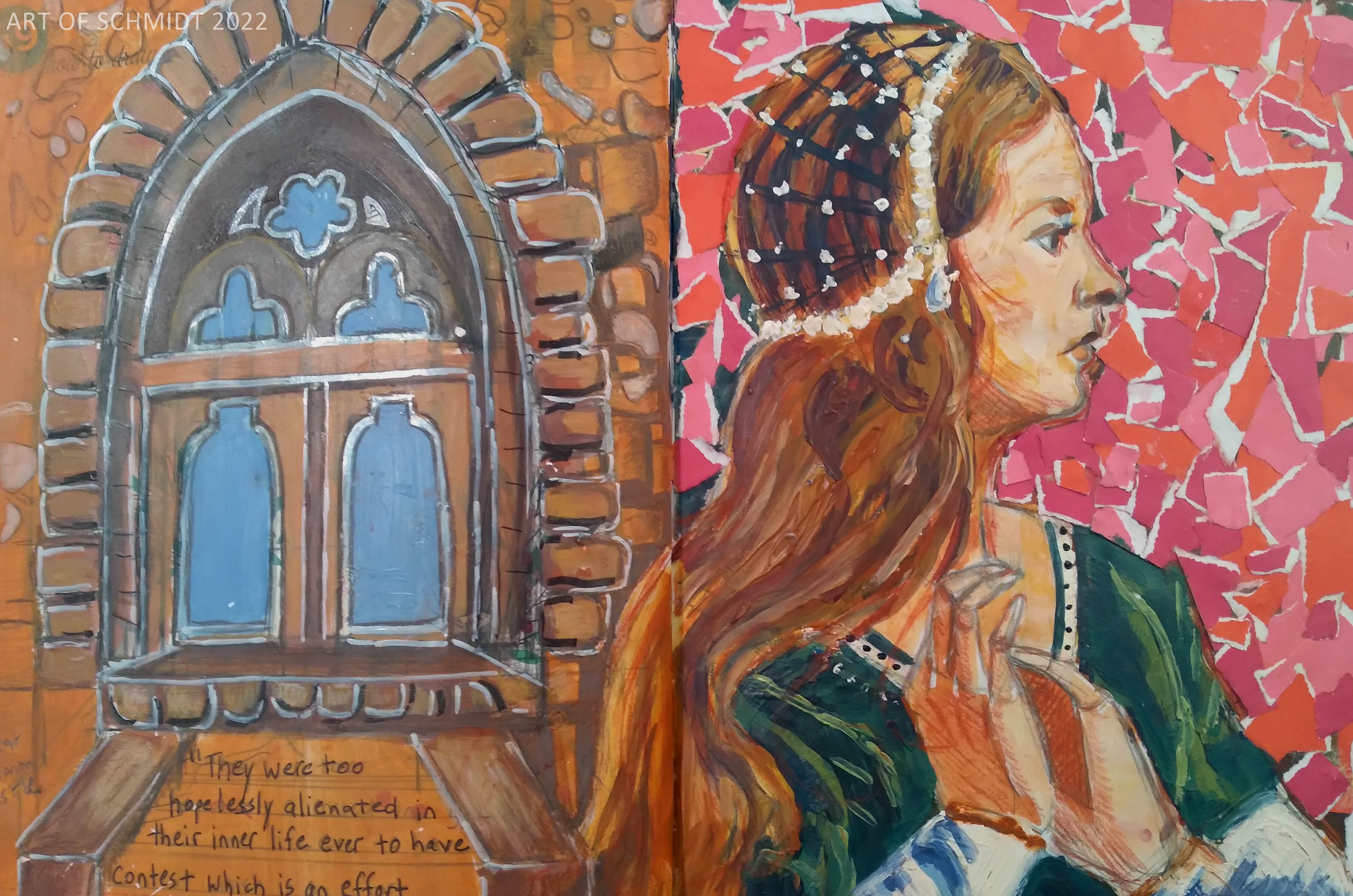
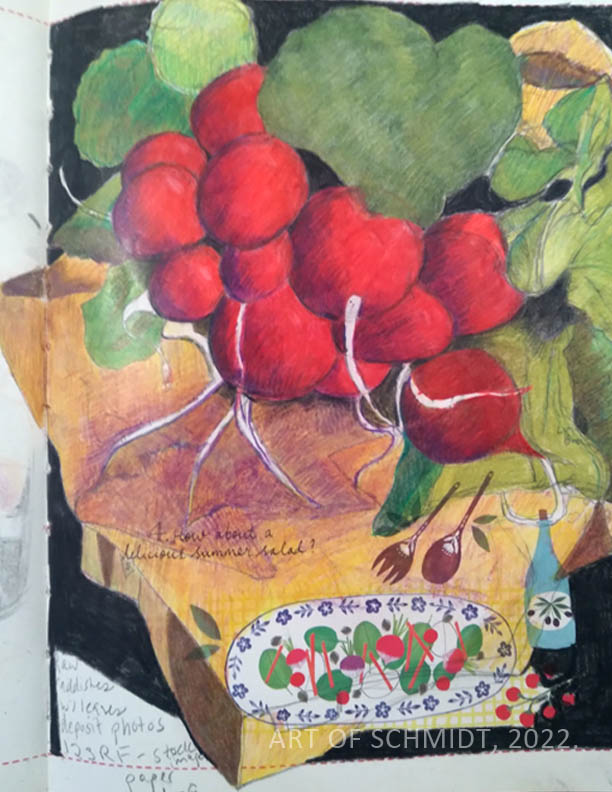
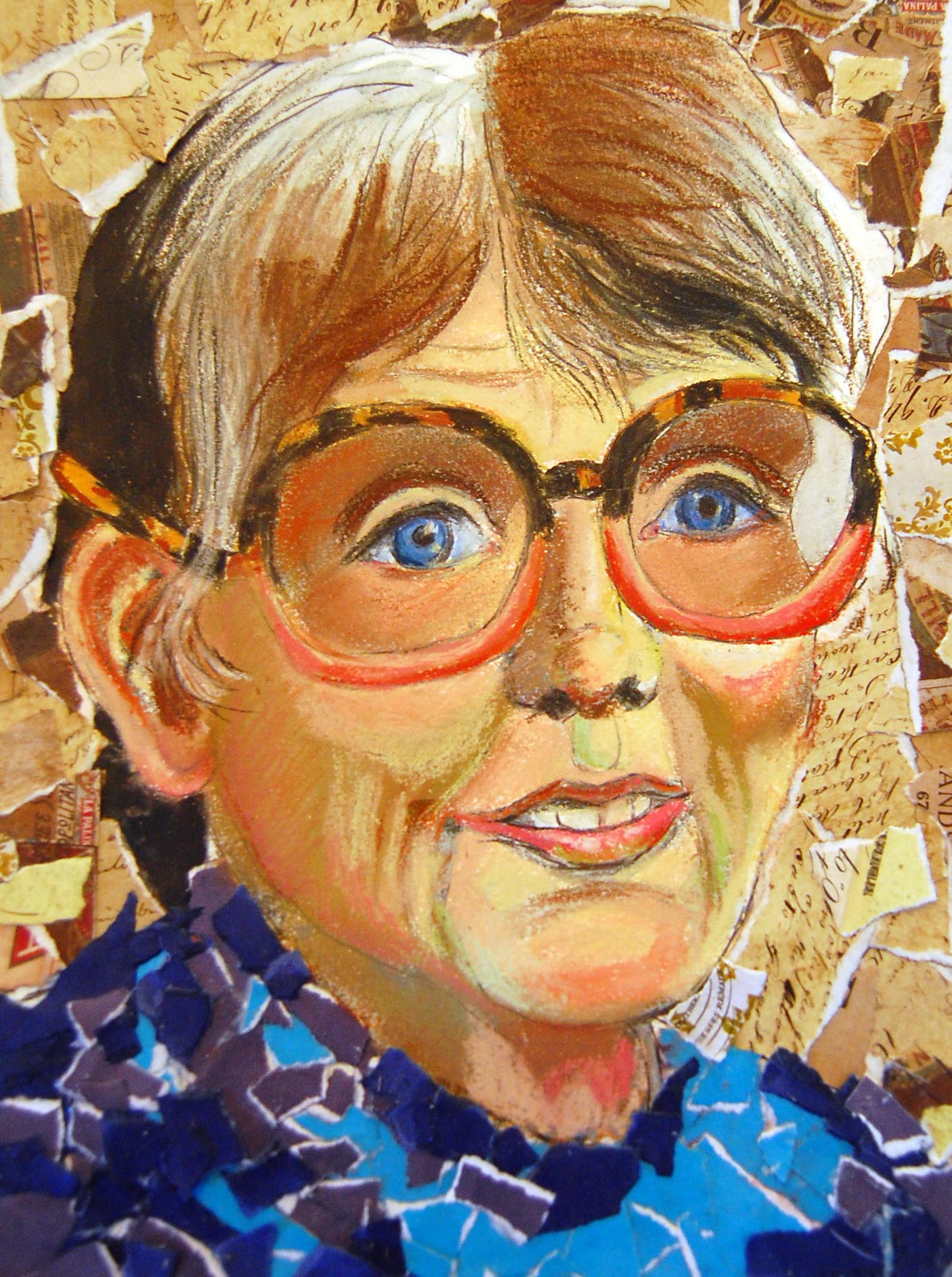
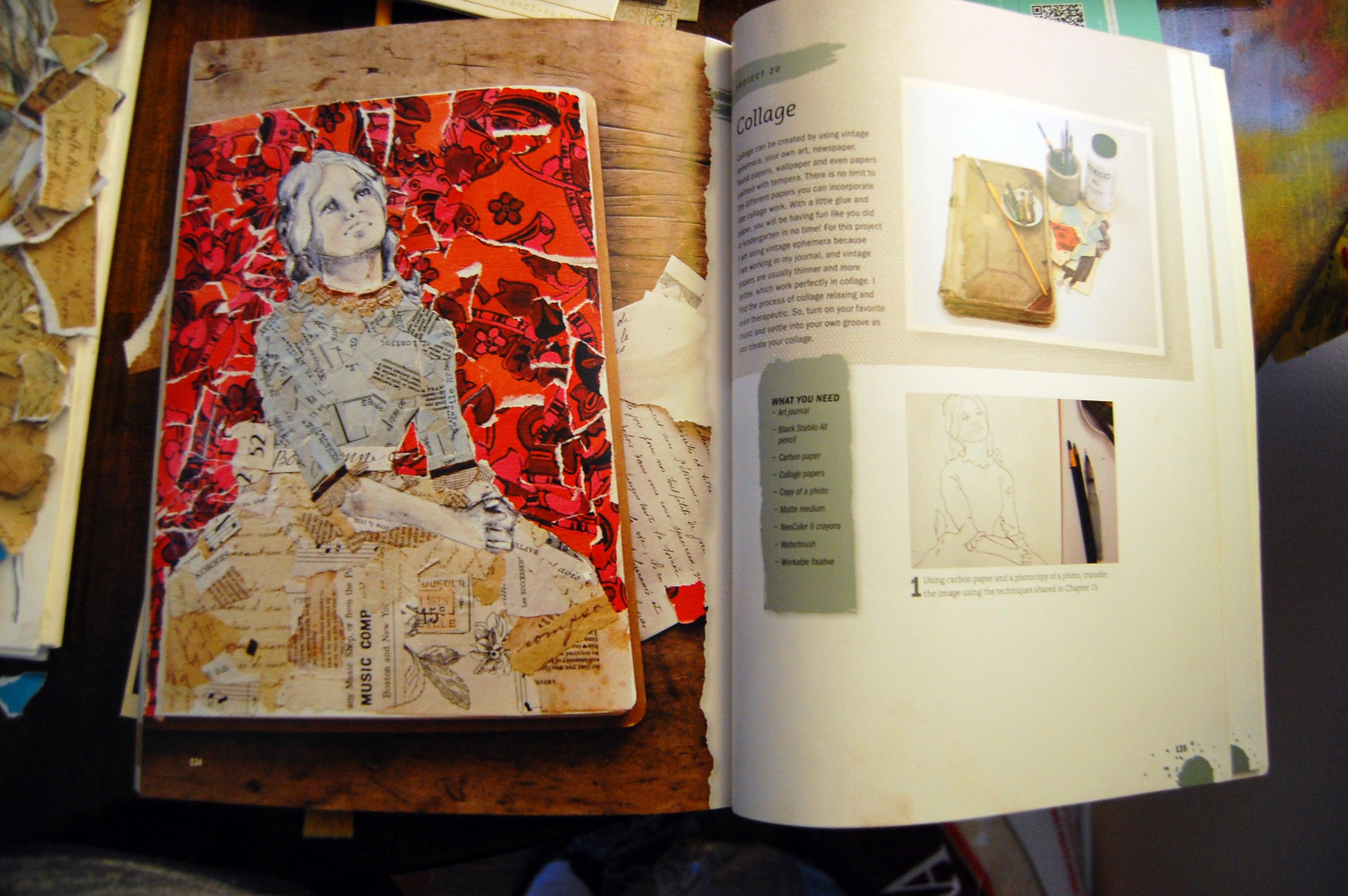
Another great way to improve your painting skills is to draw, yes draw. Regularly and in a sketchbook if you can, as much as you can so that you can practice things like composition, color, proportions, etc. It can also help you see patterns in your work, such as a favorite subject you return to, or a color palette. A sketchbook is also a great place to try out a variety of art media since it doesn’t feel as precious as a large painting can sometimes feel. This week I am featuring photos from my old sketchbook to show just how diverse you can be in art media. I include mixed-media collages and colored pencil drawings. The sky really is the limit with sketchbooks!
Lillian Gish as Romola, Mixed Media, Jodie Schmidt, 2022. Jodie Schmidt, After Alphonse Mucha, Mixed media, 2022.Fruit Bowl Drawing, Colored pencil, Jodie Schmidt, 2022. Radishes with paper bag, Colored Pencil, Jodie Schmidt, 2022.
Have you ever wondered why some artists, such as Andrew Wyeth, and others create their artwork in a series format? My first experience with creating artwork as a series was as an undergraduate at McDaniel College, taking art classes at the senior level. In this Senior Studio Capstone class, my fellow students and I were given the assignment to create a series of artworks that expressed a theme of interest or importance to us and to write an artist’s statement that described our artwork’s theme. For example, according to the website The Abundant Artist, some themes that artists might explore in a series include, 1.) “color and texture,” 2.) politics (Kathe Kollwitz), 3.) death, (Hirst) or 4.) messages that uplift, like Kelley Rae Roberts, Source: https://theabundantartist.com.
Prior to that, my assignments in drawing and painting consisted of drawing or painting to try and copy the still life or model in front of me, to teach the skills of observation. At that time, I had no idea how to even get started and had artist’s block for two weeks while I searched for artworks that inspired, all in vain. My Teacher did give us some guidance to the process though. He suggested that we create sketchbooks in which we pasted artworks of inspiration, no matter the medium, and he suggested that we look up art magazines, such as Art in America. Pouring over art magazines and artist websites, such as Forum Gallery, I could think of nothing new to say with my artwork that hadn’t already been said. I felt I had a lot of competition since there have already been many artists who have gone before me, who have created several unforgettable artworks to boot, such as Vermeer’s, Girl with a Pearl Earring, painted in 1665.
After weeks of struggle and seeking out artwork that inspired me, I had a solution. My answer came from an unlikely source, music. I decided to illustrate some of the songs of my favorite musician, Sting, using my self-portrait as a muse, along with color, and composition to portray various feelings of uncertainty, sadness, etc. Some of the songs I illustrated in my self-portrait series were Lithium Sunset and Secret Journey. The first song talks about how medication can help bring a person out of depression and make them strong enough to get back up again. While the second song, Secret Journey, talks about a mystical journey of enlightenment. I printed out the songs from Sting’s website, www.sting.com, pasted them in my sketchbooks, and underlined words and phrases that I thought were good candidates for illustration. And I referenced these songs and artworks of inspiration as I crafted my Artist’s Statement. As I searched through artwork that inspired, it became evident that I was drawn to the subject of the portrait, but I didn’t know how to make my work unique, because the portrait has been done numerous times before.
The imagery of Sting’s songs provided the perfect solution to my dilemma and I was off and running. My then-boyfriend, Dan, took photos of me to provide the source photos for my oil paintings. To make a long story short, I finished the series in time and even made a PowerPoint presentation as part of the project requirements of my finished works. In addition, I crafted an artist’s statement, which helped me to define the artwork by describing what the artwork would be about and what influences had to lead me to the finished work. I learned a lot about myself as an artist, such as how to distill ideas through writing artist statements and creating sketchbooks to illustrate my ideas by pasting artwork that inspired onto its pages. In particular, I discovered that I liked to make artworks that had a message, even if the search for the solution was far from easy. But back to my main question, “Why should artists work in a series?”
To investigate that question more fully, I did what many people would do, I googled it. The websites, Abundant Artist and Art Business.com, shed some light on the subject of content-based art. According to the authors, some of these benefits include: 1.) Making artwork in a series gives the artist a platform to connect with their audience on an emotional level because the artwork is focused and personal, 2.) Creating artwork in a series format helps others to understand what an artist’s work is about and who they are as a person, 3.) Artists who make artwork in a series are more likely to find art galleries to exhibit their work because they know how to market the artist and this format follow their business model, and 4.) Working in a series format helps artists to understand what topics/subjects are important to them, and which they like to draw or paint.
This week I am posting some photos of my latest painting, The Dream of Time Travel, which I started many months ago, and I am happy to say is finally complete! It is part of a series of paintings about the human condition, which is part of my portfolio for graduate school. These new works are a continuum of the series of paintings I completed as an undergraduate at McDaniel College, using the theme of the self-portrait, but expanding its representation to other themes such as poetry illustration. Thanks for stopping by!
Art of Blog Schmidt: How to Build Artistic Muscles
Hello Readers. This is an older blog post, but I felt that it has some points which still resonate with me, such as the importance of making time to practice my craft as an artist, making daily and weekly time to work on my paintings and drawings. This new series, Constructed Realities has been challenging in many ways, with challenges in coming up with new ideas, overcoming weaknesses as an artist, and sometimes just getting started. I feel afraid to make a mistake sometimes, and just have to choose to jump into the deep water and see what happens. Below is a recycled blog post, How to Build Artistic Muscles. But the artwork I am posting here is new. This artwork is based on song lyrics and poems, and is all about the figure, using mixed media materials for drawings and paintings.
Anxiety, Mixed Media on Crescent Illustration Board, Jodie Schmidt 2020.
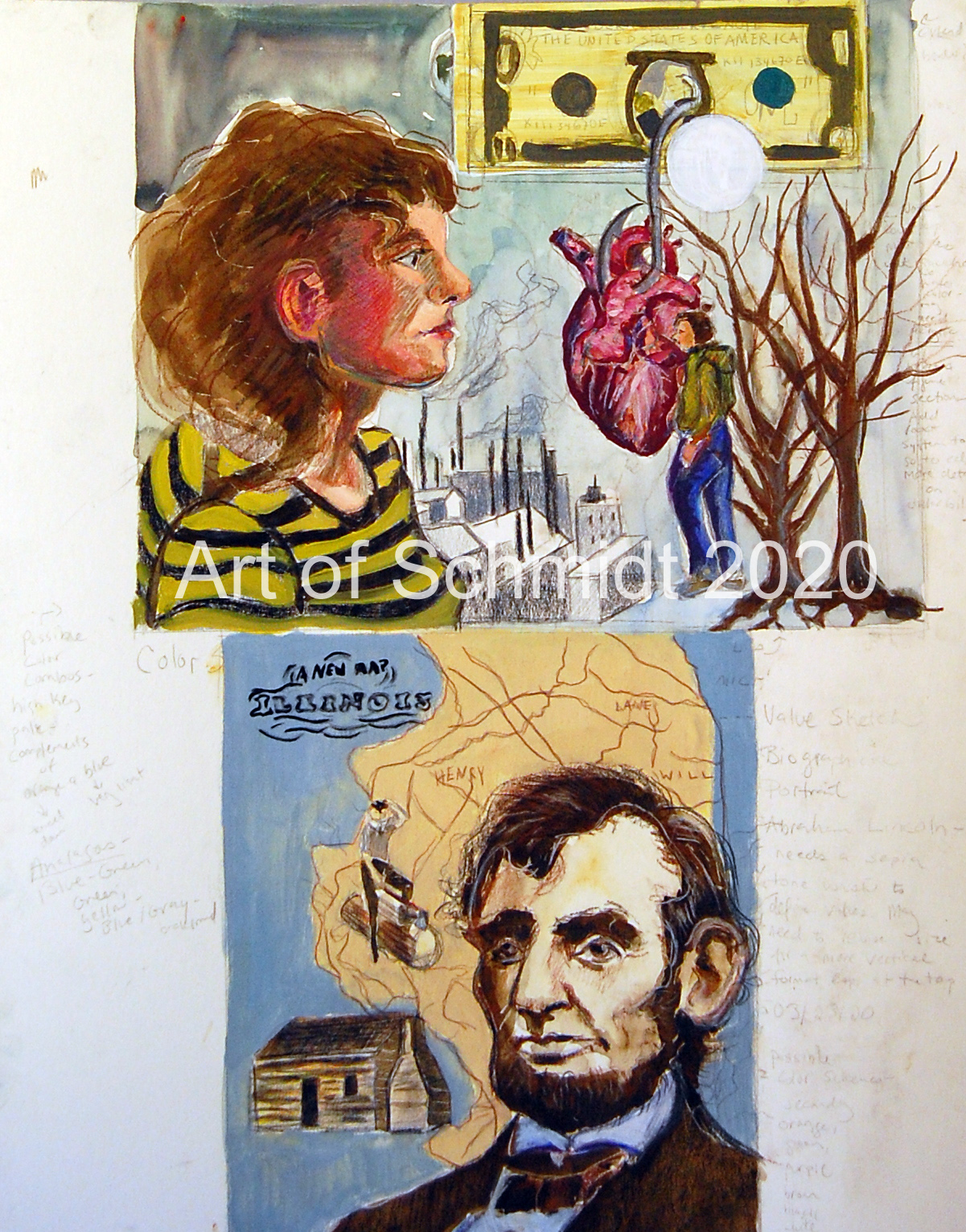
Top: Anxiety, (Value Sketch) Mixed Media on Crescent Board, Jodie Schmidt 2020.
Bottom: Money is the Bait, (Value Sketch) Mixed Media on Crescent Board, Jodie Schmidt 2020.
Top: Money is the Bait, (color sketch), Mixed media on Crescent illustration board, Jodie Schmidt, 2020.
Bottom: Abraham Lincoln Biographical Portrait (value sketch), Mixed Media on Crescent Illustration Board, 2020.
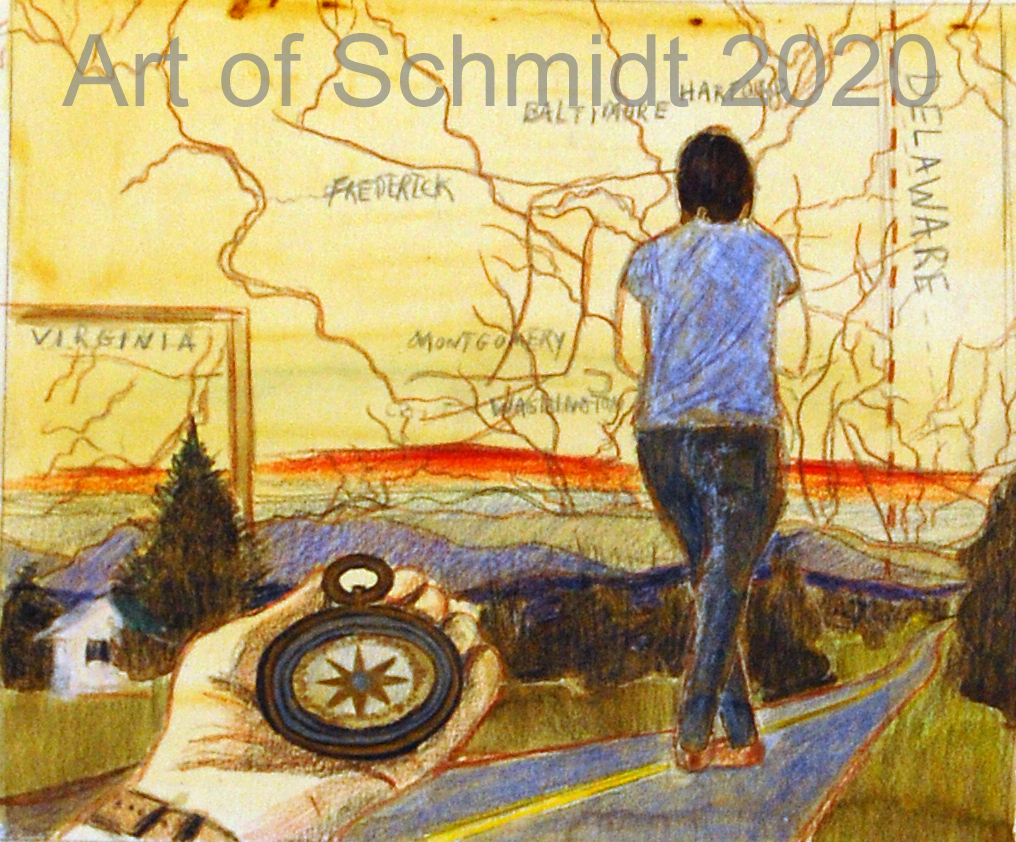
Let Your Soul Be Your Pilot, (color sketch) Mixed Media on Crescent illustration board, Jodie Schmidt, 2020.
A few weeks ago, one of my art fans complimented me on a painting which she had viewed on my Art of Schmidt website, entitled, Phyllis and Dad. She said that she liked the colors, that she admired my talent, and wanted to know the story behind the painting. I told her that the painting was based on a collection of family photos that I had collected and that I always remembered my father as being older than other kid’s fathers. I also shared that this was the first photo I had ever seen of my father taken when he was young. Although I do not know his exact age, as the picture is not dated, I would estimate that he was in his early twenties when this photo was taken of him and his first wife, Phyllis.
I was of course, grateful to hear the compliments about my artwork, but at the same time, I wanted to share that the artwork I post on my website does not come about by magic. It takes a lot of effort. Furthermore, sometimes more than one version of a painting or drawing is created to lead to the finished product that people see on my website, commerce site, and social media feeds on Facebook and Instagram. In fact, I have to practice on a weekly basis to keep my drawing and painting skills from getting rusty. During this conversation, I shared all of these insights with her and I hastened to add that if I relied solely on my artistic “talent” then it wouldn’t get me very far. Instead, I have found that practicing art is much like practicing a sport or playing an instrument. I believe that in order to get good at any of these disciplines, one needs to practice, a lot, and on a regular basis to maintain a certain level of skill. And sometimes it may require me to make a drawing or painting over and over again until I get it “just right.” In the words of songwriter, Sting: “I will reapply the needle of the record player again and again to the bars of music that seem beyond my analysis, like a safecracker picking a lock, until the prize is mine.” (Sting, Broken Music, dust jacket cover, 2003).
I was thinking about this conversation this week when I was trying to decide what to blog about. While I was pondering this, I wondered how to make this knowledge which I have gained about the need for artists to practice their art, into an applicable blog post that anyone can learn from. According to the author, and textile artist, Bren Boardman, one specific way for artists to stay “in practice” with their craft is to keep a sketchbook. The sketchbook serves as a repository to record their ideas and inspirations, such as “color swatches, quotes, magazine clippings, newspaper cuttings, or reference photos” for artwork in progress. (Boardman, Bren. “Sketchbooks and Mind Mapping for Artists”, https: www.textileartist.org).
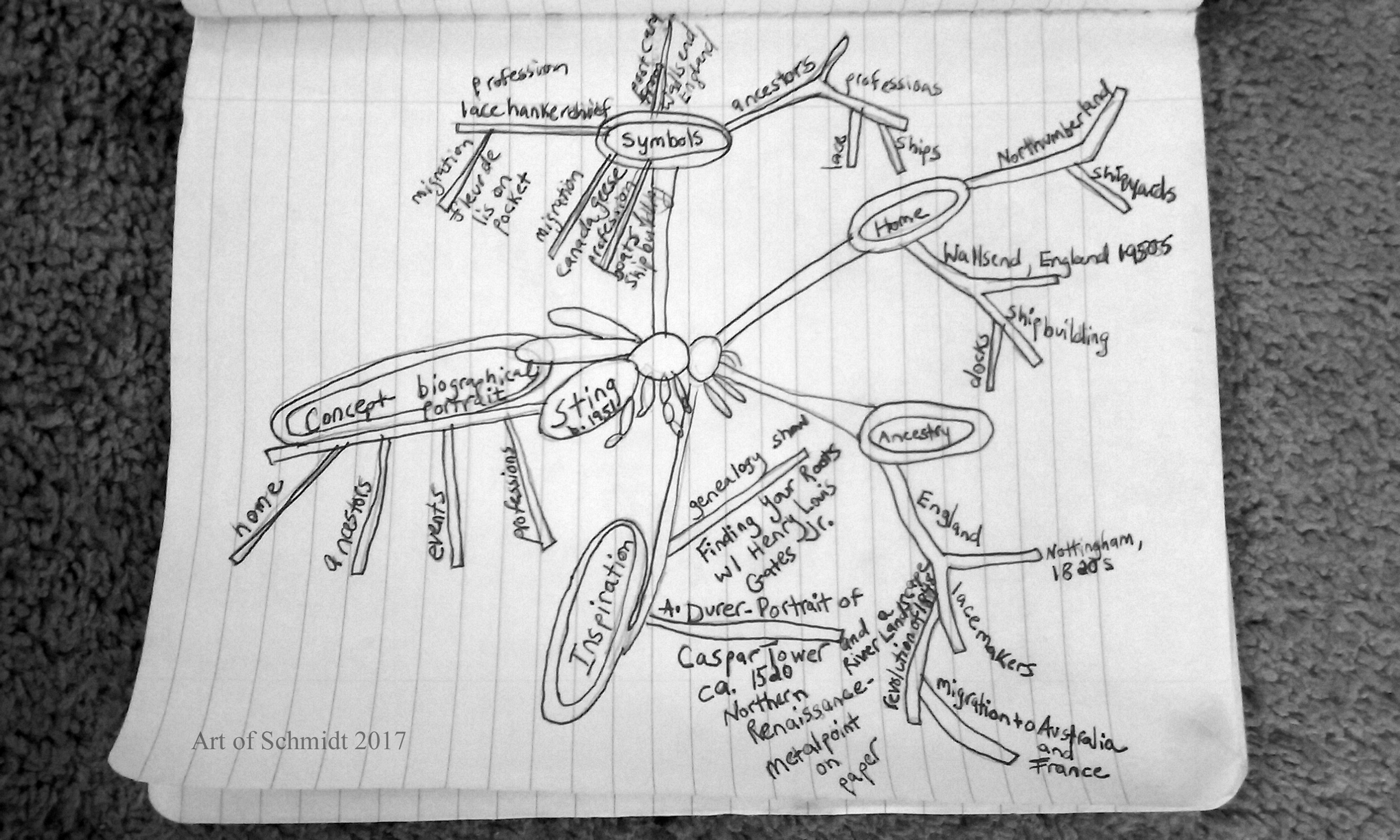
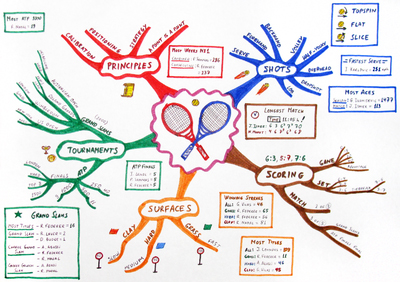
Bren Boardman, textile artist, and author of the article, “Sketchbooks and Mind Mapping for Artists”, states that sketchbooks can help artists to develop their ideas for artwork and that using a mind map in their sketchbooks is an effective strategy for fleshing out ideas for new artwork. In her article, she provides some useful tips on how to start a mind map diagram, sort of like the “web” I remember from grade school in which my teachers used to help my fellow students brainstorm new ideas. In Boardman’s mind maps, she starts with a word or phrase that encapsulates her concept for a new artwork and draws connecting branches, which describe her ideas in more detail, sometimes using imagery. To start a mind map, she recommends that you write a word or phrase, with which you can associate, the main idea. (Boardman, Bren. 2013)
In addition, Boardman states that it is helpful to consider what type of sketchbook you would like to create such as a reference sketchbook, where you might “collect color mixing tests, color swatches or samples, or an idea generation sketchbook”; such as creating a mind map which describes the process and ends with the final result. On the other hand, perhaps you might make a sketchbook that would describe a trip or journey. Furthermore, if you still feel overwhelmed about the process of starting a sketchbook, I’m including a list of suggestions that Boardman offers in her article to get you started with the process. For example, you might include: “photos, magazines or prints, magazine or newspaper cuttings, drawings, sketches and doodles, text, poetry, stories, thoughts, thoughts, letters, extracts, statements, words, fabric, threads, wools, beads, buckles, papers of all kinds.” (Boardman, Bren. “Sketchbooks and Mind Mapping for Artists”)
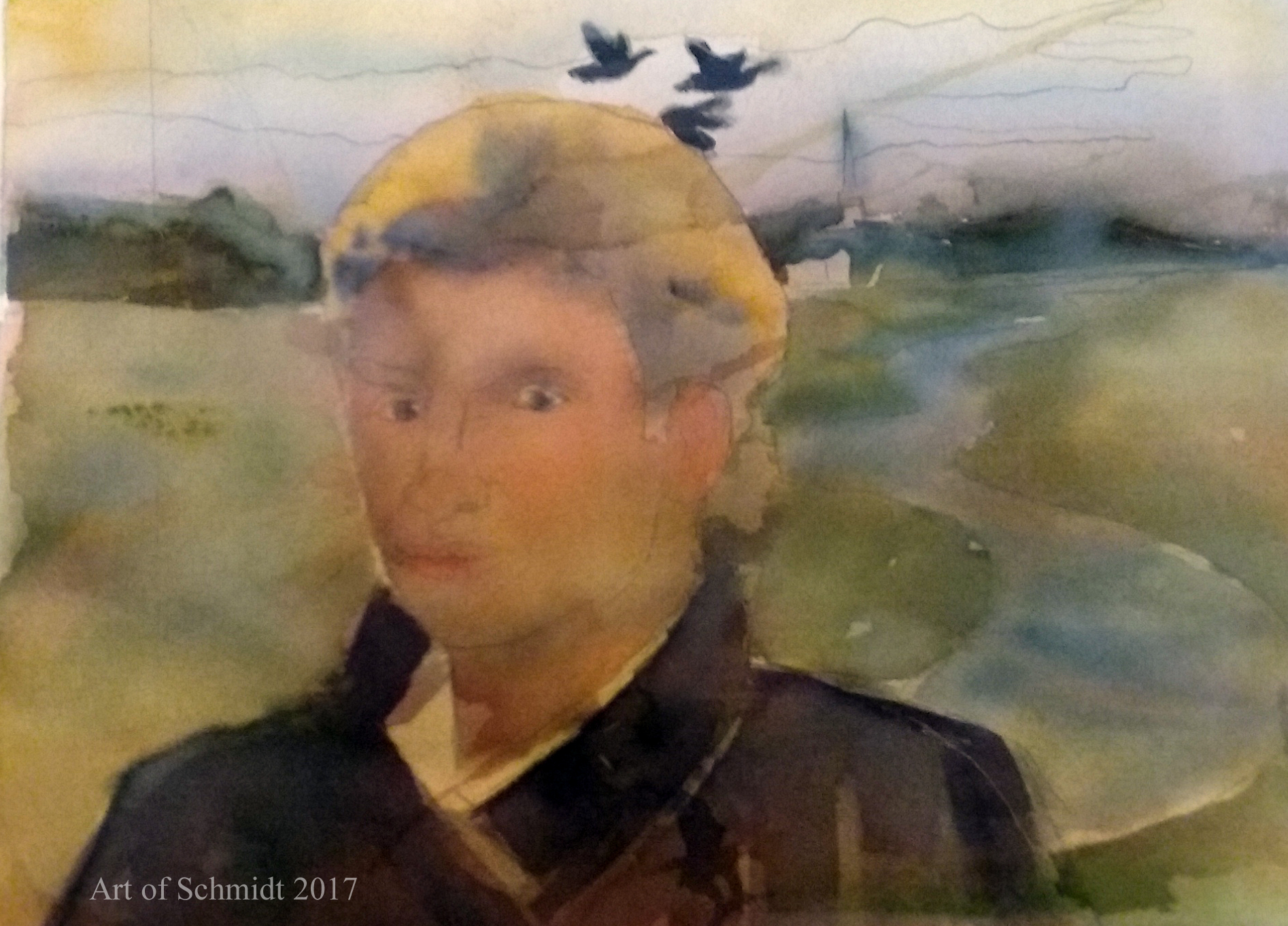
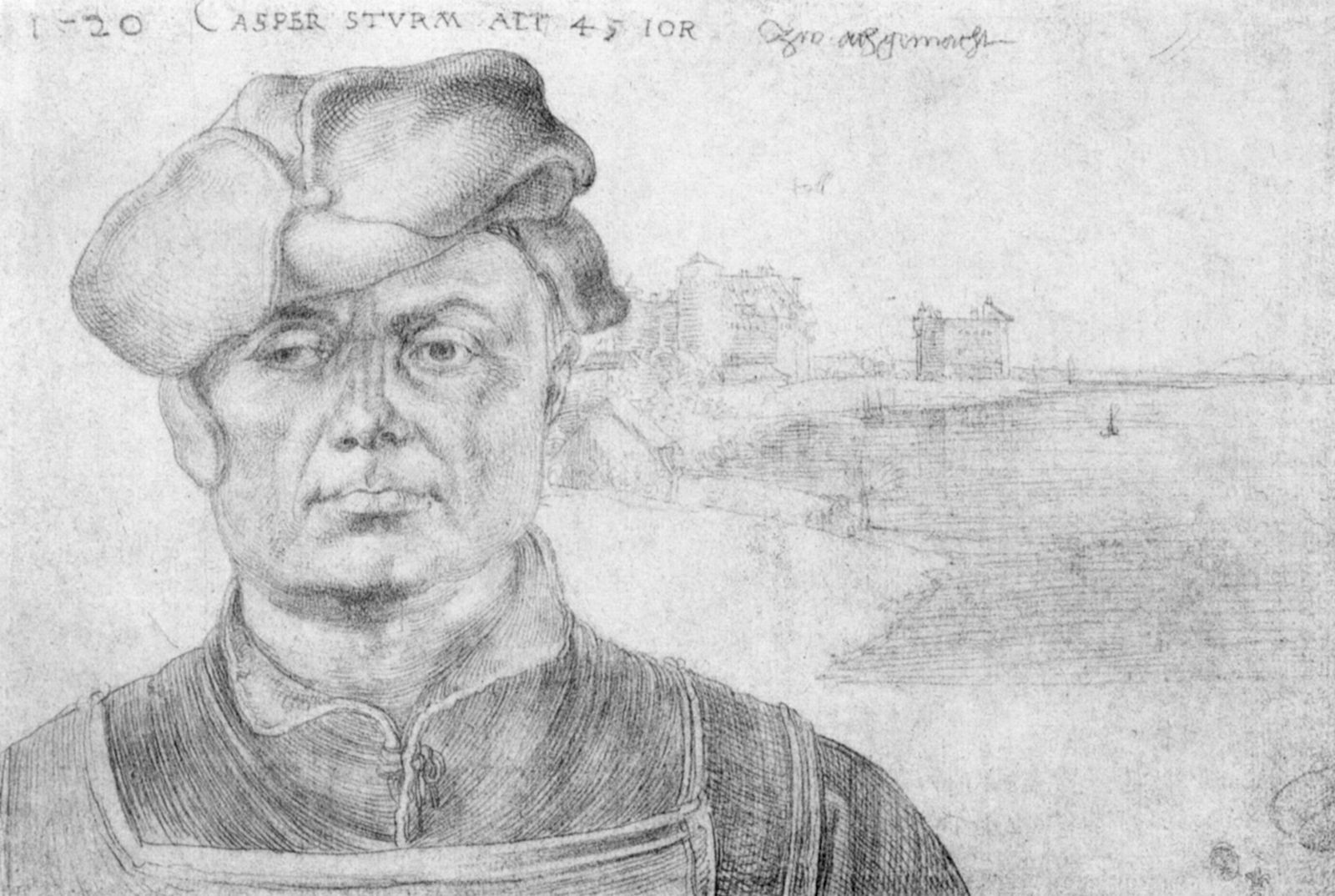
In this blog post, I include my process for adapting Boardman’s mind map idea and translating it into a project I wanted to create a genealogical portrait of recording artist, Sting. My inspiration for this project was based on an overworked watercolor painting I made last summer, a portrait by Durer of a man standing in front of a landscape, and a TV miniseries, entitled, Finding YourRoots, with Henry Louis Gates, J., on PBS. The segment I took inspiration from was called, “Sting, Sally Field, and Deepak Chopra,” and was filmed in 2014. Gates spoke with each individual in turn and he shared what he had learned about their ancestry through genealogical research. In particular, Gates shared that Sting’s third-great grandparents were lacemakers who started a family in Nottingham, England in the 1820s. However, due to the Industrial Revolution, which led to mass production of products and consumer goods, they were forced to seek work elsewhere in Calais, France, and Australia.
I took inspiration from this TV series, a failed watercolor portrait of Sting, and from a sketch by Duerer which featured a portrait of a man and a landscape in the background. To record my thoughts, I took notes as I watched the TV segment and I re-draw these thoughts in a mind map. I knew I wanted to make a portrait that was different from the typical face front painting or sketch of a person with a wall as background, and that I wanted to let the artwork tell a story about the person. I wanted to use symbols to tell the person’s story so that it would lead the viewer to contemplate the scene and ask questions about what the symbols might mean. After I completed the notes, I set to work looking for images on the internet of Sting, his home town of Wallsend, England, and some symbols to describe his ancestor’s migration to France and their profession as lacemakers. Then I put all the photos together in Adobe Photoshop to create a collage as reference for the resulting sketch and three value watercolor painting. I plan to continue this project as a larger acrylic painting in a 12 x 24-inch size. Stay tuned for more updates on my painting process of this portrait! Thanks for stopping by!
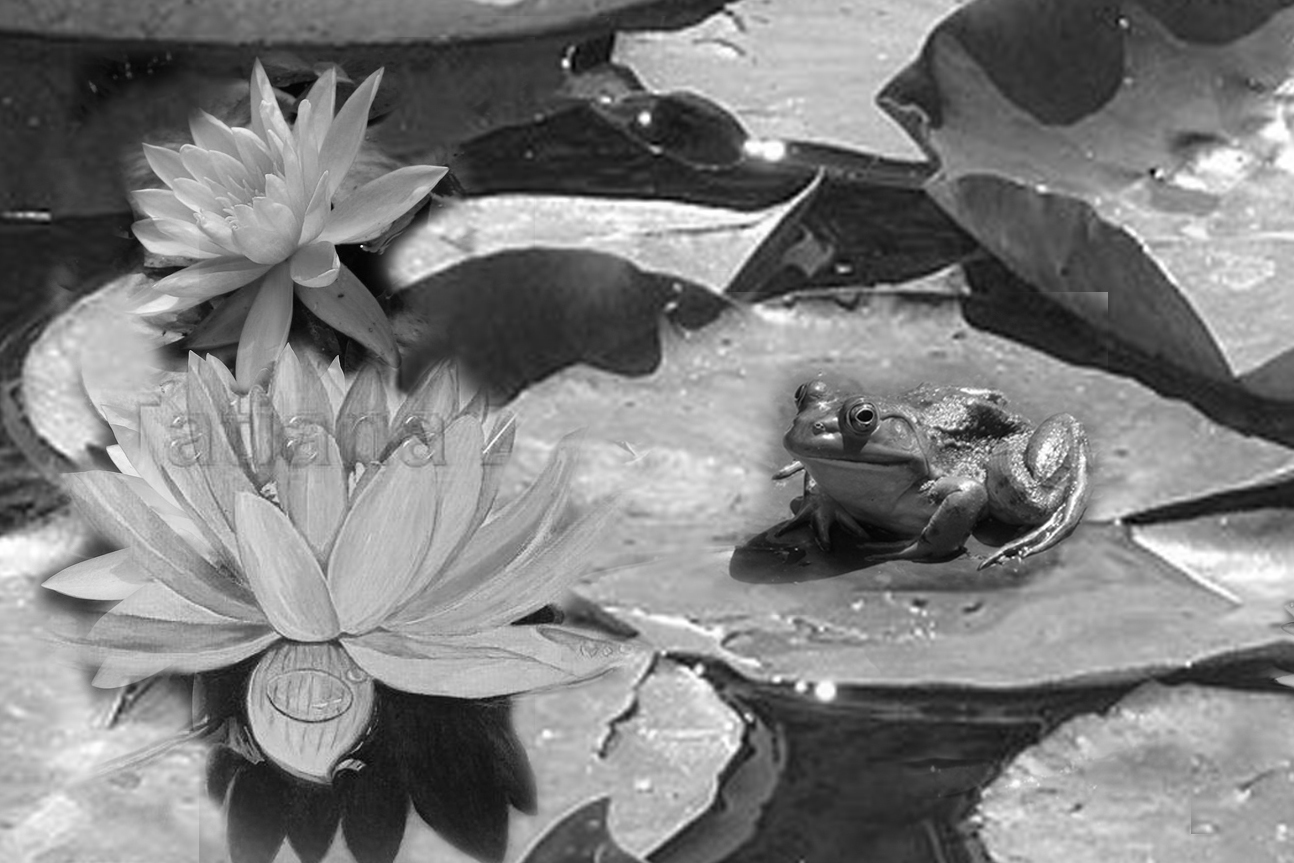
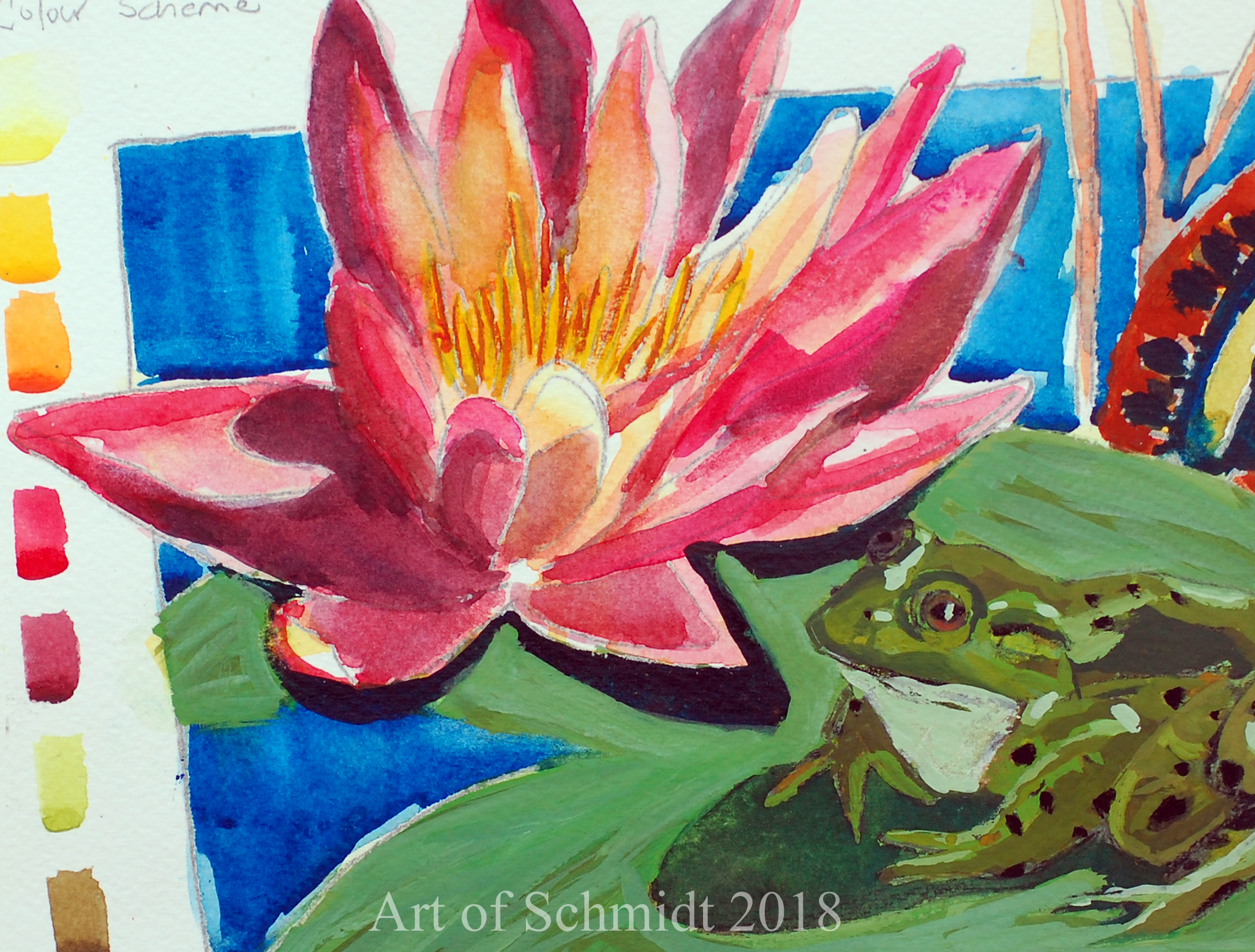
I have a confession to make; I haven’t been painting very much lately, even though I call myself an artist. In fact, it’s been almost a month since I painted a picture, or even wanted to work on a painting. Yesterday was my first day back at the easel, working on a complicated water lily painting. Although this subject seems simple, it has been quite challenging to execute. I have been trying to push myself beyond my usual comfort zone of placing everything in the middle of my artwork and to create alternative compositions. I have spent a lot of time, effort and thought to explore different compositions and value schemes to resolve the painting.
Sometimes Life Gets in the Way of Creativity
But it’s been an off and on the journey, with very little motivation to create again. This lack of motivation to be creative is, unfortunately, nothing new in my journey as an artist. Instead, it has been a frequent and unwelcome companion. For some reason, I no longer have that naive joy I used to have in creating art, where I was free from the brutal inner critic. Instead, now it seems that my artwork must have a purpose, in order to be worthwhile. Somewhere, perhaps buried deep inside me, is a desire to create, but that has to compete with a myriad of other priorities that fight for my attention, such as cooking, organizing, cleaning, to-do lists, etc. It’s a constant tug of war, deciding what my priorities should be. Other things that make me doubt the point of being creative and feeling like it’s a luxury to make art have been the drying up of art sales and commissioned work. In addition, I have had to cancel several art events due to weather conditions, or a lack of interest from others. All in all, it makes me wonder, what is the point? Does anyone really care if I make art or not? Does it impact their lives? Is it meaningful for me to make art, whether it sells or not? Is this a hobby, a business, or something in between? What is my purpose in creating art?
Ways I have been Making Time for Art
Despite my doubts about the validity of making artwork, I have been pushing myself to create art nonetheless, kind of like adhering to a fitness schedule. One of my methods to keep my drawing skills sharp has been to draw a dog portrait from a reference book called, For the Love of Dogs, by the photographer, Rachael Hale, five days a week and to post the results on Instagram. I try to keep the sketches simple, and I spend about 30-45 minutes on each drawing. However, I am not sure how to get back my love for creativity. Instead of taking time to ponder this question, I tend to spend my time reading or watching the British television mystery series on YouTube, called Lewis. But now I am starting to wonder, what steps can I take to start enjoying making art again? So, on that note, I would like to share some tips from an article I read on a website called, Skinny Artist, managed by Drew Kimble.
The author, of the article, “5 Ways to Rediscover Your Art and Reclaim Your Passion”, states that there are five techniques which can be used by artists to rediscover their creative spark. The techniques he lists include: 1. finding ways to nourish your creativity, 2. reducing distractions in your environment, 3.) locating a community of creatives, either online or in real life, 4. engaging in small creative practices on a daily basis, and 5., keeping your creative practice varied by changing up your techniques, media, etc. (Source: Drew Kimble, “5 Ways to Rediscover Your Art and Reclaim Your Passion,” www.skinnyartist.com.) In the interest of brevity, I am only going to share a few of Drew Kimble’s tips.
Nourish Your Creativity
Drew Kimble states that to keep your creative well flowing, you need to re-group by viewing as much art as you can. (Source: ibid) By observing works in art galleries, books, art magazines, websites, etc., it will help you to define the direction in which you would like your artwork to go, and inspire you with imagery to re-construct, abstract or re-interpret your artwork through the lens of other artwork. (Source: ibid) A quote from Isaac Newton helps to illustrate this concept: “If I have seen further, it is by standing on the shoulders of giants.”
Limit Your Distractions
In our twenty-first century modern society, we are frequently inundated with distractions, whether it comes in the form of cell phones, the internet, movies, hello, YouTube, etc. (Source: ibid) A cell phone alone contains a myriad of distractions including: “movies, instant messenger, arcades, phone games”, such as Pokémon Go, etc, etc. (Source: ibid.) This does not include other distractions, which may seem well-intentioned or important: such as cleaning, cooking or organizing our homes. And for most of us, we need to make a living outside of our art, unless we are retired, have a trust fund, or a well-off partner who helps to support our artistic careers, so there is also time we need to dedicate to our jobs. (Source: Ibid.) On the other hand, to be creative, we must carve out empty places in our schedules, or what I like to call, white space. (Source: Ibid.) Without stillness and solitude, it is difficult to create an environment conducive to creativity where memories, experiences, literature, song lyrics, cultural influences, history, imagery, etc, can merge to create the seeds of inspiration. (Source: Ibid.) In fact, Agatha Christie has been known for saying that some of her best ideas came to her for novels when she was washing dishes. She states, “The best time to plan a book is while you’re doing the dishes.” (Source: https://www.brainyquote.com/authors/agatha_christie)
In addition, the author, Drew Kimble, suggests that keeping a “time journal” for many days can help him to identify what activities he spends his time doing. (Source: Ibid.) Another tip he shares is to schedule time for making art and to be gentle with yourself, even if you don’t meet your expectations and cross everything off your to-do list. (Source: Ibid.) Likewise, I have been trying to reduce the number of items I place on my to-do list, as far as creative projects are concerned. I’ve been realizing that most days, I can only do one project at a time, especially on days when I work at my part-time job. I’m trying to make Thursdays a day to spend more time on creative projects. One of the projects I hope to get started on, is my poetry illustration narrative series, an art project I have yet to complete because of its complexity. I also want to focus my energies on my daily drawing challenge, which features dog portraits. I’m learning that if I take on too many art projects, I have a tendency to leave these projects unfinished and then I feel guilty for being so unproductive. One other way I could make time for art would be to cut down on the time I allocate for entertainment, especially movies, which can take up a lot of my free time if I am not careful.
Conclusion: What’s the Point of Making Art?
In closing, I would like to return to some questions about the meaning of art, both to myself and to the society in which I live. Pondering the role of art in my society and in my life specifically, I read and researched some articles online to see what others had to say about the importance of art in our society, to address one of the main questions I posted about making art, which is, What’s the point? So here are a few thoughts from an article I read: “Why We All Need Art in Our Lives,” by Lesli Walsh, April 11, 2013, retrieved from http://www.michipreneur.com/why-we-all-need-art-in-our-lives/. The first point, the author, Walsh makes is that 1.) art is an integral part of who we are as humans, and that it can help us to create balance in our lives or to find other routes for self-expression when words fail us. (Source: Ibid) Point number two is that art helps us to understand how historical events impact people emotionally, and how it has shaped our own lives. (Source: Ibid) Thirdly, making or viewing art can help us to become more self-aware about our inner thoughts, desires, fears, etc, and gives us a chance to slow down and decrease the stress we experience from living in a multi-tasking, fast-paced society. (Source: Ibid) Through self-awareness, we can grieve losses and heal from traumas. Another value we can get from making art is that it can help us to develop critical thinking skills, by teaching us how to represent abstract thoughts and concepts in concrete ways through visual symbols. (Source: Ibid) Finally, by talking about the art we make, we can learn how to be better communicators with others. (Source: Ibid) One last thought about the value of art is that it can transcend cultural differences and give people a common language, where words are not necessary. (Source: Ibid) Thanks for stopping by and reading!
Time seems to be getting away from me lately; working long hours at my part-time job, keeping my house clean and neat, cooking, running errands, etc. I’ve had precious little time lately to do art, or even to blog, or think much about the when/how/what, I want to blog about. My thoughts have been scattered like so many leaves on the wind, and my content ideas for this week’s blog post have ranged from marketing tips for artists to ideas for making time for art, and finally to the reason why artists need a portfolio. And I have come to the conclusion that I might have put the cart before the art because before artists can market their artwork, they need a substantial body of work to choose from with a concentrated theme and a style. However, before I get into a lot of detail about why artists need a portfolio to help market themselves to galleries, etc., I want to provide a definition of an artist’s portfolio. What is it? An artist’s portfolio is a visual reproduction of an artist’s work, often displayed as photo reproductions in a removable file folder, and other formats may include a printed book of an artist’s artwork, or a CD with jpeg images, or other formats such as online portfolio, “which showcases an artist’s style or method of work.” (Source: Wikipedia, “Artist’s Portfolio,” retrieved from https://en.wikipedia.org/wiki/Artist%27s), a portfolio can be used by artists to show employers and gallery owners the artist’s collection of best works, often limited to a specific medium and theme for clarity and cohesiveness (ibid).
To investigate this idea more fully, I did some research via my favorite source, the World Wide Web. According to an article entitled, “6 Things You Can Do To Promote Your Art”, by Agora Gallery staff, A compelling portfolio will help artists to create “branding and packaging.” (www.agora-gallery.com) In addition, a portfolio paves the way for artists to enter art competitions “post on their website,” and create marketing materials (ibid), such as brochures, business cards, fliers, etc. Furthermore, a crucial aspect of an artist’s portfolio is the “visual reproduction,” of an artist’s art, because the quality of your art reproductions, (ibid) whether it is in photographs or prints, will play a crucial role in capturing your potential fans and customers and turning them into followers. This is especially true of visual heavy sites such as Instagram and Pinterest.
High-quality photography is a must for an artist’s website, social media postings, portfolio, commerce shops or online galleries, etc… To stand out from the competition, Artists need their artwork to shine above all, not for their followers to focus on bad photographs, with fuzzy or blurred images that are dark and badly composed. These flaws will detract from an artist’s work. Although some experts will advise artists to hire professional photographers to exclusively document their work, I have a different take on this issue. I think artists should do whatever works best for them, rather than a hard and fast rule like this one. I know from personal experience that it can be difficult to afford the fees from professional photographers as an emerging artist. For example, one of the choices I have made in order to make time for art is to work part-time. There are both pluses and minuses of this life choice, and while it affords me additional time to work on art while I am at my best, (during early afternoon hours) it also limits the amount of money I have to spend on art supplies, marketing, etc. My solution for photography is to take my own photos and learn how to do this skillfully. If artists want to learn how to take their own photos, they can learn this skill through a variety of avenues, such as reading photography books from their library, taking photography classes at their local community colleges, and experimenting with different cameras, lighting, and tripods, etc. I also recommend an article called,” 4 Steps to Photographing Your Art”, by Art Archive, which can be retrieved at https://www.artworkarchive.com/blog/4-steps-to-photographing-your-art-like-a-professional.
If you can afford a professional photographer, by all means, do some research and seek out professional recommendations from trusted friends and family. But be sure the photographer in question has experience in taking photos of art. Here are some tips from Agora Gallery offers regarding the content of an artist’s portfolio: 1.) Use high-quality photos to document your art, 2.) Include a brief and compelling description of each artwork, include information such as: “size, title, media”. Also be sure to include a succinct description which describes the art. 3.) Tell a story about your art if you can, what inspired you to do the work, etc. 4.) Include a strong biography which describes your backstory as an artist, such as your journey as an artist, etc. (Source: Agora Gallery, “6 Things You Can Do To Promote Your Art”, retrieved from www.agora-gallery.com). Make sure it isn’t generic, and that it sets you apart from other artists. As you write your biography, think about the first page of your favorite book and why it moves you or grabs your attention and makes you want to turn the page to find out what happens next.
Please note that it is very important to limit the number of images that you include in your art portfolio and be sure that there is a consistency in style and theme, as part of your branding. (Source: “Artists: Are you Consistent? A Gallery Owner’s Perspective,” Jason Horejs, November 3, 2017, retrieved from http://reddotblog.com/artists-are-you-consistent-a-gallery-owners-perspective-3/). Do not attempt to include every item of artwork you have made in your portfolio. (ibid) Only include your best work. To narrow your focus, it might help you to write an artist’s statement, which describes the themes and context of your work and what makes it unique. To learn more about an artist statement, go to the following link: http://www.saic.edu/media/saic/pdfs/lifesaic/careerco-opcenter/workingartistsseries/Handout_WorkingArtist_WritingYourArtistStatement.pdf.
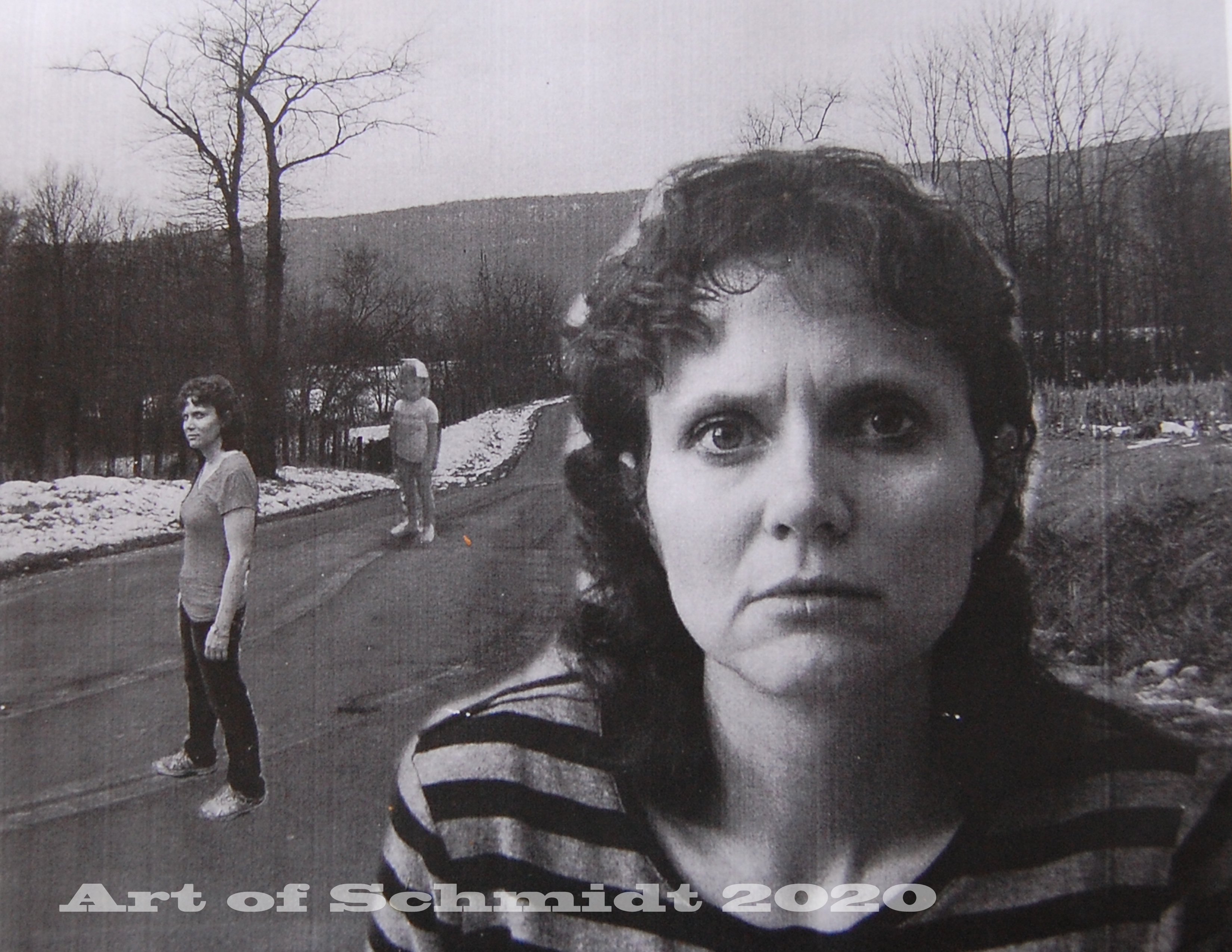
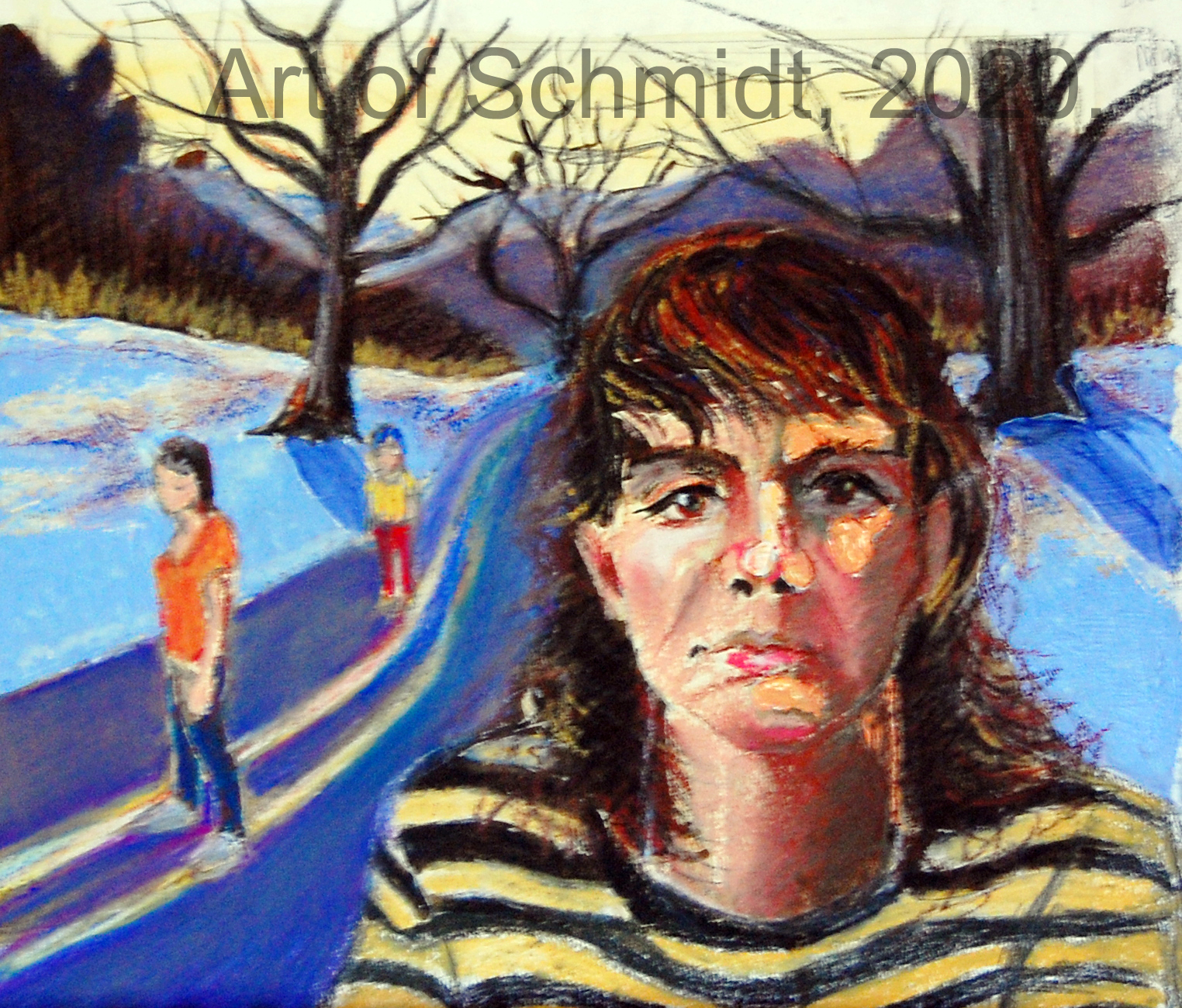
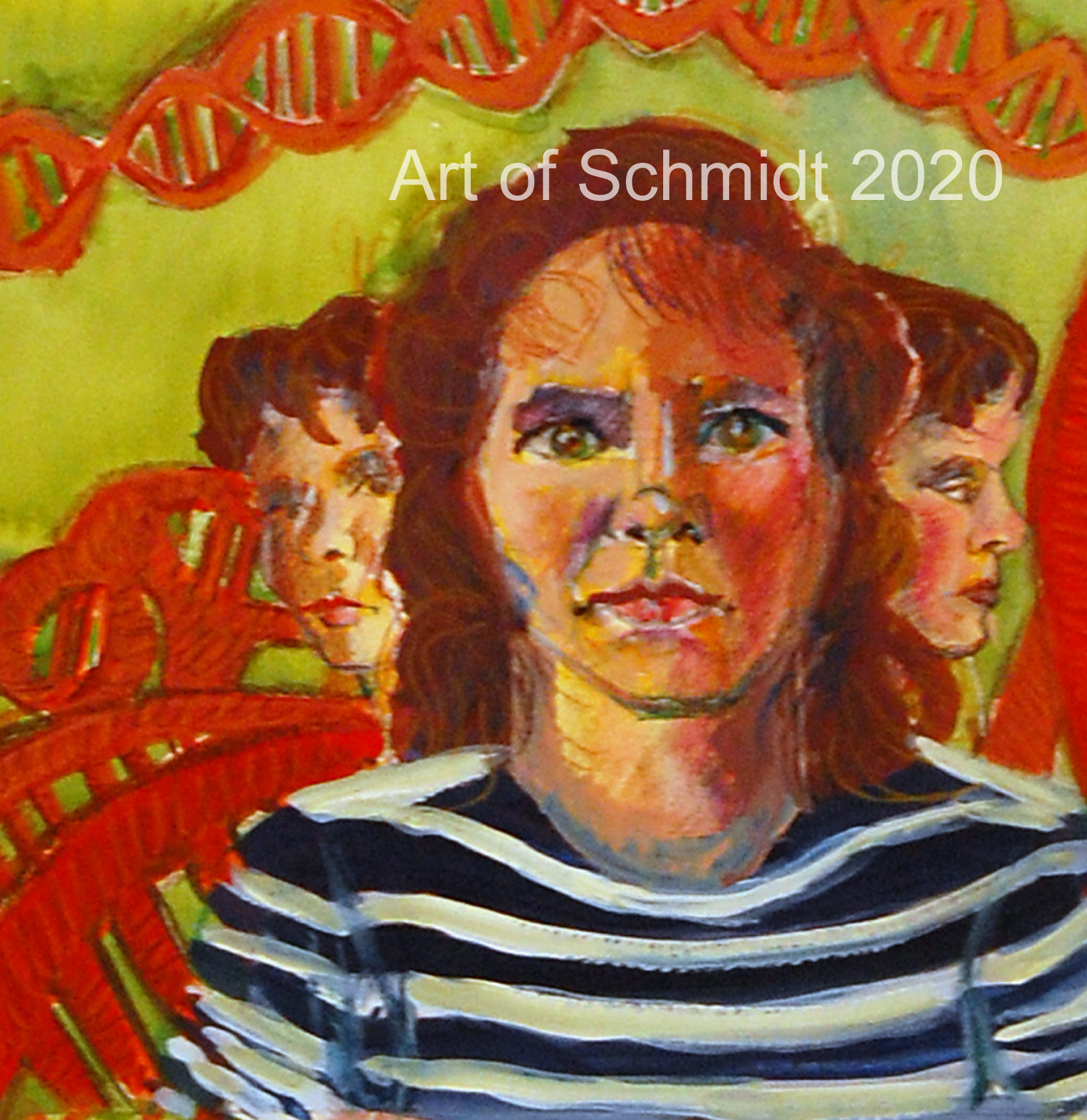
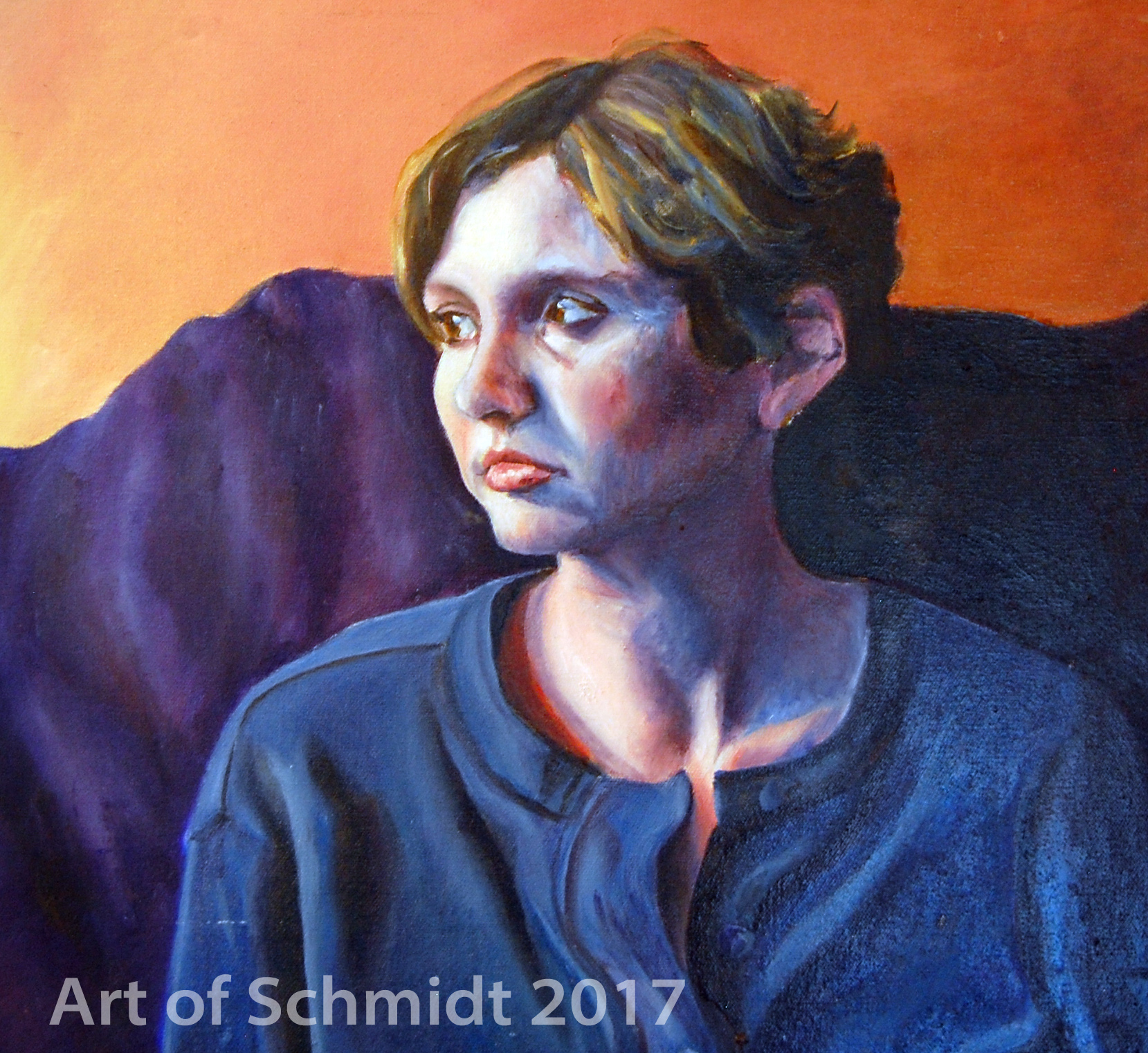
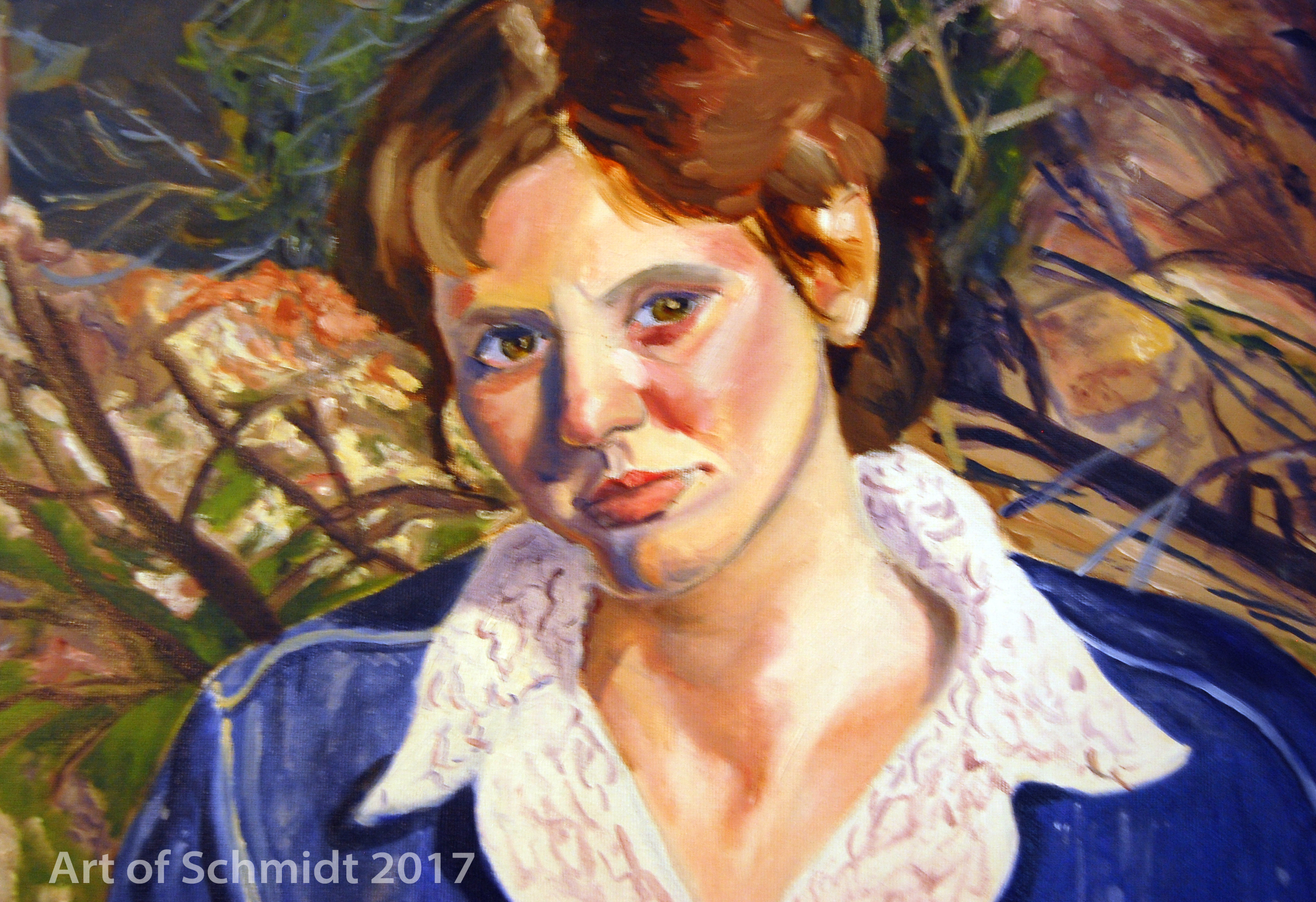
In this post, I have included some oil paintings I completed during my senior year at McDaniel College as part of my senior studio final project. These help explain the concept of consistency in style, subject matter, and medium, as they are all self-portraits, executed in oil paints in an impressionistic style. The theme of these works was to illustrate different feelings expressed in the lyrics of songwriter, Sting. Some of the songs that inspired these works are: Lithium Sunset, Secret Journey and Let Your Soul Be Your Pilot. Many of these songs express struggles with failure, depression, making choices, getting back up again and making sense of the world. Here is a brief lyric from Let Your Soul Be Your Pilot:
When you’re down and they’re counting
When your secrets all found out
When your troubles take to mounting
When the map you have leads you to doubt
When there’s no information
And the compass turns to nowhere that you know well
Let your soul be your pilot (Source: http://www.sting.com/discography/lyrics/lyric/song/176)
It is also important to do research about potential galleries you would like to exhibit your artwork before you send out your portfolio to galleries. For example, you might want to read their website and look at the work of artists that they already represent to get an idea of what style, mediums they gravitate towards, the gallery’s philosophy, etc. You might even want to make a drive to visit the gallery in person and meet the staff
Another self-portrait from my art student years. Lithium Sunset, 2005, Jodie Schmidt, Oil on Canvas.
Self-Portrait with Red Shirt, 2004, Jodie Schmidt, oil.
Here is a self-portrait I painted during my years as an art student at McDaniel College. Let Your Soul Be Your Pilot, 2005, Jodie Schmidt, Oil.
Self-Portrait with Scenery, Oil on Canvas, 2004.
if that is possible. This will give you an idea of what their customer service is like, and if you might mesh well with the gallery staff or not. Remember to be strategic about your choices for art competitions and gallery submissions, and look for opportunities that will be a good fit for your art.
Thanks for stopping by! I am planning to write about the topic of how artists can market their work as a series, to follow up this week’s post on why artists need a portfolio. Next week’s blog post will describe the concept of artist portfolios in more detail and all the different formats which are available.One final thought before I close, before you can make a portfolio, you must be putting in the hours in your studio and make art as much as possible, nights, weekends, etc. Also, it is important to invest time in learning and developing your specific medium of choice and style. This may not happen overnight and it takes time. After all, if you aren’t making art, you have nothing to promote.
A few weeks ago, one of my art fans complimented me on a painting which she had viewed on my Art of Schmidt website, entitled, Phyllis and Dad. She said that she liked the colors, that she admired my talent, and wanted to know the story behind the painting. I told her that the painting was based on a collection of family photos which I had collected and that I always remembered my father as being older than other kid’s fathers. I also shared that this was the first photo I had ever seen of my father taken when he was young. Although I do not know his exact age, as the picture is not dated, I would estimate that he was in his early twenties when this photo was taken of him and his first wife, Phyllis.
I was of course, grateful to hear the compliments about my artwork, but at the same time, I wanted to share that the artwork I post on my website does not come about by magic. It takes a lot of effort. Furthermore, sometimes more than one version of a painting or drawing is created to lead to the finished product that people see on my website, commerce site, and social media feeds on Facebook and Instagram. In fact, I have to practice on a weekly basis to keep my drawing and painting skills from getting rusty. During this conversation, I shared all of these insights with her and I hastened to add that if I relied solely on my artistic “talent” then it wouldn’t get me very far. Instead, I have found that practicing art is much like practicing a sport or playing an instrument. I believe that in order to get good at any of these disciplines, one needs to practice, a lot, and on a regular basis to maintain a certain level of skill. And sometimes it may require me to make a drawing or painting over and over again until I get it “just right.” In the words of songwriter, Sting: “I will reapply the needle of the record player again and again to the bars of music that seem beyond my analysis, like a safecracker picking a lock, until the prize is mine.” (Sting, Broken Music, dust jacket cover, 2003).
I was thinking about this conversation this week when I was trying to decide what to blog about. While I was pondering this, I wondered how to make this knowledge which I have gained about the need for artists to practice their art, into an applicable blog post that anyone can learn from. According to the author, and textile artist, Bren Boardman, one specific way for artists to stay “in practice” with their craft is to keep a sketchbook. The sketchbook serves as a repository to record their ideas and inspirations, such as “color swatches, quotes, magazine clippings, newspaper cuttings, or reference photos” for artwork in progress. (Boardman, Bren. “Sketchbooks and Mind Mapping for Artists”, https: www.textileartist.org). Bren Boardman, textile artist, and author of the article, “Sketchbooks and Mind Mapping for Artists”, states that sketchbooks can help artists to develop their ideas for artwork and that using a mind map in their sketchbooks is an effective strategy for fleshing out ideas for new artwork. In her article, she provides some useful tips on how to start a mind map diagram, sort of like the “web” I remember from grade school in which my teachers used to help my fellow students brainstorm new ideas. In Boardman’s mind maps, she starts with a word or phrase that encapsulates her concept for a new artwork and draws connecting branches, which describe her ideas in more detail, sometimes using imagery. To start a mind map, she recommends that you write a word or phrase, with which you can associate, the main idea. (Boardman, Bren. 2013)
In addition, Boardman states that it is helpful to consider what type of sketchbook you would like to create such as a reference sketchbook, where you might “collect color mixing tests, color swatches or samples, or an idea generation sketchbook”; such as creating a mind map which describes the process and ends with the final result. On the other hand, perhaps you might make a sketchbook that would describe a trip or journey. Furthermore, if you still feel overwhelmed by the process of starting a sketchbook, I’m including a list of suggestions that Boardman offers in her article to get you started with the process. For example, you might include: “photos, magazines or prints, magazine or newspaper cuttings, drawings, sketches and doodles, text, poetry, stories, thoughts, thoughts, letters, extracts, statements, words, fabric, threads, wools, beads, buckles, papers of all kinds.” (Boardman, Bren. “Sketchbooks and Mind Mapping for Artists”)
In this blog post, I include my process for adapting Boardman’s mind map idea and translating it into a project I wanted to create of a genealogical portrait of recording artist, Sting. My inspiration for this project was based on an overworked watercolor painting I made last summer, a portrait by Durer of a man standing in front of a landscape, and a TV miniseries, entitled, Finding YourRoots, with Henry Louis Gates, J., on PBS. The segment I took inspiration from was called, “Sting, Sally Field, and Deepak Chopra,” and was filmed in 2014. Gates spoke with each individual in turn and he shared what he had learned about their ancestry through genealogical research. In particular, Gates shared that Sting’s third-great grandparents were lace makers who started a family in Nottingham, England in the 1820s. However, due to the Industrial Revolution, which led to mass production of products and consumer goods, they were forced to seek work elsewhere in Calais, France and in Australia.
I took inspiration from this TV series, a failed watercolor portrait of Sting, and from a sketch by Duerer which featured a portrait of a man and a landscape in the background. To record my thoughts, I took notes as I watched the TV segment and I re-draw these thoughts in a mind map. I knew I wanted to make a portrait that was different from the typical face front painting or sketch of a person with a wall as background, and that I wanted to let the artwork tell a story about the person. I wanted to use symbols to tell the person’s story so that it would lead the viewer to contemplate the scene and ask questions about what the symbols might mean. After I completed the notes, I set to work looking for images on the internet of Sting, his hometown of Wallsend, England, and some symbols to describe his ancestor’s migration to France and their profession as lace makers. Then I put all the photos together in Adobe Photoshop to create a collage as a reference for the resulting sketch and three value watercolor painting.
Original watercolor painting of Sting with English landscape.
Mindmap I made based on the TV mini-series, Finding Your Roots, with Sting, Sally Field, and Deepak Chopra.
Example of mind map from Wikipedia.
Portrait of Caspar, Tower and a River Landscape, Albrecht Durer, 1520. This portrait by Durer, influenced the composition for Sting’s biographical portrait.
Photoshop collage I made with various photographs. I created a black and white image and applied a cut out filter to create a value scale in black and white.
Line sketch based on the Photoshop collage, drawn with pencil on backing board.
Stay tuned for more updates on my painting process of this portrait! Thanks for stopping by!
This week I am writing about my somewhat haphazard journey towards becoming an artist and some lessons I have learned along the way. I also add a few insights from some famous artists that I feel provide a meaningful segue for my thoughts. A few months back when I was hosting an Artist opening show at Spin the Bottle Wine Company in Frederick, MD, one of the visitors to the wine shop asked me how I got my start as an artist. I answered that my mother had always encouraged me to make art and that she had enrolled me in a watercolor painting class at the age of nine. Since then I have taken many other art classes at the Howard County Center for the Arts (acrylic and watercolor), Howard Community College (drawing and photography), McDaniel College (graphic design, sculpture, drawing, and oil painting) and art classes with local artist Rebecca Pearl for watercolor, to name a few. My journey has not been a straight path to overnight success. Instead, it has had many ups and downs, despite how things might look in my carefully timed and worded Facebook Posts and artist biographies that I write. For example, I don’t post artwork that I don’t like for the most part, and the ones I do post have often been re-worked several times. Furthermore, the artworks that I show in galleries, coffee shops, etc., are examples of my best work, culled from unfinished works, experiments, and messes. In the words of poet Langston Hughes, “This life ain’t been no crystal stair.”
I can’t speak for the path of other artists, but after I graduated from McDaniel College with a bachelor’s degree in art, I struggled to find a path that would work for me. After graduation, I had to balance the realities of everyday realities such as student loan payments, with my dreams of being an exhibiting and teaching artist. My transition from being an art student in a creative bubble, to the world outside those walls, was not seamless. For instance, it was hard to deal with the isolation of being an artist without a group of creative’s to cheer me on or encourage me when rejection inevitably came, in the form of rejection letters from Graduate Schools, such as Towson University, MICA, and James Madison University. There were also rejection letters from art galleries who rejected my artwork. At the time, I thought the only way to be an artist was to teach art or to exhibit my artwork in juried art shows. During this time, I took classes in a variety of subjects other than art, trying to find out what I wanted to do with my life, such as history, social work, and graphic design. None of these seemed to “fit”, and I usually ended up returning to art again at some point, either by taking another art class or by making art on my own time on days off from work or in the evenings. I worked in customer service jobs as a library assistant and restaurant hostess.
Jane Addams, pencil on paper, 2017, Jodie Schmidt.
Princess Diana, pencil on paper, 2017, Jodie Schmidt.
Michael J. Fox, pencil on paper, 2017, Jodie Schmidt.
Harrison Ford, pencil on paper, 2017, Jodie Schmidt.
Frank Sinatra, pencil on paper, 2017, Jodie Schmidt.
However, none of these paths seemed to “fit”, and I usually ended up returning to art again at some point, either by taking another art class or by making art on my own time on days off from work or in the evenings. I worked in customer service jobs as a library assistant, hostess, and currently, I work as a Receptionist at a Funeral Home. I have learned that there are many different ways to be an artist, whether it provides your livelihood or not. At present, I divide my time between part-time Reception work and making art in my spare time. I’m constantly looking for new opportunities to exhibit my art or share my art with others on Instagram and Facebook, or at art festivals or coffee houses.
One of the most valuable lessons I have learned during my creative journey as an artist was to be careful with whom I showed my art, and to carefully filter people’s comments about my art to see if they are helpful. I’ve had some bad critiques in the past and so I try to choose people who have my best interests at heart and who have some art training but are not pretentious or mercilessly blunt. Smiley, Kim. ” 10 Life Lessons from History’s Most Famous Artists.” Huffington Post, 2 Mar. 2017, http://www.huffingtonpost.ca/kim-smiley/10-life-lessons-from-hist_b_4880431.html.
And finally, another lesson that I am currently in the process of learning is that it takes a lot of time, sweat and tears to perfect one’s craft as an artist. By no means does excellent work occur in and of itself. It takes years of practice and a determination on the part of the artist not to give up on practicing one’s art. For example, according to Kim Smiley, the “Renaissance sculptor, painter, poet and engineer, Michelangelo,” knew that it took time to create art, and likewise, Leonardo Da Vinci, states that, “Art is never finished, only abandoned.” According to Smiley, artists should “go against the grain” of our modern culture to get everything done quicker, and instead take their time to create quality work and the patience to carry it out. Ibid, Smiley, 2017.
One way that I am working on practicing my craft, has been to challenge myself to draw a portrait a day, or as often as possible. Every time I create a portrait of a celebrity, change maker, or another historical figure, I post the results on Instagram. So far, I have created 91 line portraits out of the 100 I planned to make. It’s a work in progress. If you are interested in following my drawing challenge, 100 faces in 100 days, you can find me on Instagram as jsjsschmidt2, or you may view my website, www.artofschmidt.com, which has a link to my Instagram page and is updated each time I post a new drawing. Thanks for looking!









 !
!




 Art of Schmidt